Despite growing recognition of the importance to foster students' agency in climate change education, approaches that are both integrated and interdisciplinary remain limited. This paper addresses this gap by examining an interdisciplinary approach, developed within the "Shape2Gether" project, that combines geotechnologies, education for sustainable development (ESD), experiential learning, and game-based methods within a coherent pedagogicalframework for sustainability and climate-change education. It examines how this approach can help students develop knowledge, confidence, and action competence in communicating complex sustainability issues. Shape2Gether (S2G) is a three-year Erasmus+ project uniting seven European universities. The project aims to support students in becoming "agents of change" capable of critically engaging with, communicating, and addressing complex socio-environmental challenges. Across three international summer schools (held in Norway, Malta, and Germany), students participated in a cumulative learning trajectory supported by online preparation and inter-summer-school assignments. They worked with advanced geotechnologies, engaged in place-based fieldwork, collaborated in interdisciplinary teams, and used discursive game design to communicate sustainability issues through virtual reality tours, multimedia products, and playable game prototypes. Student evaluations indicate strong gains in sustainability literacy, technological skills, intercultural competence, and confidence in communicating climate-change topics. Participants particularly valued experiential learning, international collaboration, and creative communication methods, which together fostered action competence and personal growth. A systematic review ofEuropean study programmes revealed that although geotechnologies, sustainability education, and game-based learning are each well represented individually, no existing long-term higher-education programme integrates all three domains. This highlights a structural educational gap and further supports the relevance of the Shape2Gether pedagogical model. The findings provide both empirical evidence and conceptual guidance for designing a joint international curriculum that combines geotechnologies, education for sustainable development, experiential methods, and discursive game design. The paper contributes to the conceptualisation of students as "agents of change", provides empirical insights into the implementation of an interdisciplinary curriculum prototype, and lays the groundwork for the development of a joint international higher-education programme.
In their chapter, Glas and Lammes critically investigate the limitations of citizen science game design when it comes to having amateurs playfully participate in the production of scientific knowledge. Moving away from the traditional distance between the scientist as expert and the citizen as layperson, and between science as serious and play as trivial, they argue for a recognition of play as fundamental to the scientific endeavor and see rule breaking and bending as an essential part of this process. From this perspective, they consider an approach to citizen science game design that includes playing with the rules as a more critical way of having citizens think about and participate in science.
With the emergence of digital and mobile technologies, our conceptions and hopes of what citizen participation entails have changed profoundly.It seems as though interactive, networked, and cheap technologies have greatly democratized how literacies, knowledge, and power structures are generated and perceived in everyday life and that they have increased-and have further potential to increase-the degree of civic engagement.From playing, modifying, and designing games and interactive documentaries, and using playful tools and games for the production of alternative knowledges, to becoming protest-cartographers or pollution measurers, citizens appear to engage with, alter, and probe media technologies to a far greater extent than ever before.At the same time, we should be critical of what exactly these apparently enabling technologies do, and question what the drawbacks and the possibilities of digital media are for civic engagement.In this edited volume, we provide an overview of the potentials and limitations of citizen engagement in the digital age through a selection of contributions from various academic fields.These contributions discuss the many digital media technologies and developments that grew to prominence in the second decade of this century.From the Occupy Wall Street movement to the development of citizen science games, from new forms of participatory documentary film-making to the rise and exploits of Reddit users, unifying all these topics is a sustained focus on what we consider to be ludic, or playful, engagement.It is through this view, we argue, that forms of partaking such as DIY, journalism, research, activism, art, or politics are to be understood.We would like to share a particularly striking example here, found in the 2010 exhibition Space Invaders, organized by the National Gallery of Australia.Referring to the eponymous 1978 arcade video game, this playful exhibition celebrated the energy of graffiti culture and its street-based creativity (Babington 2010).Street artist MEEK's contribution Begging For Change shows a homeless man holding a sign that reads "Keep your coins, I want
Media literacy is considered one of the key competencies to acquire in the 21st century. With games being recognized as having a large potential to train and educate, a wide range of games focusing on media literacy related topics such as fake news games, digital privacy, personal media habits, and practical media skills have sprung up over the years. All claim to foster media literacy skills and competencies. This begs the question how these games generally frame and understand media literacy, what competencies and skills they actually focus on, and through which game design choices. This paper thus asks: how media literacy games are designed to foster media literacy? Taking the Dutch Media Literacy Competencies Model as a departure point, we answer this question using a thematic analysis of 100 media literacy games and formal analysis of a smaller heterogeneous sample consisting of 12 games. We present a series of key findings involving the prominent presence of certain topics and competencies in the dataset, as well as prevalent design choices, allowing for a discussion of the current landscape of literacy games and underlying competencies and future potential for development.
This article discusses an interactive storybook series titled The Final Hours which provides behind-the-scenes perspectives on the creation of certain video games. The focus is on how the specific interactive, playful elements which make up the reading - or playing - of these books provide forms of engagement which deviate from more traditional paper-based books on the making-of games. The analysis is situated within ongoing discussions about the role of paratextuality in and around games, in this case focusing on the question how these storybooks give shape to players' understanding of games and game production through playful interactions with the making-of games. To account for the medium specificity of this type of interactive books, the paratextual analysis also connects to studies on paperbased pop-up or 'movable' books, a genre often associated with play, providing not just insights into paratextual functions but also highly ludic form.
This paper presents the results of a systematic literature review of academic publications about digital literacy games. We have analyzed a total of 30 papers and book chapters published in English, Spanish, Portuguese and Dutch between 2005 and 2021 and stored in Scopus. The results of this literature review report on: (1) the topics of the games discussed in the publications; (2) the digital literacy competencies supported by the games studied in the publications; (3) the effects of these games; and (4) ten game design considerations for digital literacy games collected from the results of the publications. This paper also provides detailed access to the original sources by reporting on which paper addressed what.
In »Making Mario. Shaping Franchise History Through Paratextual Play«, René Glas observes how Nintendo, through its partly textual, partly paratextual SUPER MARIO MAKER game creation systems, attempts to rewrite its own history in the interest of streamlining present and future successes: »the SMM games have a dual function of being making-ofs of the old, and a way to present a new direction for the franchise as more user-creation driven.«
Simulation games, as a method of playful learning, have been used for more than 70 years in various disciplines with the economy as a leading application field. Their development has been tied with advances in computer science, and nowadays, hundreds of simulation games exist. However, simulation games are not just useful for encouraging disciplinary knowledge production; they also promise to be effective tools for interdisciplinary collaboration. To further explore these promises, we report on the design and playing of a simulation game on the boundary of geoinformatics and business and economics; an interdisciplinary field we have termed Spationomy. Within this game, students from different disciplinary (and cultural) backgrounds applied their knowledge and skills to tackle interdisciplinary problems. In this paper, we also analyze students’ feedback on the game to complement this aspect. The main goal is to discuss the design process that went into creating the game as well as experiences from play sessions in relation to this increase of interdisciplinary knowledge among students. In the end, we present a new gaming concept based on real-world data that can be played in other interdisciplinary situations. Here, students´ feedback on individual features of the game helped to identify future directions in the development of our simulation game.
In this contribution, we outline Discursive Game Design (DGD) as a practice-based educational framework, explain how to use this design framework to teach game historiography, and report on findings from a series of in-class experiments. Using Nandeck, a freely available software tool for card game prototyping, we created sets of playing cards based on two game-historical datasets. Students were then asked to prototype simple games with these card decks; both playtesting and co-creating each other’s games in an ongoing quasi-conversational process between different student groups fostered discussions on, and produced alternative insights into, the complex notion of (Dutch) game history, canonization/selection and games as national cultural heritage. The article shows how DGD can be implemented to allow for students with little or no design background to actively ‘think through’ games about the subject matter at hand.
In this paper, we provide insight into the politics of forming a national games canon by the Netherlands Institute for Sound and Vision, one of the biggest audiovisual cultural heritage institutions in the Netherlands. From a historiographical perspective, the paper investigates how different stakes and commitments of the different actors involved (the authors included) during the different stages of admission and selection are inherently connected. From a unique insider's perspective, we recognize that more pragmatic concerns around preservation and archival efforts of the Institute collapse with the socioculturally-driven aims of the canon as a history of Dutch games, a process we call the politics of acquisition.
In the last decade, digital media technologies and developments have given rise to exciting new forms of ludic, or playful, engagements of citizens in cultural and societal issues. From the Occupy movement to playful city-making to the gameful designs of the Obama 2008 and Trump 2016 presidential campaigns, and the rise of citizen science and ecological games, this book shows how play is a key theoretical, methodological, and practical principle for comprehending such new forms of civic engagement in a mediatized culture. The Playful Citizen explores how and through what media we are becoming more playful as citizens and how this manifests itself in our ways of doing, living, and thinking. We offer a pluralistic answer to such questions by bringing together scholars from different fields such as game and play studies, social sciences, and media and culture studies.
This paper deals with play as an important methodological issue when studying games as texts, and is intended as a practical methodological guide. After considering text as both the structuring object as well as its plural processual activations, we argue that different methodological considerations can turn the focus towards one of the two (without completely excluding the other). After outlining and synthesizing a broad range of existing research we move beyond the more general advice to be reflective about the type of players that we are, and explore two methodological considerations more concretely. First of all, we discuss the various considerations to have regarding the different choices to make when playing a game. Here we show how different instrumental and free strategies lay bare different parts of the game as object and/or process. Secondly, we consider how different contexts in which the game and the player exist, can function as different reference points for meaning construction and the way they can put limitations on the claims we can make about our object of analysis.
This paper deals with play as an important methodological issue when studying games as texts, and is intended as a practical methodological guide. After considering text as both the structuring object as well as its plural processual activations, we argue that different methodological considerations can turn the focus towards one of the two (without completely excluding the other). After outlining and synthesizing a broad range of existing research we move beyond the more general advice to be reflective about the type of players that we are, and explore two methodological considerations more concretely. First of all, we discuss the various considerations to have regarding the different choices to make when playing a game. Here we show how different instrumental and free strategies lay bare different parts of the game as object and/or process. Secondly, we consider how different contexts in which the game and the player exist, can function as different reference points for meaning construction and the way they can put limitations on the claims we can make about our object of analysis.
Similar as to how films are accompanied with bonus features and extras on their dvd release, digital games too are sometimes released with supplemental materials which provide insight in the creative development process. Examples of these are behind-the-scenes documentaries, concept art, audio commentaries, and so on. In the study of digital games this material could easily be overlooked or primarily seen as marketing material outside and therefore not part of a game itself. This paper will discuss a shift in the paratextual location and function of making-of material from an external to internal or even integral part of the digital game experience. In some contemporary games, making-of material has become a feature which has a visible presence during play, and at times can only be accessed by unlocking them, which invites players to forms of paratextual play. In these play situations, paratext and text entangle, resulting not just in a potential shaping of the understanding but also of the playing of digital games, making them part of players’ gaming capital. By engaging with this type of making-of material, players are not just framed as knowledgeable insider in the creative process of game design but also acknowledged expert in terms of gaming prowess, requiring us to rethink how we approach making-of material as paratexts.
A few years ago computer games became an academic field of media research and theory. Since then historians have been working on a thorough history of gaming. This article tracks computer gaming from its earliest conception through its highs, such as the 'Golden Age', and its lows, such as the financial crash that followed the Golden Age. It aims to create a clearer picture of the biggest platforms and companies in the industry and the technological breakthroughs that were accomplished. Although most of this history centres on technology, some important games and developers are also reviewed. The article concludes with a view of the future of both the industry and academic game research.
 Jasper van Vught合作论文数7Sybille Lammes合作论文数Utrecht University5Joost Raessens合作论文数4
 Michiel de Lange合作论文数3
 Teresa de la Hera合作论文数2
 Jeroen Jansz合作论文数University of Amsterdam2
 Stefan Werning合作论文数University of Bonn2Laura Canete Sanz合作论文数1Timo Fluitsma合作论文数1
 Jessica Breen合作论文数University of Kentucky;USA;University of Kentucky1
 Lindsay Ems合作论文数Media Sch, Indiana Univ1
 Sonia Fizek合作论文数Games and Arts1Jiri Panek合作论文数1
 Sam Hind合作论文数SFB Media Of Cooperat 1187, Univ Siegen1
 Anne Dippel合作论文数Institute for Art and Culture Studies, Friedrich Schiller University Jena1
 Salvador Gómez-García合作论文数Fac Filosofia & Letras, Univ Valladolid1
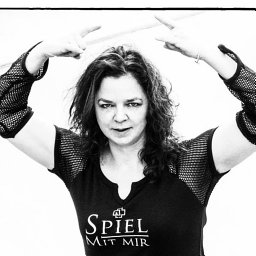 Julia Kneer合作论文数Erasmus School of History, Culture and Communication, Erasmus University Rotterdam1
 Mark Deuze合作论文数indiana university1
 Alex Gekker合作论文数Department of Media and Culture Studies, Utrecht University1
 Vit Paszto合作论文数1
 Kristine Jørgensen合作论文数University of Bergen1
 Ben Schouten合作论文数Eindhoven University of Technology;Hogeschool Van Amsterdam;HVA University of Applied Sciences1
 Douglas Rushkoff合作论文数1
 Torill Elvira Mortensen合作论文数Volda College1
 Joyce L. D. Neys合作论文数1Eric Gordon合作论文数Department of Geography;Sonoma State University;Department of Geography, Sonoma State University1




