This paper presents a comparative study of two powerful tools, Tracker and Python, in analyzing high-speed camera footage for exploring subharmonic oscillations in physics education. By utilizing high-speed video capture, we delve into the nuanced study of these oscillations, capturing intricate details at frame rates unattainable by standard video. Our study emphasizes the comparative effectiveness of Tracker, an open-source video analysis and modeling tool, and Python, a versatile programming language with extensive libraries for data analysis and visualization, in extracting and interpreting the physical parameters of subharmonic oscillations.We explore the capabilities of each tool in processing high-speed footage, focusing on their strengths in enhancing students’ understanding of complex oscillatory behaviors, and evaluate the ease of use, accuracy of data extraction, and the depth of analysis provided by Tracker and Python. By presenting a side-by-side analysis, we aim to guide educators in selecting the appropriate tool for their pedagogical needs, enhancing the learning experience in physics classrooms. The comparative analysis not only illuminates the potential of integrating advanced technologies in education but also serves as a guide for educators to harness these tools effectively in physics education.
Technology is all around us in our daily lives, in mobile phones, televisions, computers, and smart devices. Teachers need to incorporate digital tools into their lessons and perform other activities to develop digital competence. There are three key competences that have been identified by the European Union (2019), and we believe there is an opportunity to address them in physics teacher education programs. These are mathematical competence, competence in science, technology and engineering, and digital competence. One of the important issues is experimental work in physics education, especially when we look at specific subgroups of students. For example, an ongoing challenge for teachers is to combine experimental activities with the development of different competences. We will address the questions, what are the essential knowledge, skills and attitudes related to digital competence, and do physics teachers acquire them during their studies? We focused on the inclusion of digital competence in physics teacher studies, and we examined the description of subjects in the physics curriculum at several faculties in Croatia and in Slovenia.
As part of raising awareness and mitigating the impact of climate change on everyday life, municipalities are preparing their strategies and related action plans for climate neutrality and resilience. In these strategies, municipalities can significantly take into account their specificities and thus reduce vulnerability to the effects of climate change by implementing measures effective in their locality. As a basis for efficiency, comparability and the exchange of good practices, we propose a common abstract model of key performance indices and a common methodology that will enable the comparison of municipalities according to indicators of vulnerability and effectiveness of implemented measures. We illustrate the methodology on the indices of the health sector, which measure the effects of climate change on health. We focus on heat stress and prevalence of sick leave.
Fizikalni eksperimenti 2 – zbirka laboratorijskih vaj je namenjena študentom 2. letnika študijskega programa Fizika in študijskega programa Predmetni učitelj, usmeritev Izobraževalna fizika, na Fakulteti za naravoslovje in matematiko v Mariboru. Laboratorijske vaje se izvajajo pri predmetu Fizikalni eksperimenti 2 in obravnavajo področje elektromagnetizma in termodinamike. Zbirka je razdeljena na tri poglavja. V prvem poglavju so predstavljene obvezne, v drugem delu pa izbirne laboratorijske vaje, pri katerih gre za vsebinsko ali izvedbeno nadgradnjo. Tretje poglavje je namenjeno osnovam priprave in analize grafov v različnih računalniških programih.
Priročnik primerov pedagoške prakse poučevanja in učenja na univerzitetnem nivoju z osredotočenostjo na naravoslovno-matematična področja je namenjen vsem visokošolskim učiteljem in sodelavcem, ki želijo v svoj pedagoški proces vpeljati preverjene pedagoške prakse z namenom izboljšati študijski uspeh in opolnomočiti študente z ustreznimi kompetencami za njihovo nadaljnjo karierno pot. V priročniku predstavimo proces usvajanja znanja od odkrivanja do uporabe skozi lestvico stopenj zrelosti tehnologij. Pri tem želimo poudariti omejenost virov kot so znanje, inteligenca, čustvena inteligenca, empatija, čas, pozornost, zaupanje in pomen njihovega optimalnega izkoriščanja. Skozi konkretne primere učinkovitih pedagoških praks želimo vzpodbuditi visokošolske učitelje in sodelavce, da v pedagoški proces vpeljejo sodobne metode učenja in jih kombinirajo s tradicionalnimi.
This chapter provides a short overview of the education system in Slovenia with a focus on science education. Institutions for basic and upper secondary education collaborate with universities and research centers on a national level in the development and research projects that aim to enhance students' scientific and mathematics literacy, entrepreneurship competences and encourage the use of e-learning environments. According to international student assessments, PISA and TIMSS, Slovenia ranks above the OECD average in mathematics and natural science. There are many competitions, science fairs, summer schools, and workshops organized on a national level. Based on the analysis of the study program Subject teacher at the University of Maribor, we can conclude trainee teachers obtain good theoretical knowledge in the field of natural science and adequate competences for the sensible use of ICT in teaching. In the future, greater focus should be on e-learning, e-teaching, and distance learning, as well as introducing AI and VR in education.
Fizikalni eksperimenti 3 – zbirka laboratorijskih vaj – so namenjeni študentom 1. stopnje študija v programih Fizika in Predmetni učitelj na Fakulteti za naravoslovje in matematiko v Mariboru. Zbirka zajema snov s področja nihanja in valovanja. Vaje se izvajajo pri predmetu Fizikalni eksperimenti 3 v letnem semestru 2. letnika. Naslovi vaj: Goriščne razdalje leč, Uklon in interferenca, Stefanov zakon, Sklopljeno nihanje, Hitrost ultrazvoka, Nihanje s trenjem, Resonanca, Stoječe valovanje, Frekvenca in hitrost zvoka, Prekinjeno nihalo, Spektrometer. Navodila so namenjena uspešni izvedbi meritev, analizi, interpretaciji in vrednotenju merskih rezultatov. Dodani so naslovi samostojnih projektov, ki so bili v okviru predmeta izvedeni v preteklih letih
This article presents an undergraduate project for measuring the speed of sound in the air as a function of air temperature. The measurement is implemented in two versions. The simplicity of the basic experiment in dry air is used for a detailed analysis of systematic errors: the measured values are corrected with an additive constant and optimized to match the expected parabolic dependence of the speed of sound on temperature. Such a time correction is correlated with the physical content, that is, by changing the phase of oscillation of the pressure difference at the reflection of the sound at the open end of the tube. The second part of the experiment involves measuring the speed of sound in saturated humid air as a function of air temperature and allows for a substantive connection of two areas of physics (waves and thermodynamics). The measured water vapour pressure, within the range of statistical errors, follows the theoretical course up to the upper limit of the measured temperature range (60 °C) surprisingly well.
Didaktika fizike s praktikumom 2 – zbirka laboratorijskih vaj je namenjena študentom 3. in 4. letnika študijskega programa Predmetni učitelj, usmeritev Izobraževalna fizika na Fakulteti za naravoslovje in matematiko v Mariboru. Fizikalni eksperimenti se izvajajo pri predmetu Didaktika fizike 2 s praktikumom in so razdeljeni v sedem tematskih sklopov: Pospešeno gibanje, Mehanika tekočin, Termodinamika, Zvok, Svetloba, Elektromagnetizem in Moderna fizika. V okviru laboratorijskih vaj študentje pridobivajo znanje in razvijajo spretnosti za ustrezno izvedbo eksperimentov pri pouku fizike na srednješolskem nivoju izobraževanja.
The article presents the experimental results of the thermal conductivity of absorbent fabrics for increasing relative amount of water in the fabric. Measurements confirm that the effective thermal conductivity of fabrics at low moisture level is proportional to the relative amount of water absorbed in fabrics. With increasing relative amount of water in the fabric, effective thermal conductivity stabilizes around the value comparable with the thermal conductivity of water. The experimental results are compared with the theoretical linear model.
In today's world, most of measurement equipment in teaching physics are digital and more computer like then their analogue counterpart. The process of measurement becomes as closed black box and students lack the real feel of experimentation. Often students just connect sensors, press start button and get the results. If something is not right, they do not understand the underlying physics and cannot explain the results nor find the errors in the process. In such cases, they often blame the “faulty” equipment. After years of observation and communication with the primary school students and teachers, we conclude that students need to be involved into the experiment's equipment development. This not just enhance their physics knowledge and natural science competences but digital competences too. We used BBC Micro:bit and its sensors to develop experiment equipment. Students need to learn how to connect sensors and write the code to acquire data from the sensors. Later they use their sensors in measurements and try to explain the underlying physics phenomena they measure. We designed the blueprint for gradual building of complexity in measuring equipment. The case study was carefully prepared and conducted in a small group of primary school students.
The determination of properties of nonlinear dynamics from recorded time series offers fascinating in-sights into everyday phenomena that can be explored in the lab as well as in physics classrooms. A note-worthy challenge thereby is the distinction between multirhythmic signals, i.e., time series with many but still a finite number of harmonic frequencies, and deterministically chaotic signals. Especially if the signals are relatively short and decaying in intensity, both can have very similar continuous Fourier trans -forms. We show that stringed instruments offer easily accessible waveforms that can be studied with methods of nonlinear time series analysis to demonstrate that even highly multirhythmic signals can be robustly distinguished from deterministic chaos. In particular, we study the transition from sounds to chords by means of recordings of picked guitar strings, showing how the increasing complexity of the waveforms is still in fact periodic although it might seem chaotic. The treatment is instructive in terms of identifying common pitfalls that are associated with declaring deterministic chaos in observed data, and since it relies on readily available resources, it seems particularly well suited for the classroom on nonlinear dynamics and time series analysis. (c) 2021 Elsevier Ltd. All rights reserved.
Maintaining item banks that continually reflect the measured construct can be achieved through periodically removing obsolete items and adding validated items.
We study the synchronization of coupled identical circulant and non-circulant oscillators using single variable and different multi-variable coupling schemes. We use the master stability function to determine conditions for synchronization, in particular the necessary coupling parameter that ensures a stable synchronization manifold. We show that for circulant oscillators, the smallest coupling parameter for synchronization is needed when multi-variable coupling with the same coupling coefficients is applied. Conversely, for non-circulant oscillators, no such general conclusions are attainable in that the smallest coupling parameter cannot be attributed to a particular coupling setup. (C) 2020 Elsevier Inc. All rights reserved.
Physics is an experimental scientific discipline and needs to be introduced as such in schools. However, in recent decades, we witnessed intensive advancement in the field of computers, sensors, and measurement devices and also educational technologies, animations, and simulations, which one can use in teaching Physics. With ICT integration in education, we can supplement, but not substitute, different teaching methods, which include experiments. The modern teacher of Physics needs to be well trained in the use of all kinds of educational technologies, in particular in the field of experimental work. In this contribution, we analyze the study program of educational Physics at the University of Maribor in Slovenia, where we focus on achieving adequate competences for appropriate use of ICT in teaching theoretical topics as well as executing experiments.
Finance and economics are complex nonlinear systems that are affected by various external factors, including of course human action, bilateral relations, conflicts, and policy. Time delays in a financial system take into account the amount of time that passes from a particular policy or decision being made to it actually taking effect. It is thus important to consider time delays as an integral part of modeling in this field. Moreover, many features of financial systems cannot be expressed sufficiently precisely by means of integer-order calculus. Fractional-order calculus alleviates these shortcomings. The aim of this paper is therefore to study the dynamics and complexity in a fractional-order financial system with time delays. We observe fascinating transitions to deterministic chaos, including cascading period doubling, as well as high levels of complexity. This is particularly true in response to variations of derivative orders, which are thus identified as key system parameters.
Composite materials containing liquid crystalline microstructures, providing fast stimuli responsive variations of birefringence at low consumption power, have great potential applications in photonics. Here, a composite material based on polymer membranes with photo-aligned nematic microstructures is proposed for the first time. For this purpose, porous polyethylene terephthalate (PET) films were covered with an azo-dye and subjected to a modified photoalignment technique to control the azimuthal orientation and anchoring strength of nematic liquid crystals (LCs) at the pore walls. Nematic internal ordering was identified using polarized optical micro-scopic observations assisted by theoretical simulations. The proposed approach provides spatial distribution of nematic microstructures characterized by specific internal ordering and fingerprint in near infrared spectra at an electro-optical response. These composites can be used as flexible photonic LC elements such as spatial light modulators, optical filters and lenses.
 Vladimir Grubelnik合作论文数15
 Samo Kralj合作论文数Slovenia and Jožef Stefan Institute, University of Maribor14
 Milan Ambrožič合作论文数13
 Marjan Krasna合作论文数University of Maribor;Faculty of Arts;Faculty of Arts, University of Maribor11
 Eva Klemencic合作论文数Dept Phys, Univ Maribor7
 Ivan Gerlic合作论文数7
 Matjaž Perc合作论文数Complex Systems Center, University of Maribor6
 Mitja Slavinec合作论文数5Valentin Barna合作论文数Fac Phys, Univ Bucharest4Peter Bernad合作论文数3Samo Kralj合作论文数3R. Hauko合作论文数3
 Dzana Salibasic Glamocic合作论文数3
 Vanes Mesic合作论文数Faculty of Natural Sciences and Mathematics3
 Andrej Flogie合作论文数3
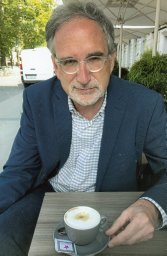 William J. Boone合作论文数Division of General Internal Medicine, University of Cincinnati Medical Center;Miami University;University of Cincinnati Medical Center, Miami University3
 Marko Marhl合作论文数Faculty of Natural Sciences and Mathematics, University of Maribor3
 Knut Neumann合作论文数Department of Physics Education, Leibniz-Institute for Science and Mathematics Education (IPN)3
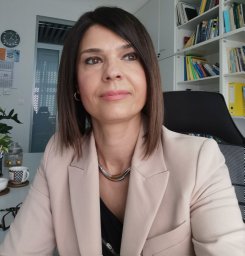 Natasa Erceg合作论文数3
 Aleksander Zidanšek合作论文数University of Maribor3Ana Susac合作论文数Faculty of Science, University of Zagreb3
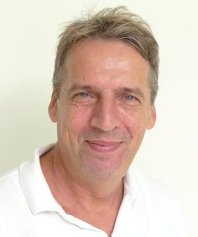 Ivica Aviani合作论文数Institute of Physics, University of Zagreb3
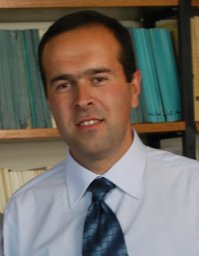 Elvedin Hasovic合作论文数Faculty of Science Zmaja od Bosne, University of Sarajevo3Vlad Popa-Nita合作论文数2Damjan Osrajnik合作论文数2Robi Arcet合作论文数2
 Igor Pesek合作论文数Fac Nat Sci & Math, Univ Maribor2
 Sajad Jafari合作论文数Biomedical Engineering Department, Amirkabir University of Technology2
 Andrej Sorgo合作论文数2Zlatko Bradac合作论文数2
 Dina Shmeliova合作论文数2Sergey V. Pasechnik合作论文数2
 Erivelton Nepomuceno合作论文数Laboratório de Sistemas e Sinais, Universidade Federal de São João del-Rei2Matej Cvetko合作论文数2
 Milan Svetec合作论文数Faculty of Education, University of Maribor2V. Popa-Nita合作论文数2
 Marko Gosak合作论文数Faculty of Natural Sciences and Mathematics, University of Maribor2Alexander Dubtsov合作论文数2
 Mateja Ploj Virtic合作论文数2Z Bradač合作论文数1
 Alipio Monteiro Barbosa合作论文数1
 Samo Fosnaric合作论文数1Priscila F. S. Guedes合作论文数1Špela Tertinek合作论文数1
 Shirin Panahi合作论文数Univ New Mexico1Pavlo Kurioz合作论文数1
 Arthur M Lima合作论文数Automat & Control Grp, Univ Brasilia1
 Simon Ulen合作论文数1
 Martina Rajsp合作论文数1




