The Saccharomyces Genome Database (SGD; http://www.yeastgenome.org) collects and organizes biological information about the genes, proteins, and chromosomal features of S. cerevisiae, and presents this information on Locus Summary pages for every feature. Locus Summary pages contain such information as descriptions of the function and role of the feature, mutant phenotype data, summaries of physical and genetic interaction data, and results of large-scale gene expression studies. Through this extensive annotation SGD has become a powerful resource for studies of related proteins in other organisms. SGD has developed web-based tools that integrate searching among these diverse types of data to discover functional connections among sets of genes. These tools, such as the GO Term Finder, allow for analysis of gene list results from high-throughput assays to identify cellular localizations or biological roles that a set of proteins shares in common. Use of comparison resources such as the Model Organism BLASTP Best Hits identifies proteins in other organisms that may be orthologs to those identified in the assay. Examples describing the use of these tools will be discussed. The SGD project is an ongoing effort and we welcome feedback from users. SGD is funded as a National Genomic Resource by the National Human Genome Research Institute at the National Institutes of Health.
Sequencing and annotation of the entire Saccharomyces cerevisiae genome has made it possible to gain a genome-wide perspective on yeast genes and gene products.To make this information available on an ongoing basis, the Saccharomyces Genome Database (SGD) (http://www.yeastgenome.org/) has created the Genome Snapshot (http://db.yeastgenome.org/cgi-bin/genomeSnapShot.pl).The Genome Snapshot summarizes the current state of knowledge about the genes and chromosomal features of S.cerevisiae.The information is organized into two categories: (i) number of each type of chromosomal feature annotated in the genome and (ii) number and distribution of genes annotated to Gene Ontology terms.Detailed lists are accessible through SGD's Advanced Search tool (http://db.yeastgenome.org/cgi-bin/search/featureSearch),and all the data presented on this page are available from the SGD ftp site (ftp://ftp.yeastgenome.org/yeast/).
A scientific database can be a powerful tool for biologists in an era where large-scale genomic analysis, combined with smaller-scale scientific results, provides new insights into the roles of genes and their products in the cell. However, the collection and assimilation of data is, in itself, not enough to make a database useful. The data must be incorporated into the database and presented to the user in an intuitive and biologically significant manner. Most importantly, this presentation must be driven by the user's point of view; that is, from a biological perspective. The success of a scientific database can therefore be measured by the response of its users - statistically, by usage numbers and, in a less quantifiable way, by its relationship with the community it serves and its ability to serve as a model for similar projects. Since its inception ten years ago, the Saccharomyces Genome Database (SGD) has seen a dramatic increase in its usage, has developed and maintained a positive working relationship with the yeast research community, and has served as a template for at least one other database. The success of SGD, as measured by these criteria, is due in large part to philosophies that have guided its mission and organisation since it was established in 1993. This paper aims to detail these philosophies and how they shape the organisation and presentation of the database.
The Saccharomyces Genome Database (SGD; http://www.yeastgenome.org/), a scientific database of the molecular biology and genetics of the yeast Saccharomyces cerevisiae, has recently developed several new resources that allow the comparison and integration of information on a genome-wide scale, enabling the user not only to find detailed information about individual genes, but also to make connections across groups of genes with common features and across different species. The Fungal Alignment Viewer displays alignments of sequences from multiple fungal genomes, while the Sequence Similarity Query tool displays PSI-BLAST alignments of each S.cerevisiae protein with similar proteins from any species whose sequences are contained in the non-redundant (nr) protein data set at NCBI. The Yeast Biochemical Pathways tool integrates groups of genes by their common roles in metabolism and displays the metabolic pathways in a graphical form. Finally, the Find Chromosomal Features search interface provides a versatile tool for querying multiple types of information in SGD.
Upon the completion of the SACCHAROMYCES: cerevisiae genomic sequence in 1996 [Goffeau,A. et al. (1997) NATURE:, 387, 5], several creative and ambitious projects have been initiated to explore the functions of gene products or gene expression on a genome-wide scale. To help researchers take advantage of these projects, the SACCHAROMYCES: Genome Database (SGD) has created two new tools, Function Junction and Expression Connection. Together, the tools form a central resource for querying multiple large-scale analysis projects for data about individual genes. Function Junction provides information from diverse projects that shed light on the role a gene product plays in the cell, while Expression Connection delivers information produced by the ever-increasing number of microarray projects. WWW access to SGD is available at genome-www.stanford. edu/Saccharomyces/.
 Mark Schroeder合作论文数Laboratory of Developmental Neurogenetics, The Rockefeller University6
 Selina S. Dwight合作论文数Grace Science, LLC6
 Gail Binkley合作论文数6
 David Botstein合作论文数Lewis-Sigler Institute for Integrative Genomics, Princeton University;Department of Molecular Biology, Princeton University6
 Shuai Weng合作论文数Cherry Lab, Department of Genetics, Stanford University6
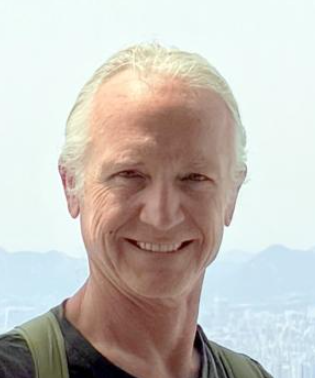 Mike Cherry合作论文数Department of Genetics, Stanford University6
 Kara Dolinski合作论文数Howard Hughes Medical Institute, Duke University Medical Center6Qing Dong合作论文数5
 Stacia R Engel合作论文数5Maria C. Costanzo合作论文数Section of Genetics, University5Karen R. Christie合作论文数4Robert S. Nash合作论文数4Barry Starr合作论文数4Jodi E. Hirschman合作论文数4Eurie L. Hong合作论文数School of Medicine, Stanford University;AncestryDNA;Constellation Genomics Consulting LLC4Laurie Issel-Tarver合作论文数4R Balakrishnan合作论文数3Theesfeld Chandra L合作论文数Department of Pharmacology and Cancer Biology, Duke University Medical Center3DG Fisk合作论文数2Becket Feierbach合作论文数2A Sethuraman合作论文数2Rose Oughtred合作论文数Research Collaboratory for Structural Bioinformatics, Protein Data Bank (RCSB PDB), Department of Chemistry and Chemical Biology, Rutgers, The State University of New Jersey, 610 Taylor Road, Pisc ...2Marek S. Skrzypek合作论文数2
 Julie Park合作论文数Department of Oncology, St. Jude Children's Research Hospital2
 Dianna Fisk合作论文数2
 Michael Livstone合作论文数Regeneron2
 Rama Balakrishnan合作论文数2S R Nash合作论文数1Jc Matese合作论文数1Jodi Hirschman合作论文数1ra l theesfeld合作论文数1D Fisk合作论文数1K Christie合作论文数1
 Jennifer Williams合作论文数1
 Christopher E. Lane合作论文数Department of Biochemistry;Molecular Biology;Dalhousie University;Department of Biochemistry, Dalhousie University1Anand Sethuraman合作论文数1Edith D. Wong合作论文数1Midori A. Harris合作论文数1Mayank K. Thanawala合作论文数1Catherine A. Ball合作论文数Department of Biochemistry, Stanford University School of Medicine1Benjamin C. Hitz合作论文数Dept Genet, Stanford Univ1Stuart R. Miyasato合作论文数1
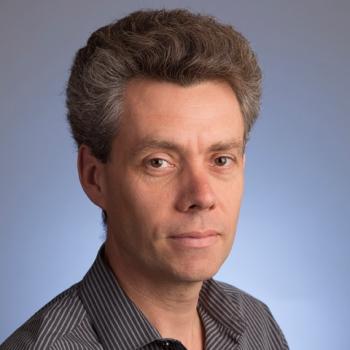 Gavin Sherlock合作论文数Department of Genetics, Stanford University1Heng Jin合作论文数Department of Biochemistry, Stanford University School of Medicine, Stanford, CA 94305, USA1




