Spiking neural networks (SNNs) offer a biologically inspired, energy-efficient alternative to conventional artificial neural networks (ANNs). However, deep SNNs struggle to process complex EEG signals because their spike-based representations are sparse and highly time-specific, which often causes important information to be lost as it passes through multiple layers. In this work, we address these limitations by proposing an Efficient Deep Spiking Neural Network (EDSNN) for automatic sleep stage classification. The model is trained and evaluated on raw single-channel recordings from two large-scale sleep EEG datasets: Sleep-EDF-78 and SHHS. The proposed architecture incorporates multi-scale convolutional spiking layers with skip connections to preserve spiking information across deep layers. It also employs aggregated spike-based supervision, class-weighted label smoothing, and incremental data feeding to improve training stability and generalization. We evaluated the proposed EDSNN on two challenging and imbalanced sleep EEG datasets, SHHS and Sleep-EDF-78. The model achieved accuracies of 81.64% on Sleep-EDF-78 and, 80.55% on SHHS, demonstrating competitive performance compared to conventional deep neural networks, while offering faster inference and lower energy consumption due to its spiking architecture.
After the World Health Organization (WHO) released information about the coronavirus, researchers began working to predict the spread of the disease and explore ways to prevent it. A key challenge is forecasting coronavirus time series, particularly for long-term perspectives, while ensuring that predictions are made without access to future data. This article aims to address these issues by employing various hybrid methods to generate accurate predictions for coronavirus-related death time series. The approach incorporates six distinct hybrid models and proposes the use of two hybrid statistical-neural network models. We also introduce a hybrid model combined with time series decomposition, specifically discrete wavelet decomposition. These hybrid models are compared with four well-known single models. Additionally, we evaluated a recently proposed method named DLinear. The study involves predicting global time series data as well as mortality rates for the four countries with the highest death tolls: the United States, Brazil, India, and Russia. The results indicate that the hybrid statistical and neural network models generally perform well in multi-step-ahead prediction (i.e., forecasting without access to future data) and also demonstrate good accuracy for one-step-ahead prediction (i.e., when future data is available). Our proposed hybrid models consistently outperformed DLinear, with improvements ranging from 26
Parkinson’s disease (PD) is a progressive neurological disorder that affects both motor and cognitive domains. While recent studies have investigated EEG-based classification, few have addressed the continuous estimation of clinical scores using interpretable models. In this study, we propose a novel deep fuzzy rule-based model designed to predict two key clinical indices—Montreal Cognitive Assessment (MoCA) and Unified Parkinson’s Disease Rating Scale (UPDRS)—directly from task-based EEG signals recorded during cognitively demanding interval timing tasks (3s and 7s). Our model combines nonlinear entropy and recurrence-based features extracted from the multiple phases—where cognitive load is maximal—with a layered fuzzy rule structure guided by Fuzzy clustering, enabling interpretable reasoning. The model significantly outperforms conventional regressors, fuzzy models (ANFIS, and GMM-based deep fuzzy types) in all evaluation metrics. It achieves the lowest MAE (2.05 ± 0.41), highest R² (0.107 ± 0.081), and highest Spearman’s ρ (0.270 ± 0.148) for MoCA estimation in the 3s task, and shows similar superiority in the 7s task (MAE = 2.18 ± 0.43, R² = 0.135 ± 0.104, ρ = 0.269 ± 0.129). For UPDRS-III estimation, it also achieves leading results (short task: MAE = 5.31 ± 1.28, R² = 0.045 ± 0.068, ρ = 0.137 ± 0.135; long task: MAE = 5.24 ± 1.38, R² = 0.064 ± 0.074, ρ = 0.163 ± 0.119). These findings highlight the clinical potential of interpretable deep fuzzy systems for dual-score estimation in PD, providing a transparent, and physiologically grounded framework for assessing disease severity from cognitive-task EEG complexity.
Machine learning has emerged as a transformative technology in healthcare, enabling automated diagnosis, prognosis, and clinical decision support. However, the effectiveness of machine learning models is strongly dependent on the type and quality of medical data, which are inherently heterogeneous, high-dimensional, and often noisy. This review provides a comprehensive and unified taxonomy of all major medical data types including structured (EHR/EMR), semi-structured (clinical text), unstructured (medical imaging, physiological signals), and multimodal data and systematically analyzes the unique machine learning challenges associated with each category. Our synthesis of more than 100 peer-reviewed articles published between 2018 and 2026 reveals several recurring patterns: data sparsity and missing values remain pervasive obstacles in EHR-based studies, particularly for laboratory and vital-sign covariates that are not routinely recorded outside clinical encounters; computational demands escalate sharply across model families, from classical machine learning methods trainable in minutes on standard hardware to medical foundation models requiring thousands of GPU-hours; and intermediate fusion in multimodal learning has been reported to achieve 5–12% AUC improvements over unimodal models [16]. Widely used datasets across the reviewed literature include MIMIC-III/IV for EHR, CheXpert and COVID-19 CT scans for imaging, and PhysioNet for physiological signals. We also identify persistent challenges including data scarcity, class imbalance, privacy constraints, and poor generalization across institutions and propose a practical, challenge-driven framework for selecting appropriate machine learning strategies across different data types. This review offers a holistic roadmap for researchers and clinicians navigating the complexities of medical machine learning, and concludes by prioritizing five actionable research directions to accelerate clinical translation.
Introduction. This study investigated whether personalized transcranial direct current stimulation (tDCS) protocols informed by quantitative EEG (qEEG) patterns could enhance treatment outcomes in adults who stutter (AWS), addressing individual variability in neural activity. Methods. Twenty male AWS participated in a double-blind, randomized controlled trial. EEG signals were recorded during speech tasks to differentiate neural substrates of fluent and stuttered speech. Over 10 days, participants received 10 sessions of speech therapy combined with tDCS. The experimental group received personalized tDCS (2 mA for 25 min per session) targeting regions identified through qEEG, while the control group received standard stimulation over FC5. Behavioral outcomes (SSI-4 scores) and EEG metrics were compared pretreatment, posttreatment, and at 3-month follow-up using repeated-measures ANOVA. Results. Both groups exhibited significant reductions in stuttering severity posttreatment. However, the study group maintained greater fluency at follow-up (p < .001). EEG analysis revealed that the study group demonstrated enhanced delta power in the FC5, reduced phase coherence in motor-auditory-somatosensory networks, and greater suppression of high-frequency bands in the personalized group. Conclusion. Personalized, qEEG-informed tDCS protocols yielded more sustainable fluency improvements than conventional tDCS, highlighting the potential of individualized neuromodulation strategies for treating stuttering.
HTLV-1-associated myelopathy/tropical spastic paraparesis (HAM/TSP) is a long-term neuroinflammatory condition without effective therapy, partly due to limited understanding of its immunopathogenesis. Although higher HTLV-1 proviral load (PVL) is linked to disease susceptibility, the contribution of T-cell immune checkpoints remains unclear. PD-1 and TIM-3 regulate T-cell function, and evaluating them alongside cytokine balance may provide insight into disease mechanisms. This study included 30 HAM/TSP patients, 30 HTLV-1 asymptomatic carriers, and 30 healthy controls. Distribution of PD-1 and TIM-3 across CD4+ and CD8+ T cells was assessed by flow cytometry, serum IFN-γ and IL-10 concentrations were quantified by ELISA, HTLV-1 proviral load quantification was performed using a SYBR Green-based qPCR assay designed and validated in this study and viral subtypes were determined by LTR sequencing and drawing phylogenetic tree. Although CD4+ and CD8+ T cells from HAM/TSP cases displayed elevated PD-1 expression, TIM-3 expression was similar across groups. IFN-γ, but not IL-10, was elevated in HAM/TSP. Increased PD-1+CD8+ T-cell frequency and IFN-γ levels were associated with proviral load, motor disability, and disease duration. Elevated PD-1 expression without concurrent TIM-3 upregulation, together with high IFN-γ levels, suggests a proinflammatory immune profile in HAM/TSP rather than classical T-cell exhaustion.
Chronic spinal meningitis, marked by inflammation of the spinal cord’s meninges, poses significant diagnostic and therapeutic challenges, particularly when the cause remains unidentified. This case series reviews four patients presenting with chronic spinal meningitis, showcasing diagnostic strategies, clinical courses, and management difficulties. The study highlights the need for a comprehensive, multidisciplinary approach involving neurologists, infectious disease experts, and rheumatologists. Despite advances in imaging and cerebrospinal fluid (CSF) analysis, definitive diagnosis often remains elusive. Cases progress to complications such as hypertrophic spinal pachymeningitis and spinal adhesive arachnoiditis, which may lead to severe long-term sequelae. A detailed analysis of each patient demonstrated the complexities of differential diagnosis, with conditions ranging from infectious and autoimmune disorders to carcinomatous meningitis. This series emphasizes the necessity of heightened clinical awareness, comprehensive diagnostic approaches, and further research to address the knowledge gap in chronic spinal meningitis and improve patient outcomes through timely intervention.
Anti-recombinant human acid α-glucosidase (anti-rhGAA) antibody formation is a major challenge in patients with Pompe disease receiving enzyme replacement therapy (ERT). The clinical significance of these antibodies and their detection methods remain uncertain. This study aimed to evaluate the diagnostic and functional relevance of anti-rhGAA antibodies in late-onset Pompe disease (LOPD) and to compare the performance of ELISA and Western blot assays. Fourteen patients with LOPD undergoing ERT and 14 age- and sex-matched healthy controls were studied. Serum anti-rhGAA antibodies and their IgG, IgM, and IgA isotypes were quantified using ELISA and verified by Western blot. Motor function was assessed using the Pompe Motor Function Levels Questionnaire, an adapted version of the GMFCS validated for Pompe disease. Total and isotype-specific anti-rhGAA antibody levels were significantly higher in patients than in controls. ROC analysis showed excellent discrimination between groups. Strong agreement was observed between ELISA and Western blot results. However, antibody levels were not significantly correlated with motor function grade. Given the small sample size (n = 14), this non-significant result may reflect limited statistical power rather than a true lack of association. Anti-rhGAA antibody detection effectively distinguishes LOPD patients from healthy individuals. Western blot provides a reliable, low-cost alternative to ELISA, particularly useful in resource-limited settings. Nevertheless, the prognostic utility of antibody titers for functional outcomes remains uncertain and warrants larger, multicenter validation studies.
This paper introduces the Vision-EMG Transformer (ViEMGT), a novel deep learning architecture designed for hand gesture recognition using high-density surface electromyography (HD-sEMG) in individuals with traumatic brain injury (TBI). ViEMGT reformulates multichannel EMG signals into structured spatio-temporal patches, enabling attention mechanisms to capture intricate neuromuscular patterns. On a dataset of 22 gesture classes from 12 individuals with TBI using 56 electrodes, the model achieved a 95.2% accuracy and a macro-averaged F1-score of 95.1%, surpassing CNN-LSTM, 1D-CNN, LSTM, and SVM baselines by up to 12% in accuracy and F1-score. The approach demonstrated robust performance across gesture types, with F1-scores of 0.955 for grip patterns and 0.930 for finger movements. Attention-based modeling enhanced interpretability and provided valuable insights into neuromuscular control. Data augmentation improved robustness, supporting ViEMGT’s application in real-world rehabilitation, prosthetic systems, and adaptive human-computer interfaces.
Breast cancer is the second most common cancer in the world. If cancerous masses are not detected in a proper time interval, they can jeopardize patients' lives. Breast cancer can be detected in different ways, such as X-Ray, ultrasound, histopathological imaging, and genetic sequencing. Deep learning (DL) plays a vital role in medical imaging research, such as convolutional neural networks (CNNs), graph neural networks (GNNs), and transformer-based models. We also reviewed previous research on DL methods for detecting and classifying breast cancer. We focus on studies of previous DL methods, preprocessing, datasets, evaluation, and limitations. CNN and hybrid models increase performance compared to traditional machine learning. Transformer-based and graphbased models enhance feature representation. In this research, we use ScienceDirect, IEEE Xplore, Springer, and Google Scholar databases. This survey focuses on new DL-based architectures for just X-Ray mammograms as well as multimodal fusion DL-based methods to make researchers familiar with state-of-the-art DL-based methods in breast cancer detection methods. We have briefly introduced the efficient DL-based schemes and compared their results on different publicly available datasets and discussed the pros and cons of the investigated methods.
A variety of malicious software programs such as malware have been developed to damage computer systems for various purposes such as interfering users' daily tasks. Recently, there have been several studies focus on malware detection from different perspectives. Investigating the Opcodes of files is one of the famous approaches for malware detection. Recently, machine learning methods have been applied to distinguish extracted text features of Opcodes sequence into normal and malware files. Nevertheless, due to the length of sequences obtained from Opcodes, most of these methods discard considerable portions of Opcodes, resulting in a decrease in detection accuracy. In this paper, we address this problem by converting and treating Opcodes as discrete signals. At first, a signal is created by mapping the Opcodes of each file to a fixed number. After that, 15 informative entropy-based features have been elicited from the extracted signal of each file. We use machine learning classifiers such as random forest, different boosting classifiers and a convolutional neural network to detect malware-related features. The proposed method using 15 features archives an accuracy of 95.08
OBJECTIVE:Hereditary spastic paraplegias (HSP) are rare neurodegenerative disorders marked by spasticity and lower limb weakness. The most common type, SPG4, is usually autosomal dominant and caused by SPAST gene variants, typically presenting as pure HSP. We describe five individuals from three unrelated families who meet the clinical criteria for cerebral palsy and carry biallelic SPAST variants. We aim to increase the clinical and genetic understanding of SPAST-related disorders and explore the underlying abnormal cellular mechanisms. METHODS:We performed comprehensive phenotyping and genetic analysis. In silico and functional studies were conducted using confocal microscopy on fibroblast cultures derived from carriers of the biallelic SPAST variants, a monoallelic SPAST variant, and a healthy control. RESULTS:Individuals exhibited early-onset complex HSP with a diverse range of encephalopathy severity, spasticity, and neuronoaxonal involvement, occasionally leading to the diagnosis of cerebral palsy. Whole-exome sequencing identified homozygous and compound heterozygous SPAST variants. Functional studies demonstrated reduced spastin and tubulin levels, mitochondrial fragmentation, and abnormal filopodia morphology in patient-derived fibroblasts, supporting the pathogenicity of the variants. INTERPRETATION:We provide the first evidence of biallelic inheritance in SPAST-related disorders, supported by functional analysis, expanding the clinical spectrum to include moderate-to-severe early-onset encephalopathy. Our findings emphasize the importance of genetic diagnosis in cerebral palsy for prognosis, counseling, and personalized therapy. The identified variants reveal the genetic complexity of SPAST-related disease and suggest a threshold effect of spastin levels in phenotypic variation. Cellular mechanisms such as mitochondrial dynamics and membrane morphology may contribute to pathogenesis and warrant further investigation.
Background: The Amyotrophic Lateral Sclerosis Cognitive Behavioral Screen (ALS-CBS) and the Revised Amyotrophic Lateral Sclerosis Functional Rating Scale (ALSFRS-R) are widely recognized tools for evaluating cognitive, behavioral, and functional changes in patients with amyotrophic lateral sclerosis (ALS). Given the increasing number of ALS cases in Persian-speaking communities, there is a critical need for culturally and linguistically adapted versions of these instruments. The objective of this study was to translate the ALS-CBS and ALSFRS-R into Persian and evaluate their validity and reliability to ensure their applicability in clinical practice and research. Methods: The Persian versions of the ALS-CBS and ALSFRS-R questionnaires were developed using the translation-back translation method. The translated questionnaires were administered to 36 individuals diagnosed with ALS. To assess content validity, neuromuscular specialists evaluated each item based on relevance, clarity, simplicity, necessity, and comprehensiveness, using content validity ratio (CVR) and content validity index (CVI) measures. Internal consistency reliability was assessed using Cronbach's alpha coefficient. Test-retest reliability was evaluated using the intra-class correlation coefficient (ICC). Statistical analysis was conducted using SPSS software. Results: All questionnaire items demonstrated satisfactory face validity after expert-guided revisions. The minimum acceptable values for CVI (≥ 0.78) and CVR (≥ 0.62) were achieved by correcting items that initially scored below the threshold. Reliability analysis revealed ICC values of 0.969 and 0.816 for the cognitive and behavioral sections of the ALS-CBS, respectively, and 0.909 for the ALSFRS-R. Cronbach’s alpha coefficients were 0.791 for the ALS-CBS behavioral section and 0.825 for the ALSFRS-R, indicating acceptable internal consistency. Conclusion: The Persian versions of the ALS-CBS and ALSFRS-R have been shown to be both valid and reliable. These adapted tools provide valuable resources for assessing the cognitive, behavioral, and functional status of patients with ALS in Persian-speaking populations, ultimately supporting more accurate diagnosis, monitoring, and disease management.
Music emotion recognition (MER) is an essential branch in music information retrieval, focusing on categorization of music based on emotional content. This study introduces a multimodal deep learning architecture adopting audio and lyrics to improve the emotion recognition accuracy. The model employs convolutional neural networks, long short-term memory layers, in addition with an attention to emphasize emotionally salient features. Significant performance gains are achieved by analyzing the chorus—often the most expressive and repetitive part of music. Herein, a new dataset containing 9,087 tracks which are labeled by valence and arousal, is prepared and introduced. Moreover, embeddings generated by XLNet and BERT networks are compared for lyrics feature extraction. Experimental results demonstrate the proposed scheme is superior to state-of-the-art methods in achieving significantly superior emotion recognition accuracy, which underscores the value of chorus-based analysis, deep attention networks, and multimodal integration in advancing MER.
Cognitive deficits in each brain are likely to be associated with alterations in brain connectivity. Given the vast number of connections, studying and identifying these changes is neither practical nor efficient. Therefore, we use a minimum spanning tree (MST) to address these challenges. We hypothesize that there is a global subgraph for each cognitive disease that consists of the most repeated connections for each group and because of the slow changes of the disease, we call this “disease-specific subgraph”. To validate this model, two datasets are used, a MEG dataset with 80 subjects with Alzheimer’s disease (AD), mild cognitive impairment (MCI), and healthy control (HC), and an EEG dataset recorded from 88 subjects: 36 AD, 23 frontotemporal dementia (FTD), and 29 HC. The weighted phase lag index (wPLI), phase lag index (PLI), and phase locking value (PLV) were employed to assess the functional connectivity and brain graph construction. However, due to less sensitivity to volume conduction and noise, wPLI was utilized to construct the graph and MST matrices. The results and the location of hub nodes showed higher integrated graphs of AD, MCI and FTD which is related to poorer cognitive performance and compatible with physiological observations. Moreover, the characteristics of MST matrices of subjects were used as cognition features and showed high classification rates in comparison with state-of-the-art methods.
The Study of depression and its effects on the brain is essential since this common mental health disorder affects millions. In addition to disturbing emotional and cognitive processes, depression also disrupts activity in discrete brain regions. Identifying these distortions is important for expanding the diagnosis and treatment plans. A recently introduced spiking neural network (SNN) framework called NeuCube has successfully demonstrated its effectiveness in modeling dynamic brain activity using EEG signals by capturing the temporal and spatial patterns of neural activity. In this study, we introduce a new model to interpret brain region contributions in depression by integrating NeuCube architecture with a dictionary learning method. NeuCube artificially replicates neural activity in multiple brain regions and its output spike trains are then combined with dictionary learning to recognize depression-related patterns. This hybrid solution allows a high level of interpretability with respect to the contribution from biology and connectivity while maintaining strong separation power for depression diagnosis. Significant contributions were observed in neuromarkers of brain regions, such as frontal and temporal lobes for eyes-closed, and eye-open states. Through the analysis of sparse codes, we reveal which brain region interactions are affected by depression, providing an understanding of the neural underpinnings behind this disorder. In addition, our model achieves an accuracy of 91\% for both eyes-closed and eyes-open conditions, stronger than traditional methods.
This paper presents a content-based music recommender system that leverages deep learning to extract emotional features from audio and lyrics. Unlike traditional methods relying on popularity or user interaction data, this system uses intermediate features from a pre-trained multi-modal network to calculate emotional similarity between music tracks. The model effectively addresses the cold-start and long-tail challenges by focusing on emotional features. A new dataset of 96,309 playlists was used to evaluate the system. The proposed model significantly outperforms baseline methods and recent studies in key metrics, achieving the highest Recall and NDCG while maintaining competitive performance in Diversity and Novelty.
Background:This study aimed to explore the patients' reactions when HAM/TSP was diagnosed. This qualitative content analysis study was conducted on HAM/TSP patients referred to an HTLV-1 clinic in Mashhad, Iran. Methods:We selected a purposive sample of 16 HAM/TSP patients meeting the inclusion criteria to participate in semi-structured interviews to explore their reactions and emotions when they first learned about their diagnosis. A qualitative content analysis was utilized with MAXQDA 2020 software. Results:Four categories and 14 subcategories were extracted, summarized in the main concept "Astonish yourself while worrying about another." The categories included threatened mental health, fear of falling into the path of ambiguity and darkness, fears and conflicts of deciding to expose the disease, and the double stress of threatening the health of others." Conclusion:HAM/TSP is an incurable and progressive disease with several physical complications. Its first diagnosis can also cause severe psychological damage to patients and profoundly affect the patient's social and family relationships. Therefore, it seems that education and health policies should integrate multidisciplinary teams to minimize the effects of HAM/TSP on the patients' quality of life.
Autophagy is a fundamental and evolutionary conserved biological pathway with vital roles in intracellular quality control and homeostasis. The process of autophagy involves the engulfment of intracellular targets by autophagosomes and their delivery to the lysosome for digestion and recycling. We have previously reported recessive variants in EPG5, encoding for the ectopic P-granules 5 autophagy protein with a crucial role in autophagosome-lysosome fusion, as the cause of Vici syndrome (VS), a severe multisystem neurodevelopmental disorder defined by a combination of distinct clinical features including callosal agenesis, cataracts, cardiomyopathy, immunodeficiency, and hypopigmentation. Here, we present extensive novel genetic, clinical, neuroradiological and pathological features from the largest cohort of EPG5-related disorders reported to date, complemented by experimental findings from patient cells and models of EPG5 defects in Caenorhabditis elegans and Mus musculus. We identified 200 patients with recessive EPG5 variants, 86 of them previously unpublished. The associated phenotypic spectrum ranged from antenatally lethal presentations and the classic VS phenotype (n=60) to much milder neurodevelopmental disorders with less specific manifestations (n=140). Myopathic features and epilepsy with variable progression were frequently observed. Novel manifestations included early-onset parkinsonism and dystonia with cognitive decline during adolescence, hereditary spastic paraplegia (HSPP), and myoclonus. Radiological findings included previously recognized EPG5-related features with callosal abnormalities and pontocerebellar hypoplasia, and a range of novel features suggesting an emerging continuum with disorders of brain iron accumulation or copper metabolism as well as HSPPs. Genotype-phenotype studies suggested a correlation between predicted residual EPG5 expression and clinical severity, especially regarding disease progression and survival. The Epg5 p.Gln331Arg knock-in mouse, a model of milder EPG5-related disorders, showed an age-related motor phenotype and impaired autophagic clearance in several brain regions mirroring those also affected in humans. In Caenorhabditis elegans, epg-5 knockdown gave rise to neurodevelopmental features and motor impairment comparable to defects in parkinsonism-related genes, abnormal mitochondrial respiration, and impaired mitophagic clearance early in life. Cellular assays revealed impaired PINK1-Parkin dependent mitophagic clearance in patient fibroblasts. Our findings expand the phenotypic spectrum of EPG5-related disorders and indicate a life time continuum of disease that overlaps with other disorders of defective autophagy and intracellular trafficking. Our observations also suggest close links between early-onset neurodevelopmental and neurodegenerative conditions of later onset due to EPG5 defects, in particular dystonia and parkinsonism, highlighting the fundamental importance of dysfunctional autophagy in the pathophysiology of common neurodegenerative disorders.### Competing Interest StatementThe authors have declared no competing interest.### Funding StatementThis work was supported by grants from the European Union Horizon 2020 Programme (765912 DRIVE H2020-MSCA-ITN-2017) to CD, MF and HJ, Action Medical Research (2446) to HJ and MF, and Action Medical Research (GN2959) to KS and MRD. HSD was supported by the Koeln Fortune Program/Faculty of Medicine, University of Cologne (371/2021 and 243/2022), as well as the Cologne Clinician Scientist Program/Medical Faculty/University of Cologne and German Research Foundation (CCSP, DFG project No. 413543196). AA was supported by the Max Planck Gesellschaft. TSB was supported by the Netherlands Organisation for Scientific Research (ZonMw Vidi, grant 09150172110002), and acknowledges ongoing support from EpilepsieNL and CURE Epilepsy. KO is supported by Estonian Research Council grant PRG2040. Funding bodies did not have any influence on study design, results, and data interpretation or final manuscript.### Author DeclarationsI confirm all relevant ethical guidelines have been followed, and any necessary IRB and/or ethics committee approvals have been obtained.YesThe details of the IRB/oversight body that provided approval or exemption for the research described are given below:IRB of Medical Faculty, University of Cologne gave ethical approval for this work.I confirm that all necessary patient/participant consent has been obtained and the appropriate institutional forms have been archived, and that any patient/participant/sample identifiers included were not known to anyone (e.g., hospital staff, patients or participants themselves) outside the research group so cannot be used to identify individuals.YesI understand that all clinical trials and any other prospective interventional studies must be registered with an ICMJE-approved registry, such as ClinicalTrials.gov. I confirm that any such study reported in the manuscript has been registered and the trial registration ID is provided (note: if posting a prospective study registered retrospectively, please provide a statement in the trial ID field explaining why the study was not registered in advance).YesI have followed all appropriate research reporting guidelines, such as any relevant EQUATOR Network research reporting checklist(s) and other pertinent material, if applicable.YesAll data produced in the present study are available upon reasonable request to the authors.
 Malihe Sabeti合作论文数35
 Houshangh Rafatpanah合作论文数Sch Med, Mashhad Univ Med Sci19
 Ehsan Ghayoor Karimiani合作论文数Department of New Sciences and Technology, Mashhad University of Medical Sciences14
 Zohreh Azimifar合作论文数Sunnybrook and Women's College Health Sciences Centre
S646 - 2075 Bayview Avenue14
Zohreh Azimifar合作论文数Sunnybrook and Women's College Health Sciences Centre
S646 - 2075 Bayview Avenue14 S.A.R Rezaee合作论文数Research Center for HIV/AIDS, HTLV and Viral Hepatitis, Iranian Academic Center for Education, Culture and Research (ACECR), Mashhad Branch, Mashhad, IR Iran;Medical School, Mashhad University of Medical Sciences;Medical School, Mashhad University of Medical Sciences13
 Shahriar Nafissi合作论文数Department of Neurology, Tehran University of Medical Sciences;Neuromuscular Research Center, Tehran University of Medical Sciences;Shariati Hospital12
 Fariba Zemorshidi合作论文数11
 Ali Mobaien合作论文数Biomed Engn Grp, Shiraz Univ10Mohammad Hossein Shakoor合作论文数Islamic Azad Univ, Shiraz Branch, Dept Comp Engn, Shiraz, Iran10
 Somayeh Afrasiabi合作论文数Shiraz Univ, Elect & Comp Fac, Biomecl Grp, CSE & IT Dept, Shiraz, Iran9Ali Shoeibi合作论文数9
 Saeid Sanei合作论文数College of Engineering and Computer Science, VinUniversity;School of Neuroscience, King's College London;Institute of Psychiatry, Psychology & Neuroscience, King's College London9
 Zohreh Vahidi合作论文数Inflammat & Inflammatory Dis Div, Mashhad Univ Med Sci8
 Farzad Fatehi合作论文数Shariati Hosp, Univ Tehran Med Sci8
 Taghavi Mahsa合作论文数Department of Psychiatry and Behavioral Sciences, Shiraz University of Medical Sciences8
 Fatemeh Alimardani合作论文数Faculty of Electrical and Computer Engineering, Shiraz University8
 Toktam Zoughi合作论文数Faculty of Electrical and Computer Engineering, Shiraz University8Zohreh Poursina合作论文数7
 Mokhtar Mohammadi合作论文数Lebanese French Univ, Dept Informat Technol, Erbil, Kurdistan Regio, Iraq7
 Okhovat Ali Asghar合作论文数Alzahra Hospital, Isfahan University of Medical Sciences7
 Elham Parvinnia合作论文数Islamic Azad University of Mashhad Mashhad7
 Reza Maroofian合作论文数6
 Bahram Haghi Ashtiani合作论文数Firoozgar Hospital, Iran University of Medical Sciences6
 Payam Sarraf合作论文数Imam Khomeini Hospital, Tehran University of Medical Sciences6
 Mohammad Nami合作论文数6
 S. D. Katebi合作论文数6
 Mansoor Zolghadri Jahromi合作论文数Centre for Computational Intelligence, De Montfort University6Fatemeh Moayedi合作论文数Computer Science & Engineering Department, Shiraz University6Morteza Saeidi合作论文数5
 Najmeh Ahangari合作论文数Dept Med Genet, Next Generat Genet Polyclin5
 Ahmadi Ghezeldasht Sanaz合作论文数Research Center for HIV/AIDS, HTLV and Viral Hepatitis, Iranian Academic Center for Education, Culture and Research (ACECR), Mashhad Branch, Mashhad, IR Iran.5
 Behnaz Ansari合作论文数Alzahra Hospital, Isfahan University of Medical Sciences5
 Ehsan Moradi合作论文数5Manzari Zahra Sadat合作论文数School of Nursing and Midwifery, Mashhad University of Medical Sciences5
 Nahid Olfati合作论文数School of Medicine;National Public Health Management Centre;School of Medicine, National Public Health Management Centre5
 Shahla Nemati合作论文数Department of Electrical and Computer Engineering, Isfahan University of Technology5
 Mohammad Davarpanah Jazi合作论文数Faculty of Electrical and Computer Engineering, Isfahan University of Technology5
 Samaneh Kouchaki合作论文数5
 Mohammad Ali Masnadi-Shirazi合作论文数Shiraz University;Sabanci University;Shiraz University, Sabanci University5
 Delaram Jarchi合作论文数School of Engineering, Cardiff University5Abdullah Alqammaz合作论文数4Malihe Davoudi合作论文数4
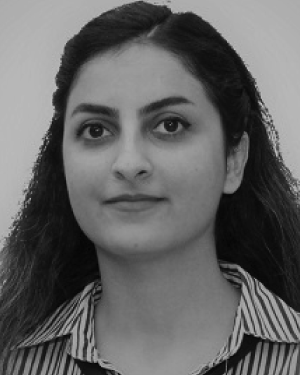 F. Karimzadeh合作论文数4Paria Najarzadeh Torbati合作论文数4
 Mohammad Hassan Moradi合作论文数4
 Mohammad Ali Nahayati合作论文数Department of Neurology, Mashhad University of Medical Sciences4
 Mohammadreza Pirmoradi合作论文数School of Behavioral Sciences and Mental Health, Iran University of Medical Sciences4
 Bentolhoda Ziaadini合作论文数Shariati Hospital, Tehran University of Medical Sciences;and.;Shariati Hospital, Tehran University of Medical Sciences4




