The aim of this article is to show that long-distance agreement (LDA) in Border Lakes Ojibwe (Central Algonquian) correlates not with topicality, as claimed in past literature, but with evidentiality (direct evidence), a finding that adds to the set of existing evidential extensions of non-evidential categories (e.g., the perfect in Georgian, participles in Lithuanian, the conditional in French) and bolsters the view that verbal agreement can also correlate with special semantics. Another important observation introduced in this article is that LDA in Ojibwe typically occurs in contexts involving verbs of perception and cognition known as transitive animate. Based on these observations, we propose that these verbs are associated with a set of ϕ-features on matrix v, while selecting an evidential feature. The latter is associated with an extended projection principle (EPP) property, which allows the embedded external or internal argument to raise to the specifier of embedded C. Finally, we show that LDA in Border Lakes Ojibwe has epistemic extensions, which have to do with the speaker’s probability and commitment towards information expressed. In this connection, we also propose that the evidential effect exhibited by LDA in Border Lakes Ojibwe is of the epistemic, rather than the illocutionary type.
This paper argues for an extension of current models of Agree to capture relativized EPP effects, where a probe for movement targets an element with a specific set of features. We support the proposal through a case study of long distance agreement (LDA) in the Border Lakes dialect of Ojibwe (Central Algonquian), where the patterns of LDA depend on the particular combination of person/animacy features of the embedded arguments. This can be captured by the feeding and bleeding relationships between agreement and movement probes on Voice, Infl, and C.
This article examines the properties of epistemic indefinites (EIs) when pluralized, focusing on the following puzzle: while ignorance is expressed by both singular and plural EIs in a number of languages, e.g. German, only the singular conveys ignorance in languages such as Spanish and French. What is the nature of this parameter? We propose that, despite appearances and, in contrast with the German situation, Spanish algunos and French quelques are not lexically related to singular epistemic algun and quelque, respectively.We show that, in these languages, singular EIs give rise to a conventional implicature - in the sense of Potts (2005) -, rather than a conversational implicature based on Gricean reasoning, as in Alonso-Ovalle & Menendez-Benito (2011) for Spanish: the ignorance expressed in Spanish and French is inherent to singular EIs. Using evidence from the inclusive/exclusive distinction (Krifka 1989; Sauerland 2003; Farkas & de Swart 2010; Mart & imath; 2020), we provide support for the idea that, despite plural morphology, the role of algunos EIs and quelques EIs is to express paucity (adding evidence for Mart & imath; 2015 proposal for Spanish).
This article examines the properties of epistemic indefinites (EIs) when pluralized, focusing on the following puzzle: while ignorance is expressed by both singular and plural EIs in a number of languages, e.g. German, only the singular conveys ignorance in languages such as Spanish and French. What is the nature of this parameter? We propose that, despite appearances and, in contrast with the German situation, algunos and French quelques are not lexically related to singular epistemic algún and quelque, respectively. We show that, in these languages, singular EIs give rise to a conventional implicature -- in the sense of Potts (2005)--, rather than a conversational implicature based on Gricean reasoning, as in Alonso-Ovalle & Menéndez-Benito (2011) for Spanish: the ignorance expressed in Spanish and French is inherent to singular EIs. Using evidence from the inclusive/exclusive distinction (Krifka 1989; Sauerland 2003; Farkas & de Swart 2010; Martí 2020), we provide support for the idea that, despite plural morphology, the role of algunos EIs and quelques EIs is to express paucity (adding evidence for Martí (2015) proposal for Spanish).
This chapter gives an overview of singulative systems, focusing on a few languages, including Arabic, Breton, Welsh. First, we introduce relevant data showing how a singulative noun is formed from a collective noun or a mass term. Second, we show that it is possible for singulative nouns to be pluralized and that, in some languages (e.g. Arabic), this plural contrasts semantically with the collective form. Third, we review existing accounts of singulatives and show that one main issue in the literature is whether the singulative operation is an inflectional or a derivational operation. Singulatives are interesting because they shed light on number and gender and show that, morphologically, the singular is not always unmarked.
The objective of this book is to develop a deeper understanding of the form and interpretation of number. Using insights from Generative syntax and Distributed Morphology, we develop a theory of distributed number, arguing that number can be associated with several functional heads and that these projections exist depending on the features they specify. In doing so, we make a strong claim for a close mapping between the syntactic structure and the semantics in the noun phrase, since each node corresponds to a different interpretation of number. Despite some technical implementations, the book is accessible to linguists working outside any particular syntax-semantic framework, since we propose generalizations that are applicable in many, if not all, models of grammar. The book focuses on Arabic, but also discusses a number of languages including English, French, Ojibwe, Blackfoot, Hebrew, Japanese, Korean, Chinese, Turkish, Persian, and Western Armenian.
The aim of this article is to identify a new case of historical variation involving Sub-word formation. Most, if not all, research on diachronic changes in generative grammar involves changes or innovations in the status of linguistic terminals from M-words to Sub-words or vice-versa, but seldom discusses historical changes within M-words. Using insights from Diertani (2011) and the operation affix migration, with the support of analogy, we give a formal account of the various changes that the suffix –a(t) went through in early Semitic (focusing on Arabic), and the various meanings it picked up along the way. We propose that innovations in the function of –a(t) arose in circumstances of analytical ambiguity: the number and gender-marking properties of –a(t) developed out of the reanalysis of a pre-existing morpheme (but with no eradication of the previous function(s)). Based on reconstruction studies, our account of –a(t) is comparative and deductive and is based on theoretical insights from Distributed Morphology as well as featural accounts of number (Noyer 1992, Nevins 2011, Harbour 2011, Harbour 2014).
We propose that pluralization of bare nouns in Western Armenian and Turkish is a two-step process. First, the noun is atomized giving a singular form (this is achieved via a null exponent of number under Num) and a new noun is created providing a brand new semi-lattice to serve as the underlying semantic domain. Second, the higher NumP operates morphosyntactically on the singular, and returns a set of atoms from the semi-lattice introduced by the higher n. This is a case of morphological compositionality where one number is built out of another. Our proposal gives a satisfying solution to the puzzle of how “indeterminate nouns” in these languages can express singularity and plurality, depending on the context.
The aim of this paper is to explain an unusual agreement pattern that arises between Tunisian Arabic broken plurals and their targets. For example, a verb may agree with a plural subject in all phi-features or, rather oddly, in singular/feminine, even when the subject (the controller) is masculine plural. Developing an idea first briefly sketched-but ultimately not adopted-by Zabbal (2002), we argue that broken plurals are hybrid nouns. Hybrid nouns have been the topic of much recent research (Corbett, 2000, 2015; den Dikken, 2001; Wechsler and Zlatic, 2003; Danon, 2011, 2013; Matushansky, 2013; Landau, 2015; Smith, 2015): either their syntactic or semantic features can be the target of agreement, creating the possibility of an agreement mismatch. Using Harbour's (2011, 2014) theory of number, coupled with some innovations, we provide the featural makeup of Tunisian Arabic broken plurals and contrast it with that of collectives, on the one hand, and sound plurals, on the other. We propose that the feminine agreement seen with broken plurals is associated with a [+ group] feature, one that is exponed as -a. In the course of the discussion, we will argue that all gender features are visible at IF (Hammerly, 2018) and that semantic agreement is routinely possible with nouns that are low on the Animacy Hierarchy.
This chapter discusses the properties of polysynthesis and noun incorporation in the languages of North America. Starting with the Humboldtian tradition, it discusses the history of the interrelation between polysynthesis and noun incorporation, especially in the context of North American languages. It also discusses the kinds of concepts that are encoded morphologically in polysynthetic languages, presenting details of Mattissen’s typological classification of polysynthesis. Contemporary analyses of noun incorporation and polysynthesis are discussed. In particular, we discuss Baker’s generative approaches to polysynthesis and noun incorporation, Mithun’s functionalist analysis of polysynthesis, and touch on Roberts’s microparametric approach to variation in the context of polysynthesis and noun incorporation. Central to all these discussions is the notion of whether polysynthesis and noun incorporation are obligatorily intertwined or not. While early research suggested that the two phenomena go hand-in-hand, especially in North America, more recent research shows they are not, a conclusion that has serious ramifications for the analysis of these two phenomena. The chapter ends with an outlook for future research on the topics raised here.
//static.cambridge.org/content/id/urn%3Acambridge.org%3Aid%3Aarticle%3AS0008413117000391/resource/name/firstPage-S0008413117000391a.jpg
This introduction discusses current trends in diachronic linguistics with a focus on syntactic change and reviews the fifteen other chapters included in the volume. In the spirit of modern diachronic syntax, the selected articles show that very general patterns of change, emergent, multigenerational diachronic phenomena, interact with small, discrete, local, intergenerational changes in the lexical specification of grammatical features. General topics include acquisition biases, cross-categorial word order generalizations, typological particularities and universals, language contact, and transitional changes, while specific linguistic topics include tense and viewpoint aspect, directional/aspectual affixes, V2, V3, Stylistic Fronting, directional/aspectual prefixes, negation, accusative and dative marking, analytic passives, complementizer agreement, and control and raising verbs.
The puzzle Like their sound plural (SP) counterparts, the φ-features of broken plurals (BP) subjects in Tunisian Arabic (TA) normally agree with the verb in gender and number but, as seen in (1), they can also fail to agree with the verb. Rjel ‘men’ is masculine plural while the verb is unexpectedly inflected in the feminine singular (in Standard Arabic, this is only possible with non-humans). Is this a case of agreement failure? (1) El The rjel man.bp xerj-u go.outperf-3.masc.pl / / xerj-et go.outperf-3.fem.sg ‘The men went out.’ [Tunisian Arabic] The proposal First, we show that the contrast in (1), gives rise to a semantic alternation, as first observed by Zabbal (2002), where masc plur agreement has a distributive interpretation, while fem sing agreement receives a collective interpretation. We build on Zabbal’s (2002) insights but re-evaluate them in light of recent developments in the syntax and semantics of plurality and distributivity, and we add relevant data showing that the collective-distributive contrast seen in (1) is not tied to the nature of the predicate. Zabbal makes a distinction between plurals denoting groups (g-plurals) and plurals denoting sums (s-plurals). He first argues that the g-plural is associated with N (making it lexical and derivational) while the s-plural is under Num (inflectional). We provide arguments and evidence for his second proposal, briefly introduced towards the end of his thesis, namely that the g-plural is in fact inflectional and thus not under N. In particular, we strengthen his intuition that the singulative is realized under the same head as the group reading. However, inspired by Borer (2005) and a number of authors, we identify this functional projection as Div and, contrary to what Zabbal proposes, we argue that SPs are in complementary distribution with BPs under Div where the singulative can also be found. We also show that non-matching broken plurals are not hybrid nouns in the sense of Landau (2016) and others (den Dikken 2001, Wechsler Zlatić 2003, Danon 2011, Smith 2015). Landau argues that hybrid nouns can trigger semantic agreement on the verb, with the semantic (index) φ-features differing from the morphological (concord) φ-features. This proposal, although sound for the Hebrew data he reviews, cannot apply to our data, since verbs in TA turn out to consistently agree with grammatical (not semantic) gender (in (1) ‘men’ is semantically masc). Next, we show that the distributive/collective contrast seen in (1) has nothing to do with the nature of the predicate. The application of the group operator that forms a group out of a set of individuals is free (de Vries 2015). Fem sing agreement is also possible with distributive predicates and masc pl agreement is also possible with collective predicates. This shows that the contrast between masc/pl and fem/sing agreement is related to how the subject noun is viewed by the speaker (as a homogeneous group versus a set of individuals) rather than closely tied to the predicate as in the case of the English collective-distributive distinction. Finally, we end the paper with a set of arguments that there is a position just above Div that hosts different kinds of plurals (double plurals, plurals of singualtives), arguing more generally that number can be distributed along the nominal spine (see also Harbour 2008, Wiltschko 2008, 2012, Butler 2012, Mathieu 2013, Gillon 2015, Kramer 2016).
The aim of this paper is to account for single and double plurals of Arabic under Borer's nominal theory of division (2005). In particular, we study these plurals in constructions where the agreement between the verb and the plural is deflected and make four proposals : 1) broken plurals are feminine (and singular) at an underlying level in contexts where the agreement is deflected, thus not representing failure of agreement, contrary to appearances; 2) when the broken plurals agree with the verb, distributive or collective interpretations arise, and when the broken plurals do not agree with the verb, only the collective interpretation can be generated as a result of the atomizing function of the feminine gender that is independently found in the context of the singulative; 3) the feminine broken plural constitutes the basis of the double plurals, so that the later surface at a higher level in the nominal structure, thus providing a second type of plural, with a counting function, while the plural generated under Div has an atomizing function; 4) the rules that we describe are quite predictable and productive, suggesting that the plurals studied in our paper are not lexical plurals.
L’objectif de cet article est de rendre compte des pluriels simples et doubles de l’arabe dans le cadre de la théorie des nominaux et de l’individuation de Borer (2005). En particulier, nous étudions ces pluriels dans les constructions où l’accord entre le verbe et le pluriel est déviant et faisons quatre propositions 1) les pluriels internes sont féminins (et singuliers) à un niveau sous-jacent dans les contextes où l’accord est déviant, ne représentant donc pas, contrairement aux apparences, d’échec d’appariement ; 2) lorsque les pluriels internes s’accordent avec le verbe, une interprétation distributive ou collective est établie, et lorsque les pluriels internes ne s’accordent pas avec le verbe, seule l’interprétation collective peut être générée, résultat de la fonction atomisante du féminin que l’on retrouve indépendamment dans le contexte du singulatif ; 3) le pluriel interne féminin constitue la base des doubles pluriels, si bien que ces derniers font surface à un niveau supérieur dans la structure nominale, offrant donc un deuxième type de pluriel, pourvu d’une fonction comptable, alors que celui généré sous la tête Div a une fonction atomisante ; 4) les règles que nous décrivons sont tout à fait prévisibles et productives, ce qui laisse supposer que les pluriels étudiés dans notre article ne sont pas des pluriels lexicaux.
The aim of this article is twofold. First, we claim that delta-features (discourse features), as well as phi-features, can be inherited from C to T (Richards 2007, Chomsky 2008), as shown by wh-agreement on T in Ojibwe (Algonquian). Our analysis supports Miyagawa's (2010) hypothesis that discourse and agreement features are two sides of the samecoin, which can be distributed differently crosslinguistically. Second, we propose that although phi and delta typically bundle together on a single C head, this is not the case in all languages and in fact will vary parametrically. Ojibwe clause typing is partitioned between agreement/phi-features on independent order (i.e., plain matrix) C and discourse/delta-features on conjunct order (e.g., embedded) C. This parameter, that certain features may or may not bundle on C, captures a significant cluster of properties in Ojibwe: Initial Change, lack of person prefixes in the conjunct order in contrast with the independent, as well as the availability of long-distance agreement. Our proposal supports the idea that much crosslinguistic variation reduces to the distinct feature structures making up functional heads, such as v, D, and C, rather than to primitives.
While we agree with Baker (2009) that noun incorporation (NI) is not a unified phenomenon cross-linguistically, we argue against his claim that head movement is still needed for NI in a number of languages (including Mohawk and Mapudungun). Our proposal is that NI involves phrasal movement. The motivation behind our proposal is that incorporated nominals can be much larger than bare roots with a structure incompatible with head movement. The empirical foundation for the phrasal movement claim comes primarily from Onondaga (qua Northern Iroquoian) and Ojibwe (qua Algonquian). In these languages, incorporated nouns appear with nominalizers and inflectional morphemes violating Baker’s (1996, 2003) Proper Head Movement Generalization. Our proposal about NI has important theoretical ramifications: while it has been popular to build words in polysynthetic languages in the syntax via head movement, we view “wordhood” and the polysynthetic properties of such languages as a phonological phenomenon (Déchaine 1999; Branigan et al. 2005; Compton and Pittman 2010).
Abstract Inspired by Richards (2010), the hypothesis of this chapter is that whether a language is a wh in situ or a wh movement language depends entirely on whether the language associates focus with prosody in a purely demarcative fashion. The chapter concentrates on French wh in situ. It proposes that, although CP is universal, variation in question formation is conditioned independently by prosodic factors. The logic of this proposal is compatible with the idea that syntax is mainly invariant but pushes the idea that externalization is radical in that it does away with “strength” parameters completely. In Chomsky’s system, some variation is kept in syntax by way of features (strong or weak), especially for cases such as the wh parameter. Since the hypothesis of this paper abandons such features, its theoretical stance is much closer to that of Boeckx (2012, 2014), who claims that syntactic parameters simply do not exist.
Michael Zimmermann, Expletive and Referential Subject Pronouns in Medieval French. (Linguistische Arbeiten, 556.)Berlin: de Gruyter, 2014, x + 246 pp. 978 3 11 037337 0 (relié), 978 3 11 036747 8 (numérique, PDF), 978 3 11 039430 6 (numérique, EPUB) - Volume 26 Issue 2
 Myriam Dali合作论文数8Bethany Lochbihler合作论文数5Alastair Butler合作论文数5Michael Barrie合作论文数Department of Linguistics, University of Ottawa5
 Ioanna Sitaridou合作论文数Faculty of Modern and Medieval Languages and Linguistics, University of Cambridge3
 Christopher Hammerly合作论文数Department of Linguistics, University of British Columbia2
 Hans van de Koot合作论文数Division of Psychology and Language Sciences, Faculty of Brain Sciences, University College London2Jeff Mielke合作论文数1Michael Yoshitaka Erlewine合作论文数1Emily Elfner合作论文数1Walcir Cardoso合作论文数1Sabine Bartsch合作论文数1Nigel Armstrong合作论文数1Marie-Hélène Côté合作论文数1Gita Zareikar合作论文数1Norman Yeo合作论文数1
 kathleen j brannen合作论文数1Jovana Gajic合作论文数1
 Ivano Caponigro合作论文数Linguistics Department, Division of Social Sciences, University of California, San Diego1
 Randall Gess合作论文数1Francis Nolan合作论文数1Michelle Sheehan合作论文数Newcastle University1Will Oxford合作论文数1Mireille Tremblay合作论文数1
 Andrzej Porzuczek合作论文数university of silesia in katowice1Anamaria Falaus合作论文数CNRS1
 Robert Truswell合作论文数Linguistics and English Language, School of Philosophy, Psychology and Language Sciences, The University of Edinburgh1Susana Béjar合作论文数Department of Linguistics, Faculty of Arts and Science, University of Toronto1
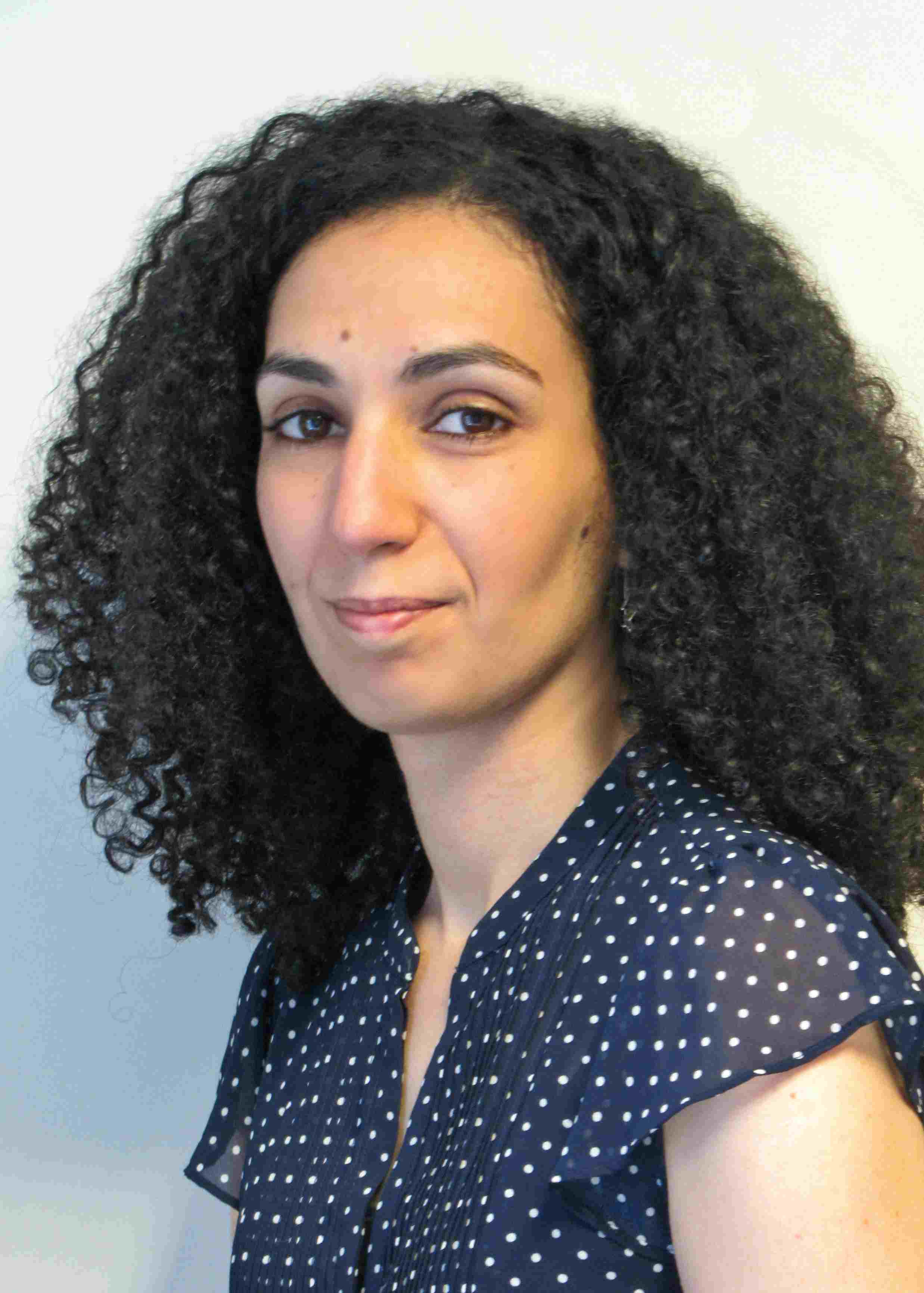 Fatima Hamlaoui合作论文数Department of French, Faculty of Arts and Science, University of Toronto1
 Carson Schütze合作论文数Department of Linguistics, College of Humanities, University of California1
 Andrew Nevins合作论文数Division of Psychology and Language Sciences, Faculty of Brain Sciences, University College London1
 Jonathan David Bobaljik合作论文数Department of Linguistics, Faculty of Arts and Sciences, Harvard University1
 Lyn Frazier合作论文数Department of Linguistics, College of Humanities & Fine Arts, University of Massachusetts Amherst1
 Khattab Ghada合作论文数1
 Arthur Stepanov合作论文数University of Connecticut1
 Ewa Waniek-Klimczak合作论文数University of Łódź1
 Barbara De Cock合作论文数1Terry Nadasdi合作论文数Dept Linguist, Univ Alberta1
 Barbara Hemforth合作论文数Laboratoire Parole et Langage, Université de Provence1
 Isabel Oltra-Massuet合作论文数1I. Sitaridou合作论文数1Trudel Meisenburg合作论文数1
 Duk-Ho An合作论文数1
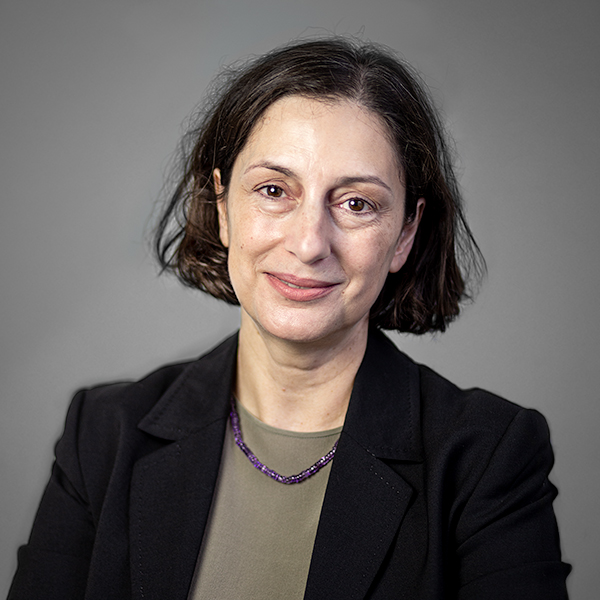 Artemis Alexiadou合作论文数Institute of German Language and Linguistics, Humboldt Universität zu Berlin;Leibniz-Centre General Linguistics;Department of English and American Studies, Humboldt Universität zu Berlin1
 Lisa A. Reed合作论文数Mosquito Research and Control;Department of Entomology;Rutgers University;Department of Entomology, Rutgers University1
 Halldór Ármann Sigurðsson合作论文数Lund University1Wladyslaw Cichocki合作论文数1
 Mercedes Tubino-Blanco合作论文数University of Arizona1
 Hélène Blondeau合作论文数Gillian Sankoff et Anne Charity1




