Global Virtual Teams (GVTs) based projects provide a robust experiential learning environment to develop and enhance the global mind set and workforce readiness of dispersed teams. Yet, this learning environment can be negatively impacted by inherent team conflict, as described in this study through an incident that emerged in an online student collaboration platform (X-Culture). We view this incident through the lens of cultural intelligence and recommend that the design of pedagogy and interventions around GVST interactions can greatly improve the metacognitive intelligence of each participant and enhance the likelihood of successful GVT engagement through active conflict resolution. Key communications, informant interviews, e-mails and web board discussions were triangulated to demonstrate that lack of cultural intelligence and trust are the genesis of conflict between team members in multicultural GVTs. We conclude with recommendations for pedagogical and managerial practice that include pre-engagement preparatory development for GVTs.
This study examines how Indian social enterprises navigate persistent paradoxes through jugaad, a culturally embedded logic of frugal, flexible, and inclusive innovation. Drawing on case studies of Aravind Eye Care System and Dr. Shroff Charity Eye Hospital, we identify five recurring practices: frugality, adaptive innovation, social inclusivity, community engagement, and ethical decision-making. Unlike formal mechanisms emphasised in Western contexts, these grassroots practices emerge from local values and improvisation, forming a coherent innovation logic that sustains economic, social, environmental, and ethical goals. The study extends paradox theory to the Global South and reframes jugaad as a systematic, replicable pathway to sustainability.
Purpose This study aims to present a sustainability framework that advances the conceptual understanding of the role of spirituality in the context of social entrepreneurship. Design/methodology/approach Through a systematic literature review of spirituality at both the individual and organisational levels, the triple bottom line framework of sustainability, and business ethics, this study offers a sustainability framework for social entrepreneurship. It explains how spirituality at these levels influences various dimensions of social entrepreneurship and helps achieve social, economic, environmental and ethical outcomes. Findings The study proposed that individuals with spiritual practices are more likely to engage in entrepreneurial, social, ethical and environmental orientations, while organisations with spiritual practices are more likely to engage in employee, market and ethical orientations. Spiritual capability can serve as a strategic advantage and contribute to the sustainable development of social enterprises. Originality/value This study makes three significant contributions. First, it presents an emergent framework for integrating spirituality (at both individual and organisational levels) and sustainability within the social entrepreneurship literature, offering implications for both social entrepreneurs and social enterprises. Second, this study proposes incorporating ethics as the fourth dimension of sustainability and argues that spirituality can act as a catalyst for achieving sustainability in social entrepreneurship. Third, this study identifies seven critical dimensions of social entrepreneurship: spiritual capabilities, entrepreneurial orientation, social orientation, environmental orientation, market orientation, ethical orientation and employee orientation, all of which contribute to ethical and sustainable development.
This study aims to map cultural changes in the transformational journey of an Indian public sector bank (PSB) using longitudinal data collected at three different points. This study investigates the relationship between Organizational Culture (OC) and the financial performance. The survey was conducted out using the Organizational Culture Assessment Instrument (OCAI) based on the competing values framework. The findings revealed an emerging pattern between changing culture and financial performance of the Bank culture indicating a shift from clan culture of pre-change initiatives to market culture of phase 1 to primacy of market culture of phase 2, in phase 3 hierarchy was the dominant culture. The findings contradict the extant literature that categorizes public sector employees as resistant to change, adapting to the top leader’s mission in this case. This study maps cultural change in PSB through a longitudinal study using Competing Value Framework (CVF) in an emerging market context, examining the past (then), current, and preferred culture.
This phenomenological study seeks to explore the life experiences of the participants to gain a holistic understanding of retirement transition in the urban Indian context. In-depth semi-structured interviews were conducted with 15 individuals within a period of five years of retirement. Seven emergent themes: 1) preparation preceding retirement; 2) retirement as a process; 3) significant changes; 4) role of family; 5) religion and spirituality; 6) gender variation in retirement; 7) opinions on retirement based on the adage 60-is-the-new-40. The unique contribution of this study lies in describing retirement as an opportunity to pursue a path of spirituality to achieve self-discovery largely by surrendering to God and discuss role of spirituality in resolving conflict in eighth stage of Erikson between ego integrity and despair. The study explained the significance of Bronfenbrenner's ecological model to highlight the interactions between an individual and its environment in retirement experience.
Spiritual intelligence (SI) has been gaining popularity as a concept among academicians and the general public since its inception. In the COVID world, many people are suffering from the problems of stress, anxiety and depression, and SI presents a promising solution. It is often confused with spirituality. We tried to highlight their difference by separately defining them. Though many attempts have been made to conceptualize SI by researchers worldwide, efforts to define it from Nichiren Buddhism are limited. This study aims to fill this gap. It’s an exploratory study based on qualitative research methods using ‘Gosho’ as the data source. Inductive content analysis is used to analyze the data. A total of seven themes emerged for SI, suggesting that we can achieve “absolute happiness”. Further, a multilayered model is proposed to represent the themes. This article discusses the implications of SI for conscious leadership and ends with future research directions.
This study aims to expand the horizons of social entrepreneurship (SE) through indigenous research. We conducted a systematic literature review and Pareto analysis tool to determine the ‘critical’ dimensions of SE and identified gaps in the literature regarding indigenous contributions to SE. We identified four indigenous constructs: karma yoga, lokasamgraha, swadeshi, and jugaad. Karma yoga and lokasamgraha were identified through the qualitative content analysis of the Bhagavad Gita, while swadeshi and jugaad were identified in contemporary Indian philosophy and culture. We provided a framework and proposed these constructs’ unique contributions to SE. We also discussed the implications, limitations, and future research directions.
This study aims to investigate the role of the indigenous construct lokasamgraha in the context of social entrepreneurship. We identified lokasamgraha through content analysis of the Bhagavad Gita, employing the methodological approaches proposed by Bhawuk (2010). Using the lens of paradox theory, we investigated commonly accepted tensions in social enterprises. We developed a framework to explain how lokasamgraha can assist social enterprises in managing tensions and achieving the triple bottom-line. Furthermore, we validated this framework by citing a lokasamgraha-based social enterprise in India. Finally, before concluding, we discussed the implications and future research directions.
India had for centuries been the centre of Indian Ocean trade and has had long history of intercultural exchanges starting from ancient period silk route to the liberalization of economy. After independence many multinational companies set up operations in India. Foreign invasions as well as cultural exchange led Indians to develop ability to adapt to diverse situations. Unique Indian culture and cultural interface with other cultures enhanced the trait of tolerance and mutual acceptance and respect. Cultural adaptation and integration led to the emergence of pluralistic nature which remains a key factor in the success of organizations in India. Present chapter aims at mapping socio-cultural changes during the economic phases in India from Vedic and Puranic period to the fourth Industrial Revolution and aims to decipher the impact of the socio-cultural milieu on business and business organization in India. This Chapter ends with pointers for future research in the domain of interface between societal culture and management practices in organizations operating in India.
Spiritual intelligence (SI) has been looked at as a possible solution to alleviate the suffering of the world from problems like stress, anxiety and depression. Organisations also incur huge losses due to these. Several attempts have been made to develop the construct of SI by academicians around the world. This study fills the gap of limited efforts to conceptualise SI from the scriptures' perspective, rooting in two popular religious philosophies: Hinduism and Christianity. This exploratory study is based on qualitative research methods. Data sources used are 'Bhagavad Gita' and 'Bible'. Seven SI themes emerged via inductive content analysis - purpose of human life, self, nature, faith, worship, transcendence and interpersonal relations. Study proposes a SI model and its relation to three layers of OB. Article ends with the suggestions for future research avenues in SI. This study contributes to the holistic conceptualisation of SI and its usability in organisations.
In this work, we have analyzed the perceptions of Master of Business Administration (MBA) enrolled job-seekers towards video resumes along with determining the reasons for preference and non-preference for it. We administered 210 semi-structured self-designed questionnaires among MBA enrolled candidates looking for internships or final year placements of various Indian Universities. They were asked to use a video resume platform followed by filling up a semi-structured questionnaire focussed on gathering viewpoints about the perceived interface features, fairness, validity, privacy. Qualitative data analysis was also done to determine the reasons affecting user’s adoption of platform driven services. Video resumes hosted on video-sharing platforms offer a unique opportunity to both the sides concerned i.e. the job applicant as well as the recruiter. Research on determining video resumes from job applicants’ viewpoints is scarce and this study will add to the paucity of research pool on this topic. Moreover, this is the first study to highlight the issue of security and privacy of video resume platforms and, provide technical recommendations to these platforms from the applicants’ perspective. With this study we hope to reach out to recruiters (practitioners), job-seekers, researchers and information system application developers for better acceptability of the product.
The purpose of this exploratory study is to explore worldview of budding Indian management professionals. Taking an interpretivist epistemological position, this paper attempt to address the ontological perspective of Indians. Respondents were asked to write their views on 'What is reality according to people around you?' Followed by one 90-minute focus group discussion (FGD) and two in-depth interviews were conducted. Four types of analyses were conducted to minimise researcher bias and touch deeper layer of meaning. Based on Schein's layers of culture, the paper ends by proposing multiple layers in Indian culture namely, basic assumptions, values and artefacts. Paper conjecture 'go with the flow' or samarpan (devotion) as the deep-rooted philosophy or basic assumption that influences Indian values and practices. Typical Indian values: faith in God, paradoxical mindset, family orientation, contextual sensitivity, and tolerance. The physical artefacts: jugaad, adaptability, visit to temples, prayers, fasting, yoga, meditation and tolerance for ambiguity.
Current paper is an overview of qualitative research. It starts with discussing meaning of research and links it with a framework of experiential learning. Complexity of socio-political environment can be captured with methodologies appropriate to capture dynamism and intricacy of human life. Qualitative research is a process of capturing lived-in experiences of individuals, groups, and society. It is an umbrella concept which involves variety of methods of data collection such as interviews, observations, focused group discussions, projective tools, drawings, narratives, biographies, videos, and anything which helps to understand world of participants. Researcher is an instrument of data collection and plays a crucial role in collecting data. Main steps and key characteristics of qualitative research are covered in this paper. Reader would develop appreciation for methodiness in qualitative research. Quality of qualitative research is explained referring to aspects related to rigor, worthiness of topic in interpretivist research. This paper presents challenges of qualitative research in terms of thinking of qualitative research, doing of qualitative research, and trustworthiness.
PurposeThe purpose of this paper is to propose a framework to improve the effectiveness of university–industry collaboration (UIC). This work enhances the existing body of literature and knowledge regarding collaboration and offers concrete steps to be taken for effective collaboration between universities and industries.Research MethodologyA literature review to study the best practices, impediments to collaboration and the various models proposed in the past for successful UIC was conducted. A workshop and focus-group meetings of practitioners and academic researchers was designed and organised to explore the current state of the university–industry engagement within the Australian Capital Territory (ACT) region and gather inputs regarding possible approaches to improve collaboration. The findings from the literature review and the results from this qualitative research regarding the approaches to improve the effectiveness of the collaboration were analysed.Results and implicationsThe study discovers that various measures have been proposed in the form of best practices or models to improve the effectiveness of UIC. However, these measures often address a specific concern such as technology transfer, intellectual property (IP), etc. There is a scope for a comprehensive holistic framework to address many aspects of UIC in order to improve effectiveness and achieve success. A framework for improving the effectiveness of collaboration considering a comprehensive list of factors operating in a broad context within the collaboration system was proposed.Originality/valueThe framework builds on previous literature dealing with measures for successful UIC. However, it is the first of its kind, in the researcher's knowledge, in terms of comprehensiveness of the factors contributing to establishing and sustaining successful collaboration. The value of the individual experience of the participants in this qualitative research, which is on average more than 10 years in the software engineering field, validates the importance and quality of the data collected. The addition of these results to the framework increases its validity.The framework can be utilised by universities and industry practitioners to foster successful and effective collaboration. The results have significant relevance, particularly within the Australian context as the government has intensified the adoption of measures to encourage and improve collaboration between universities and the industry.
University-industry (U-I) collaboration has gained increased attention in recent years. Several best practices and models have been proposed to address the problem of establishing U-I collaborations and improving their effectiveness. It is important for the stakeholders to analyze and evaluate the effectiveness of their collaborative efforts in order to identify and adopt improvements. One way to assess effectiveness is through the maturity models approach that has been applied successfully in other areas such as quality assurance, knowledge management, and business processes. Our literature review indicates a lack of existing collaboration maturity models. In this paper, we present the University-industry Collaboration Maturity Model (UICMM) - a collaboration maturity model based on the thorough review of best practices for collaboration described in existing literature, and existing maturity models relevant to collaborations. UICMM is intended to be a useful benchmarking tool for a range of stakeholders including universities and industry to assess and benchmark their collaborative efforts. The underlying hypothesis while developing this maturity model is that a higher level of maturity will lead to increased collaboration and improved outcomes.
Subject area Organizational diagnosis. The case addresses the issue of an outsider at a senior position in a family-run business. Study level/applicability MBA. Case overview NCR-Delhi is a multi-specialty hospital in Delhi and is essentially a family-run business. Though it had done well in the early years since its inception, it had been plagued by many problems and had undergone many changes in management and processes. An outsider joined it as the Facility Director (FD) two years ago. In these two years, he introduced multi-directional changes. However, he has not been able to achieve a complete turnaround of the hospital. The major issues facing him are financial, operational and personnel-related issues. The hospital is currently in a major financial crisis, which has been causing delays in disbursement of salaries and creating resource crunches in daily operations. Most of the patients are government empanelled patients, and collection of payments from such patients usually takes at least three months. Employee attrition and customer satisfaction are also continuing challenges. Other issues include lack of proper support and interference from top management. The FD has been showing considerable prowess and capability in leading the organization, but has not been able to achieve the desired results owing to the above factors. Expected learning outcomes To understand the frameworks and process of organizational diagnosis; to understand the influence of change initiatives on organizational culture; and to understand the complexity of family business and what happens when an outsider leader joins family business. Supplementary materials Teaching Notes are available for educators only. Please contact your library to gain login details or email support@emeraldinsight.com to request teaching notes. Subject code CSS 6: Human Resource Management.
Preparing Software Engineering graduates with skills to satisfy the demands of industry has always been a challenge for universities. One way to overcome this challenge is to provide students with an authentic team project experience. Authentic student projects are those that are as close as possible to real projects in terms of uncertainty, complexity and diversity. In order to achieve this, collaboration with business and other external stakeholders is essential. However, such collaboration is often hindered by constraints around team structure, team and individual student assessment, the use of specific processes and technology, providing technical and other support, and fixed project durations. In this paper, we present a simple course structure and assessment process that has allowed us to remove the majority of such constraints, while maintaining integrity around student learning and assessment. By removing these constraints, we are providing students with authentic team project experiences that prepare them well for future employment. Preliminary evaluations of our approach indicate that despite several challenges, the experience has led to high levels of satisfaction among students and our external partners including employers.
 Rajen K. Gupta合作论文数19
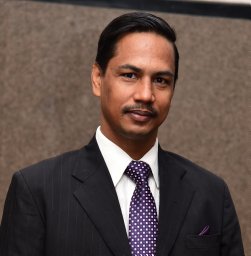 Diwakar Singh合作论文数5
 Shayne Flint合作论文数Engineering and Computer Science, Australian National University5
 Richard Jones合作论文数3C. Vijayalakshmi合作论文数3
 Ramesh Sankaranarayana合作论文数ANU College of Engineering and Computer Science3
 Richa Kathuria合作论文数2
 Apoorva Goel合作论文数Dept Management Studies DoMS, Indian Inst Technol Madras2
 Sumati Varma合作论文数2Manasa Narayan合作论文数1kalpana narain合作论文数1
 Tanuja Sharma合作论文数1
 Rishika Nayyar合作论文数Int Business, Indian Inst Foreign Trade1
 Monica Adya合作论文数Marquette University1
 Satish K. Kalra合作论文数1




