Progress in gravitational-wave (GW) astronomy depends upon having sensitive detectors with good data quality. Since the end of the Laser Interferometer Gravitational-Wave Observatory-Virgo-KAGRA third Observing run in March 2020, detector-characterization efforts have lead to increased sensitivity of the detectors, swifter validation of GW candidates and improved tools used for data-quality products. In this article, we discuss these efforts in detail and their impact on our ability to detect and study GWs. These include the multiple instrumental investigations that led to reduction in transient noise, along with the work to improve software tools used to examine the detectors data-quality. We end with a brief discussion on the role and requirements of detector characterization as the sensitivity of our detectors further improves in the future Observing runs.
We present the results of a search for gravitational-wave transients associated with core-collapse supernova SN 2023ixf, which was observed in the galaxy Messier 101 via optical emission on 2023 May 19, during the LIGO–Virgo–KAGRA 15th Engineering Run. We define a five-day on-source window during which an accompanying gravitational-wave signal may have occurred. No gravitational waves have been identified in data when at least two gravitational-wave observatories were operating, which covered ∼14% of this five-day window. We report the search detection efficiency for various possible gravitational-wave emission models. Considering the distance to M101 (6.7 Mpc), we derive constraints on the gravitational-wave emission mechanism of core-collapse supernovae across a broad frequency spectrum, ranging from 50 Hz to 2 kHz, where we assume the gravitational-wave emission occurred when coincident data are available in the on-source window. Considering an ellipsoid model for a rotating proto-neutron star, our search is sensitive to gravitational-wave energy 1 × 10 −4 M ⊙ c 2 and luminosity 2.6 × 10 −4 M ⊙ c 2 s −1 for a source emitting at 82 Hz. These constraints are around an order of magnitude more stringent than those obtained so far with gravitational-wave data. The constraint on the ellipticity of the proto-neutron star that is formed is as low as 1.08, at frequencies above 1200 Hz, surpassing past results.
On May 24, 2023, the Advanced Laser Interferometer Gravitational-Wave Observatory (LIGO), joined by the Advanced Virgo and KAGRA detectors, began the fourth observing run for a two-year-long dedicated search for gravitational waves. The LIGO Hanford and Livingston detectors have achieved an unprecedented sensitivity to gravitational waves, with an angle-averaged median range to binary neutron star mergers of 152 and 160 Mpc, and duty cycles of 65.0% and 71.2%, respectively, with a coincident duty cycle of 52.6%. The maximum range achieved by the LIGO Hanford detector is 165 Mpc and the LIGO Livingston detector 177 Mpc, both achieved during the second part of the fourth observing run. For the fourth run, the quantum-limited sensitivity of the detectors was increased significantly due to the higher intracavity power from laser system upgrades and replacement of core optics, and from the addition of a 300 m filter cavity to provide the squeezed light with a frequency-dependent squeezing angle, part of the Athorn upgrade program. Altogether, the Athorn upgrades led to reduced detector-wide losses for the squeezed vacuum states of light which, alongside the filter cavity, enabled broadband quantum noise reduction of up to 5.2 dB at the Hanford observatory and 6.1 dB at the Livingston observatory. Improvements to sensors and actuators as well as significant controls commissioning increased low frequency sensitivity. This paper details these instrumental upgrades, analyzes the noise sources that limit detector sensitivity, and describes the commissioning challenges of the fourth observing run.
We present Fermi Gamma-ray Burst Monitor (Fermi-GBM) and Swift Burst Alert Telescope (Swift-BAT) searches for gamma-ray/X-ray counterparts to gravitational wave (GW) candidate events identified during the third observing run of the Advanced LIGO and Advanced Virgo detectors. Using Fermi-GBM on-board triggers and sub-threshold gamma-ray burst (GRB) candidates found in the Fermi-GBM ground analyses, the Targeted Search and the Untargeted Search, we investigate whether there are any coincident GRBs associated with the GWs. We also search the Swift-BAT rate data around the GW times to determine whether a GRB counterpart is present. No counterparts are found. Using both the Fermi-GBM Targeted Search and the Swift-BAT search, we calculate flux upper limits and present joint upper limits on the gamma-ray luminosity of each GW. Given these limits, we constrain theoretical models for the emission of gamma-rays from binary black hole mergers.
The Heisenberg uncertainty principle dictates that the position and momentum of an object cannot be simultaneously measured with arbitrary precision, giving rise to an apparent limitation known as the standard quantum limit (SQL). Gravitational-wave detectors use photons to continuously measure the positions of freely falling mirrors and so are affected by the SQL. We investigated the performance of the Laser Interferometer Gravitational-Wave Observatory (LIGO) after the experimental realization of frequency-dependent squeezing designed to surpass the SQL. For the LIGO Livingston detector, we found that the upgrade reduces quantum noise below the SQL by a maximum of three decibels between 35 and 75 hertz while achieving a broadband sensitivity improvement, increasing the overall detector sensitivity during astrophysical observations.
Despite the growing number of confident binary black hole coalescences observed through gravitational waves so far, the astrophysical origin of these binaries remains uncertain. Orbital eccentricity is one of the clearest tracers of binary formation channels. Identifying binary eccentricity, however, remains challenging due to the limited availability of gravitational waveforms that include effects of eccentricity. Here, we present observational results for a waveform-independent search sensitive to eccentric black hole coalescences, covering the third observing run (O3) of the LIGO and Virgo detectors. We identified no new high-significance candidates beyond those that were already identified with searches focusing on quasi-circular binaries. We determine the sensitivity of our search to high-mass (total mass $M>70$ $M_\odot$) binaries covering eccentricities up to 0.3 at 15 Hz orbital frequency, and use this to compare model predictions to search results. Assuming all detections are indeed quasi-circular, for our fiducial population model, we place an upper limit for the merger rate density of high-mass binaries with eccentricities $0 < e \leq 0.3$ at $0.33$ Gpc$^{-3}$ yr$^{-1}$ at 90\% confidence level.
The magnetar SGR 1935+2154 is the only known Galactic source of fast radio bursts (FRBs). FRBs from SGR 1935+2154 were first detected by the Canadian Hydrogen Intensity Mapping Experiment (CHIME)/FRB and the Survey for Transient Astronomical Radio Emission 2 in 2020 April, after the conclusion of the LIGO, Virgo, and KAGRA Collaborations' O3 observing run. Here, we analyze four periods of gravitational wave (GW) data from the GEO600 detector coincident with four periods of FRB activity detected by CHIME/FRB, as well as X-ray glitches and X-ray bursts detected by NICER and NuSTAR close to the time of one of the FRBs. We do not detect any significant GW emission from any of the events. Instead, using a short-duration GW search (for bursts <= 1 s) we derive 50% (90%) upper limits of 10(48) (10(49)) erg for GWs at 300 Hz and 10(49) (10(50)) erg at 2 kHz, and constrain the GW-to-radio energy ratio to <= 10(14)-10(16). We also derive upper limits from a long-duration search for bursts with durations between 1 and 10 s. These represent the strictest upper limits on concurrent GW emission from FRBs.
Magnetars are neutron stars with exceptionally strong dipole magnetic fields which are observed to display a range of x-ray flaring behavior, but the flaring mechanism is not well understood. The third observing run of Advanced LIGO and Virgo extended from April 1, 2019 to March 27, 2020, and contained x-ray flares from known magnetar SGR 1935+2154, as well as the newly-discovered magnetar, Swift J1818-1607. We search for gravitational waves coincident with these magnetar flares with minimally modeled, coherent searches which specifically target both short-duration gravitational waves produced by excited f-modes in the magnetar's core, as well as long-duration gravitational waves motivated by the Quasi-Periodic Oscillations observed in the tails of giant flares. In this paper, we report on the methods and sensitivity estimates of these searches, and the astrophysical implications.
Among the various candidates for dark matter (DM), ultralight vector DM can be probed by laser interferometric gravitational wave detectors through the measurement of oscillating length changes in the arm cavities. In this context, KAGRA has a unique feature due to differing compositions of its mirrors, enhancing the signal of vector DM in the length change in the auxiliary channels. Here we present the result of a search for $U(1)_{B-L}$ gauge boson DM using the KAGRA data from auxiliary length channels during the first joint observation run together with GEO600. By applying our search pipeline, which takes into account the stochastic nature of ultralight DM, upper bounds on the coupling strength between the $U(1)_{B-L}$ gauge boson and ordinary matter are obtained for a range of DM masses. While our constraints are less stringent than those derived from previous experiments, this study demonstrates the applicability of our method to the lower-mass vector DM search, which is made difficult in this measurement by the short observation time compared to the auto-correlation time scale of DM.
Gravitational lensing by massive objects along the line of sight to the source causes distortions to gravitational wave (GW) signals; such distortions may reveal information about fundamental physics, cosmology, and astrophysics. In this work, we have extended the search for lensing signatures to all binary black hole events from the third observing run of the LIGO-Virgo network. We search for repeated signals from strong lensing by (1) performing targeted searches for subthreshold signals, (2) calculating the degree of overlap among the intrinsic parameters and sky location of pairs of signals, (3) comparing the similarities of the spectrograms among pairs of signals, and (4) performing dual-signal Bayesian analysis that takes into account selection effects and astrophysical knowledge. We also search for distortions to the gravitational waveform caused by (1) frequency-independent phase shifts in strongly lensed images, and (2) frequency-dependent modulation of the amplitude and phase due to point masses. None of these searches yields significant evidence for lensing. Finally, we use the nondetection of GW lensing to constrain the lensing rate based on the latest merger-rate estimates and the fraction of dark matter composed of compact objects.
Advanced LIGO and Advanced Virgo have detected gravitational waves from astronomical sources to open a new window on the Universe. To explore this new realm requires an exquisite level of detector sensitivity, meaning that the much stronger signal from instrumental and environmental noise must be rejected. Selected examples of unwanted noise in Advanced LIGO are presented. The initial focus is on how the existence of this noise (characterized by particular frequencies or time intervals) was discovered. Then, a variety of methods are used to track down the source of the noise, e.g., a fault within the instruments or coupling from an external source. The ultimate goal of this effort is to mitigate the noise by either fixing equipment or by augmenting methods to suppress the coupling to the environment.
Quantum noise imposes a fundamental limitation on the sensitivity of interferometric gravitational -wave detectors like LIGO, manifesting as shot noise and quantum radiation pressure noise. Here, we present the first realization of frequency-dependent squeezing in full-scale gravitational-wave detectors, resulting in the reduction of both shot noise and quantum radiation pressure noise, with broadband detector enhancement from tens of hertz to several kilohertz. In the LIGO Hanford detector, squeezing reduced the detector noise amplitude by a factor of 1.6 (4.0 dB) near 1 kHz; in the Livingston detector, the noise reduction was a factor of 1.9 (5.8 dB). These improvements directly impact LIGO's scientific output for high-frequency sources (e.g., binary neutron star postmerger physics). The improved low -frequency sensitivity, which boosted the detector range by 15%-18% with respect to no squeezing, corresponds to an increase in the astrophysical detection rate of up to 65%. Frequency-dependent squeezing was enabled by the addition of a 300-meter-long filter cavity to each detector as part of the LIGO A thorn upgrade.
The global network of gravitational-wave observatories now includes five detectors, namely LIGO Hanford, LIGO Livingston, Virgo, KAGRA, and GEO 600. These detectors collected data during their third observing run, O3, composed of three phases: O3a starting in 2019 April and lasting six months, O3b starting in 2019 November and lasting five months, and O3GK starting in 2020 April and lasting two weeks. In this paper we describe these data and various other science products that can be freely accessed through the Gravitational Wave Open Science Center at https://gwosc.org. The main data set, consisting of the gravitational-wave strain time series that contains the astrophysical signals, is released together with supporting data useful for their analysis and documentation, tutorials, as well as analysis software packages.
We present a search for dark photon dark matter that could couple to gravitational-wave interferometers using data from Advanced LIGO and Virgo's third observing run. To perform this analysis, we use two methods, one based on cross-correlation of the strain channels in the two nearly aligned LIGO detectors, and one that looks for excess power in the strain channels of the LIGO and Virgo detectors. The excess power method optimizes the Fourier Transform coherence time as a function of frequency, to account for the expected signal width due to Doppler modulations. We do not find any evidence of dark photon dark matter with a mass between $m_{\rm A} \sim 10^{-14}-10^{-11}$ eV/$c^2$, which corresponds to frequencies between 10-2000 Hz, and therefore provide upper limits on the square of the minimum coupling of dark photons to baryons, i.e. $U(1)_{\rm B}$ dark matter. For the cross-correlation method, the best median constraint on the squared coupling is $\sim2.65\times10^{-46}$ at $m_{\rm A}\sim4.31\times10^{-13}$ eV/$c^2$; for the other analysis, the best constraint is $\sim 2.4\times 10^{-47}$ at $m_{\rm A}\sim 5.7\times 10^{-13}$ eV/$c^2$. These limits improve upon those obtained in direct dark matter detection experiments by a factor of $\sim100$ for $m_{\rm A}\sim [2-4]\times 10^{-13}$ eV/$c^2$, and are, in absolute terms, the most stringent constraint so far in a large mass range $m_A\sim$ $2\times 10^{-13}-8\times 10^{-12}$ eV/$c^2$.
We present directed searches for continuous gravitational waves from the neutron stars in the Cassiopeia A (Cas A) and Vela Jr. supernova remnants. We carry out the searches in the LIGO data from the first six months of the third Advanced LIGO and Virgo observing run, using the Weave semi-coherent method, which sums matched-filter detection-statistic values over many time segments spanning the observation period. No gravitational wave signal is detected in the search band of 20--976 Hz for assumed source ages greater than 300 years for Cas A and greater than 700 years for Vela Jr. Estimates from simulated continuous wave signals indicate we achieve the most sensitive results to date across the explored parameter space volume, probing to strain magnitudes as low as ~$6.3\times10^{-26}$ for Cas A and ~$5.6\times10^{-26}$ for Vela Jr. at frequencies near 166 Hz at 95% efficiency.
We present the first results from an all-sky all-frequency (ASAF) search for an anisotropic stochastic gravitational-wave background using the data from the first three observing runs of the Advanced LIGO and Advanced Virgo detectors. Upper limit maps on broadband anisotropies of a persistent stochastic background were published for all observing runs of the LIGO-Virgo detectors. However, a broadband analysis is likely to miss narrowband signals as the signal-to-noise ratio of a narrowband signal can be significantly reduced when combined with detector output from other frequencies. Data folding and the computationally efficient analysis pipeline, {\tt PyStoch}, enable us to perform the radiometer map-making at every frequency bin. We perform the search at 3072 {\tt{HEALPix}} equal area pixels uniformly tiling the sky and in every frequency bin of width $1/32$~Hz in the range $20-1726$~Hz, except for bins that are likely to contain instrumental artefacts and hence are notched. We do not find any statistically significant evidence for the existence of narrowband gravitational-wave signals in the analyzed frequency bins. Therefore, we place $95\%$ confidence upper limits on the gravitational-wave strain for each pixel-frequency pair, the limits are in the range $(0.030 - 9.6) \times10^{-24}$. In addition, we outline a method to identify candidate pixel-frequency pairs that could be followed up by a more sensitive (and potentially computationally expensive) search, e.g., a matched-filtering-based analysis, to look for fainter nearly monochromatic coherent signals. The ASAF analysis is inherently independent of models describing any spectral or spatial distribution of power. We demonstrate that the ASAF results can be appropriately combined over frequencies and sky directions to successfully recover the broadband directional and isotropic results.
We present results of an all-sky search for continuous gravitational waves which can be produced by spinning neutron stars with an asymmetry around their rotation axis, using data from the third observing run of the Advanced LIGO and Advanced Virgo detectors. Four different analysis methods are used to search in a gravitational-wave frequency band from 10 to 2048 Hz and a first frequency derivative from $-10^{-8}$ to $10^{-9}$ Hz/s. No statistically-significant periodic gravitational-wave signal is observed by any of the four searches. As a result, upper limits on the gravitational-wave strain amplitude $h_0$ are calculated. The best upper limits are obtained in the frequency range of 100 to 200 Hz and they are ${\sim}1.1\times10^{-25}$ at 95\% confidence-level. The minimum upper limit of $1.10\times10^{-25}$ is achieved at a frequency 111.5 Hz. We also place constraints on the rates and abundances of nearby planetary- and asteroid-mass primordial black holes that could give rise to continuous gravitational-wave signals.
We report the results of the first joint observation of the KAGRA detector with GEO600. KAGRA is a cryogenic and underground gravitational-wave detector consisting of a laser interferometer with three-kilometer arms, and located in Kamioka, Gifu, Japan. GEO600 is a British--German laser interferometer with 600 m arms, and located near Hannover, Germany. GEO600 and KAGRA performed a joint observing run from April 7 to 20, 2020. We present the results of the joint analysis of the GEO--KAGRA data for transient gravitational-wave signals, including the coalescence of neutron-star binaries and generic unmodeled transients. We also perform dedicated searches for binary coalescence signals and generic transients associated with gamma-ray burst events observed during the joint run. No gravitational-wave events were identified. We evaluate the minimum detectable amplitude for various types of transient signals and the spacetime volume for which the network is sensitive to binary neutron-star coalescences. We also place lower limits on the distances to the gamma-ray bursts analysed based on the non-detection of an associated gravitational-wave signal for several signal models, including binary coalescences. These analyses demonstrate the feasibility and utility of KAGRA as a member of the global gravitational-wave detector network.
The network of interferometric gravitational-wave observatories has successfully detected tens of astrophysical signals since 2015. In this paper, we experimentally investigate compact sensors that have the potential to improve the sensitivity of gravitational-wave detectors to intermediate-mass black holes. We use only commercial components, such as sensing heads and lasers, to assemble the setup and demonstrate its subpicometer precision. The setup consists of a pair of Michelson interferferometers that use deep frequency modulation techniques to obtain a linear, relative displacement readout over multiple interference fringes. We implement a laser-frequency stabilisation scheme to achieve a sensitivity of 0.3\,$\text{pm} / \sqrt{\text{Hz}}$ above 0.1\,Hz. The device has also the potential to improve other experiments, such as torsion balances and commercial seismometers.
We present a directed search for continuous gravitational wave (CW) signals emitted by spinning neutron stars located in the inner parsecs of the Galactic Center (GC). Compelling evidence for the presence of a numerous population of neutron stars has been reported in the literature, turning this region into a very interesting place to look for CWs. In this search, data from the full O3 LIGO--Virgo run in the detector frequency band $[10,2000]\rm~Hz$ have been used. No significant detection was found and 95$\%$ confidence level upper limits on the signal strain amplitude were computed, over the full search band, with the deepest limit of about $7.6\times 10^{-26}$ at $\simeq 142\rm~Hz$. These results are significantly more constraining than those reported in previous searches. We use these limits to put constraints on the fiducial neutron star ellipticity and r-mode amplitude. These limits can be also translated into constraints in the black hole mass -- boson mass plane for a hypothetical population of boson clouds around spinning black holes located in the GC.
 Rana Adhikari合作论文数Department of Applied Physics and Materials Science, Division of Engineering and Applied Science, California Institute of Technology214
 Rolf Bork合作论文数LIGO Lab, California Institute of Technology196Joseph (Joe) Betzwieser合作论文数California Institute of Technology192D. Barker合作论文数191
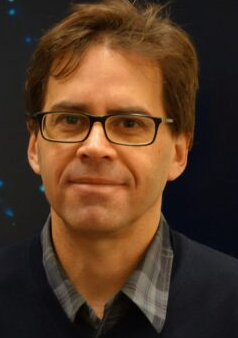 Peter Fritschel合作论文数Kavli Institute for Astrophysics and Space Research, Massachusetts Institute of Technology;Laser Interferometric Gravitational-wave Observatory189
 J. S. Kissel合作论文数LIGO Hanford Observatory188Keita Kawabe合作论文数Laser Interferometer Gravitational-wave Observatory - Hanford Observatory;California Institute of Technology185M. Fyffe合作论文数185
 Calum Gray合作论文数School of Physics & Astronomy, University of Glasgow183
 Ettore Majorana合作论文数Dipartimento di Fisica, Sapienza Università di Roma181
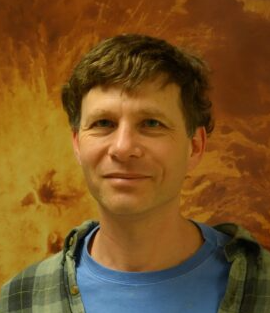 Richard Mittleman合作论文数Kavli Institute for Astrophysics and Space Research, Massachusetts Institute of Technology180
 Joseph A. Giaime合作论文数Department of Physics & Astronomy, College of Science, Louisiana State University;LIGO Livingston Observatory, California Institute of Technology180Bryan Barr合作论文数School of Physics & Astronomy, University of Glasgow180K. Mason合作论文数178
 Nergis Mavalvala合作论文数Department of Physics, School of Science, Massachusetts Institute of Technology;Kavli Institute for Astrophysics & Space Research, Massachusetts Institute of Technology178R. Gustafson合作论文数177M. Lormand合作论文数176
 Hartmut Grote合作论文数Gravity Exploration Institute, School of Physics and Astronomy, Cardiff University176
 Brian Lantz合作论文数Logo Group, Stanford University;Applied Physics Department, School of Humanities and Sciences, Stanford University175
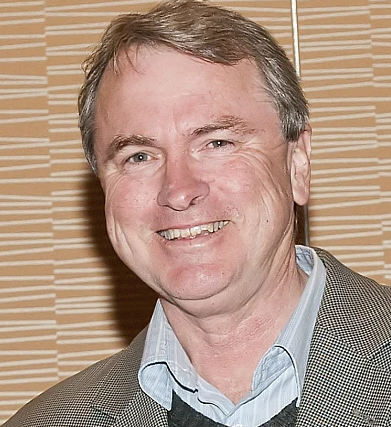 David McClelland合作论文数Centre for Gravitational Astrophysics, Research School of Physics, Australian National University175
 Christopher Messenger合作论文数School of Physics & Astronomy, University of Glasgow175
 Szabolcs Márka合作论文数Department of Physics, Columbia University173
 Gerardo Moreno合作论文数LIGO Hanford Observatory173
 Philip Charlton合作论文数School of Computing, Mathematics and Engineering, Charles Sturt University173H. Overmier合作论文数172
 Igor Bilenko合作论文数Russian Quantum Center;Faculty of Physics, Lomonosov Moscow State University172
 Nelson Christensen合作论文数Department of Physics and Astronomy, Carleton College172
 Gregory Harry合作论文数Department of Physics, College of Arts & Sciences, American University172
 Brad Abbott合作论文数Homer L. Dodge Department of Physics and Astronomy, Dodge Family College of Arts and Sciences, The University of Oklahoma172
 Laura Cadonati合作论文数School of Physics, College of Sciences, Georgia Institute of Technology172
 Kent Blackburn合作论文数172
 David Blair合作论文数School of Physics, Maths and Computing, The University of Western Australia171
 James Hough合作论文数School of Physics & Astronomy, University of Glasgow171
 Karsten Danzmann合作论文数Albert Einstein Institute, Max-Planck-Institut fur Gravitationsphysik;Institute of Gravitational Physics, Faculty of Mathematics and Physics, Leibniz Universität Hannover170
 Andreas Freise合作论文数Department of Physics and Astronomy, Vrije Universiteit Amsterdam169
 Garilynn Billingsley合作论文数California Institute of Technology168
 Alessandra Buonanno合作论文数Max Planck Institute for Gravitational Physics;Department of Physics, University of Maryland, College Park;Humboldt University;Potsdam University168
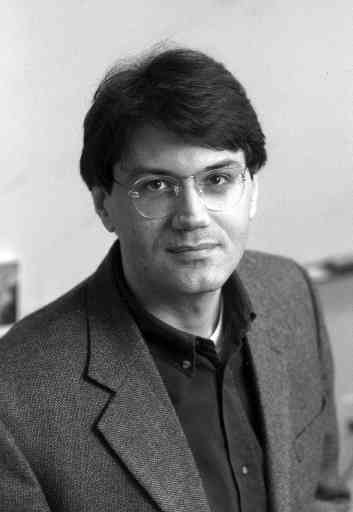 E. C. Katsavounidis合作论文数Department of Physics, Kavli Institute for Astrophysics and Space Research, Massachusetts Institute of Technology;Laser Interferometer Gravitational-wave Observatory, Massachusetts Institute of Technology166S. B. Anderson合作论文数166
 Thomas Corbitt合作论文数Department of Physics & Astronomy, College of Science, Louisiana State University166
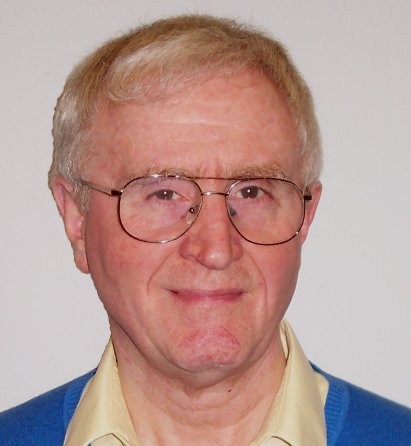 Robert L. McCarthy合作论文数Department of Physics and Astronomy, College of Arts and Sciences, Stony Brook University166
 Gabriela González合作论文数Department of Physics and Astronomy, College of Science, Louisiana State University166
 Vicky Kalogera合作论文数Department of Physics and Astronomy, Weinberg College of Arts & Sciences, Northwestern University;Center for Interdisciplinary Exploration and Research in Astrophysics, Northwestern University.166G. Mendell合作论文数165
 Patrick R Brady合作论文数Department of Physics, College of Letters & Science, University of Wisconsin-Milwaukee165
 Evan Goetz合作论文数Department of Physics & Astronomy, The University of British Columbia163WG Anderson合作论文数162E. Maros合作论文数162J. Brau合作论文数162




