The multi-NASA center Mars Atmosphere and Regolith COllector/PrOcessor for Lander Operations (MARCO POLO) project was established to build and demonstrate a methane/oxygen propellant production system in a Mars analog environment. Work at the Kennedy Space Center (KSC) has focused on the Atmospheric Processing Module (APM). The purpose of the APM is to freeze carbon dioxide from a simulated Martian atmosphere at Martian pressures (∼8 torr) by using dual cryocoolers. The resulting pressurized CO2 and hydrogen are fed to a Sabatier subsystem to make methane and water vapor. This paper covers (1) the design and selection of major hardware items, such as the cryocoolers, pumps, tanks, chillers, and membrane separators, (2) the determination of the optimal cold head design and flow rates needed to meet the collection requirement of 88 g CO2/hr for 14 hr, (3) the testing of the CO2 freezer subsystem, and (4) testing of the Sabatier subsystem.
This paper presents a fluid dynamic-based approach to the prediction of the flux decline due to partial and complete pore blocking in the microfiltration process. The electrostatic force model includes both particle–particle (PP) and particle–membrane (PM) electrostatic forces. The addition of such forces was shown to affect particle trajectories in a tortuous three-dimensional microfilter membrane geometry. The model was validated by comparing experimental flux decline data with simulation flux decline data. A design of experiments was conducted to investigate the effects of transmembrane pressure, PM- and PP-zeta potential on flux decline. The simulation experiments revealed that low flux decline was associated with relatively low transmembrane pressures and near-zero values of PP- and PM-zeta potential; and relatively high transmembrane pressures and more-negative values of PP- and PM-zeta potential. The amount of flux decline was shown to be correlated to the specific nature of partial and complete pore blocking in the pore structure.
The design and manufacturing process for a porous-restricted aerostatic lead screw actuator (ALSA) is presented. The ALSA provides near-frictionless motion with submicron positioning accuracy, high stiffness at low inlet air pressures (<827 kPa), and a travel length of 50 mm. Porous graphite disk inserts are held in a helical pattern in an aerostatic nut housing against a lead screw thread to create multiple simultaneous air bearing surfaces. A wave spring flexure is inserted behind each graphite disk to provide a preload and ensure full contact between the porous graphite disk surface and the lead screw flank. When the wave spring flexures and graphite disks are potted in combination with a slow-curing epoxy, this creates a self-aligning method to consistently match all graphite disk insert surfaces to the helical profile of the lead screw thread. Experimental trials were performed to evaluate the performance of the manufactured ALSA. It was found that a stable nut with a per-thread stiffness of 9.7 N/μm was achievable with a 3.5 μm air gap and an overall permeability of 5.4 × 10⁻¹⁵ m2. Applications requiring higher stiffness may couple two or more single-threaded nuts to achieve the desired actuator stiffness.
In an earlier paper, a high-speed microgroove cutting process that makes use of a flexible single-point cutting tool was presented. In this paper, 3D finite element modeling of this cutting process is used to better understand process mechanics. The development of the model, including parameter estimation and validation, is described. Validation experiments show that on average the model predicts side burr height to within 2.8%, chip curl radius to within 4.1%, and chip thickness to within 25.4%. The model is used to examine chip formation, side burr formation, and exit burr formation. Side burr formation is shown to primarily occur ahead of a tool and is caused by expansion of material compressed after starting to flow around a tool rather than becoming part of a chip. Exit burr formation is shown to occur when a thin membrane of material forms ahead of a tool and splits into two side segments and one bottom segment as the tool exits a workpiece.
Droplet spreading on a rotating surface has been modeled with an aim to design an efficient atomization-based cutting fluid (ACF) system for micromachining processes. To this end, single-droplet impingement experiments are conducted on a rotating surface to capture the 3D shape of a droplet upon impingement. A parameterization scheme is then developed to mathematically define the 3D shape of droplet upon impingement. The shape information is used to develop an energy-based model for droplet spreading. The droplet spreading model captures the experimental results within 10% accuracy. The spreading model is then used to predict the cooling and lubrication for an ACF-based microturning process. The model captures the cooling and lubrication trends observed in microturning experiments. A parametric study is conducted to identify the significant factors affecting the performance of an ACF system. Droplet speed is found to have a dominant effect on both cooling and lubrication performance, particularly, with a low surface tension fluid for cooling and a low surface tension and high viscosity fluid for lubrication.
Fouling mechanisms and models for flux decline are investigated with a three-dimensional simulation of the tortuous, verisimilar geometry of an α-alumina microfilter. Reconstruction of the three-dimensional geometry was accomplished from two-dimensional cross-sectional cuts. A wall collision model and a particle trapping model are developed for the investigation of fouling mechanisms. The reconstructed geometry and the two models were used in computational fluid dynamics to simulate metalworking colloidal particles travelling through and becoming trapped in the tortuous pore paths of a microfilter. Results reveal sharp flux decline initiating from partial pore blocking and subdued flux decline transitioning to cake layer development with steady-state flow. This flow behavior is in agreement with experimental data from earlier studies. The inclusion of the wall collision model and particle trapping model enabled the revelation of cake layer development as a fouling mechanism. Additional simulations of microfilters at different particle size distributions were conducted and discussed.
The demand for precision surgical knives is enormous. Currently, diamond knives have been the preferred choice among surgeons for use in precision surgeries, owing to the extreme hardness of diamond and the sharpness that can be achieved in single crystal diamond blades, but material and processing costs are high. Bulk metallic glass (BMG) has the potential to be an economically viable material of similar performance for use in precision surgical knives. To this end, a novel hybrid manufacturing process integrating thermally assisted micro-molding and micro-drawing has been developed for producing BMG surgical-grade knife blade cutting edges with edge radii <50nm. A hybrid process testbed was designed and used to successfully run tests over a range of the key process variables. Through this testing the deformation of BMG under different strain rates and temperatures was studied in terms of the quality of edge formation. The hybrid process was shown to be capable of producing cutting edges of radius at or below 100nm.
Tool life has been a vital issue in machining titanium alloys. Recently, an atomization-based cutting fluid (ACF) application has been found to be an effective approach for cooling and lubrication in micromachining operations. In this study, an ACF spray system is developed for macro-scale turning of Ti–6Al–4V. The spray system is designed to minimize interaction between the fluid droplets, and the gas nozzle to control the divergence of the fluid droplets. Experiments are conducted to study the effect of five specific ACF spray parameters including fluid flow rate, spray distance, impingement angle, and type and pressure level of the droplet carrier gas on cutting forces, tool life, and chip characteristics. It has been observed that the combination of lower pressure (150psi) air-mixed CO2 with a higher flow rate (20ml/min) and a larger spray distance (35mm) produces a significantly longer tool life and broken chips. The results also reveal that the ACF spray system can extend tool life up to 40–50% over flood cooling.
The development and implementation of a microstructure-based finite element model for the machining of carbon fiber-reinforced polymer composites is presented. A new approach to interfacial modeling is introduced where the material interface is modeled using continuum elements, allowing failure to take place in either tension or compression. The model is capable of describing the fiber failure mode occurring throughout the chip formation process. Characteristic fiber length in the chips, and machining forces for microstructures with fibers orientated at 0°, 45°, 90°, and 135° are examined. For model validation purposes, the model-based machining performance predictions are compared to the machining responses from a set of orthogonal machining experiments. A parametric study is presented that identifies a robust tool geometry, which minimizes the effects of fiber orientation and size on the machining forces.
In an earlier paper, a high-speed micro-groove cutting process that makes use of a flexible single-point cutting tool was presented. In this paper, 3D finite element modeling of this cutting process is used to better understand process mechanics. The development of the model, including parameter estimation and validation, is described. Validation experiments show that on average the model predicts side burr height to within 2.8%, chip curl radius to within 4.1%, and chip thickness to within 25.4%. The model is used to examine chip formation, side burr formation, exit burr formation, and the potential for delamination of a workpiece consisting of a thin film on a substrate. Side burr formation is shown to primarily occur ahead of a tool and is caused by expansion of material compressed after starting to flow around a tool rather than becoming part of a chip. Exit burr formation is shown to occur when a thin membrane of material forms ahead of a tool and splits into two side segments and one bottom segment as the tool exits a workpiece. Lastly, examination of the stresses below a workpiece surface shows that film delamination can occur when the depth of a groove cut into a thin film is large relative to the film thickness.
A new manufacturing method is presented for an aerostatic lead screw actuator (ALSA) designed for use in a hard-turning micro-scale machine tool. The actuator is designed for a travel of 20 mm and to achieve a static stiffness of 50 N/mm and dynamic stiffness of 40–60 N/mm for a range of frequencies from 50 Hz to 500 Hz, respectively. The design of the aerostatic bearing is based on a orifice-restricted groove-fed collar bearing and uses replication of the lead screw geometry by casting with a low-shrink epoxy to produce the nut. The nut is designed to achieve a static stiffness of 50 N/μm and dynamic stiffness of 40–60 N/μm with friction below 0.1 N m. Equations for the aerostatic bearing are adopted from a mathematical model of an aerostatic collar bearing and used to determine the screw size, orifice diameter and air gap. The design evaluation led to the selection of an air gap of 9 μm and an orifice diameter of 1 mm. By using a two-revolution nut, the stiffness requirements of the ALSA are achieved. Methods to produce the orifices, grooves, nut housing and desired surface roughness on the nut are presented. Several alternative nut designs used to construct the ALSA are evaluated according to stability and friction characteristics. Stability is found to be improved by using a single revolution nut due to better control of the orifice size, but at the expense of some system stiffness. Potential methods to control the air gap size are also presented.
A three-dimensional fluid dynamic model is developed to predict flux decline due to membrane fouling during the microfiltration of semisynthetic metalworking fluids. The model includes surface forces as well as hydrodynamic effects. Two pore model geometries are developed based on sintered aluminum oxide membranes. Simulations conducted using a single-pathway pore geometry illustrate the ability of the three-dimensional model to represent how flow continues through a partially blocked pore and how partial blocking reduces effective cross-sectional area. A four-disk pore geometry is used to compare flux decline behavior for different pore size distributions representing a new membrane and a membrane that had become partially blocked. Flux decline results are found to be consistent with published experimental results for similar membranes. An example shows how the three-dimensional fluid dynamic model may be used to determine the best membrane pore size distribution for a given situation and therefore demonstrates its overall utility as a design tool.
Previous magnetic-field-assisted microelectrical discharge machining (μ-EDM) techniques have been limited to use with magnetic materials. Therefore, a novel process has been developed and tested to improve material removal rate in magnetic-field-assisted μ-EDM for nonmagnetic materials. The workpiece electrodes were oriented to promote directionality in the current flowing through the workpiece, while an external magnetic field was applied in such a way as to produce a Lorentz force in the melt pool. Single-discharge events were carried out on nonmagnetic Grade 5 titanium workpieces to investigate the mechanical effects of the Lorentz force on material removal. Erosion efficiency, melt pool volume analysis, plasma temperature, electron density, and debris field characterization were used as the response metrics to quantify and explain the change in material removal with the applied Lorentz force. By orienting the Lorentz force to act in a direction pointing into the workpiece surface, volume of material removed was shown to increase by up to nearly 50%. Furthermore, erosion efficiency is observed to increase by over 54%. Plasma temperature is unaffected and electron density shows a slight decrease with the addition of the Lorentz force. The distribution of debris around the crater is shifted to greater distances from the discharge center with the Lorentz force. Taken together, these facts strongly suggest that the Lorentz force process developed produces a mechanical effect on the melt pool to aid in increasing material removal. The application of the Lorentz force is not found to negatively impact tool wear.
 Shiv Kapoor合作论文数Department of Mechanical Science and Engineering, The Grainger College of Engineering, University of Illinois at Urbana-Champaign78
 Martin B.G. Jun合作论文数Department of Mechanical and Industrial Engineering, University of Illinois at Urbana-Champaign11
 Keith A. Bourne合作论文数10John E. Wentz合作论文数9
 Johnson Samuel合作论文数5
 Kornel F. Ehmann合作论文数Department of Mechanical Engineering, Robert R. McCormick School of Engineering and Applied Science, Northwestern University5N. Rajagopalan合作论文数4Kurt Adair合作论文数4Seounghyun Ham合作论文数3Andrew Honegger合作论文数3
 William Endres合作论文数Dept . of Mech;Technological University;Ford Motor Company;Ford Motor Company, Technological University3Andrew G. Phillip合作论文数3r d neathammer合作论文数2bingyi yu合作论文数2peter bittorf合作论文数2
 William A. Kline合作论文数Engn Management, Rose Hulman Inst Technol2
 Jian Cao (曹简)合作论文数McCormick School of Engineering, Northwestern University2
 Suhas S. Joshi合作论文数Department of Mechanical Engineering, Indian Institute of Technology Bombay2Onik Bhattacharyya合作论文数2
 Anna Carla Araujo合作论文数Programa de Engenharia Mecânica, COPPE/UFRJ2
 Burak Ozdoganlar合作论文数Department of Mechanical Engineering, Carnegie Mellon University;Department of Biomedical Engineering, College of Engineering, Carnegie Mellon University2Paul D. Schomer合作论文数2
 Steven J. Skerlos合作论文数Dept. of Mechanical Engineering, University of Michigan, Ann Arbor, Michigan, USA2
 Anil Srivastava合作论文数ChemBiotek Research International2james zhu合作论文数1Robert Graves合作论文数1alex krejcie合作论文数1jon iverson合作论文数1
 Sunghyuk Park合作论文数School of Management Engineering, College of Business, Korea Advanced Institute of Science and Technology1Zongxuan Sun合作论文数University of Minnesota1
 Vijay Surla合作论文数1
 John W. Sutherland合作论文数Laboratory for Sustainable Manufacturing, Department of Environmental and Ecological Engineering, College of Engineering, Purdue University1
 Xinyu Liu (刘心宇)合作论文数桂林电子科技大学1
 Marc Madou合作论文数Department of Biomedical Engineering, Samueli School of Engineering, University of California, Irvine;Department of Mechanical and Aerospace Engineering, Samueli School of Engineering, University of California, Irvine1
 Rohit Reddy合作论文数Department of Mechanical and Industrial Engineering, University of Illinois at Urbana-Champaign1
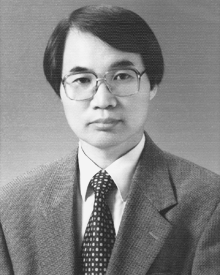 Jong-Kweon Park合作论文数1
 Nick G Glumac合作论文数Department of Mechanical Science and Engineering, The Grainger College of Engineering, University of Illinois Urbana-Champaign1
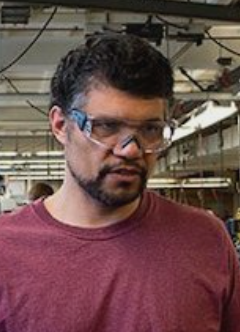 Martin Culpepper合作论文数Department of Mechanical Engineering, Massachusetts Institute of Technology1
 Robert A Sanford合作论文数Department of Geology, School of Earth, Society & Environment, College of Liberal Arts and Sciences, University of Illinois at Urbana-Champaign1
 Jose Luis Lopes Silveira合作论文数1Patrick N. Bless合作论文数1
 K Jimmy Hsia合作论文数School of Mechanical & Aerospace Engineering, Nanyang Technological University;School of Chemical and Biomedical Engineering, Nanyang Technological University1Sridhar Sastry合作论文数1
 John J. Mills合作论文数Automation and Robotics Research Institute, University of Texas, Arlington;Department of Mechanical and Aerospace Engineering, College of Engineering, University of Texas at Arlington1Ashwin Balasubramanian合作论文数1Daniel J. Waldorf合作论文数1
 J. Ramkumar合作论文数Department of Mechanical Engineering, Indian Institute of Technology1Arjun Iyer合作论文数1




