Many suggestions have been made as to the functions of the prefrontal (PF) cortex. However, they involve labelling areas using psychological terminology. But what we need to know is how the PF cortex operates. We argue that understanding this must start with describing the flow of information. We illustrate this argument by considering three PF areas. Each has a unique pattern of inputs and outputs, and we suggest that the implication is that each performs a unique transformation from the inputs to the outputs. The caudal PF cortex transforms input that is maintained by attention or short-term memory into the target of the appropriate eye movement. The mid-dorsal PF cortex transforms input concerning the order of objects or actions into the target of the appropriate eye and hand movements, thus supporting sequences of action. The ventral PF cortex transforms input concerning an object or sound into prospective activity that encodes the associated object or sound. However, it is important to appreciate that the mid-dorsal and ventral PF cortex are specialized for encoding abstract transformations, irrespective of the specific actions or objects. The advantage is that this enables generalization to novel problems that have the same underlying logic. We account for the difference between fast learning and slow learning in this way. The human brain has co-opted these mechanisms so as to support intelligence. Non-verbal tests of IQ typically use sequences of letters, numbers or designs. These test the ability to understand the abstract rules that apply. Here the activations lie in the mid-dorsal PF cortex. Verbal tests typically assess the ability to understand semantic associations. These can be presented either in pictorial or verbal form. Here the activations lie in the ventral PF cortex.
The caudal prefrontal (PF) cortex supports the visual search for objects such as foods both through eye movements and covert attention, and its connections explain how it can do this. The caudal PF cortex, which includes the frontal eye field, has connections with both the dorsal and ventral visual streams. The direction of eye movements depends on its connections with the superior colliculus and oculomotor nuclei. Covert attention depends on enhanced sensory responses that are mediated through top-down interactions with posterior sensory areas. Along with the granular parts of the orbital PF cortex, the caudal PF cortex evolved in early primates. Together, these two new areas led to improvements in searching for and evaluating objects that are hidden in a cluttered environment.
Abstract This chapter and the next one consider how to account for the astonishing difference in intelligence between humans and our nearest living ancestors, the great apes. An integrated system that includes the dorsal prefrontal cortex and the parietal association cortex is activated when subjects attempt tests of non-verbal intelligence. It has been suggested that this system might act as a ‘multiple-demand system’ or ‘global workspace’ that can deal with any problem. However, closer examination suggests that the tasks used to support this claim have in common that they involve abstract sequences. These problems can be solved by visual imagery alone. But humans also have the advantage that they also have access to a propositional code. This means that they can solve problems that involve verbal reasoning, as well as being able to form detailed plans for the future. They can also form explicit judgements about themselves, including their perceptions, actions, and memories, and this means that they can represent themselves as individuals. The representation of the self depends in part on tissue in the medial prefrontal cortex (PF).
The primate prefrontal cortex sits at the top of the sensory, motor, and outcome processing hierarchies of the neocortex. It transforms sensory inputs into motor outputs, determining the response that is appropriate given the current context and desired outcome. This transformation involves conditional rules. The dorsal prefrontal cortex supports the learning of behavioural sequences, where the next action is conditional on the previous one. The ventral prefrontal cortex supports associations between objects, where the choice of one object is conditional on the presence of another object. However, because hierarchical processing supports the extraction of abstract representations, the primate prefrontal cortex is able to represent conditional rules that are abstract, meaning that they apply irrespective of the specific inputs. The selective advantage is that by learning these rules, primates can solve new problems rapidly when they have the same conditional logic as prior problems. The human prefrontal cortex has the same fundamental organization as in other primates. The dorsal prefrontal cortex supports the understanding of sequences and the ventral prefrontal cortex supports the ability to learn semantic associations. Thus the human prefrontal cortex has co-opted and elaborated mechanisms that were present in ancestral primates. These mechanisms can be used for new ends. For example, words have been associated with objects so as to communicate with others. This means that to understand human intelligence it is necessary to take into account the fact that the abstract rules are transmitted verbally from one generation to another.
Abstract The key to the granular prefrontal (PF) cortex is that it sits at the top of the sensory processing hierarchy, the motor hierarchy, and the outcome hierarchy. This means that it is a position to learn abstract task rules. These relate to conditional tasks that involve sequences, associations, and attentional performance. Because they can learn abstract rules, primates can show specific behavioural transfer from one problem to another when the problems share the same logic. And, since the different PF areas are closely interconnected, the PF cortex provides a general-purpose mechanism for the rapid solution of novel tasks.
The primate prefrontal (PF) cortex evolved in phases. The first PF granular areas emerged as early primates and their closest ancestors adapted to an arboreal life. These areas improved the use of vision to search for foods and decide whether they were edible. Another phase of PF evolution occurred in anthropoids as they adapted to a diurnal life. They increased in body size and foraged over large distances, using foveal vision to search for resources. This exposed them to new competitors and encouraged social grouping, the advantage being that there are many eyes on the lookout for danger. The brain expanded in relation to the size of the body (encephalization) and the cortex expanded as a proportion of the brain (corticalization). At the same time, new PF areas emerged.
The key to the granular prefrontal (PF) cortex is that it sits at the top of the sensory processing hierarchy, the motor hierarchy, and the outcome hierarchy. This means that it is a position to learn abstract task rules. These relate to conditional tasks that involve sequences, associations, and attentional performance. Because they can learn abstract rules, primates can show specific behavioural transfer from one problem to another when the problems share the same logic. And, since the different PF areas are closely interconnected, the PF cortex provides a general-purpose mechanism for the rapid solution of novel tasks.
Abstract The orbital prefrontal cortex (PF) receives inputs from the olfactory, gustatory, somatosensory, visceral, and visual cortex. It is also interconnected with the amygdala which represents the current value of the resources, given the internal state of the animal. The worth of the different foods is compared in a ‘common currency’ of value. The central sector of the orbital prefrontal cortex uses vision to predict the value of the resources. These changes depend on the extent to which the animal has already become satiated on a particular food, and an interaction between the amygdala and the orbital PF cortex supports the ability to choose a new food, rather than the one on which the animal has become satiated. The lateral sector of the orbital PF cortex supports the ability to change behaviour depending on the outcome.
We argue that there is a relation between the judgements that 'I did it' and 'I saw it'. Both are statements are about the individual, not just the world. We show that the dorsal prefrontal cortex is activated both when human subjects judge that they are the agents of their actions and when they judge that they are confident that they have seen a masked visual stimulus. Macaque monkeys have also been taught to report whether they have or have not seen visual stimuli and cells can be found in the dorsal prefrontal cortex that distinguish between 'seen' and 'not seen'. The judgement is abstract in that it applies largely irrespective of the nature and location of the stimulus. We suggest that the reason why the prefrontal cortex is involved is that it evolved in primates, adapted by searching for fruit and leaves and using their hands to retrieve them. There is cell activity in the dorsal prefrontal cortex that relates to eye movements, covert attention and visual search; activity that relates to learning abstract rules; and activity that relates to the planning of the hand movements that are appropriate. We propose that this is the reason why this area is involved in making judgements about both agency and visual detection.
Limb apraxia is a syndrome often observed after stroke that affects the ability to perform skilled actions despite intact elementary motor and sensory systems. In a large cohort of unselected stroke patients with lesions to the left, right, and bilateral hemispheres, we used voxel-based lesion-symptom mapping (VLSM) on clinical CT head images to identify the neuroanatomical correlates of the impairment of performance in three tasks investigating praxis skills in patient populations. These included a meaningless gesture imitation task, a gesture production task involving pantomiming transitive and intransitive gestures, and a gesture recognition task involving recognition of these same categories of gestures. Neocortical lesions associated with poor performance in these tasks were all in the left hemisphere. They involved the pre-striate and medial temporal cortices, the superior temporal sulcus, inferior parietal area PGi, the superior longitudinal fasciculus underlying the primary motor cortex, and the uncinate fasciculus, subserving connections between temporal and frontal regions. No significant lesions were identified when language deficits, as indicated via a picture naming task, were controlled for. The implication of the superior temporal sulcus and the anatomically connected prestriate and inferior parietal regions challenges traditional models of the disorder. The network identified has been implicated in studies of action observation, which might share cognitive functions sub-serving praxis and language skills.
Scientific research on consciousness is critical to multiple scientific, clinical, and ethical issues. The growth of the field could also be beneficial to several areas including neurology and mental health research. To achieve this goal, we need to set funding priorities carefully and address problems such as job creation and potential media misrepresentation.
Fifteen years ago, Passingham and colleagues proposed that brain areas can be described in terms of their unique pattern of input and output connections with the rest of the brain, and that these connections are a crucial determinant of their function. We explore how the advent of neuroimaging of connectivity has allowed us to test and extend this proposal. We show that describing the brain in terms of an abstract connectivity space, as opposed to physical locations of areas, provides a natural and powerful framework for thinking about brain function and its variation across the brains of individuals, populations, and species.
Comparing the brains of related species faces the challenges of establishing homologies whilst accommodating evolutionary specializations. Here we propose a general framework for understanding similarities and differences between the brains of primates. The approach uses white matter blueprints of the whole cortex based on a set of white matter tracts that can be anatomically matched across species. The blueprints provide a common reference space that allows us to navigate between brains of different species, identify homologous cortical areas, or to transform whole cortical maps from one species to the other. Specializations are cast within this framework as deviations between the species’ blueprints. We illustrate how this approach can be used to compare human and macaque brains.
The scientific study of consciousness emerged as an organized field of research only a few decades ago. As empirical results have begun to enhance our understanding of consciousness, it is important to find out whether other factors, such as funding for consciousness research and status of consciousness scientists, provide a suitable environment for the field to grow and develop sustainably. We conducted an online survey on people's views regarding various aspects of the scientific study of consciousness as a field of research. 249 participants completed the survey, among which 80% were in academia, and around 40% were experts in consciousness research. Topics covered include the progress made by the field, funding for consciousness research, job opportunities for consciousness researchers, and the scientific rigor of the work done by researchers in the field. The majority of respondents (78%) indicated that scientific research on consciousness has been making progress. However, most participants perceived obtaining funding and getting a job in the field of consciousness research as more difficult than in other subfields of neuroscience. Overall, work done in consciousness research was perceived to be less rigorous than other neuroscience subfields, but this perceived lack of rigor was not related to the perceived difficulty in finding jobs and obtaining funding. Lastly, we found that, overall, the global workspace theory was perceived to be the most promising (around 28%), while most non-expert researchers (around 22% of non-experts) found the integrated information theory (IIT) most promising. We believe the survey results provide an interesting picture of current opinions from scientists and researchers about the progresses made and the challenges faced by consciousness research as an independent field. They will inspire collective reflection on the future directions regarding funding and job opportunities for the field.
Damage following traumatic brain injury or stroke can often extend beyond the boundaries of the initial insult and can lead to maladaptive cortical reorganisation. On the other hand, beneficial cortical reorganisation leading to recovery of function can also occur. We used resting state FMRI to investigate how cortical networks in the macaque brain change across time in response to lesions to the prefrontal cortex, and how this reorganisation correlated with changes in behavioural performance in cognitive tasks. After prelesion testing and scanning, two monkeys received a lesion to regions surrounding the left principal sulcus followed by periodic testing and scanning. Later, the animals received another lesion to the opposite hemisphere and additional testing and scanning. Following the first lesion, we observed both a behavioural impairment and decrease in functional connectivity, predominantly in frontal-frontal networks. Approximately 8 weeks later, performance and connectivity patterns both improved. Following the second lesion, we observed a further behavioural deficit and decrease in connectivity that showed little recovery. We discuss how different mechanisms including alternate behavioural strategies and reorganisation of specific prefrontal networks may have led to improvements in behaviour. Further work will be needed to confirm these mechanisms.
Limb apraxia is a syndrome that affects the ability to perform skilful actions, despite intact elementary motor and sensory systems. Using voxel-based lesion symptom mapping in a large cohort of 387 stroke patients we determined the neuroanatomy of three tasks traditionally used to study praxis skills in patient populations: these included a meaningless gesture imitation task, a gesture production task involving pantomime of transitive and intransitive gestures and a gesture recognition task, involving recognition of these same categories of gestures. Lesions associated with reduced performance in these tasks involved an integrated network previously described in biological motion, with input areas comprising left pre-striate and occipital regions, left superior temporal sulcus and motor output areas comprising left premotor area, left striatum and the white matter underlying the left primary motor cortex. This study confirms a role for the left hemisphere in limb apraxia and supports the hypothesis it is a white matter disconnection syndrome, whilst shedding new light into the nature of the behavioural deficits described in the disorder comprising parts of an integrated network of brain areas described in biological motion.
 Richard Frackowiak合作论文数Queen Square Institute of Neurology, University College London;Centre Hospitalier Universitaire Vaudois, University of Lausanne;Department of Clinical Neurosciences, Université de Lausanne;Wellcome Department of Imaging Neuroscience, University College London44
 David Brooks合作论文数Faculty of Medical Sciences, Newcastle University;Institute of Neuroscience, Newcastle University;Aarhus Universitet;Imperial College London36
 Matthew Rushworth合作论文数Department of Experimental Psychology, Medical Sciences Division, University of Oxford24
 Philip D. Nixon合作论文数21
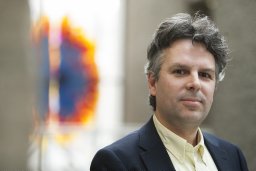 Ivan Toni合作论文数Institute of Medicine, Forschungszentrum Jülich21
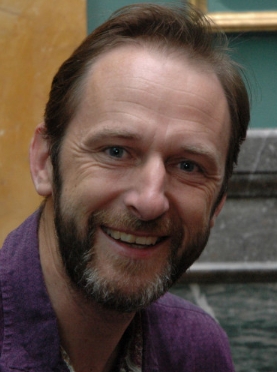 James B. Rowe合作论文数Cambridge Centre for Frontotemporal Dementia and Related Disorders, Department of Clinical Neurosciences, University of Cambridge;Dementias Platform UK;Alzheimer's Research UK;Medical Research Council Cognition and Brain Sciences Unit, University of Cambridge20
 Karl Friston合作论文数Institute of Neurology, University College London;The National Hospital for Neurology and Neurosurgery20
 Hakwan Lau合作论文数UCLA Brain Research Institute17
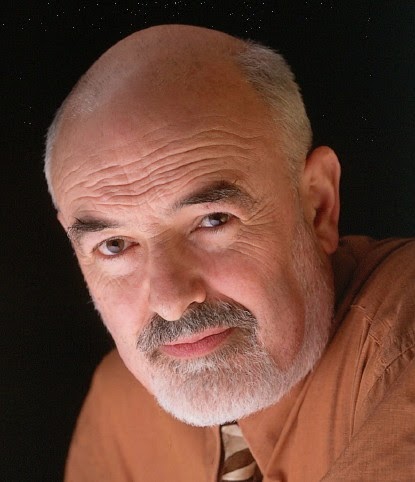 Chris Frith合作论文数Wellcome Centre for Human Neuroimaging, University College London17Ramnani, N合作论文数14M. Krams合作论文数14C. David Marsden合作论文数Institute of Neurology, Queen Square13
 Julie Grezes合作论文数Laboratoire de Neurosciences Cognitives, Ecole Normale Supérieure12I H Jenkins合作论文数11A O Ceballos-Baumann合作论文数10
 John Ashburner合作论文数Functional Imaging Laboratory, Wellcome Centre for Human Neuroimaging, University College London;Institute of Neurology, University College London10
 Patrick Haggard合作论文数Institute of Cognitive Neuroscience, University College London9K. M. Stephan合作论文数8
 J. Rothwell合作论文数Queen Square Institute of Neurology, University College London8J J Kew合作论文数7
 Playford E Diane合作论文数Institute of Neurology, UCL7
 ROBERT ROGERS合作论文数School of Human and Behavioural Sciences, Bangor University7
 Steven Wise合作论文数Olschefskie Institute for the Neurobiology of Knowledge7
 Faraneh Vargha-Khadem合作论文数Developmental Neurosciences Department, Great Ormond Street Institute of Child Health, University College London;Centre for Developmental Cognitive Science, University College London;Great Ormond Street Hospital7
 Kate E. Watkins合作论文数Department of Experimental Psychology, University of Oxford7O Josephs合作论文数6
 P Nigel Leigh合作论文数Brighton and Sussex Medical School;University of Sussex6Katherine J. Alcock合作论文数6Katsuyuki Sakai合作论文数6M Jueptner合作论文数5N. D. Schluter合作论文数5
 Sara L Bengtsson合作论文数5C Dettmers合作论文数5
 Marie-Pierre Deiber合作论文数5
 H. Henrik Ehrsson合作论文数Department of Neuroscience, Karolinska Institutet5
 Samuel M合作论文数5
 Henning Boecker合作论文数Department of Radiology, Rheinische Friedrich-Wilhelms-Universität Bonn5
 John Aggleton合作论文数School of Psychology, Cardiff University5A.G.M. Canavan合作论文数5Marjan Jahanshahi合作论文数5
 Gereon Rudolf Fink合作论文数Institute Cognitive Neuroscience, Forschungszentrum Jülich GmbH;Department of Neurology, Cologne University Hospital & Institute of Neuroscience and Medicine, Cognitive Neuroscience, Research Centre Jülich5K. A. Hadland合作论文数4Rj Dolan合作论文数4Alain Dagher合作论文数Department of Neurology & Neurosurgery, Faculty of Medicine and Health Sciences, McGill University4
 Klaas Stephan合作论文数Department of Information Technology and Electrical Engineering, ETH Zurich;Institute for Biomedical Engineering, University of Zurich4
 David E Thaler合作论文数Comprehensive Stroke Center at Tufts Medical Center, Tufts University School of Medicine4
 Michael C. Ridding合作论文数Department of Medicine, Royal Adelaide Hospital4Elisabeth Rounis合作论文数Institute of Neurology, University College London4
 Robert Turner合作论文数Max Planck Institute for Human Cognitive and Brain Sciences;Faculty of Physics and Earth Science, University of Leipzig;School of Physics and Astronomy, The University of Nottingham4




