Text-conditioned diffusion models can generate impressive images, but fall short when it comes to fine-grained control. Unlike direct-editing tools like Photoshop, text conditioned models require the artist to perform "prompt engineering," constructing special text sentences to control the style or amount of a particular subject present in the output image. Our goal is to provide fine-grained control over the style and substance specified by the prompt, for example to adjust the intensity of styles in different regions of the image (Fig. 1). Our approach is to decompose the text prompt into conceptual elements, and apply a separate guidance term for each element in a single diffusion process. We introduce guidance scale functions to control when in the diffusion process and where in the image to intervene. Since the method is based solely on adjusting diffusion guidance, it does not require fine-tuning or manipulating the internal layers of the diffusion model's neural network, and can be used in conjunction with LoRA- or DreamBooth-trained models.
We introduce a way to learn to estimate a scene representation from a single image by predicting a low-dimensional subspace of optical flow for each training example, which encompasses the variety of possible camera and object movement. Supervision is provided by a novel loss which measures the distance between this predicted flow subspace and an observed optical flow. This provides a new approach to learning scene representation tasks, such as monocular depth prediction or instance segmentation, in an unsupervised fashion using in-the-wild input videos without requiring camera poses, intrinsics, or an explicit multi-view stereo step. We evaluate our method in multiple settings, including an indoor depth prediction task where it achieves comparable performance to recent methods trained with more supervision. Our project page is at https://dimensions-of-motion.github.io/.
Time-to-event analysis is an important statistical tool for allocating clinical resources such as ICU beds. However, classical techniques like the Cox model cannot directly incorporate images due to their high dimensionality. We propose a deep learning approach that naturally incorporates multiple, time-dependent imaging studies as well as non-imaging data into time-to-event analysis. Our techniques are bench-marked on a clinical dataset of 1,894 COVID-19 patients, and show that image sequences significantly improve predictions. For example, classical time-to-event methods produce a concordance error of around 30-40% for predicting hospital admission, while our error is 25% without images and 20% with multiple X-rays included. Ablation studies suggest that our models are not learning spurious features such as scanner artifacts and that models which use multiple images tend to perform better than those which only use one. While our focus and evaluation is on COVID-19, the methods we develop are broadly applicable.
Image extrapolation extends an input image beyond the originally-captured field of view. Existing methods struggle to extrapolate images with salient objects in the foreground or are limited to very specific objects such as humans, but tend to work well on indoor/outdoor scenes. We introduce OCONet (Object COmpletion Networks) to extrapolate foreground objects, with an object completion network conditioned on its class. OCONet uses an encoder-decoder architecture trained with adversarial loss to predict the object’s texture as well as its extent, represented as a predicted signed-distance field. An independent step extends the background, and the object is composited on top using the predicted mask. Both qualitative and quantitative results show that we improve on state-of-the-art image extrapolation results for challenging examples.
We introduce the problem of predicting, from a single video frame, a low-dimensional subspace of optical flow which includes the actual instantaneous optical flow. We show how several natural scene assumptions allow us to identify an appropriate flow subspace via a set of basis flow fields parameterized by disparity and a representation of object instances. The flow subspace, together with a novel loss function, can be used for the tasks of predicting monocular depth or predicting depth plus an object instance embedding. This provides a new approach to learning these tasks in an unsupervised fashion using monocular input video without requiring camera intrinsics or poses.
Autofocus is an important task for digital cameras, yet current approaches often exhibit poor performance. We propose a learning-based approach to this problem, and provide a realistic dataset of sufficient size for effective learning. Our dataset is labeled with per-pixel depths obtained from multi-view stereo, following [9]. Using this dataset, we apply modern deep classification models and an ordinal regression loss to obtain an efficient learning-based autofocus technique. We demonstrate that our approach provides a significant improvement compared with previous learned and non-learned methods: our model reduces the mean absolute error by a factor of 3.6 over the best comparable baseline algorithm. Our dataset and code are publicly available.
Important applications such as mobile computing require reducing the computational costs of neural network inference. Ideally, applications would specify their preferred tradeoff between accuracy and speed, and the network would optimize this end-to-end, using classification error to remove parts of the network. Increasing speed can be done either during training – e.g., pruning filters – or during inference – e.g., conditionally executing a subset of the layers. We propose a single end-to-end framework that can improve inference efficiency in both settings. We use a combination of batch activation loss and classification loss, and Gumbel reparameterization to learn network structure. We train end-to-end, and the same technique supports pruning as well as conditional computation. We obtain promising experimental results for ImageNet classification with ResNet (45–52% less computation).
Panorama creation is one of the most widely deployed techniques in computer vision. In addition to industry applications such as Google Street View, it is also used by millions of consumers in smartphones and other cameras. Traditionally, the problem is decomposed into three phases: registration, which picks a single transformation of each source image to align it to the other inputs, seam finding, which selects a source image for each pixel in the final result, and blending, which fixes minor visual artifacts [1, 2]. Here, we observe that the use of a single registration often leads to errors, especially in scenes with significant depth variation or object motion. We propose instead the use of multiple registrations, permitting regions of the image at different depths to be captured with greater accuracy. MRF inference techniques naturally extend to seam finding over multiple registrations, and we show here that their energy functions can be readily modified with new terms that discourage duplication and tearing, common problems that are exacerbated by the use of multiple registrations. Our techniques are closely related to layer-based stereo [3, 4], and move image stitching closer to explicit scene modeling. Experimental evidence demonstrates that our techniques often generate significantly better panoramas when there is substantial motion or parallax.
Important applications such as mobile computing require reducing the computational costs of neural network inference. Ideally, applications would specify their preferred tradeoff between accuracy and speed, and the network would optimize this end-to-end, using classification error to remove parts of the network \cite{lecun1990optimal,mozer1989skeletonization,BMVC2016_104}. Increasing speed can be done either during training -- e.g., pruning filters \cite{li2016pruning} -- or during inference -- e.g., conditionally executing a subset of the layers \cite{aig}. We propose a single end-to-end framework that can improve inference efficiency in both settings. We introduce a batch activation loss and use Gumbel reparameterization to learn network structure \cite{aig,jang2016categorical}. We train end-to-end against batch activation loss combined with classification loss, and the same technique supports pruning as well as conditional computation. We obtain promising experimental results for ImageNet classification with ResNet \cite{he2016resnet} (45-52\% less computation) and MobileNetV2 \cite{sandler2018mobilenetv2} (19-37\% less computation).
Image stitching is typically decomposed into three phases: registration, which aligns the source images with a common target image; seam finding, which determines for each target pixel the source image it should come from; and blending, which smooths transitions over the seams. As described in [1], the seam finding phase attempts to place seams between pixels where the transition between source images is not noticeable. Here, we observe that the most problematic failures of this approach occur when objects are cropped, omitted, or duplicated. We therefore take an object-centered approach to the problem, leveraging recent advances in object detection [2,3,4]. We penalize candidate solutions with this class of error by modifying the energy function used in the seam finding stage. This produces substantially more realistic stitching results on challenging imagery. In addition, these methods can be used to determine when there is non-recoverable occlusion in the input data, and also suggest a simple evaluation metric that can be used to evaluate the output of stitching algorithms.
A generalization of recent group-theoretic matrix multiplication algorithms to an analogue of the theory of partial matrix multiplication is presented. We demonstrate that the added flexibility of this approach can in some cases improve upper bounds on the exponent of matrix multiplication yielded by group-theoretic full matrix multiplication. The group theory behind our partial matrix multiplication algorithms leads to the problem of maximizing a quantity representing the "fullness" of a given partial matrix pattern. This problem is shown to be NP-hard, and two algorithms, one optimal and another non-optimal but polynomial-time, are given for solving it.
 Ramin Zabih合作论文数Department of Computer Science, Cornell University;arXiv11
 Charles Herrmann合作论文数Cornell Tech8
 Michelle Shu合作论文数Cornell University2
 Ce Liu合作论文数Meta GenAI2
 Noah Snavely合作论文数Department of Computer Science, Cornell University;Google Research2
 Chen Wang合作论文数2
 Richard Tucker合作论文数Google Research2Emil Keyder合作论文数Invitae2Gengmo Qi合作论文数1
 Qiurui He (贺秋瑞)合作论文数1
 Piotr Teterwak合作论文数Boston University1
 Michele Santacatterina合作论文数Department of Public Health Sciences, Karolinska Institutet1Bo Chen合作论文数1
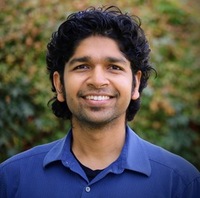 Rahul Garg合作论文数Netflix Inc.1Huiwen Chang合作论文数1
 Jon Barron合作论文数Google DeepMind1
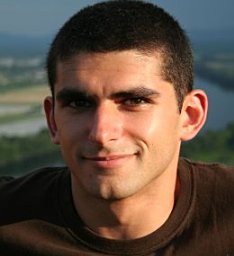 Michael Krainin合作论文数University of Washington1Martijn Van Schaardenburg合作论文数1Hendrik Orem合作论文数1
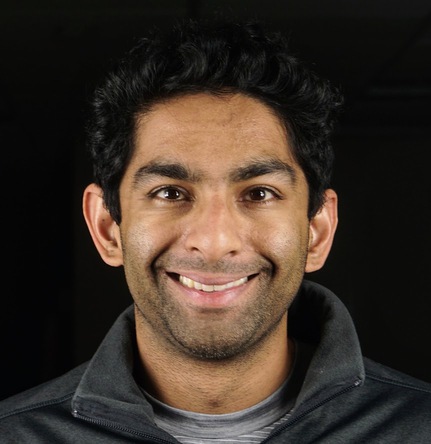 Neal Wadhwa合作论文数Google1
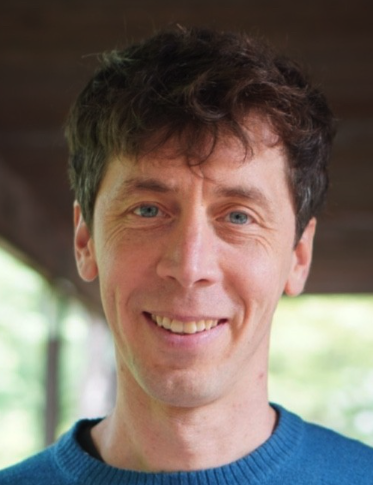 Forrester Cole合作论文数Google1




