In 2024, the Lancet Commission on Investing in Health proposed targeting investment in 15 priority conditions through 19 modular interventions to improve global health by 2050. While pragmatic, this approach may not fully capture the complex-adaptive nature of health and health systems, nor their social, economic and political determinants. In an iterative, interpretive analysis, proposed global health investment frameworks were mapped against complexity, systems thinking and health epistemology frameworks; five thematic areas were identified for further development: (i) health as emergent from interdependent, social-biological systems; (ii) the non-biomedical determinants driving inequities; (iii) health systems' adaptive requirements; (iv) epistemic injustices that marginalize non-Western perspectives; and (v) the need for context-sensitive, community-led implementation of health measures. Recent major disruptions to international aid financing, while challenging, present a unique opportunity to redesign health investment on more sustainable and locally grounded foundations, where national governments deliberately invest in the social determinants of health as direct health improvement strategies rather than merely as adjacent social policy. To seize this opportunity, we propose five guiding principles for policy-makers: (i) community co-production of interventions; (ii) adaptive governance structures; (iii) complex systems literacy in workforce training to navigate interdependencies and uncertainty; (iv) cross-sectoral partnerships to address determinants of health; and (v) context-sensitive metrics that incorporate community engagement to support learning within health systems. These are not optional enhancements to existing approaches; they are the foundations without which any health investment strategy will continue to treat the symptoms of inequity rather than its causes.
This paper presents findings from an experiment/workshop, which was motivated by the ever-increasing need in today's fractured and complex world to foster engagements between people of diverse backgrounds, positions, and identities. The workshop taught and employed the PRISMA method, which provides a way for researcher-participants to study the experiential dynamics of participatory sense-making in social interactions. PRISMA can be seen as an analogue process technology or a participation technology. It is used to refract the experience of interaction dynamics as we engage in interactions. In this study, we invited participants to interact by drawing together on shared sheets of paper. We found that participants engaged in what we call paradoxical practices of being with each other, and that the materials through which people interacted influenced the emotions and sense-making that emerged. We present the research findings in a way that can be followed step by step by a reader in a traditional fashion, but also give the reader structured options to engage with the findings presented in a participatory way, true to the message of the paper. Finally, we draw conclusions from this work for the use of technology in human co-becoming, enactive ethics of participation and difference, and how to enhance interaction "literacy". This research deepens the understanding of participatory sense-making, and sheds light on the interactive tensions at the roots of languaging and co-becoming. The findings contribute to both scientific knowledge and practical implications for navigating complex social interactions. (c) 2025 The Author(s). Published by Elsevier Ltd. This is an open access article under the CC BY license (http://creativecommons.org/licenses/by/4.0/).
This paper reimagines the future of systems research as an enacted cybersystemic praxis that moves beyond traditional notions of systems thinking. We argue that systems research is best understood as a reflexive, embodied and situated practice that integrates systemic sensibilities, systems literacy and capabilities in (cyber)systemic co-inquiry. Drawing on insights from systems theory, cybernetics, complexity science and process philosophy, we critique the limitations of goal-seeking behaviours and advocate for a shift towards purposeful, co-inquiry-driven approaches to systems research. Our analysis foregrounds the role of conversation, relational agency and ethical responsibility in systems thinking, highlighting how systems research can be institutionalised as a dynamic practice that fosters transformative change within ongoing, conducive governance arrangements. Written from the perspective of the current executive committee (EC) members of the International Federation for Systems Research (IFSR), an invitation is extended via this paper to join a cybersystemic co-inquiry into the future of systems research, encouraging practitioners to engage with a meta-level praxis that enables bridging of new modes of knowing, governing and society transforming. Through this paper, we call for a renewed commitment to cybersystemic thinking that enables new forms of knowing and acting in the Anthropocene, positioning systems research as a vital practice for navigating complex global challenges.
Systems thinking emerged as a transdisciplinary movement that sought to bridge the sciences, humanities and practices of change. Today, it spans many fields but risks losing coherence as its core ideas are repeatedly rediscovered and reapplied without deepening their theoretical roots. This paper draws on the experiences of the cybersystemic community under the roof of the International Federation for Systems Research (IFSR) and a scoping review of three journals: Systems Research and Behavioural Science , Systems Practice and Action Research and the Journal of Awareness‐Based Systems Change . It maps 10 clusters of contemporary systems research that emerged from 2020 to 2025. The analysis reveals wide application yet limited synthesis, suggesting that while the field is vibrant, it struggles to integrate its philosophical foundations. Using Jürgen Renn's concept of epistemic networks, the paper reinterprets systems research as a living ecology of ontological, epistemological and axiological commitments. Rather than seeking unity through control, the next phase of the field can nurture coherence through relationship, recognising and realising the field of systems research in and for itself. The IFSR 2026 agenda explores the conditions for the possibility of cultivating shared spaces of learning, encouraging plural ways of knowing, and regenerating the epistemic commons that sustain systems inquiry as a dynamic, reflective and life‐affirming practice.
Cultural milieus determine the worldviews and practices of individuals and groups, including the reception of norms that guide them. Semiotic Cultural Psychological Theory (SCPT) methods, such as Symbolic Universes (SU), describe relationships of reception, worldviews and practice, which also applies to geo-philosophical matters [1]. This essay outlines how geoethics, for example, the Cape Town Geoethics (CTG), might be received in different cultural milieus. The Cape Town Statement on Geoethics was proposed in 2016 at the 36th IGC [2] and is the most accessible resource on geoethics. It bundles various concepts in a Kantian/Aristotelian virtue ethics framework, illustrated, for example, by the Geoethical Promise [3]. The SU method describes the understanding, insights, and behaviour of groups of people expressing their respective cultural milieus. Extensive fieldwork identified five SU for people of European (Western) cultures [4]. The SUs called "Ordered Universe", "Interpersonal Bond", "Caring Society", "Niche of Belongingness", and "Others' World" categorise milieus, for example, in terms of relation to power and institutions or sources of trust. They corroborated with the Kohlberg hierarchy of the level of societal coordination [5] that is applicable to associate CTG and the worldviews of individuals and groups [6]. Comparing CTG and SU indicates: (1) CTG resonates most positively with people of the cultural milieu “Ordered Universe” (highest Kollberg level); (2) in other milieus, the reception of the CTG will be “measured”; (3) reception will be adverse for the milieu “Others' World” (lowest Kohlberg level). Hence, considering the quantitative distribution of SUs (in Europe), European citizens' reception of CTG is likely restrained. Given complex-adaptive social-ecological systems of the World and Nature couple world views, human practices, and societal and natural systems [7] (see example: [8]), whether variants of CTG “fitted to different milieus” should be developed is of practical relevance. The perception of norms and their acceptance or rejection is a system feature, of which geoethics should not be agnostic. [1] Bohle M (2019) “Homo Semioticus” Migrating Out of Area? In: Salvatore S, et al. (eds) Symbolic Universes in Time of (Post)Crisis. Springer Berlin Heidelberg, Cham, pp 295–307 [2] Di Capua G, et al. (2017) The Cape Town Statement on Geoethics. Ann Geophys 60:1–6. https://doi.org/10.4401/ag-7553 [3] Matteucci R, et al. (2014) The “Geoethical Promise”: A Proposal. Episodes 37:190–191. https://doi.org/10.18814/epiiugs/2014/v37i3/004 [4] Salvatore S, et al (2019) The Cultural Milieu and the Symbolic Universes of European Societies. In: Salvatore S, et al. (eds) Symbolic Universes in Time of (Post)crisis. Springer, Cham, pp 53–133 [5] Kohlberg L (1981) The Philosophy of Moral Development: Moral Stages and the Idea of Justice. Harber & Row, San Francisco [6] Bohle M, Marone E (2022) Phronesis at the Human-Earth Nexus: Managed Retreat. Front Polit Sci 4:1–13. https://doi.org/10.3389/fpos.2022.819930 [7] Preiser R, Woermann M (2019) Complexity, philosophy and ethics. In: Galaz V (ed) Global Challenges, Governance, and Complexity. Edward Elgar Publishing., Cheltenham, pp 38–62 [8] Talukder B, et al. (2023) Complex Adaptive Systems-Based Conceptual Framework for Modeling the Health Impacts of Climate Change. J Clim Chang Heal 100292. https://doi.org/10.1016/j.joclim.2023.100292
MotivationForesight methods are increasingly recognized as essential for decision-making in complex environments, particularly within development and research settings. As foresight methods continue to gain prominence for decision-making, their application in these settings grows. Funders and policy-makers can benefit from the experience of transformative foresight practitioners and researchers who are skilled in designing novel ways to envision alternative and diverse development futures.PurposeThe Seeds of Good Anthropocenes (SoGA) initiative has experimented with transformative foresight since its inception in 2016. We position SoGA within the framework of Minkkinen et al. (2019); we present its transformative capacity through participatory visioning; and we explore how foresight methods can shape strategic development options.PurposeThe Seeds of Good Anthropocenes (SoGA) initiative has experimented with transformative foresight since its inception in 2016. We position SoGA within the framework of Minkkinen et al. (2019); we present its transformative capacity through participatory visioning; and we explore how foresight methods can shape strategic development options.Approach and methodsWe draw lessons from how SoGA, used extensively in various contexts around the world, has introduced experimental transformative foresight to deal with diversity and complexity. We describe the transformative foresight processes in detail.FindingsSoGA exemplifies how transformative foresight can support policy and change initiatives by providing participants, planners, and decision-makers with opportunities to reinforce the collaborative and transformative objectives of their policy and convening practices. Such engagement not only deepens the strategic impact of policies, it also encourages a more inclusive and participatory approach to policy development, aligning with broader goals for sustainable and impactful change.
In our Agenda Essays to date, we have argued the need to frame contemporary circumstances in terms of the Anthropocene-world we humans have created. We also prioritise the five-decade-old, prescient analysis of humanity's predicament as the 'global probl & eacute;matique.' Earlier, we advocated for identifying comprehensive modes of 'collaborative agency' to better unleash the transformative potential inherent in cybersystems thought and action. In the present essay, we continue this reflection. What does the enhancement of collaborative agency look like, and what can various modes hope to deliver? To what extent does immersion in cybersystemic traditions inform the design possibilities for acts of co? We offer critical reflections on the individual, organisational and community ecologies within which this 'praxis of co' is emerging. A key take away here concerns how processes of valuing shape the enactment of the 'praxis of co,' particularly as it cannot be realised outside conversation. Understanding oneself is always and inescapably conducted in relationship with others, but progress in the 'praxis of co' requires a dance between responsibility and response-ability-an ethic (responsibility) that exists in duality with enablement or affordance (response-ability). Moves towards organisational or operational interdependence are contingent on responsible autonomy, grounded in an axiology that is both operational and ethically defensible.
Social-ecological systems (SES) research has gained substantial momentum, as witnessed by the growth in SES publications, theories, and frameworks, and the traction these concepts have gained in development and policy arenas. However, the growth and development of the SES field has only been partially examined, which limits our ability to make sense of and support the future development of the field and its ability to inform pressing sustainability challenges. The aim of this study is to understand how SES research has grown and changed over time as a field of study using bibliometric methods, co-authorship and co-citation network analysis. Our study is informed by broader bodies of work that have sought to understand the development of scientific fields, concepts, and research agendas. We highlight key trends that have influenced the organization of the field as well as how key thematic areas of SES research have evolved over time. Our results indicate that the research on SES is (i) mainly carried out by authors located in North America and Europe, (ii) characterized by changes in the terminology employed, as identified through our search terms, (iii) linked to the emergence of major conferences and centers dedicated to SES research, as well as its growth over time, (iv) characterized by a highly interconnected structure, with almost 80% of scholars being connected to each other, and (v) characterized by a shift in citation patterns, with newcomers in the network carving out their niche and replacing the founding figures as the central focus. We discuss the implications of these findings, including the nature of SES research as an “epistemic network,” the highly collaborative nature of SES research, and the role played by open-access journals in the growth of SES research in the digital era. We further suggest that the SES research field is at a critical transition point, with contending visions of its future following a more disciplinary path or remaining as a more open interdisciplinary space. We conclude with the questions this raises for future SES research regarding the implications of this duality on the nature, production, and validation of knowledge and its evolution.
The current solutions offered by Western sustainability science to address prevailing global environmental destruction and social injustice are still largely embedded in the Western knowledge system established by colonisation, limiting the efficacy of these solutions for a large part of the planet. Conversely, it may be reasonable to imagine that the concept of relationality is beneficial in all cultures and knowledge systems. Relationality, elementally referring to a web of relationships, as considered from an African Indigenous and local knowledge perspective, could play an important role in decolonising Western sustainability science. Two valuable approaches, namely ubuntu (humanness) and ukama (relatedness), as predominantly observed in southern Africa, are essentially immersed in human-nature relationality. This type of relationality considers everything as interconnected, and therefore that nothing happens in isolation, and that the well-being of humans is inextricable from the well-being of nature. The way relationality is approached in African Indigenous knowledge systems is inclusive, holistic and perpetual, broadening its usefulness to a large audience, making it a sensible contributor to decoloniality in sustainability science. A collective knowledge could emerge, including cooperative, multidirectional interactions with different types of information from diverse human and non-human sources, increasingly eradicating the relational divide among knowledge systems caused by persistent colonial discourse and attitudes.
The challenges of the Anthropocene were pre-empted by systems scholars in the exposition of the 'global problematique' and are now made manifest in what systems scholars called the polycrisis. These framings alert us to our human circumstances but to date, have done little to transform our manners of being and doing, as the polycrisis is an outcome of a profound governance crisis. Ongoing reflections, building on the framing offered by the global problematique, in the IFSR Conversations in 2023 addressed these issues. Advocating for more epistemological transparency in systems research was a major theme to emerge. Widening the gaze and embracing the full capacity of the cybersystemic perspective of systems research seeks to allow IFSR members, and cybersystemic scholars more generally, to harness their understandings and praxes to bring fresh momentum to navigating the polycrisis and governing for transformation.
Sustainability-focused research networks and communities of practice have emerged as a key response and strategy to build capacity and knowledge to support transformation towards more sustainable, just and equitable futures. This paper synthesises insights from the development of a community of practice on social-ecological systems (SES) research in southern Africa over the past decade, linked to the international Programme on Ecosystem Change and Society (PECS). This community consists of a network of researchers who carry out place-based SES research in the southern African region. They interact through various cross-cutting working groups and also host a variety of public colloquia and student and practitioner training events. Known as the Southern African Program on Ecosystem Change and Society (SAPECS), its core objectives are to: (1) derive new approaches and empirical insights on SES dynamics in the southern African context; (2) have a tangible impact by mainstreaming knowledge into policy and practice; and (3) grow the community of practice engaged in SES research and governance, including researchers, students and practitioners. This paper reflects on experiences in building the SAPECS community, with the aim of supporting the development of similar networks elsewhere in the world, particularly in the Global South.
In his 1970 report to the Club of Rome, Hasan ozbekhan compiled an extensive collection of intersecting issues confronting humanity-the Global Problematique. Alas, half a century later, we find ourselves even further entrenched in this network of complex, systemic issues that some have framed the Anthropocene, a period new to human history. Collectively, we must take seriously the question: what purposeful action will aid human flourishing, create and sustain a viable space for humanity, in our ongoing co-evolution with the Anthropocene-Biosphere?Through ongoing reflections to this prompt, the theme of the IFSR's 2023 agenda is community. At the heart of this community, we place emphasis on the role of conversation to enable the co-creation of a common (yet not necessarily shared) understanding. Collective efforts to grow and participate in this diverse cyber-systemic community of conversation and understanding will enhance the capacity to shift from stasis towards transformative actions demanded by the Global Problematique. In the Batesonian sense, the prospect of making a meta-difference that makes a difference is the emergent promise of our enterprise made collective.
We highlight the radicalness of Candiotto's proposal, by following the flow of the conceptual devices that create a new language for deepening ways of thinking and enacting our relation with the Earth, in terms of loving sense-making, enactive listening, and becoming native.
Social-ecological systems (SES) research has emerged as an important area of sustainability science, informing and supporting pressing issues of transformation towards more sustainable, just and equitable futures. To date, much SES research has been done in or from the Global North, where the challenges and contexts for supporting sustainability transformations are substantially different from the Global South. This paper synthesises emerging insights on SES dynamics that can inform actions and advance research to support sustainability transformations specifically in the southern African context. The paper draws on work linked to members of the Southern African Program on Ecosystem Change and Society (SAPECS), a leading SES research network in the region, synthesizing key insights with respect to the five core themes of SAPECS: (i) transdisciplinary and engaged research, (ii) ecosystem services and human well-being, (iii) governance institutions and management practices, (iv) spatial relationships and cross-scale connections, and (v) regime shifts, traps and transformations. For each theme, we focus on insights that are particularly novel, interesting or important in the southern African context, and reflect on key research gaps and emerging frontiers for SES research in the region going forward. Such place-based insights are important for understanding the variation in SES dynamics around the world, and are crucial for informing a context-sensitive global agenda to foster sustainability transformations at local to global scales.
Five clusters of concern arising from IFSR-facilitated conversations with its organisational members are used to invite the broader systems community to rethink agency. It is argued that by addressing the cluster elements, potential will be co-created for the systems community as a whole to help citizens venture beyond failing responses to the global problematique and the Anthropocene-creating thinking in which we humans are trapped. The five clusters are as follows: Exploring the in-between: Growing a shared understanding is going beyond a competition of ideas or a clash of concepts. It is a joint exploration of the unknown in-between. Including the excluded: Systems research happens in open research ecosystems, not in disciplinary silos. It is transdisciplinary and constitutes a global discourse. Living questions: Questions shape paradigms. Transcending paradigms starts from allowing the questions to have their own life, to grow and to dissolve, to improve and to transform. Going beyond systems literacy: Learning to speak systems is one thing, proficiency in systems thinking, systems doing and systems being another. There is a difference between knowing and understanding that we may address as systems wisdom. Rethinking agency: Agency goes from ego to eco, from me to we. Yet, it is not an either-or; it is ego and eco, me and we. To understand agency, we need to understand the 'and'.
 Reinette Biggs合作论文数Center for Limnology, University of Wisconsin, Madison, WI 53706, USA21
 Laura Pereira合作论文数Centre for Sustainability Transitions, Stellenbosch University10
 Alta De Vos合作论文数9
 Louis Klein合作论文数Bertalanffy Center for the Study of Systems Science, International Federation for Systems Research8
 Hayley S Clements合作论文数Centre for African Conservation Ecology, Nelson Mandela Metropolitan University7
 Maike Hamann合作论文数Centre for Sustainability Transitions, Stellenbosch University6
 Maja Schluter合作论文数University of Osnabrück Institute of Environmental Systems Research6
 Raymond L. (Ray) Ison合作论文数The Open University6
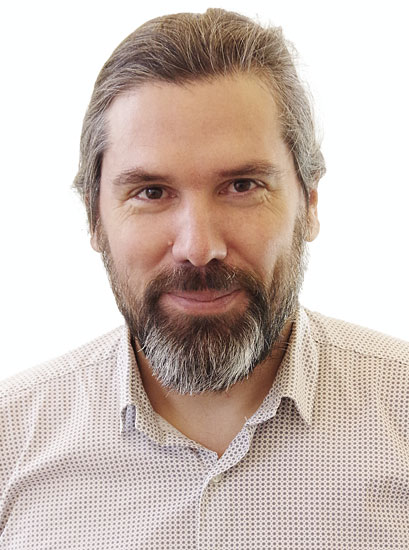 Garry Peterson合作论文数Stockholm Resilience Centre, Stockholm University5
 Nam C. Nguyen合作论文数5
 Minka Woermann合作论文数Department of Philosophy, University of Stellenbosch5
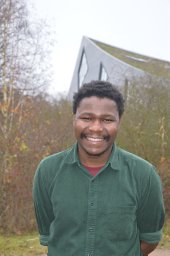 Odirilwe Selomane合作论文数Centre for Sustainability Transitions, Stellenbosch University4
 Kristi Maciejewski合作论文数Centre for African Conservation Ecology, Nelson Mandela Metropolitan University4Tanja Hichert合作论文数4
 Per Olsson合作论文数Stockholm Resilience Centre;Stockholm University;Stockholm Resilience Centre, Stockholm University4Pamela Buckle-Henning合作论文数School of Business;Adelphi University;School of Business, Adelphi University4
 Liza S.E. van der Merwe合作论文数3
 María Mancilla García合作论文数Socioenvironm Dynam Res Grp SONYA, Univ Libre Bruxelles ULB3
 Vanessa A. Masterson合作论文数Stockholm Resilience Centre, Stockholm University3
 Jessica Cockburn合作论文数Dept Environm Sci, Rhodes Univ3
 Nadia Sitas合作论文数Natural Resources and Environment, Council for Scientific and Industrial Research;Department of Conservation Ecology and Entomology, Stellenbosch University;Department of Conservation Ecology and Entomology, Stellenbosch University3Human Oliver合作论文数3
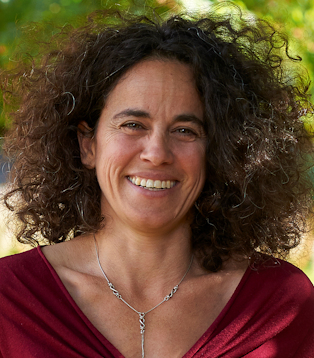 Elena Bennett合作论文数Department of Natural Resource Sciences, Faculty of Agricultural and Environmental Sciences, McGill University3
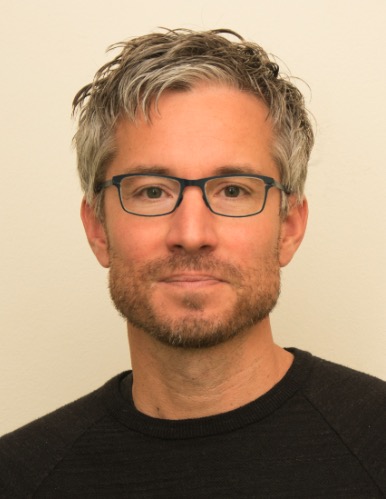 Timon Mcphearson合作论文数Environmental Studies Department, College of Arts & Science, New York University;Climasens;Stockholm Resilience Centre3
 Ryan Blanchard合作论文数Leslie Hill Institute of Plant Conservation, University of Cape Town3
 Joost Vervoort合作论文数Environmental Change Institute, University of Oxford;Copernicus Institute of Sustainable Development, Utrecht University;Terzij de Horde3
 Karen O'Brien合作论文数Department of Sociology and Human Geography, Faculty of Social Sciences, University of Oslo2
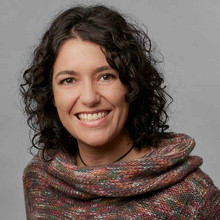 Berta Martín-López合作论文数Social-Ecological Systems Institute, Leuphana Universität Lüneburg2Linda Luvuno合作论文数2
 Amanda Manyani合作论文数Centre for Sustainability Transitions, Stellenbosch University2Tilman Hertz合作论文数2
 Martin Bohle合作论文数Ronin Institute2
 Sheona Shackleton合作论文数Department of Environmental Science, Rhodes University2
 Marja Spierenburg合作论文数Free University2
 Georgina Cundill合作论文数Rhodes University;World Wildlife Fund;Wageningen University;New York University;Resourceful Solutions Consulting;Wageningen University, New York University2
 Carl Folke合作论文数Beijer Institute of Ecological Economics, Royal Swedish Academy of Sciences;Stockholm Resilience Centre, Stockholm University2Paul Cilliers合作论文数2Sharon Pollard合作论文数2
 Belinda Reyers合作论文数Future Africa, University of Pretoria2
 Rebecka Henriksson合作论文数2Jasper A. Slingsby合作论文数Fynbos Node, South African Environm Observat Network2
 Carolyn Gay Palmer合作论文数Institute for Water Research, Rhodes University;ARUA Water Centre of Excellence, Rhodes University2
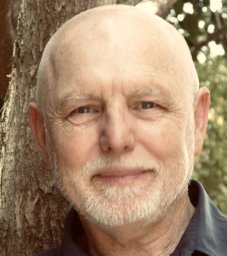 Christo Fabricius合作论文数Nelson Mandela Metropolitan University2
 Patrick J O’Farrell合作论文数Natural Resources and the Environment, CSIR2
 Albert V. Norström合作论文数Natural Resource Management;Department of Systems;Stockholm University;Department of Systems, Stockholm University2
 Karen A. Kotschy合作论文数Johannesburg Centre for Water in the Environment, University of the Witwatersrand2
 Karen Esler合作论文数Conservation Ecology & Centre for Invasion Biology, Stellenbosch University;Department of Conservation Ecology & Entomology, Stellenbosch University2
 Hanne De Jaegher合作论文数Department of General Psychiatry, University of Heidelberg2
 Ciara Raudsepp-Hearne合作论文数2




