Accurate mechanical properties (or materials) Young's modulus (E), Poisson's ratio (ν) and density (ρ) are essential for reliable physics simulation of digital worlds, but most 3D assets lack this information. We propose AdaVoMP, a method for predicting accurate dense spatially-varying (E, ν, ρ) for input 3D objects across representations, improving the resolution, accuracy, and memory efficiency over the state-of-the-art. The foundation of our technique is a sparse and adaptive voxel structure SAV that efficiently represents both the input 3D shape and the material field output. We replace the fixed-voxel model of the most accurate prior method, VoMP, with a novel sparse transformer encoder-decoder model that learns to generate a unique SAV autoregressively for every input shape to represent its materials, achieving a resolution 16^3× higher than prior art. Experiments show that AdaVoMP estimates more accurate volumetric properties, even with lesser test-time compute than all prior art. This allows us to convert high-resolution complex 3D objects into simulation-ready assets, resulting in realistic deformable simulations.
Physical simulation relies on spatially-varying mechanical properties, typically laboriously hand-crafted. We present the first feed-forward model to predict fine-grained mechanical properties, Young’s modulus($E$), Poisson’s ratio($\nu$), and density($\rho$), throughout *the volume* of 3D objects. Our model supports any 3D representation that can be rendered and voxelized, including Signed Distance Fields(SDFs), Gaussian Splats and Neural Radiance Fields(NeRFs). To achieve this, we aggregate per-voxel multi-view features for any input, which are passed to our trained Geometry Transformer to predict per-voxel material latent codes. These latents reside on the trained manifold of physically plausible materials, which we train on a real-world dataset, guaranteeing the validity of decoded per-voxel materials. To obtain object-level training data, we propose an annotation pipeline combining knowledge from segmented 3D datasets, material databases, and a vision-language model. Experiments show that VoMP estimates accurate volumetric properties and can convert 3D objects into simulation-ready assets, resulting in realistic deformable simulations and far outperforming prior art.
Generating combined visual and auditory sensory experiences is critical for the consumption of immersive content. Recent advances in neural generative models have enabled the creation of high-resolution content across multiple modalities such as images, text, speech, and videos. Despite these successes, there remains a significant gap in the generation of high-quality spatial audio that complements generated visual content. Furthermore, current audio generation models excel in either generating natural audio or speech or music but fall short in integrating spatial audio cues necessary for immersive experiences. In this work, we introduce SEE-2-SOUND, a zero-shot approach that decomposes the task into (1) identifying visual regions of interest; (2) locating these elements in 3D space; (3) generating mono-audio for each; and (4) integrating them into spatial audio. Using our framework, we demonstrate compelling results for generating spatial audio for high-quality videos, images, and dynamic images from the internet, as well as media generated by learned approaches.
Imaging under extremely low-light conditions presents a significant challenge and is an ill-posed problem due to the low signal-to-noise ratio (SNR) caused by minimal photon capture. Previously, diffusion models have been used for multiple kinds of generative tasks and image-to-image tasks, however, these models work as a post-processing step. These diffusion models are trained on processed images and learn on processed images. However, such approaches are often not well-suited for extremely low-light tasks. Unlike the task of low-light image enhancement or image-to-image enhancement, we tackle the task of learning the entire image-processing pipeline, from the RAW image to a processed image. For this task, a traditional image processing pipeline often consists of multiple specialized parts that are overly reliant on the downstream tasks. Unlike these, we develop a new generative ISP that relies on fine-tuning latent diffusion models on RAW images and generating processed long-exposure images which allows for the apt use of the priors from large text-to-image generation models. We evaluate our approach on popular end-to-end low-light datasets for which we see promising results and set a new SoTA on the See-in-Dark (SID) dataset. Furthermore, with this work, we hope to pave the way for more generative and diffusion-based image processing and other problems on RAW data.
Current methods for performing 3D reconstruction and novel view synthesis (NVS) in ultrasound imaging data often face severe artifacts when training NeRF-based approaches. The artifacts produced by current approaches differ from NeRF floaters in general scenes because of the unique nature of ultrasound capture. Furthermore, existing models fail to produce reasonable 3D reconstructions when ultrasound data is captured or obtained casually in uncontrolled environments, which is common in clinical settings. Consequently, existing reconstruction and NVS methods struggle to handle ultrasound motion, fail to capture intricate details, and cannot model transparent and reflective surfaces. In this work, we introduced NeRF-US, which incorporates 3D-geometry guidance for border probability and scattering density into NeRF training, while also utilizing ultrasound-specific rendering over traditional volume rendering. These 3D priors are learned through a diffusion model. Through experiments conducted on our new "Ultrasound in the Wild" dataset, we observed accurate, clinically plausible, artifact-free reconstructions.
Satellite remote sensing missions have gained popularity over the past fifteen years due to their ability to cover large swaths of land at regular intervals, making them ideal for monitoring environmental trends. The FINCH mission, a 3U+ CubeSat equipped with a hyperspectral camera, aims to monitor crop residue cover in agricultural fields. Although hyperspectral imaging captures both spectral and spatial information, it is prone to various types of noise, including random noise, stripe noise, and dead pixels. Effective denoising of these images is crucial for downstream scientific tasks. Traditional methods, including hand-crafted techniques encoding strong priors, learned 2D image denoising methods applied across different hyperspectral bands, or diffusion generative models applied independently on bands, often struggle with varying noise strengths across spectral bands, leading to significant spectral distortion. This paper presents a novel approach to hyperspectral image denoising using latent diffusion models that integrate spatial and spectral information. We particularly do so by building a 3D diffusion model and presenting a 3-stage training approach on real and synthetically crafted datasets. The proposed method preserves image structure while reducing noise. Evaluations on both popular hyperspectral denoising datasets and synthetically crafted datasets for the FINCH mission demonstrate the effectiveness of this approach.
This study assesses deep learning models for audio classification in a clinical setting with the constraint of small datasets reflecting real-world prospective data collection. We analyze CNNs, including DenseNet and ConvNeXt, alongside transformer models like ViT, SWIN, and AST, and compare them against pre-trained audio models such as YAMNet and VGGish. Our method highlights the benefits of pre-training on large datasets before fine-tuning on specific clinical data. We prospectively collected two first-of-their-kind patient audio datasets from stroke patients. We investigated various preprocessing techniques, finding that RGB and grayscale spectrogram transformations affect model performance differently based on the priors they learn from pre-training. Our findings indicate CNNs can match or exceed transformer models in small dataset contexts, with DenseNet-Contrastive and AST models showing notable performance. This study highlights the significance of incremental marginal gains through model selection, pre-training, and preprocessing in sound classification; this offers valuable insights for clinical diagnostics that rely on audio classification.
Recent advancements in areas such as natural language processing and computer vision rely on intricate and massive models that have been trained using vast amounts of unlabelled or partly labeled data and training or deploying these state-of-the-art methods to resource constraint environments has been a challenge. Galaxy morphologies are crucial to understanding the processes by which galaxies form and evolve. Efficient methods to classify galaxy morphologies are required to extract physical information from modern-day astronomy surveys. In this paper, we introduce Astroformer, a method to learn from less amount of data. We propose using a hybrid transformer-convolutional architecture drawing much inspiration from the success of CoAtNet and MaxViT. Concretely, we use the transformer-convolutional hybrid with a new stack design for the network, a different way of creating a relative self-attention layer, and pair it with a careful selection of data augmentation and regularization techniques. Our approach sets a new state-of-the-art on predicting galaxy morphologies from images on the Galaxy10 DECals dataset, a science objective, which consists of 17736 labeled images achieving 94.86% top-$1$ accuracy, beating the current state-of-the-art for this task by 4.62%. Furthermore, this approach also sets a new state-of-the-art on CIFAR-100 and Tiny ImageNet. We also find that models and training methods used for larger datasets would often not work very well in the low-data regime.
We present a new challenging dataset, CPPE-5 (Medical Personal Protective Equipment), with the goal to allow the study of subordinate categorization of medical personal protective equipments, which is not possible with other popular data sets that focus on broad-level categories (such as PASCAL VOC, ImageNet, Microsoft COCO, OpenImages, etc). To make it easy for models trained on this dataset to be used in practical scenarios in complex scenes, our dataset mainly contains images that show complex scenes with several objects in each scene in their natural context. The image collection for this dataset focuses on: obtaining as many non-iconic images as possible and making sure all the images are real-life images, unlike other existing datasets in this area. Our dataset includes five object categories (coveralls, face shields, gloves, masks, and goggles), and each image is annotated with a set of bounding boxes and positive labels. We present a detailed analysis of the dataset in comparison to other popular broad-category datasets as well as datasets focusing on personal protective equipments, we also find that at present, there exist no such publicly available datasets. Finally, we also analyze performance and compare model complexities on baseline and state-of-the-art models for bounding box results. Our code, data, and trained models are available at https://git.io/cppe5-dataset.
Recent increases in computational power and the development of specialized architecture led to the possibility to perform machine learning, especially inference, on the edge. OpenVINO is a toolkit based on Convolutional Neural Networks that facilitates fast-track development of computer vision algorithms and deep learning neural networks into vision applications, and enables their easy heterogeneous execution across hardware platforms. A smart queue management can be the key to the success of any sector.} In this paper, we focus on edge deployments to make the Smart Queuing System (SQS) accessible by all also providing ability to run it on cheap devices. This gives it the ability to run the queuing system deep learning algorithms on pre-existing computers which a retail store, public transportation facility or a factory may already possess thus considerably reducing the cost of deployment of such a system. SQS demonstrates how to create a video AI solution on the edge. We validate our results by testing it on multiple edge devices namely CPU, Integrated Edge Graphic Processing Unit (iGPU), Vision Processing Unit (VPU) and Field Programmable Gate Arrays (FPGAs). Experimental results show that deploying a SQS on edge is very promising.
In this paper, we focus on creating a keywords extractor especially for a given job description job-related text corpus for better search engine optimization using attention based deep learning techniques. Millions of jobs are posted but most of them end up not being located due to improper SEO and keyword management. We aim to make this as easy to use as possible and allow us to use this for a large number of job descriptions very easily. We also make use of these algorithms to screen or get insights from large number of resumes, summarize and create keywords for a general piece of text or scientific articles. We also investigate the modeling power of BERT (Bidirectional Encoder Representations from Transformers) for the task of keyword extraction from job descriptions. We further validate our results by providing a fully-functional API and testing out the model with real-time job descriptions.
Most of the people in the world face a problem of forgetting to take their medicines on time this device will help them to take their medicines on right time.It can also be used for deaf and blind people, it will also have a band with it which will have vibrator and LED (Light Emitting Diode) flasher as indicator so the user can be alerted about taking medicines.After this he has to go to the Medicine Dispenser and spread his hand.The device will detect the hand and according to the time will dispense the appropriate medicine.With some modifications this device can also be installed on streets and people can withdraw their required medicines, here a RFID (Radio Frequency Identification) card can be used to store the data and identify the person and validate it.
 Ali Mustufa Shaikh合作论文数Postman Inc.2
 Masha Shugrina合作论文数NVIDIA Toronto AI Lab;NVIDIA Spatial Intelligence Lab2
 David I. W. Levin合作论文数Department of Computer Science, Faculty of Arts and Science, University of Toronto;NVIDIA2
 Houman Khosravani合作论文数Division of Neurology, Department of Medicine, University of Toronto2
 Atsuhiro Hibi合作论文数1
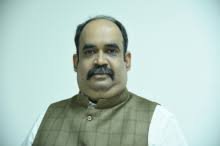 Sameer Suresh Nanivadekar合作论文数dept. Information Technology, A P Shah Institute of Technology1
 Eptehal Nashnoush合作论文数1
 Arjun Balachandar合作论文数Department of Medicine, University of Toronto1
 Gavriel State合作论文数NVIDIA1
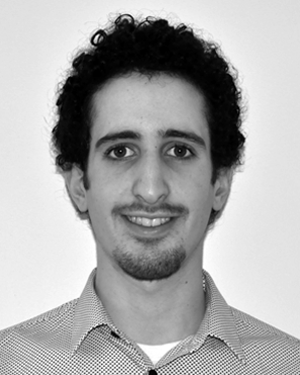 Rami Saab合作论文数1
 Hamza Mahdi合作论文数Holland Musculoskeletal Research Program, Sunnybrook Research Institute1
 Pascal Tyrrell合作论文数Department of Medical Imaging, Temerty Faculty of Medicine, University of Toronto;Demeter Innovation Lab;Pulsar Music1
 Suleyman Eken合作论文数1
 Rahul G. Krishnan合作论文数Department of Laboratory Medicine & Pathobiology, Temerty Faculty of Medicine, University of Toronto;Department of Computer Science, University of Toronto;Vector Institute1
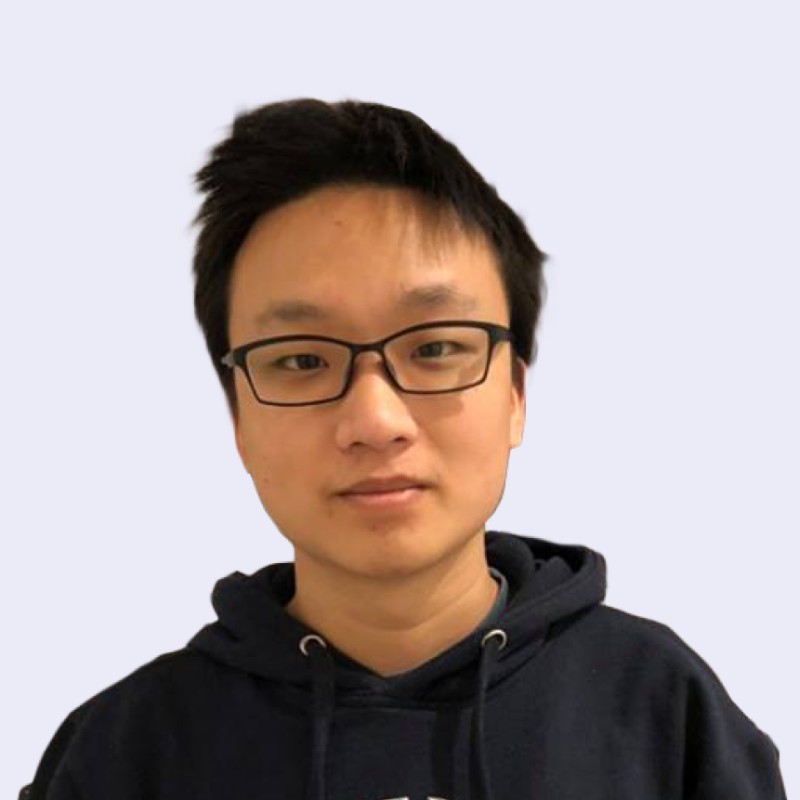 Tsai-chuan Wu (吳才銓)合作论文数AMD1
 Hussain Falih Mahdi合作论文数1




