Cross-sections and angular distributions for hadronic and lepton pair final states in e+e− collisions at a centre-of-mass energy near 189 GeV, measured with the OPAL detector at LEP, are presented and compared with the predictions of the Standard Model. The results are used to measure the energy dependence of the electromagnetic coupling constant αem, and to place limits on new physics as described by four-fermion contact interactions or by the exchange of a new heavy particle such as a sneutrino in supersymmetric theories with R-parity violation. A search for the indirect effects of the gravitational interaction in extra dimensions on the μ+μ− and τ+τ− final states is also presented. Submitted to European Journal of Physics C The OPAL Collaboration G.Abbiendi, K.Ackerstaff, G.Alexander, J. Allison, K.J.Anderson, S.Anderson, S.Arcelli, S.Asai, S.F.Ashby, D.Axen, G.Azuelos, A.H.Ball, E. Barberio, R.J. Barlow, J.R.Batley, S. Baumann, J. Bechtluft, T.Behnke, K.W.Bell, G.Bella, A.Bellerive, S. Bentvelsen, S. Bethke, S. Betts, O.Biebel, A.Biguzzi, I.J. Bloodworth, P. Bock, J. Böhme, O.Boeriu, D.Bonacorsi, M.Boutemeur, S. Braibant, P. Bright-Thomas, L. Brigliadori, R.M.Brown, H.J. Burckhart, P.Capiluppi, R.K.Carnegie, A.A.Carter, J.R.Carter, C.Y.Chang, D.G.Charlton, D.Chrisman, C.Ciocca, P.E.L.Clarke, E.Clay, I. Cohen, J.E.Conboy, O.C.Cooke, J. Couchman, C.Couyoumtzelis, R.L.Coxe, M.Cuffiani, S.Dado, G.M.Dallavalle, S.Dallison, R.Davis, S.De Jong, A. de Roeck, P.Dervan, K.Desch, B.Dienes, M.S.Dixit, M.Donkers, J.Dubbert, E.Duchovni, G.Duckeck, I.P.Duerdoth, P.G.Estabrooks, E. Etzion, F. Fabbri, A. Fanfani, M. Fanti, A.A. Faust, L. Feld, P. Ferrari, F. Fiedler, M. Fierro, I. Fleck, A. Frey, A. Fürtjes, D.I. Futyan, P.Gagnon, J.W.Gary, G.Gaycken, C.Geich-Gimbel, G.Giacomelli, P.Giacomelli, W.R.Gibson, D.M.Gingrich, D.Glenzinski, J.Goldberg, W.Gorn, C.Grandi, K.Graham, E.Gross, J.Grunhaus, M.Gruwé, C.Hajdu G.G.Hanson, M.Hansroul, M.Hapke, K.Harder, A.Harel, C.K.Hargrove, M.Harin-Dirac, M.Hauschild, C.M.Hawkes, R.Hawkings, R.J.Hemingway, G.Herten, R.D.Heuer, M.D.Hildreth, J.C.Hill, P.R.Hobson, A.Hocker, K.Hoffman, R.J.Homer, A.K.Honma, D.Horváth, K.R.Hossain, R.Howard, P.Hüntemeyer, P. Igo-Kemenes, D.C. Imrie, K. Ishii, F.R. Jacob, A. Jawahery, H. Jeremie, M. Jimack, C.R. Jones, P. Jovanovic, T.R. Junk, N.Kanaya, J.Kanzaki, D.Karlen, V.Kartvelishvili, K.Kawagoe, T.Kawamoto, P.I.Kayal, R.K.Keeler, R.G.Kellogg, B.W.Kennedy, D.H.Kim, A.Klier, T.Kobayashi, M.Kobel, T.P.Kokott, M.Kolrep, S.Komamiya, R.V.Kowalewski, T.Kress, P.Krieger, J. von Krogh, T.Kuhl, P.Kyberd, G.D. Lafferty, H. Landsman, D. Lanske, J. Lauber, I. Lawson, J.G. Layter, D. Lellouch, J. Letts, L. Levinson, R. Liebisch, J. Lillich, B. List, C. Littlewood, A.W.Lloyd, S.L. Lloyd, F.K. Loebinger, G.D. Long, M.J. Losty, J. Lu, J. Ludwig, D. Liu, A.Macchiolo, A.Macpherson, W.Mader, M.Mannelli, S.Marcellini, T.E.Marchant, A.J.Martin, J.P.Martin, G.Martinez, T.Mashimo, P.Mättig, W.J.McDonald, J.McKenna, E.A.Mckigney , T.J.McMahon, R.A.McPherson, F.Meijers, P.Mendez-Lorenzo, F.S.Merritt, H.Mes, I.Meyer, A.Michelini, S.Mihara, G.Mikenberg, D.J.Miller, W.Mohr, A.Montanari, T.Mori, K.Nagai, I. Nakamura, H.A.Neal, R.Nisius, S.W.O’Neale, F.G.Oakham, F.Odorici, H.O.Ogren, A.Okpara, M.J.Oreglia, S.Orito, G. Pásztor, J.R. Pater, G.N.Patrick, J. Patt, R. Perez-Ochoa, S. Petzold, P. Pfeifenschneider , J.E. Pilcher, J. Pinfold, D.E. Plane, P. Poffenberger, B. Poli, J. Polok, M.Przybycień, A.Quadt, C.Rembser, H.Rick, S. Robertson, S.A.Robins, N.Rodning, J.M.Roney, S. Rosati, K.Roscoe, A.M.Rossi, Y.Rozen, K.Runge, O.Runolfsson, D.R.Rust, K. Sachs, T. Saeki, O. Sahr, W.M. Sang, E.K.G. Sarkisyan, C. Sbarra, A.D. Schaile, O. Schaile, P. Scharff-Hansen, J. Schieck, S. Schmitt, A. Schöning, M. Schröder, M. Schumacher, C. Schwick, W.G. Scott, R. Seuster, T.G. Shears, B.C. Shen, C.H. Shepherd-Themistocleous , P. Sherwood, G.P. Siroli, A. Skuja, A.M. Smith, G.A. Snow, R. Sobie, S. Söldner-Rembold , S. Spagnolo, M. Sproston, A. Stahl, K. Stephens, K. Stoll, D. Strom, R. Ströhmer, B. Surrow, S.D.Talbot, P.Taras,
ABSTRACT We present the results of a search for deeply eclipsing white dwarfs in the Zwicky Transient Facility (ZTF) Data Release 4 (DR4). We identify nine deeply eclipsing white dwarf candidates, four of which we followed up with high-cadence photometry and spectroscopy. Three of these systems show total eclipses in the ZTF data and our follow-up Apache Point Observatory 3.5 m telescope observations. Even though the eclipse duration is consistent with sub-stellar companions, our analysis shows that all four systems contain a white dwarf with low-mass stellar companions of ∼0.1 M⊙. We provide mass and radius constraints for both stars in each system based on our photometric and spectroscopic fitting. Finally, we present a list of 41 additional eclipsing WD+M candidates identified in a preliminary search of ZTF DR7, including 12 previously studied systems. We identify two new candidate short-period, eclipsing, white dwarf–brown dwarf binaries within our sample of 41 WD+M candidates based on Pan-STARRS colours.
Using a data sample of $$\sqrt{s}=13\,\text {TeV}$$ proton-proton collisions collected by the CMS experiment at the LHC in 2017 and 2018 with an integrated luminosity of $$103\text {~fb}^{-1}$$ , the $$\text {B}^{0}_{\mathrm{s}} \rightarrow \uppsi (\text {2S})\text {K}_\mathrm{S}^{0}$$ and $$\text {B}^{0} \rightarrow \uppsi (\text {2S})\text {K}_\mathrm{S}^{0} \uppi ^+\uppi ^-$$ decays are observed with significances exceeding 5 standard deviations. The resulting branching fraction ratios, measured for the first time, correspond to $${\mathcal {B}}(\text {B}^{0}_{\mathrm{s}} \rightarrow \uppsi (\text {2S})K_\mathrm{S}^{0})/{\mathcal {B}}(\text {B}^{0}\rightarrow \uppsi (\text {2S})K_\mathrm{S}^{0}) = (3.33 \pm 0.69 (\text {stat})\, \pm 0.11\,(\text {syst}) \pm 0.34\,(f_{\mathrm{s}}/f_{\mathrm{d}})) \times 10^{-2}$$ and $${\mathcal {B}}(\text {B}^{0} \rightarrow \uppsi (\text {2S})\text {K}_\mathrm{S}^{0} \uppi ^{+} \uppi ^{-})/ {\mathcal {B}}(\text {B}^{0} \rightarrow \uppsi (\text {2S})\text {K}^{0}_{\mathrm{S}}) = 0.480 \pm 0.013\,(\text {stat}) \pm 0.032\,(\text {syst})$$ , where the last uncertainty in the first ratio is related to the uncertainty in the ratio of production cross sections of $$\hbox {B}^{0}_{\mathrm{s}}$$ and $$\hbox {B}^{0}$$ mesons, $$f_{\mathrm{s}}/f_{\mathrm{d}}$$ .
The B$^0_s$ and B$^+$ production yields are measured in PbPb collisions at a center-of-mass energy per nucleon pair of 5.02 TeV. The data sample, collected with the CMS detector at the LHC, corresponds to an integrated luminosity of 1.7 nb$^{-1}$. The mesons are reconstructed in the exclusive decay channels B$^0_s$ $\to$ J/$\psi(\mu^+\mu^-)\phi($K$^+$K$^-)$ and B$^+$ $\to$ J/$\psi(\mu^+\mu^-)$K$^+$, in the transverse momentum range 7-50 GeV/c and absolute rapidity 0-2.4. The B$^0_s$ meson is observed with a statistical significance in excess of five standard deviations for the first time in nucleus-nucleus collisions. The measurements are performed as functions of the transverse momentum of the B mesons and of the PbPb collision centrality. The ratio of production yields of B$^0_s$ and B$^+$ is measured and compared to theoretical models that include quark recombination effects.
This paper presents the Mechanical Ventilator Milano (MVM), a novel intensive therapy mechanical ventilator designed for rapid, large-scale, low-cost production for the COVID-19 pandemic. Free of moving mechanical parts and requiring only a source of compressed oxygen and medical air to operate, the MVM is designed to support the long-term invasive ventilation often required for COVID-19 patients and operates in pressure-regulated ventilation modes, which minimize the risk of furthering lung trauma. The MVM was extensively tested against ISO standards in the laboratory using a breathing simulator, with good agreement between input and measured breathing parameters and performing correctly in response to fault conditions and stability tests. The MVM has obtained Emergency Use Authorization by U.S. Food and Drug Administration (FDA) for use in healthcare settings during the COVID-19 pandemic and Health Canada Medical Device Authorization for Importation or Sale, under Interim Order for Use in Relation to COVID-19. Following these certifications, mass production is ongoing and distribution is under way in several countries. The MVM was designed, tested, prepared for certification, and mass produced in the space of a few months by a unique collaboration of respiratory healthcare professionals and experimental physicists, working with industrial partners, and is an excellent ventilator candidate for this pandemic anywhere in the world.
A combination of searches for top squark pair production using proton-proton collision data at a center-of-mass energy of 13 TeV at the CERN LHC, corresponding to an integrated luminosity of 137 fb(-1) collected by the CMS experiment, is presented. Signatures with at least 2 jets and large missing transverse momentum are categorized into events with 0, 1, or 2 leptons. New results for regions of parameter space where the kinematical properties of top squark pair production and top quark pair production are very similar are presented. Depending on themodel, the combined result excludes a top squarkmass up to 1325 GeV for amassless neutralino, and a neutralinomass up to 700 GeV for a top squarkmass of 1150 GeV. Top squarks with masses from 145 to 295 GeV, for neutralino masses from 0 to 100 GeV, with a mass difference between the top squark and the neutralino in a window of 30 GeV around the mass of the top quark, are excluded for the first time with CMS data. The results of theses searches are also interpreted in an alternative signal model of dark matter production via a spin-0 mediator in association with a top quark pair. Upper limits are set on the cross section for mediator particle masses of up to 420 GeV.
The second-order Fourier coefficients (v(2)) characterizing the azimuthal distributions of Y(1S) and Y(2S) mesons produced in PbPb collisions at root s(NN) = 5.02 TeV are studied. The Y mesons are reconstructed in their dimuon decay channel, as measured by the CMS detector. The collected data set corresponds to an integrated luminosity of 1.7 nb(-1). The scalar product method is used to extract the v2 coefficients of the azimuthal distributions. Results are reported for the rapidity range vertical bar y vertical bar < 2.4, in the transverse momentum interval 0 < pT < 50 GeV/c, and in three centrality ranges of 10-30%, 30-50% and 50-90%. In contrast to the J/psi mesons, the measured v(2) values for the Y mesons are found to be consistent with zero. (C) 2021 The Author(s). Published by Elsevier B.V.
A measurement is presented of electroweak (EW) production of a W boson in association with two jets in proton-proton collisions at s = 13 Te . The data sample was recorded by the CMS Collaboration at the LHC and corresponds to an integrated luminosity of 35.9 fb - 1 . The measurement is performed for the l ν jj final state (with l ν indicating a lepton-neutrino pair, and j representing the quarks produced in the hard interaction) in a kinematic region defined by invariant mass m jj \u003e 120 Ge and transverse momenta p T j \u003e 25 Ge . The cross section of the process is measured in the electron and muon channels yielding σ EW ( W jj ) = 6.23 ± 0.12 (stat) ± 0.61 (syst) pb per channel, in agreement with leading-order standard model predictions. The additional hadronic activity of events in a signal-enriched region is studied, and the measurements are compared with predictions. The final state is also used to perform a search for anomalous trilinear gauge couplings. Limits on anomalous trilinear gauge couplings associated with dimension-six operators are given in the framework of an effective field theory. The corresponding 95% confidence level intervals are - 2.3 c W W W / Λ 2 2.5 Te - 2 , - 8.8 c W / Λ 2 16 Te - 2 , and - 45 c B / Λ 2 46 Te - 2 . These results are combined with the CMS EW Zjj analysis, yielding the constraint on the c W W W coupling: - 1.8 c W W W / Λ 2 2.0 Te - 2 .
A search is conducted for a low-mass charged Higgs boson produced in a top quark decay and subsequently decaying into a charm and a strange quark. The data sample was recorded in proton-proton collisions at $\\sqrt{s}=$ 13 TeV by the CMS experiment at the LHC and corresponds to an integrated luminosity of 35.9 fb$^{-1}$. The search is performed in the process of top quark pair production, where one top quark decays to a bottom quark and a charged Higgs boson, and the other to a bottom quark and a W boson. With the W boson decaying to a charged lepton (electron or muon) and a neutrino, the final state comprises an isolated lepton, missing transverse momentum, and at least four jets, of which two are tagged as b jets. To enhance the search sensitivity, one of the jets originating from the charged Higgs boson is required to satisfy a charm tagging selection. No significant excess beyond standard model predictions is found in the dijet invariant mass distribution. An upper limit in the range 1.68-0.25% is set on the branching fraction of the top quark decay to the charged Higgs boson and bottom quark for a charged Higgs boson mass between 80 and 160 GeV.
Anisotropies in the initial energy density distribution of the quark-gluon plasma created in high energy heavy ion collisions lead to anisotropies in the azimuthal distributions of the final-state particles known as collective anisotropic flow. Fourier harmonic decomposition is used to quantify these anisotropies. The higher-order harmonics can be induced by the same order anisotropies (linear response) or by the combined influence of several lower order anisotropies (nonlinear response) in the initial state. The mixed higher-order anisotropic flow and nonlinear response coefficients of charged particles are measured as functions of transverse momentum and centrality in collisions at nucleon-nucleon center-of-mass energies and 5.02 with the CMS detector. The results are compared with viscous hydrodynamic calculations using several different initial conditions, as well as microscopic transport model calculations. None of the models provides a simultaneous description of the mixed higher-order flow harmonics and nonlinear response coefficients.
Events with no charged particles produced between the two leading jets are studied in proton-proton collisions at
Anisotropies in the initial energy density distribution of the quark-gluon plasma created in high energy heavy ion collisions lead to anisotropies in the azimuthal distributions of the final-state particles known as collective anisotropic flow. Fourier harmonic decomposition is used to quantify these anisotropies. The higher-order harmonics can be induced by the same order anisotropies (linear response) or by the combined influence of several lower order anisotropies (nonlinear response) in the initial state. The mixed higher-order anisotropic flow and nonlinear response coefficients of charged particles are measured as functions of transverse momentum and centrality in PbPb collisions at nucleon-nucleon center-of-mass energies $\\sqrt{S}$$_{NN}$=2.76 and 5.02TeV with the CMS detector. The results are compared with viscous hydrodynamic calculations using several different initial conditions, as well as microscopic transport model calculations. None of the models provides a simultaneous description of the mixed higher-order flow harmonics and nonlinear response coefficients.
Abstract Anisotropies in the initial energy density distribution of the quark-gluon plasma created in high energy heavy ion collisions lead to anisotropies in the azimuthal distributions of the final-state particles known as collective anisotropic flow. Fourier harmonic decomposition is used to quantify these anisotropies. The higher-order harmonics can be induced by the same order anisotropies (linear response) or by the combined influence of several lower order anisotropies (nonlinear response) in the initial state. The mixed higher-order anisotropic flow and nonlinear response coefficients of charged particles are measured as functions of transverse momentum and centrality in $$\mathrm {PbPb}$$ PbPb collisions at nucleon-nucleon center-of-mass energies $$\sqrt{\smash [b]{s_{_{\mathrm {NN}}}}} = 2.76$$ sNN=2.76 and 5.02$$\,\text {TeV}$$ TeV with the CMS detector. The results are compared with viscous hydrodynamic calculations using several different initial conditions, as well as microscopic transport model calculations. None of the models provides a simultaneous description of the mixed higher-order flow harmonics and nonlinear response coefficients.
Central exclusive and semiexclusive production of [see pdf] pairs is measured with the CMS detector in proton-proton collisions at the LHC at center-of-mass energies of 5.02 and 13TeV. The theoretical description of these nonperturbative processes, which have not yet been measured in detail at the LHC, poses a significant challenge to models. The two pions are measured and identified in the CMS silicon tracker based on specific energy loss, whereas the absence of other particles is ensured by calorimeter information. The total and differential cross sections of exclusive and semiexclusive central [see pdf] production are measured as functions of invariant mass, transverse momentum, and rapidity of the [see pdf] system in the fiducial region defined as transverse momentum [see pdf] and pseudorapidity [see pdf] . The production cross sections for the four resonant channels , [see pdf] , , and are extracted using a simple model. These results represent the first measurement of this process at the LHC collision energies of 5.02 and 13TeV.
Two related searches for phenomena beyond the standard model (BSM) are performed using events with hadronic jets and significant transverse momentum imbalance. The results are based on a sample of proton-proton collisions at a center-of-mass energy of 13 Te , collected by the CMS experiment at the LHC in 2016-2018 and corresponding to an integrated luminosity of 137 fb - 1 . The first search is inclusive, based on signal regions defined by the hadronic energy in the event, the jet multiplicity, the number of jets identified as originating from bottom quarks, and the value of the kinematic variable M T 2 for events with at least two jets. For events with exactly one jet, the transverse momentum of the jet is used instead. The second search looks in addition for disappearing tracks produced by BSM long-lived charged particles that decay within the volume of the tracking detector. No excess event yield is observed above the predicted standard model background. This is used to constrain a range of BSM models that predict the following: the pair production of gluinos and squarks in the context of supersymmetry models conserving R-parity, with or without intermediate long-lived charginos produced in the decay chain; the resonant production of a colored scalar state decaying to a massive Dirac fermion and a quark; or the pair production of scalar and vector leptoquarks each decaying to a neutrino and a top, bottom, or light-flavor quark. In most of the cases, the results obtained are the most stringent constraints to date.
Anisotropies in the initial energy density distribution of the quark-gluon plasma created in high energy heavy ion collisions lead to anisotropies in the azimuthal distributions of the final-state particles known as collective anisotropic flow. Fourier harmonic decomposition is used to quantify these anisotropies. The higher-order harmonics can be induced by the same order anisotropies (linear response) or by the combined influence of several lower order anisotropies (nonlinear response) in the initial state. The mixed higher-order anisotropic flow and nonlinear response coefficients of charged particles are measured as functions of transverse momentum and centrality in PbPb collisions at nucleon-nucleon center-of-mass energies s NN = 2.76 and 5.02 TeV with the CMS detector. The results are compared with viscous hydrodynamic calculations using several different initial conditions, as well as microscopic transport model calculations. None of the models provides a simultaneous description of the mixed higher-order flow harmonics and nonlinear response coefficients.
AbstractCentral exclusive and semiexclusive production of "Equation missing" pairs is measured with the CMS detector in proton-proton collisions at the LHC at center-of-mass energies of 5.02 and 13TeV. The theoretical description of these nonperturbative processes, which have not yet been measured in detail at the LHC, poses a significant challenge to models. The two pions are measured and identified in the CMS silicon tracker based on specific energy loss, whereas the absence of other particles is ensured by calorimeter information. The total and differential cross sections of exclusive and semiexclusive central "Equation missing" production are measured as functions of invariant mass, transverse momentum, and rapidity of the "Equation missing" system in the fiducial region defined as transverse momentum "Equation missing" and pseudorapidity "Equation missing". The production cross sections for the four resonant channels "Image missing" , "Equation missing", "Image missing" , and "Image missing" are extracted using a simple model. These results represent the first measurement of this process at the LHC collision energies of 5.02 and 13TeV.
 Fabrizio Fabbri合作论文数Istituto Nazionale di Fisica Nucleare Sezione di Bologna424
 J.W. Gary合作论文数417S. Marcellini合作论文数415
 Andris Skuja合作论文数Department of Physics, College of Computer, Mathematical, and Natural Sciences, University of Maryland413Meijers F合作论文数413M. Cuffiani合作论文数401
 Ken Bell合作论文数Rutherford Appleton Laboratory398J Letts合作论文数392P. Capiluppi合作论文数389
 Paul Kyberd合作论文数College of Engineering, Design and Physical Sciences, Brunel University London382Antony A. Carter合作论文数Queen Mary University of London380B.W. Kennedy合作论文数378H. J. Burckhart合作论文数European Organisation for Particle Physics CERN CH-1211 Geneva 23 Switzerland377P. Igo-Kemenes合作论文数374
 Peter Hobson合作论文数School of Physical and Chemical Sciences, Queen Mary University of London371M. Hauschild合作论文数European Organisation for Particle Physics CERN CH-1211 Geneva 23 Switzerland364G.M. Dallavalle合作论文数364Ties Behnke合作论文数362
 Gideon Alexander合作论文数School of Physics and Astronomy, Tel-Aviv University360S. Dado合作论文数358
 Steve Lloyd合作论文数School of Physical and Chemical Sciences, Queen Mary University of London;Institute of Physics, Queen Mary University of London358F. K. Loebinger合作论文数358R.D. Heuer合作论文数358
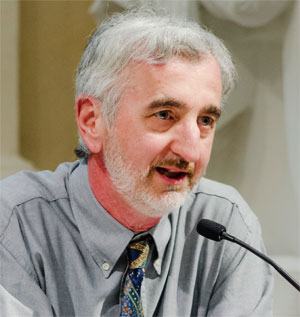 Gian Piero Siroli合作论文数Dipartimento di Fisica e Astronomia "Augusto Righi", Università di Bologna355A.H. Ball合作论文数355G. Mikenberg合作论文数354D. G. Charlton合作论文数354P. Jovanovic合作论文数354
 Günter Duckeck合作论文数Faculty of Physics, Ludwig Maximilian University of Munich352P. Bock合作论文数352A. D. Schaile合作论文数351Aldo Michelini合作论文数351
 Roger Barlow合作论文数School of Computing and Engineering, University of Huddersfield350L. Levinson合作论文数350R.K. Carnegie合作论文数349
 David Axen合作论文数Department of Physics & Astronomy, The University of British Columbia347R. Keeler合作论文数347O. Schaile合作论文数347J. Ludwig合作论文数347Shuji Orito合作论文数346
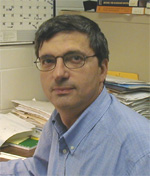 Georges Azuelos合作论文数Department of Physics, Faculty of Arts and Science, Université de Montréal;TRIUMF344Gg Hanson合作论文数343P. Sherwood合作论文数343Richard J Hemingway合作论文数342Claudio Grandi合作论文数INFN341G. Giacomelli合作论文数337F. S. Merritt合作论文数337Gabor Bella合作论文数Department of Physics and Astronomy Tel Aviv University 69978 Tel Aviv Israel337
 J. Allison合作论文数Geant4 Associates International Ltd336




