Managing negative situations is a critical task for managers and organizations, especially since doing so effectively is imperative for “creating a better world” (Academy of Management, 2021). However, there are numerous obstacles that can challenge managers. Our symposium gathers an international panel of scholars from Austria, Belgium, Canada, Finland, Germany, New Zealand, Portugal, The Netherlands, and the United States that leverages diverse perspectives and methodologies to (a) assess what influences managers’ decisions to pursue punishment (vs. procedural justice) when they handle ambiguous allegations of harm, (b) how managerial inaction can be detrimental for employees and managers, (c) how procedural justice issues can influence managers conducting layoffs, (d) how anticipatory moral emotions affect managerial behaviors in “necessary evil” tasks, and (e) how managers can effectively deliver bad news. Following the paper presentations, Dr. Robert Bies will conclude the symposium with an engaging interactive discussion that highlights key insights and future research directions. By showcasing theoretical and practical insights into how managers and organizations can more effectively manage negative situations, we aim to fulfill the Academy of Management’s objective to “create a better world” through responsible management. Procedural Justice and Safety Trade-Offs in Ambiguous Allegations of Harm Presenter: Maja Graso; U. of Otago Presenter: Karl Aquino; U. of British Columbia Presenter: Fan Xuan Chen; U. of Illinois at Urbana-Champaign Presenter: Jeroen Camps; Thomas More Presenter: Nicole Strah; Purdue U. Presenter: Kees Van Den Bos; Utrecht U. “In”action Speaks Louder Than Words: Examining the Importance of Managerial Inaction Presenter: Christine Chi Hye Hwang; U. of Guelph Presenter: Daniel Brady; Wilfrid Laurier U. Out of Control? The Effect of Procedural Justice on Managers’ Experiences of Layoffs Presenter: Abiola Sarnecki; Wiesbaden Business School Presenter: Marjo-RIitta Diehl; Aalto U. School of Business Presenter: David Leonard Patient; Vlerick Business School You Gotta Feel What You Gotta Do: Necessary Evils, Anticipatory Emotions, and Responses Presenter: Julia Zwank; EBS U. of Business and Law Presenter: Francesco Sguera; UCP - Católica Lisbon School of Business & Economics Presenter: Marjo-RIitta Diehl; Aalto U. School of Business We Need to Talk: Enhancing the Effectiveness of Bad News Delivery Presenter: Claudia Christina Kitz; U. of Klagenfurt, Austria Presenter: Laurie Barclay; U. of Guelph Presenter: Heiko Breitsohl; U. of Klagenfurt, Austria
This symposium explores a recently intensifying phenomenon of how actors manage their public identities in the #MeToo era – an era that highlights the tensions among those seeking distributive justice, due process, accountability, and endorsing psychological safety. We explore this phenomena through the lens of organizational justice, thereby broadening its application and relevance by raising new research questions and domains of study. In particular, we explore how one’s social identity shapes the aftermath of organizational conflicts, including how harshly (and why) actors’ actions may be judged and whether actors may (or may not) be forgiven, redeemed, and reintegrated. Three papers speak to these topics. Most of the symposium will be devoted to interactive discussions of each paper, then interactive discussion of the broad themes, questions, and challenges. Forgiveness in the Workplace: An Identity-Based Perspective Presenter: Michael E. Palanski; Rochester Institute of Technology Presenter: Laurie Barclay; Wilfrid Laurier U. Presenter: Nicholas Difonzo; Rochester Institute of Technology The Effect of Mindsets and Ex-Offenders’ Redemptive Narratives on Managers’ Willingness to Hire Presenter: Eunjeong Shin; Washington State U. Easier Lie the Heads: Evidence of a Gender Vilification Gap in Appraisals of Employee Misbehavior Presenter: Chuck Howard; U. of British Columbia Presenter: Ramona Bobocel; U. of Waterloo Presenter: Samir Nurmohamed; The Wharton School, U. of Pennsylvania Presenter: Karl Aquino; U. of British Columbia Presenter: Maja Graso; U. of Otago
Employees engaging in wrongs is an unfortunate workplace reality that can prove costly for organizations. Although research has shown that individuals respond destructively to such behavior, emerging work has shown that some turn the other cheek and react in a kindhearted manner (e.g., forgive, reconcile). The literature is still in its infancy; we do not have a full understanding of when and why people react in a kindhearted manner, and what the consequences are of these kindhearted reactions to organizations. This symposium addresses this research agenda by: (1) examining different antecedents of kindhearted reactions, such as features of the wrongdoing (e.g., seriousness, intentionality), individual factors of individuals engaging in the kindhearted reaction (e.g., perspective taking, narcissism), situational factors (e.g., climate, power), and different types of wrongdoing (e.g., abusive supervision, misconduct) that influence kindhearted reactions; (2) identifying different types of kindhearted reactions (e.g., coworker protective behavior, forgiveness, leniency); (3) highlighting behavioral strategies and psychological mechanisms (e.g., gossip, unfairness) that explain how kindhearted reactions influence outcomes; (4) exploring distal consequences of kindhearted reactions, such as emotions, perceptions, and behaviors; and (5) uncovering moderators (i.e., offender need, gender, mindfulness) that influence the impact of kindhearted reactions on downstream outcomes.
Recent societal movements (e.g., #MeToo and #TimesUp initiatives) and high profile misconduct cases have highlighted the importance of effectively addressing interpersonal transgressions, unethical and abusive behavior, and discrimination within the workplace. Given the pervasive and damaging impact that these misdeeds can have throughout the organization, it is critical to ensure that perpetrators are held accountable and that the aftermath is effectively managed. However, this also raises questions related to when forgiveness, reintegration, and/or redemption may be appropriate as well as how these processes can be facilitated or hindered. In this symposium, we bring together an international panel of leading scholars to explore these critical questions. Drawing upon a variety of methodologies (e.g., experiments, field studies) and theoretical frameworks (e.g., emotion regulation, social identity theory, judgment-making, postmodernism), our presenters shed light on (a) how emotion regulation may underlie forgiveness processes, (b) when members of victim groups feel empowered to engage in dialogue around reconciliation, (c) how judgment processes can influence observers‘ decisions about whether transgressors are worthy of redemption and reintegration, and (d) the process that leaders must go through to create a
The study of employees’ emotions and affective experiences at work has been a burgeoning area of interest, with prior empirical work demonstrating its effects on various work outcomes, ranging from task and interpersonal performance (e.g., Staw & Barsade, 1993) to withdrawal behaviors (e.g., Donovan, 2000; Pelled & Xin, 1999). However, the majority of extant work has aggregated several discrete emotions into corresponding positive and negative dimensions (Gooty, Gavin, & Ashkanasy, 2009), focusing on employees’ general positive or negative affective experiences. Critically, scholars have emphasized the need to examine the unique processes and outcomes associated with discrete emotions (e.g., Ashkanasy & Humphrey, 2011; Brief & Weiss, 2002; Gooty et al., 2009). The proposed presenter symposium aims to address this limitation of extant work, with each of the five papers focusing on the singular and distinct effects of varying discrete emotions (guilt, pride, boredom, envy, and loneliness). In doing so, we provide critical insight on the cognitive, motivational, and behavioral processes and outcomes associated with employees’ experiences of discrete emotional states. Guilty as Charged: Spillover Effects of Employees' Post-Work Maladaptive Interactions Presenter: Nitya Chawla; U. of Arizona Lenient Reactions to Misconduct: Examining the Role of Self-Conscious Emotions Presenter: Katelyn Zipay; U. of Oregon Presenter: Marie S. Mitchell; U. of Georgia Presenter: Michael Baer; Arizona State U. Presenter: Hudson Sessions; U. of Oregon Presenter: Robert Bies; Georgetown U. Breaking Boredom: The Role of State Boredom and Task Significance on Future Productivity Presenter: Shimul Melwani; U. of North Carolina, Chapel Hill Presenter: Casher Belinda; Kenan-Flagler Business School, U. of North Carolina at Chapel Hill Presenter: Chaitali Kapadia; Hong Kong U. of Science and Technology Presenter: Noah Eisenkraft; U. of North Carolina, Chapel Hill Mindful or Paranoid? Indirect Effects of Envy on Anxiety and Incivility Presenter: Elizabeth A. Adair; U. of Minnesota Presenter: Kristin L. Scott; College of Business, Clemson U. Presenter: Thomas Joseph Zagenczyk; Clemson U. Presenter: Michelle K Duffy; U. of Minnesota Feeling Lonely at the Top: An Examination of Leader Loneliness Presenter: Allison S. Gabriel; U. of Arizona Presenter: Klodiana Lanaj; U. of Florida
As organizations move to adopt high performance work practices (HPWP), the onus falls on supervisors to do whatever it takes to maximize the productivity of their work teams. This, however, creates a conundrum: When does high performance supervision cross the line to become abusive supervision? I it this Jekyll and Hyde situation that we plan to discuss in this panel symposium. The specific issues we will discuss are: (1) When are high performance demands perceived as abusive supervision? (2) When are high performance demands not perceived as abusive supervision? (3) How can such demanding behaviors result in employees experiencing positive affect and “feeling like part of a family?” (4) Is such demanding behavior merely in the eye of the beholder? Thus, this panel will seek to fulfill two important goals: (1) to review critical issues in high performance vs. abusive work team supervision, and (2) to ignite rigorous scholarship the nature of high performance supervision and when it can become abusive. The members of the Symposium Panel include a mixture of distinguished scholars of leadership and high performance work practice and younger scholars applying new insights and theories to these questions. The format of the session will be for each panelist to make brief opening statement based on his/her particular research foci and interests followed by facilitated group discussions and a plenary concluding session.
 Laurie J. Barclay合作论文数Wilfrid Laurier University5
 Thomas M. Tripp合作论文数5
 Daniel Brady合作论文数3Ramona Bobocel合作论文数2
 Maria Francisca Saldanha合作论文数Org Behav, Univ Catolica Portuguesa2
 Marjo-Riitta Diehl合作论文数Department of Management Studies, School of Business, Aalto University2
 Tyler Okimoto合作论文数School of Business, Faculty of Business, Economics and Law, The University of Queensland2
 Adams Gabrielle S合作论文数Graduate School of Business, Stanford University2
 Graso Maja合作论文数2
 Marie S. Mitchell合作论文数Department of Management, University of Nebraska2
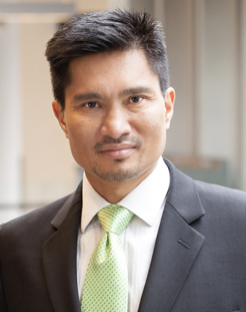 Karl Aquino合作论文数Marketing & Behavioural Science Division, Sauder School of Business, The University of British Columbia2Julia Zwank合作论文数1Nicole Strah合作论文数1elizabeth a adair合作论文数Coll Business, Calif State Univ Monterey Bay1
 Chuck Howard合作论文数Texas A&M Univ1Maura M. K. Austin合作论文数1
 Eunjeong Shin合作论文数Dept Management Informat Syst & Entrepreneurship, Washington State Univ1
 Abiola Sarnecki合作论文数Wiesbaden Business School1
 Casher Belinda合作论文数University of North Carolina at Chapel Hill1Claudia Christina Kitz合作论文数1
 Fan Xuan Chen合作论文数Department of Psychology, University of Illinois at Urbana-Champaign.1
 Hudson Sessions合作论文数Lundquist Coll Business, Univ Oregon1Chaitali Kapadia合作论文数Florida International U.1Paul Harvey合作论文数1
 Heiko Breitsohl合作论文数U. of Klagenfurt1Manuela Priesemuth合作论文数Villanova Univ1Francesco Sguera合作论文数Católica-Lisbon School of Business and Economics, Universidade Católica Portuguesa1
 Rebecca Schaumberg合作论文数Operations, Information and Decisions Department, The Wharton School, University of Pennsylvania1
 Daniel J Mcallister合作论文数Departments of Management and Organisation, National University of Singapore Business School1
 Joel Brockner合作论文数Management Division, Columbia Business School, Columbia University1
 Kees Van Den Bos合作论文数Department of Social and Organizational Psychology, Utrecht University1
 Robert G. Lord合作论文数Business School, Durham University1
 Laura E. Marler合作论文数1Keller Anita C合作论文数University of Basel;Work and Organizational Psychology, University of Bern;University of Basel, University of Bern1
 Klodiana Lanaj合作论文数Michigan State University, Michigan State University1
 Kristin L. Scott合作论文数Clemson University1
 Noah Eisenkraft合作论文数Wharton School of Management, University of Pennsylvania1
 Bennett J Tepper合作论文数Department of Management & Human Resources, The Ohio State University1
 Caroline Knight合作论文数1
 Shimul Melwani合作论文数Kenan–Flagler Business School, The University of North Carolina at Chapel Hill1
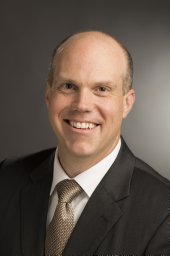 Michael E. Palanski合作论文数E. Philip Saunders College of Business, Rochester Institute of Technology1
 Nicholas Difonzo合作论文数Department of Psychology, Rochester Institute of Technology1
 Scott S. Wiltermuth合作论文数Stanford University1
 David Patient合作论文数Católica Lisbon School of Business and Economics, Universidade Católica Portuguesa1
 Thomas Zagenczyk合作论文数College of Business and Behavioral Science, Clemson University1
 Christian N. Thoroughgood合作论文数Department of Psychology, The Pennsylvania State University1
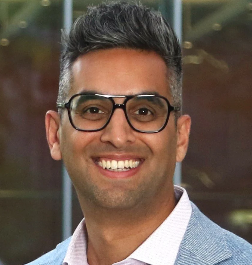 Samir Nurmohamed合作论文数Management Department, The Wharton School, University of Pennsylvania1
 Frank C. Butler合作论文数1




