Agents often inflate measured performance by distorting operating decisions (e.g., real earnings management) and/or reporting decisions (e.g., accruals management). Across four studies, we find that public judgments of distortion's acceptability largely reflect assessments of how harmful and norm-violating the distortion is. Judgments of operating distortion primarily reflect assessments of harm, whereas judgments of reporting distortion primarily reflect assessments of norm violation. These results are consistent with the Theory of Dyadic Morality (Gray, Waytz, and Young 2012; Schein and Gray 2018). We also find that those who perceive an accounting system as more unfairly withholding an agent's bonus assess distortion (especially reporting distortion) to be less norm-violating. Those who perceive the performance measure as less appropriate for capturing the value of performance to stakeholders assess distortion (especially operating distortion) to be more harmful. Assessments of distortions' harm and norm violation explain a substantial portion of the variation in acceptability judgments.
ABSTRACT We present 179 investment professionals with a scenario that manipulates whether a male or female analyst persists in pitching a stock pick after it has been voted down. Respondents evaluate analysts as less promotable when they do not persist, but only if the analyst is female. Results are consistent with categorization theory, which suggests that evaluators rely on stereotypes to interpret unexpected behaviors. In male-dominated settings, the same unexpected behavior may be perceived as evidence of a “lack of fit” in evaluations of women, but nondiagnostic in evaluations of men. Analysis of free-response questions confirm that the unexpected behavior was a predominant focus in performance evaluations of women, but not for men. Semi-structured interviews with 13 senior investment professionals provide additional support for the role of expectations and categorization heuristics on promotion decisions. Our findings shed light on factors that may contribute to the investment industry's “leaky pipeline” for women. JEL Classifications: M40; M41; M49; M51. Data Availability: Contact the authors.
In three studies totaling almost 5000 subjects, we present respondents with scenarios in which employees manage performance measures by distorting how they report performance or how they operate their organizations. We measure respondents’ judgments about the scenarios and their broader moral values, and interpret statistical associations in light of Moral Foundations Theory (Graham, Nosek, et al 2011) to draw inferences on how respondents view the ‘moral terrain’ of morally-relevant features depicted by the scenarios we present. In our business, public school and hospital settings, we conclude that respondents see reporting distortion as a more appropriate remedy than operating distortion to inequity, and see operational distortions as improving underlying performance more effectively when measures capture true performance more accurately. In our public school and hospital settings, we also conclude that respondents see the organization, (i.e. school or hospital), rather than outside stakeholders, (i.e. students or patients), as representing the in-group to which managers owe loyalty. Respondents also see a sacred element both in reporting and in supporting a school or hospital.
We provide evidence that credit investors do not fully impound the implications of firms' cost structure (or operating leverage) when pricing credit default swaps. Information about firms' cost structure is not disclosed and needs to be estimated. Furthermore, the performance implications of firms' cost structure depend on the expected macroeconomic conditions. We focus on the debt market because of the strong emphasis of this market on downside risk. To measure expected aggregate macroeconomic conditions, we employ the change in the anxious index (AI), which is the probability of a decline in real GDP provided by the SPF-the survey of professional forecasters. We find that the interaction between the firm's cost structure and change in AI predicts one-quarter-ahead CDS spreads. Portfolio-level analysis confirms this result.
I define moral accounting as the crafting of accountability systems that improve moral performance in a moral way. I also propose that accountants are well-positioned to offer Moral Accounting Engagements (MAEs), which evaluate how a client’s systems fall short of moral accounting’s aspirations and advise them on how they can address any shortcomings. I offer a conceptual framework that leaves controversial moral standards in the hands of those with the philosophical, civic or theological expertise to earn moral authority, but requires accountants to structure those standards to make MAEs a feasible endeavor that ties closely to traditional accounting engagements both conceptually and procedurally. Conceptually, moral accounting views people as stewards acting on behalf of society, just as traditional accounting views managers as stewards acting on behalf of owners. Procedurally, an MAE involves gathering objective data on accountability systems, capturing the performance of entities using double-entry bookkeeping, and evaluating systems and performance in light of existing standards. I also offer a set of Moral Accounting Principles (the MAP) that are moral analogs of longstanding principles in traditional accounting, and that guide the accountant’s evaluation of the client. I close by sketching directions for future research.
Advisors frequently have an interest in the decisions their advisees make, forcing advisees to distinguish their advisors' unbiased beliefs from their self-interested bias. This task is likely to be especially hard when psychological forces distort advisors' beliefs to make some of their bias sincerely held. In our first experiment, we show that advisors bias both their recommendations and their own actions toward their persuasion goal, and that advisees are better at distinguishing between the unbiased, sincerely biased, and insincerely biased parts of their advisor's recommendation when they meet face-to-face to discuss, compared with when they receive only a written recommendation. Our second experiment shows that advisees distinguish their advisor's bias from their advisor's unbiased beliefs more accurately when the advisors are asked to provide fact-based information about their own actions. Both experiments show that post-report interactions are more helpful for identifying insincere bias than sincere bias.
This book is an expanded version of "How to be a Good Professor", which was originally written for those who are or want to be professors. This revision is intended for a more general (and especially professional) audience, because almost everyone faces the professor’s challenges: how to use our expertise and insight to provide innovative and justifiable answers to worthwhile questions; how to convey what we know clearly, honestly and persuasively; how to evaluate what others claim to know with a skeptical eye; how to offer and receive criticism diplomatically and constructively; and how to use all of these skills to improve our own organizations and society at large. I hope this book will bring out the good professor in all of us.
This guide is intended to help you move traditional face-to-face courses online quickly. It starts with four general points: start by planning to teach as you normally do, make tweaks to maintain or enhance your interaction with students, remember to communicate to your students that you care about them, and invite guests to help you teach. The guide then walks through some useful approaches to synchronous classes, asynchronous instruction, and assessment. The guide assumes teachers and students are using Zoom and Canvas, but because it is focused more on teaching than technology, most of the lessons apply to other platforms.
Accounting journals rarely publish articles explicitly focused on re-examining prior claims. Such articles allow accounting scholars to establish the validity and generality of claims that are or might become influential in our field. However, the professional benefits of revisiting claims are often believed to be outweighed by its costs, especially for junior scholars. This document explains how pre-registered re-examination proposals (p-rex), such as those recently solicited by Journal of Financial Reporting, enhance the net professional benefits of publishing re-examinations, and offers suggestions on how faculty can integrate p-rex proposals into their doctoral seminars.
People who use venues for productive conversations impose norms (“LAAPs”) encouraging statements that are meaningful, relevant, honest, understandable, diplomatic, engaging, helpful, and supportive of the long-term success of the venue. Statements that undermine productivity by falling short on some of these characteristics without sufficient strength on others are excluded, policed and punished as “crebit”. I describe a variety of LAAPs and their crebit, use the framework to offer testable predictions about when speech will be punished as crebit, and propose some exclusions that would allow more productive conversations online and about the limits of speech on campus.
The papers in this volume were published through a Registration-based Editorial Process (REP). Authors submitted proposals to gather and analyze data; successful proposals were guaranteed publication as long as the authors lived up to their commitments, regardless of whether results supported their predictions. To understand how REP differs from the Traditional Editorial Process (TEP), we analyze the papers themselves; conference comments; a survey of conference authors, reviewers, and attendees; and a survey of authors who have successfully published under TEP. We find that REP increases up-front investment in planning, data gathering, and analysis, but reduces follow-up investment after results are known. This shift in investment makes individual results more reproducible, but leaves articles less thorough and refined. REP could be improved by encouraging selected forms of follow-up investment that survey respondents believe are usually used under TEP to make papers more informative, focused, and accurate at little risk of overstatement.
Two experiments show that face-to-face meetings help users discern reporters' true beliefs better than those who receive only a written report. Both experiments are based on a 'cheap talk' setting, modified to include two features common to accounting settings: reporters base reports on rich information, and (in a meeting condition) have rich channels of communication to users. Experiment 1 shows that meetings improve users' ability to discern the beliefs reporters held before they had an incentive to deceive the user. Once reporters learned of their incentive to deceive users, they revised their beliefs toward what they wanted users to believe (they self-deceived); those who revised more were more successful in their deception. Experiment 2 shows that users discerned reporters' beliefs through linguistic tone: reporters who believed their reports used more positive words. The results highlight the importance of face-to-face meetings and provide experimental support for Trivers' self-deception theory.
If you submit a paper to JFR, we will keep the paper true to your goals and true to what it actually does and finds. All studies make compromises, and we encourage authors to do so. You need only explain why you've chosen the compromises you have, and be honest in what readers can conclude. Reasonable disagreements about commentary on the paper's implications won't be a bar to publication. Instead, we'll hash them out in published discussions.
Jonathan Haidt's Moral Foundations Theory identifies five moral axes that can influence human motivation to take action on vital problems like climate change. The theory focuses on five moral foundations, including compassion, fairness, purity, authority, and ingroup loyalty; these have been found to differ between liberals and conservatives as well as Democrats and Republicans. Here we show, based on the Cornell National Social Survey (USA), that valuations of compassion and fairness were strong, positive predictors of willingness to act on climate change, whereas purity had a non-significant tendency in the positive direction (p = 0.07). Ingroup loyalty and authority were not supported as important predictor variables using model selection ([Formula: see text]). Compassion and fairness were more highly valued by liberals, whereas purity, authority, and in-group loyalty were more highly valued by conservatives. As in previous studies, participants who were younger, more liberal, and reported greater belief in climate change, also showed increased willingness to act on climate change. Our research supports the potential importance of moral foundations as drivers of intentions with respect to climate change action, and suggests that compassion, fairness, and to a lesser extent, purity, are potential moral pathways for personal action on climate change in the USA.
Across four studies, we show that public attitudes toward earnings management are mediated by perceptions of its deceptiveness, rule-breaking, and harm. Reporting distortion (RD, like accruals management) is seen as more deceptive and rule-breaking, while operating distortion (OD, like real earnings management) is seen as more harmful. We replicate the tendency for people to see RD as less acceptable than OD, but only in a sales setting similar to prior work. This view flips in a healthcare setting, in which the harm of OD (delaying patient care) is more severe. We also show that distortion’s acceptability, and the difference in acceptability between RD and OD, are both moderated by the perceived deservingness of the distorter and the quality of the measure being distorted, because deservingness makes RD seem relatively less deceptive and rule-breaking, while measure quality makes OD seem relatively less harmful. We draw implications for practice and future research.
The stated goals of the SEC are to protect investors, maintain orderly markets and facilitate capital formation. These goals can be achieved with very light regulation if, as assumed by traditional economic theory, investors process information costlessly and protect themselves from informational disadvantages, and firms optimally balance the costs and benefits of committing to make their reports reliable. A growing body of research demonstrates that light regulation fails to achieve the SEC’s goals, because investors find information processing costly and fail to protect themselves. After reviewing theory and prior evidence, I discuss new lessons learned from Jiang, Petroni and Wang (2015), who show that PinkSheets® reduced the liquidity of firms with low reporting quality and increased the liquidity of firms with high reporting quality, merely by highlighting the quality of their listed firms’ disclosure. While the Pink Sheets® innovation might have occurred through many causal channels, all of them entail a violation of costless processing and self-protection, and lead to the conclusion that this lightly regulated market did not initially meet the stated goals of the SEC. I conclude by arguing that markets can achieve the SEC’s goals only if they exhibit a particularly strong version of “dynamic” market efficiency, which requires that each individual trade on the path to even incomplete revelation occur at the then-optimal price. Because dynamic efficiency is unlikely, we should stop being surprised to see yet more evidence that lightly-regulated markets fall short on key dimensions. Instead, we should use our well-developed understanding of market inefficiency to guide regulation.
 Mark W. Nelson合作论文数Samuel Curtis Johnson Graduate School of Management, Cornell SC Johnson College of Business, Cornell University12
 James A. Ohlson合作论文数School of Accounting and Finance, Business School, The Hong Kong Polytechnic University11
 Karim Jamal合作论文数University of Minnesota10
 Robert Libby合作论文数Samuel Curtis Johnson Graduate School of Management, Cornell SC Johnson College of Business, Cornell University9
 Stephen Harland Penman合作论文数Graduate School of Business, Columbia University9
 Maureen O'Hara合作论文数Samuel Curtis Johnson Graduate School of Management, Cornell SC Johnson College of Business, Cornell University;Department of Economics, The College of Arts & Sciences, Cornell University8
 Theodore E. Christensen合作论文数College of Business Administration, One University Boulevard, St. Louis, MO 63121, United States8
 Ross L. Watts合作论文数Sloan School of Management, Massachusetts Institute of Technology8
 Jeremiah W. Bentley合作论文数Isenberg Sch Management, Univ Massachusetts7
 Shyam Sunder合作论文数Yale School of Management7
 Thomas Stober合作论文数7
 Stephen Moehrle合作论文数7Robert H. Colson合作论文数6Jeffrey Hales合作论文数6
 Kristina M. Rennekamp合作论文数6
 Matthew Bloomfield合作论文数Accounting Department, The Wharton School, University of Pennsylvania5Tamara A. Lambert合作论文数Dept Accounting, Lehigh Univ4
 Gideon Saar合作论文数Samuel Curtis Johnson Graduate School of Management, Cornell SC Johnson College of Business, Cornell University4T. Jeffrey Wilks合作论文数4
 Gary John Previts合作论文数Case Western Reserve University;University of Mississippi;Case Western Reserve University, University of Mississippi4
 Jonathan Glover合作论文数Graduate School of Industrial Administration, Carnegie Mellon University4Blake Steenhoven合作论文数Smith School of Business, Queen's University3
 Eiko Tsujiyama合作论文数3
 Frank D. Hodge合作论文数Jane Jollineau Kennedy;University of Washington;Jane Jollineau Kennedy, University of Washington3
 William B. Tayler合作论文数3Alyssa G. Anderson合作论文数Federal Reserve System2
 Kristina Marie Rennekamp合作论文数Samuel Curtis Johnson Graduate School of Management, Cornell SC Johnson College of Business, Cornell University2
 Shai Davidai合作论文数Management Division, Columbia Business School, Columbia University2
 Eugene F. Soltes合作论文数Harvard Business School, Harvard University2Susan D. Krische合作论文数Department of Accountancy;College of Business;University of Illinois at Urbana-Champaign;College of Business, University of Illinois at Urbana-Champaign2
 Yuri Biondi合作论文数2
 Sanjeev Bhojraj合作论文数Samuel Curtis Johnson Graduate School of Management, Cornell SC Johnson College of Business, Cornell University2
 Patrick E. Hopkins合作论文数Department of Mechanical and Aerospace Engineering;University of Virginia;Department of Mechanical and Aerospace Engineering, University of Virginia2Steven D. Smith合作论文数1Susan Cohen Kulp合作论文数1Youngki Jang合作论文数1
 Sarah Mcvay合作论文数Michael G Foster Sch Business, Univ Washington1Scott Stewart合作论文数1
 Roni Michaely合作论文数Business School, The University of Hong Kong;HKU-TLV Innovation Hub;VirtuSwap;Gina Life1
 Ilan Guttman合作论文数Department of Accounting, Leonard N. Stern School of Business, New York University1
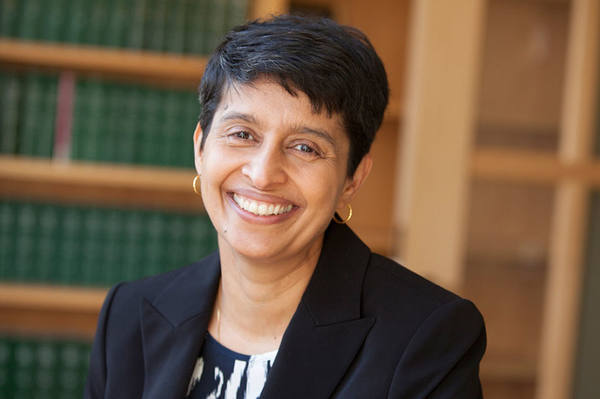 Vrinda Kadiyali合作论文数Samuel Curtis Johnson Graduate School of Management, Cornell SC Johnson College of Business, Cornell University1
 Melissa J. Ferguson合作论文数Departments of Psychological, Yale University1
 Shorna Broussard Allred合作论文数Department of Global Development, College of Agriculture and Life Sciences, Cornell University/Center for Conservation Social Sciences, Department of Natural Resources and the Environment, Cornell University1
 Melissa Ferguson合作论文数Department of Psychology, Yale University1
 Mirko S. Heinle合作论文数Accounting Department, The Wharton School, University of Pennsylvania1
 Paul Fischer合作论文数Accounting Department, The Wharton School, University of Pennsylvania1
 Doron Nissim合作论文数Graduate School of Business, Columbia University1
 Stephen H. Penman合作论文数Graduate School of Business, Columbia University1
 Tim Baldenius合作论文数Accounting, Columbia Business School, Columbia University1




