Adaptive mesh refinement techniques offer a flexible framework for future variable-resolution climate and weather models since they can focus their computational mesh on certain geographical areas or atmospheric events. Adaptive meshes can also be used to coarsen a latitude-longitude grid in polar regions. This allows for the so-called reduced grid setups. A spherical, block-structured adaptive grid technique is applied to the Lin-Rood finite-volume dynamical core for weather and climate research. This hydrostatic dynamics package is based on a conservative and monotonic finite-volume discretization in flux form with vertically floating Lagrangian layers. The adaptive dynamical core is built upon a flexible latitude-longitude computational grid and tested in two- and three-dimensional model configurations. The discussion is focused on static mesh adaptations and reduced grids. The two-dimensional shallow water setup serves as an ideal testbed and allows the use of shallow water test cases like the advection of a cosine bell, moving vortices, a steady-state flow, the Rossby-Haurwitz wave or cross-polar flows. It is shown that reduced grid configurations are viable candidates for pure advection applications but should be used moderately in nonlinear simulations. In addition, static grid adaptations can be successfully used to resolve three-dimensional baroclinic waves in the storm-track region.
One of the most important advances needed in global climate models is the development of atmospheric General Circulation Models (GCMs) that can reliably treat convection. Such GCMs require high resolution in local convectively active regions, both in the horizontal and vertical directions. During previous research we have developed an Adaptive Mesh Refinement (AMR) dynamical core that can adapt its grid resolution horizontally. Our approach utilizes a finite volume numerical representation of the partial differential equations with floating Lagrangian vertical coordinates and requires resolving dynamical processes on small spatial scales. For the latter it uses a newly developed general-purpose library, which facilitates 3D block-structured AMR on spherical grids. The library manages neighbor information as the blocks adapt, and handles the parallel communication and load balancing, freeing the user to concentrate on the scientific modeling aspects of their code. In particular, this library defines and manages adaptive blocks on the sphere, provides user interfaces for interpolation routines and supports the communication and load-balancing aspects for parallel applications. We have successfully tested the library in a 2-D (longitude-latitude) implementation. During the past year, we have extended the library to treat adaptive mesh refinement in the vertical direction. Preliminary results are discussed. This research project is characterized by an interdisciplinary approach involving atmospheric science, computer science and mathematical/numerical aspects. The work is done in close collaboration between the Atmospheric Science, Computer Science and Aerospace Engineering Departments at the University of Michigan and NOAA GFDL.
Abstract A spherical 2D adaptive mesh refinement (AMR) technique is applied to the so-called Lin–Rood advection algorithm, which is built upon a conservative and oscillation-free finite-volume discretization in flux form. The AMR design is based on two modules: a block-structured data layout and a spherical AMR grid library for parallel computer architectures. The latter defines and manages the adaptive blocks in spherical geometry, provides user interfaces for interpolation routines, and supports the communication and load-balancing aspects for parallel applications. The adaptive grid simulations are guided by user-defined adaptation criteria. Both statically and dynamically adaptive setups that start from a regular block-structured latitude–longitude grid are supported. All blocks are logically rectangular, self-similar, and independent data units that are split into four in the event of refinement requests, thereby doubling the horizontal resolution. Grid coarsenings reverse this refinement principle. ...
We describe a new parallel program for optimizing and analyzing 3-arm Bernoulli bandit problems. Previous researchers had considered this problem computationally intractable, and we know of no previous exact optimizations of 3-arm bandit problems. Despite this, our program is able to solve problems of size 100 or more. We describe the techniques used to achieve this, and indicate various extensions of the program that enable it to solve a wide range of related problems.
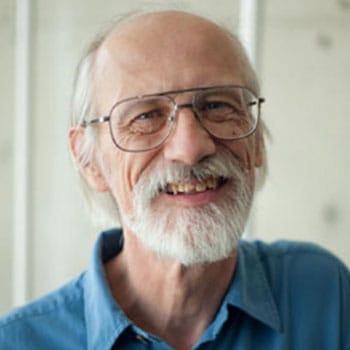 Quentin F Stout合作论文数Center for Space Environment Modeling, University of Michigan;College of Engineering, University of Michigan11
 Christiane Jablonowski合作论文数Department of Climate and Space Sciences and Engineering, College of Engineering, University of Michigan-Ann Arbor7
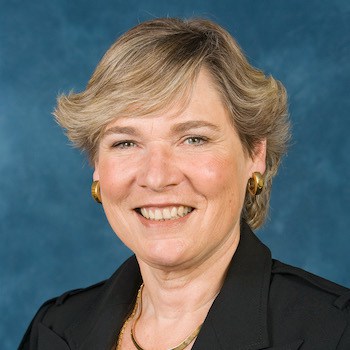 Joyce E. Penner合作论文数College of Engineering, University of Michigan;Desert Research Institute;Department of Atmospheric, Oceanic, and Space Sciences, University of Michigan6
 Kenneth Powell合作论文数Michigan Institute for Computational Discovery & Engineering, University of Michigan5
 Michael Herzog合作论文数Department of Geography, University of Cambridge4
 Igor Sokolov合作论文数Department of Climate and Space Sciences and Engineering, College of Engineering, University of Michigan3
 Aaron Ridley合作论文数Department of Climate and Space Sciences and Engineering, College of Engineering, University of Michigan-Ann Arbor3
 Bram van Leer合作论文数3
 Tamas I. Gombosi合作论文数Climate and Space Sciences and Engineering Department, College of Engineering, University of Michigan;Aerospace Engineering Department, College of Engineering, University of Michigan3
 Kenneth C. Hansen合作论文数Space Physics Research Laboratory, University of Michigan3
 Ovsei Volberg合作论文数3
 Natalia Andronova合作论文数3
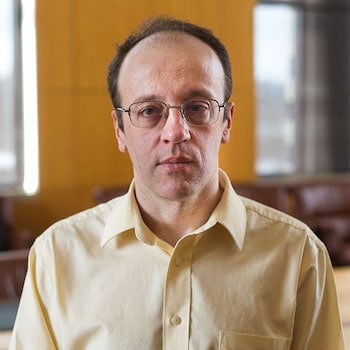 Gabor Toth合作论文数Department of Climate and Space Sciences and Engineering, College of Engineering, University of Michigan;Center for Space Environment Modeling, University of Michigan3david r chesney合作论文数3
 Darren De Zeeuw合作论文数NASA Goddard Space Flight Center2Kevin J. Kane合作论文数2j kota合作论文数1Bin Yu合作论文数1Jonathan Brown合作论文数1Anthony Chan合作论文数1
 Don A. Vandenberg合作论文数University of Victoria1Vitali P. Zubov合作论文数1C. R. Clauer合作论文数1
 Stanislav Sazykin合作论文数Department of Physics and Astronomy, Rice University1
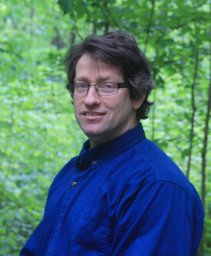 Ward B. Manchester合作论文数Center for Space Environment Modeling, University of Michigan1
 Ilia Iankov Roussev合作论文数Space Sciences Laboratory, University of California, Berkeley1
 R. A. Wolf合作论文数1




