We present a definition of causality for cases where a state of affairs has been caused by a group of agents acting together. We use modal logic to formalize this definition and then we prove that the result of the actions was caused precisely by the agents of the group. In this paper we show another definition of causality in the case where the situation was caused independently by actions performed by several subsets of agents. In addition, we systematically analyze the notion of the level of responsibility of a group agent when the actions performed by the group have violated a norm. In this context, it is assumed that the level of responsibility relies on what the agents have done and also on what they believe about what has been done by each agent. Finally, we apply our formal definitions of causality on a simple case study in order to of allowing an intuitive understanding.
Metabolic networks, formed by a series of metabolic pathways, are made of intracellular and extracellular reactions that determine the biochemical properties of a cell, and by a set of interactions that guide and regulate the activity of these reactions. Most of these pathways are formed by an intricate and complex network of chain reactions, and can be represented in a human readable form using graphs which describe the cell cycle checkpoint pathways. This paper proposes a method to represent Molecular Interaction Maps (graphical representations of complex metabolic networks) in Linear Temporal Logic. The logical representation of such networks allows one to reason about them, in order to check, for instance, whether a graph satisfies a given property $ϕ$, as well as to find out which initial conditons would guarantee $ϕ$, or else how can the the graph be updated in order to satisfy $ϕ$. Both the translation and resolution methods have been implemented in a tool capable of addressing such questions thanks to a reduction to propositional logic which allows exploiting classical SAT solvers.
Metabolic networks, formed by a series of metabolic pathways, are made of intra-cellular and extracellular reactions that determine the biochemical properties of a cell, and by a set of interactions that guide and regulate the activity of these reactions. Cancer, for example, can sometimes appear in a cell as a result of some pathology in a metabolic pathway. Most of these pathways are formed by an intricate and complex network of chain reactions, and are often represented in Molecular Interaction Maps (MIM), a graphical, human readable form of the cell cycle checkpoint pathways. In this paper, we present a logic, called Molecular Interaction Logic, which semantically characterizes MIMs and, moreover, allows us to apply deductive and abductive reasoning on MIMs in order to find inconsistencies, answer queries and infer important properties about those networks.
If an internet user wants to access information about two given individuals, he can submit a request with the names of these individuals. However, the occurrences of these two names do not guarantee that the obtained information expresses a relationship between these individuals. The aim of this paper is to propose a clear definition of sentences which express a relationship between two individuals. We first present an informal analysis, based on examples, of this notion of relationship in the context of atomic sentences, or complex sentences which combines logical connectives or quantifiers. In the next section, we give formal definitions, assuming that sentences are expressed in First Order Logic. We define the notion of "path" between individuals, the notion of link between individuals and the notion of relationship between individuals. A Theorem shows how the relationships which are implicitly expressed in complex formulas can be represented in equivalent formulas expressed with "basic relationships". In the conclusion we suggest possible extensions where the language involves equality, function symbols or modal operators.
The interactions among the components of a biological system can be given a logical representation that is useful for reasoning about them. One of the relevant problems that may be raised in this context is finding what would explain a given behaviour of some component; in other terms, generating hypotheses that, when added to the logical theory modelling the system, imply that behaviour. Temporal aspects have to be taken into account, in order to model the causality relationship that may link the behaviour of a given component to that of another one. This paper presents a hypothesis generation method for linear temporal logic theories whose formulae have a restricted syntactic form, which is however sufficient to model cellular and molecular interactions, as they are often represented by biologists. The method exploits the duality between hypothesis generation and consequence finding, and can therefore be also used to infer the consequences of a given fact. It is based on a resolution system proposed by Cavalli and Fariñas del Cerro in 1984.
Trust may have many different informal definitions. In this work, formal definitions are proposed in Modal Logic in order to have clear rules for reasoning about trust. We start from trust in some properties of an information source, like sincerity, competence or vigilance, about a given proposition. Then, this definition is extended to trust about all the propositions which are about a given topic (for instance, the topic mathematical logic or the topic painting). A further extension is about all the propositions which inform about a given individual (for instance the individual Luis Fariñas or the individual Toledo). Specific logics are presented for reasoning about the fact that a given proposition is about a given topic and for reasoning about the fact that a proposition informs about a given individual. At the end, we give a brief extension to qualitative graded trust.
A translation technique is presented which transforms a class of First Order Logic formulas, called Restricted formulas, into ground formulas. For the formulas in this class the range of quantified variables is restricted by Domain formulas.If we have a complete knowledge of the predicates involved in the Domain formulas their extensions can be evaluated with the Relational Algebra and these extensions are used to transform universal (respectively existential) quantifiers into finite conjunctions (respectively disjunctions).It is assumed that the complete knowledge is represented by Completion Axioms and Unique Name Axioms a la Reiter. These axioms involve the equality predicate. However, the translation allows to remove the equality in the ground formulas and for a large class of formulas their consequences are the same as the initial First Order formulas. This result open the door for the design of efficient deduction techniques. (C) 2016 Elsevier B.V. All rights reserved.
Metabolic networks, formed by a series of metabolic pathways, are made of intracellular and extracellular reactions that determine the biochemical properties of a cell, and by a set of interactions that guide and regulate the activity of these reactions. Cancer, for example, can sometimes appear in a cell as a result of some pathology in a metabolic pathway. Most of these pathways are formed by an intricate and complex network of chain reactions, and can be represented in a human readable form using graphs which describe the cell signaling pathways. In this paper, we define a logic, called Molecular Interaction Logic (MIL), able to represent these graphs and we present a method to automatically translate graphs into MIL formulas. Then we show how MIL formulas can be translated into linear time temporal logic, and then grounded into propositional classical logic. This enables us to solve complex queries on graphs using only propositional classical reasoning tools such as SAT solvers.
Trust is defined as a truster’s belief in some properties. At the beginning they are to reach a goal and then they are refined in trust in some trustee’s property from which the truster can infer that his goal will be reached. This property may be the trustee’s ability to bring it about that the goal is reached which can itself be derived from the trustee’s intention to reach this goal. Then, we show that this intention may be adopted by the trustee depending on three kinds of social relationships: compliance of norms, mutual commitment with another agent or willingness to act without any compensation. This analytical decomposition is formalized in a modal logic with a conditional connective. However, the technical details that could prevent an intuitive reading are omitted.
Segerberg's Dynamic Deontic Logic is a dynamic logic where among the set of all possible histories those fulfilling the norms are distinguished. An extension of this logic to obligations (respectively permissions and prohibitions) to do an action before a given deadline or during a given time interval is defined. These temporal constraints are defined by events which may have several occurrences (like the obligation to update a given file before midnight). Violations of these kinds of norms are defined in this logical framework.
During a dialogue, agents exchange information with each other and need thus to deal with incoming information. For that purpose, they should be able to reason effectively about trustworthiness of information sources. This paper proposes an argument-based system that allows an agent to reason about its own beliefs and information received from other sources. An agent's beliefs are of two kinds: beliefs about the environment (like the window is closed) and beliefs about trusting sources (like agent i trusts agent j). Six basic forms of trust are discussed in the paper including the most common one on sincerity. Starting with a base which contains such information, the system builds two types of arguments: arguments in favour of trusting a given source of information and arguments in favour of believing statements which may be received from other agents. We discuss how the different arguments interact and how an agent may decide to trust another source and thus to accept information coming from that source. The system is then extended in order to deal with graded trust (like agent i trusts to some extent agent j).
This chapter proposes a new logical model based on a fragment of the first-order logic capable of describing reactions that appear in a metabolic network. It presents an efficient automated deduction method that can answer queries by deduction to predict reaction results or by abductive reasoning to find reactions and protein states. This automated deduction method is based on a translation procedure that transforms the first-order formulas into quantifier-free formulas. The goal of the chapter is to design and develop software that allows the interactive visualization of molecular interaction maps (MIMs). The chapter also presents a basic language capable of modeling some basic positive and negative interactions between two or more proteins in a pathway. It focuses on the activation and inhibition actions, and then shows how this language can be extended to express the different other actions, as the action of phosphorylation, autophosphorylation and binding.
The formal definition of causality raises non trivial issues in the case of several agents acting together. Several action operators are defined in the semantics of a multi modal logic. The approach which is proposed is an extension to several agents of the "bringing it about" operators. A joint action operator is defined which holds the property of non monotonicity with respect to sets of agents. It is refined in a restricted joint operator for cases where several sets of agents cause independently a state of affairs and it is extended to sets of agents who are acting indirectly. The formal definitions are evaluated with respect to several typical case studies and a detailed comparison with other approaches based on the STIT operators is presented.
The paper presents a logical framework for the representation of interactions between institutional agents, human agents and software agents. A case study is used to analyze how obligations on institutional agents are “propagated” to human and software agents, and how actions performed by these agents count as actions that satisfy the obligations imposed to institutional agents. It is shown that the relationship between the different kinds of obligations and actions can be represented in terms of the concept of “count as” proposed by Searle, of role and of causality. The logical framework focus on those three concepts.
The paper is about trust in information sources in the context of Multi Agents Systems and it is focused on information and trust propagation. Trust definition is inspired from Cognitive Science and it is seen as a truster's belief in some trustee's properties which are called: sincerity, competence, vigilance, cooperativity, validity and completeness. These definitions are formalized in Modal Logic and it is shown that even if trust, in that sense, is not transitive, we can find interesting sufficient conditions based on trust that guarantee that the truth of an information is propagated along a chain of information sources.
The standard method to retrieve information can be formally defined as follows. To ask a query, one gives the properties of the entities to be retrieved, and the answer is the set of all the entities that satisfy the query. Another method, is to ask the overall information about a given entity, and the answer is the corresponding information. An example of the first kind of query is: ‘who are the persons who have had a car accident?’, an example of the second kind is: ‘what is the overall information about a given person?’. This latter method has deserved very few researches though it has great potential practical applications. However, it raises many non-trivial issues that are investigated here. The first one is to find a precise definition of the fact that a piece of information ‘is about’ a given entity. We propose a new formal definition of this notion of aboutness for query languages in first-order logic with function symbols, and the main properties that follow from this definition are presented. The second one is to define a bridge between this abstract semantic definition and automated deduction methods based on Resolution Principle. Deduction strategies are defined in this direction and it is proved that they are complete.
The paper presents a logical framework for the integration of interactions between institutional agents, human agents and software agents. It is shown, through a case study, that the relationships between actions performed by these three kinds of agents are defined in terms of the Searle's "counts as" concept and their justifications are based on the roles hold by human agents or by a causal relationships between human agent actions and software agent actions.The logical framework concentrates on the concepts of counts as, causality and role.
 Andrew Jones合作论文数King’s College London8
 Luis Fariñas del Cerro合作论文数Institut de Recherche en Informatique de Toulouse, Université Paul Sabatier6
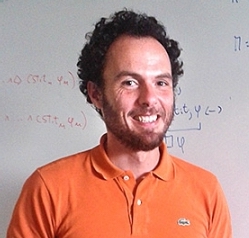 Emiliano Lorini合作论文数Centre National de la Recherche Scientifique;Institut de Recherche en Informatique de Toulouse, Toulouse University6
 Frédéric Cuppens合作论文数Room: M-3103
Polytechnique Montreal5
Frédéric Cuppens合作论文数Room: M-3103
Polytechnique Montreal5 Pilar Pozos Parra合作论文数UJAT5naji obeid合作论文数5Vincent Louis合作论文数4Luis Fariñas Del Cerro合作论文数4
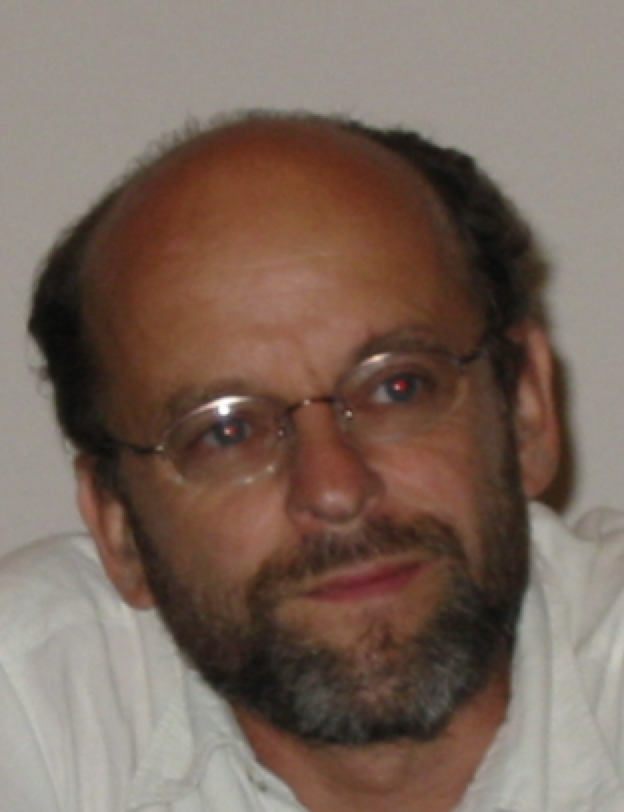 Andreas Herzig合作论文数Institut de Recherche en Informatique de Toulouse, Universite Paul Sabatie4Laurence Cholvy合作论文数DTIM (Departement Traitement de l'Information et Modelisation),ONERA3Jean-Marc Alliot合作论文数Computer Science, 1988 a€” 19923Martín Diéguez合作论文数Department of Computer Science, University of Corunna3Onera Toulouse合作论文数3
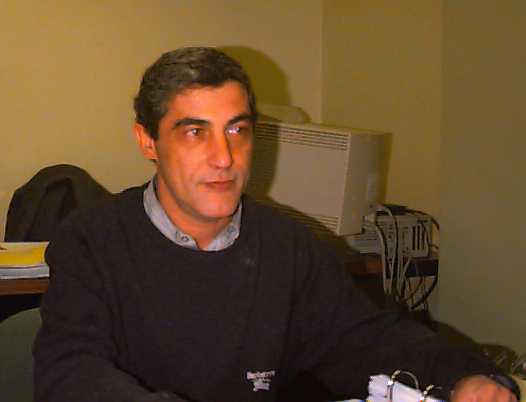 José Carmo合作论文数Center for Logic and Computation
jcc@math.uma.pt2
José Carmo合作论文数Center for Logic and Computation
jcc@math.uma.pt2 Sylvie Cazalens合作论文数2
 Churn Jung Liau合作论文数Institute of Information Science2
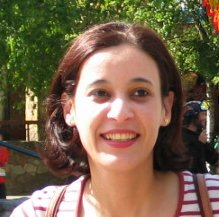 Leila Amgoud合作论文数Centre National de la Recherche Scientifique1
 Jonathan Ben Naim合作论文数Department of Artificial Intelligence, University of Toulouse1
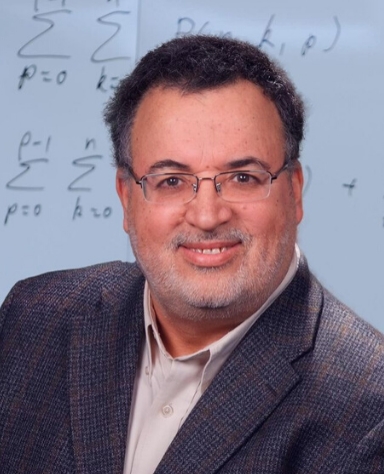 Brahim Chaib-draa合作论文数Departement d’informatique et de genie logiciel, Laval University1Camilla Schwind合作论文数1
 Laurent Vercouter合作论文数INSA Rouen, Normandie Univ1
 Gilles Favre合作论文数1
 Pierre Marquis合作论文数Centre de Recherche en Informatique de Lens, Faculte des Sciences Jean Perrin, Universite d'Artois1
 Cristiano Castelfranchi合作论文数Trust Theory and Technology Group, Istituto di Scienze e Tecnologie della Cognizione-Consiglio Nazionale delle Ricerche;Goal-Oriented Agents Lab, Istituto di Scienze e Tecnologie della Cognizione-Consiglio Nazionale delle Ricerche;University of Siena;LUISS University Rome;Uninettuno International Telematic University1
 Henri Prade合作论文数CNRS1
 Didier Dubois合作论文数Center for Natural Resource Studies;Institut de Recherche en Informatique de Toulouse1Ana María Otermin Fernandez合作论文数1Marta Cialdea Mayer合作论文数Dipartimento di Informatica e Automazione1Yves Moinard合作论文数IRISA, Rennes, France1Salem Benferhat合作论文数Centre de Recherche en Informatique de Lens, University of Artois1
 Dominique Longin合作论文数French National Centre for Scientific Research;AI Department, IRIT1Philippe Bretier合作论文数1Michel Lemaître合作论文数ONERA - Centre de Toulouse (ex CERT)1
 Olivier Sordet合作论文数1Philippe Besnard合作论文数Logic, Interaction, Language, and Computation Group, Institut de Recherche et Informatique Toulouse, University of Paul Sabatier;Centre National de la Recherche Scientifique;University of Toulouse;University of Potsdam;IRIT1Jean-Claude Chupin合作论文数1
 Tomasz Imieliński合作论文数Department of Computer Science, School of Arts and Sciences, Rutgers University1Pilar Pozos-Parra合作论文数UJAT1
 Arantza Illarramendi合作论文数Lengoaia eta Sistema Informatikoak Sailean, Faculty of Informatics of San Sebastian, University of the Basque Country1Kioumars Yazdanian合作论文数1
 Abhaya Nayak合作论文数Department of Computing Faculty of Science Macquarie Univeristy1
 Jomi Fred Hubner合作论文数Department of Automation and Systems Engineering, Federal University of Santa Catarina1Ana Mara Otermin Fernandez合作论文数1
 Ivan Varzinczak合作论文数Université Paris 8;Department of Computer Science, University of Cape Town;Institute of Science and Information Technology, CNR1Olivier Gasquet合作论文数Universite Paul Sabatier1
 José Miguel Blanco合作论文数1Jean-Marie Nicolas合作论文数D??partement TSI ?? Telecom Paris1
 Michel E. Adiba合作论文数University of Grenoble1Jean-Charles Faye合作论文数1




