We present an optical cavity design that is insensitive to both vibrations and orientation. The design is based on a spherical cavity spacer that is held rigidly at two points on a diameter of the sphere. Coupling of the support forces to the cavity length is reduced by holding the sphere at a "squeeze insensitive angle" with respect to the optical axis. Finite element analysis is used to calculate the acceleration sensitivity of the spherical cavity for the ideal geometry as well as for several varieties of fabrication errors. The measured acceleration sensitivity for an initial, sub-ideal version of the mounted cavity is 4.0(5)×10(-11)/g, 1.6(3)×10(-10)/g, and 3.1(1)×10(-10)/g (where g = 9.81 m/s2) for accelerations along the vertical and two horizontal directions, and the fractional frequency stability of a laser locked to the cavity is 1.2×10(-15) between 0.4 and 13 s. This low acceleration sensitivity combined with the orientation insensitivity that comes with a rigid mount indicates that this cavity design could allow frequency stable lasers to operate in non-laboratory environments.
Over a two-year duration, we have compared the frequency of the Hg 5d6s S1/2(F = 0) ←→ 5d6s D5/2(F = 2) electric-quadrupole transition at 282 nm with the frequency of the ground-state hyperfine splitting in neutral Cs. These measurements show that any fractional time variation of the ratio νCs/νHg between the two frequencies is smaller than ±7 × 10 yr (1σ uncertainty). According to recent atomic structure calculations, this sets an upper limit to a possible fractional time variation of gCs(me/mp)α 6.0 at the same level.
Time has always had a special status in physics because of its fundamental role in specifying the regularities of nature and because of the extraordinary precision with which it can be measured. This precision enables tests of fundamental physics and cosmology, as well as practical applications such as satellite navigation. Recently, a regime of operation for atomic clocks based on optical transitions has become possible, promising even higher performance. We report the frequency ratio of two optical atomic clocks with a fractional uncertainty of 5.2 x 10(-17). The ratio of aluminum and mercury single-ion optical clock frequencies nuAl+/nuHg+ is 1.052871833148990438(55), where the uncertainty comprises a statistical measurement uncertainty of 4.3 x 10(-17), and systematic uncertainties of 1.9 x 10(-17) and 2.3 x 10(-17) in the mercury and aluminum frequency standards, respectively. Repeated measurements during the past year yield a preliminary constraint on the temporal variation of the fine-structure constant alpha of alpha/alpha = (-1.6+/-2.3) x 10(-17)/year.
We report on work directed toward the system- atic evaluation of an optical frequency standard based on the - transition of a single, laser-cooled, trapped Hg ion, whose resonance frequency is 1.06 10 Hz. For the purpose of the evaluation, a second Hg standard has been con- structed. In the cooling-laser system built for the second standard, an injection-locking scheme has been applied to a CW Ti-sapphire laser. We also report optical frequency measurements of the clock transition performed over the past 21 months with the first standard. During this term, the variation of the clock transition frequency is found to be less than 1 10 . Index Terms—Injection-locked laser, mercury ion, optical fre- quency standard.
Frequency Standards and Metrology, pp. 361-368 (2002) No AccessQUANTUM COMPUTERS AND ATOMIC CLOCKSD. J. WINELAND, J. C. BERGQUIST, J. J. BOLLINGER, R. E. DRULLINGER, and W. M. ITANOD. J. WINELANDNIST, (Contribution of NIST; not subject to U. S. copyright.) Time and Frequency Division, Boulder, CO, 80305-3328, USA, J. C. BERGQUISTNIST, (Contribution of NIST; not subject to U. S. copyright.) Time and Frequency Division, Boulder, CO, 80305-3328, USA, J. J. BOLLINGERNIST, (Contribution of NIST; not subject to U. S. copyright.) Time and Frequency Division, Boulder, CO, 80305-3328, USA, R. E. DRULLINGERNIST, (Contribution of NIST; not subject to U. S. copyright.) Time and Frequency Division, Boulder, CO, 80305-3328, USA, and W. M. ITANONIST, (Contribution of NIST; not subject to U. S. copyright.) Time and Frequency Division, Boulder, CO, 80305-3328, USAhttps://doi.org/10.1142/9789812777713_0040Cited by:16 PreviousNext AboutSectionsPDF/EPUB ToolsAdd to favoritesDownload CitationsTrack CitationsRecommend to Library ShareShare onFacebookTwitterLinked InRedditEmail Abstract: Recent developments in quantum information processing may be applicable to future atomic clocks. In this paper we discuss two potential applications to trapped-ion frequency standards. In the first, quantum-mechanical entanglement can provide a resource for increased measurement precision in spectroscopy. In the second, we indicate how a simultaneously trapped auxiliary ion species can be used to provide cooling and as a quantum measuring device; this could be used to increase the number of ion species than can be used as frequency standards. FiguresReferencesRelatedDetailsCited By 16Technological trajectories in quantum computing to design a quantum ecosystem for industrial changeMario Coccia19 August 2022 | Technology Analysis & Strategic Management, Vol. 89Quantenlogik‐UhrenPiet O. Schmidt1 July 2021 | Physik in unserer Zeit, Vol. 52, No. 4Coherent laser spectroscopy of highly charged ions using quantum logicP. Micke, T. Leopold, S. A. King, E. Benkler and L. J. Spieß et al.29 January 2020 | Nature, Vol. 578, No. 7793Quantum Logic‐Enabled SpectroscopyPiet O. Schmidt15 April 2019Superposition, entanglement, and raising Schrödinger's catDavid J. Wineland6 September 2013 | Annalen der Physik, Vol. 525, No. 10-11Überlagerungen, Verschränkungen und Schrödingers Katze (Nobel-Aufsatz)David J. Wineland12 August 2013 | Angewandte Chemie, Vol. 125, No. 39Superposition, Entanglement, and Raising Schrödinger's Cat (Nobel Lecture)David J. Wineland12 August 2013 | Angewandte Chemie International Edition, Vol. 52, No. 39Blackbody radiation shifts in optical atomic clocksM. S. Safronova, M. G. Kozlov and C. W. Clark1 Mar 2012 | IEEE Transactions on Ultrasonics, Ferroelectrics and Frequency Control, Vol. 59, No. 3When should we change the definition of the second?Patrick Gill28 October 2011 | Philosophical Transactions of the Royal Society A: Mathematical, Physical and Engineering Sciences, Vol. 369, No. 1953Quantum information processing and quantum control with trapped atomic ionsD J Wineland15 December 2009 | Physica Scripta, Vol. T137Production of large molecular ion crystals via sympathetic cooling by laser-cooled Ba +B Roth, A Ostendorf, H Wenz and S Schiller26 September 2005 | Journal of Physics B: Atomic, Molecular and Optical Physics, Vol. 38, No. 20Logical SpectroscopyEkkehard Peik29 Jul 2005 | Science, Vol. 309, No. 5735Spectroscopy of a single Al/sup +/ ion via coupling to Be/sup +/T. Rosenband, P.O. Schmidt, J.C.J. Koelemeij, W.M. Itano and Y. Kobayashi et al.1 Jan 2005Photo-dissociation of Cold MgH $\mathsf{^ + }$ ionsA. Bertelsen, I. S. Vogelius, S. J�rgensen, R. Kosloff and M. Drewsen1 Nov 2004 | The European Physical Journal D, Vol. 31, No. 2Precision Spectroscopy of Molecular Hydrogen Ions: Towards Frequency Metrology of Particle MassesB. Roth, J. Koelemeij, S. Schiller, L. Hilico and J.-P. Karr et al.Ion optical clocks and quantum information processingD.J. Wineland, J.C. Bergquist, T. Rosenband, P.O. Schmidt and W.M. Itano et al. Frequency Standards and MetrologyMetrics History PDF download
NIST has a more than 50-year history of developing ever more accurate atomic frequency standards. For most of that time, the technology was based on thermal atomic beams of cesium atoms, and the accuracy improvement was approximately a factor of 10 every 7 years. To put this into some kind ofperspective, both the period of this history and the rate of improvement are almost identical to the development of information-storage density in magnetic medid Now, however, with the advent of laser-cooling schemes and optical- frequency metrology, the rate of progress is dramatically increasing. This paper discusses briefly the last of the thermal-beam standards and our first laser-cooled, atomic-fountain standard. It then goes into some detail about the newly developed all-optical standards that use an optical-frequency transition in a single, laser-cooled, trapped mercury ion or in an ensemble of laser-cooled and trapped calcium atoms. Based largely on the increased operating frequency of the "clock" transition, these new standards have the potential for several orders of magnitude improvement in stabirity and, in the case of the mercury standard, accuracy over today's standards operating in the microwave region.
Microwave atomic clocks have been the de facto standards for precision time and frequency metrology over the past 50 years, finding widespread use in basic scientific studies, communications, and navigation. However, with its higher operating frequency, an atomic clock based on an optical transition can be much more stable. We demonstrate an all-optical atomic clock referenced to the 1.064-petahertz transition of a single trapped Hg ion. A clockwork based on a mode-locked femtosecond laser provides output pulses at a 1-gigahertz rate that are phase-coherently locked to the optical frequency. By comparison to a laser-cooled calcium optical standard, an upper limit for the fractional frequency instability of 7 3 10 is measured in 1 second of averaging—a value substantially better than that of the world’s best microwave atomic clocks.
CRL and NIST have completed the development of CRL-O1, an improved optically pumped primary frequency standard. The results of the first evaluation of the new standard and its comparison with NIST-7, the US primary frequency standard are presented
We have achieved a stability of 3 10 13 1=2 for 3 < < 30 s with a laser-pumped rubidium gas-cell frequency standard by reducing the effects due to noise in the microwave and laser sources. This result is one order of magnitude better than the best present performance of lamp-pumped devices.
We present a theoretical comparison between a TE01n cavity and a traditional Ramsey cavity when used with a laser-cooled atom source in a microgravity clock.
we report the improvement of short term stability (5.10-’3 z-’~) that has been obtained with a laserpumped passive gas-cell frequency standard. Three types of lasers, including extended cavity (EC), solitary and DBR lar.ers, have been used with different stabilization schemes. Their amplitude modulation (AM) noise and phase modulation (PM) noise have been measured and compared. The requirements on the accuracy and on the stability of their frequency stabilization have been established by light sM measurements which were performed with simultaneous heterodyne detection of the laser frequeng. The use of the DI line instead of the D2 line of Rb is also discussed. The possibility of simultaneously making the two light shift coefficients (Avdd /A Irar and Avdd /Avlmr) zero is described. Some limitations due to the microwave synthesizer are presented. Finally, clock stability measurements are presented and discussed.
 James C. Bergquist合作论文数National Institute of Standards and Technology13
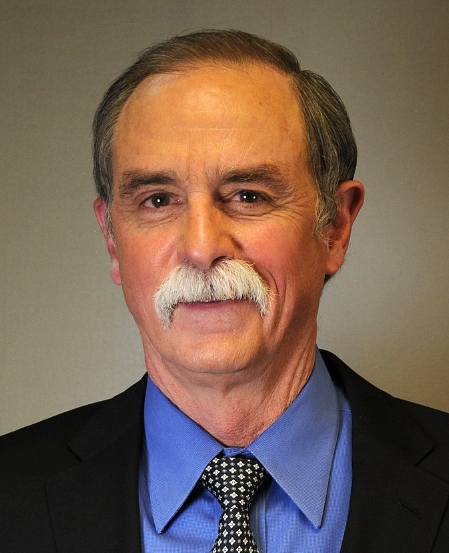 David J. Wineland合作论文数Department of Physics, College of Arts and Sciences, University of Oregon12
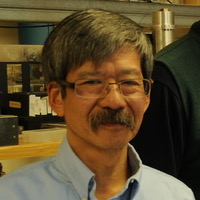 Wayne Itano合作论文数Museum of Natural History, University of Colorado;National Institute of Standards and Technology10
 m m hessel合作论文数10D. A. Jennings合作论文数8W. D. Lee合作论文数8Jon H. Shirley合作论文数7
 Scott Diddams合作论文数Department of Electrical, Computer and Energy Engineering, College of Engineering and Applied Science, University of Colorado Boulder7
 Fred L. Walls合作论文数7
 Leo Hollberg合作论文数Physics Department, School of Humanities and Sciences, Stanford University6Cw Oates合作论文数5
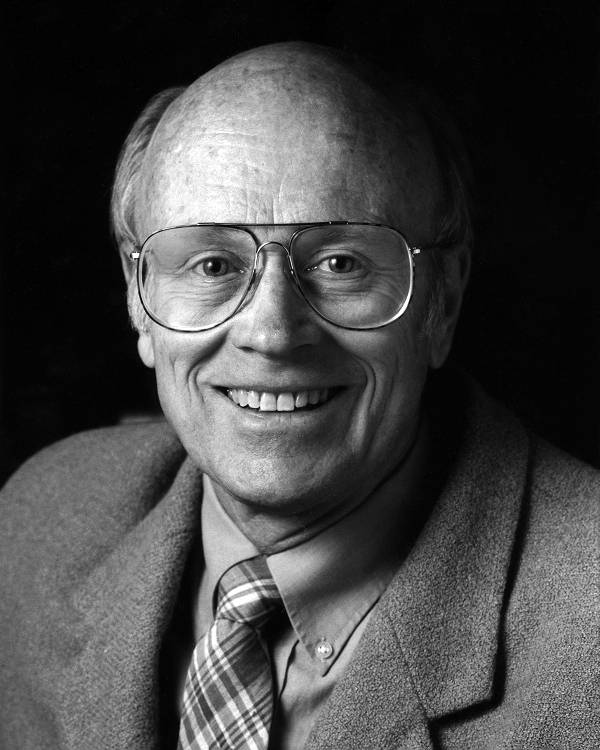 Kenneth M. Evenson合作论文数National Institute of Standards and Technology5F. R. Petersen合作论文数5
 Anne Curtis合作论文数5J.S. Wells合作论文数5Till Rosenband合作论文数National Institute of Standards and Technology, National Institute of Standards and Technology4E. C. Beaty合作论文数4
 Thomas Udem合作论文数Max-Planck-Institut für Quantenoptik;Ludwig-Maximilians-Universität Munich4
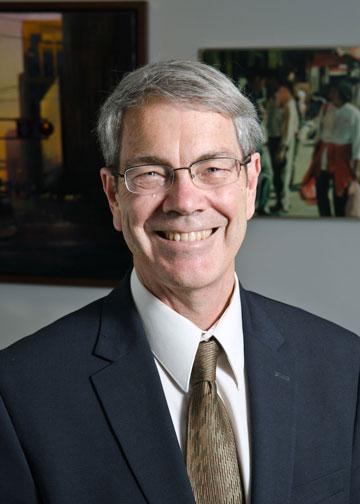 Clifford R. Pollock合作论文数Department of Electrical and Computer Engineering, Cornell University4Maryanne F. Stock合作论文数4
 Steven R. Jefferts合作论文数3
 Richard Zare合作论文数The Zarelab, Department of Chemistry, School of Humanities and Sciences, Stanford University3Windell H Oskay合作论文数Frequency Division;National Institute of Standards and Technology3
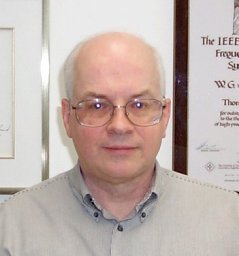 Thomas E. Parker合作论文数Frequency Division;National Institute of Standards and Technology;Frequency Division, National Institute of Standards and Technology3E. W. Smith合作论文数2j m lopezromero合作论文数2gaetano mileti合作论文数2
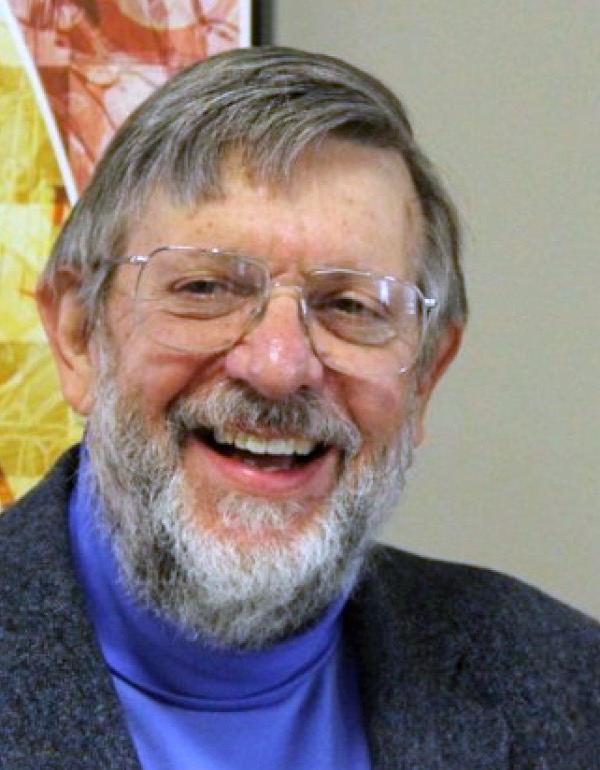 William D. Phillips合作论文数National Institute of Standards and Technology;Institute for Physical Science & Technology, College of Computer, Mathematical, & Natural Sciences, University of Maryland2Lowe, J.P.合作论文数2
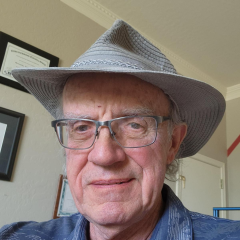 Michael Thorpe合作论文数Center for Biological Physics, Arizona State University2U. Tanaka合作论文数2
 David Leibrandt合作论文数Department of Physics, University of Colorado Boulder;Department of Physics and Astronomy, University of California, Los Angeles2
 Tara Fortier合作论文数Time & Frequency Division, National Institute of Standards and Technology;University of Colorado2
 Thomas P. Heavner合作论文数Frequency Division;National Institute of Standards and Technology2EW SMITH合作论文数2Mark Notcutt合作论文数2d b sullivan合作论文数2
 John J. Bollinger合作论文数Time and Frequency Division, NIST2
 Piet O Schmidt合作论文数Institut für Quantenoptik, Leibniz Universität Hannover;Institute for Experimental Quantum Metrology2S. Bize合作论文数1D. B. Hume合作论文数1K. R. Vogel合作论文数1Kj Siemsen合作论文数1ch breant合作论文数1Ch. Salomon合作论文数1a demarchi合作论文数1j q deng合作论文数1A. Brusch合作论文数1
 Craig W. Nelson合作论文数1




