Syntactic parsing using dependency structures has become a standard technique in natural language processing with many different parsing models, in particular data-driven models that can be trained on syntactically annotated corpora. In this paper, we tackle transition-based dependency parsing using a Perceptron Learner. Our proposed model, which adds more relevant features to the Perceptron Learner, outperforms a baseline arc-standard parser. We beat the UAS of the MALT and LSTM parsers. We also give possible ways to address parsing of non-projective trees.
Node embeddings have become an ubiquitous technique for representing graph data in a low dimensional space. Graph autoencoders, as one of the widely adapted deep models, have been proposed to learn graph embeddings in an unsupervised way by minimizing the reconstruction error for the graph data. However, its reconstruction loss ignores the distribution of the latent representation, and thus leading to inferior embeddings. To mitigate this problem, we propose a random walk based method to regularize the representations learnt by the encoder. We show that the proposed novel enhancement beats the existing state-of-the-art models by a large margin (upto 7.5\%) for node clustering task, and achieves state-of-the-art accuracy on the link prediction task for three standard datasets, cora, citeseer and pubmed. Code available at https://github.com/MysteryVaibhav/DW-GAE.
In this work, we present a dynamic response spoken dialogue system (DRSDS). It is capable of understanding the verbal and nonverbal language of users and making instant, situation-aware response. Incorporating with two external systems, MultiSense and email summarization, we built an email reading agent on mobile device to show the functionality of DRSDS.
This thesis investigates N-best hypotheses reranking techniques for improving speech recognition accuracy. We have focused on improving the accuracy of a speech recognizer used in a dialog system. Our post-processing approach uses a linear regression model to predict the error rate of each hypothesis from hypothesis features, and then outputs the one that has the lowest (recomputed) error rate. We investigated 15 different features sampled from 3 components of a dialog system: a decoder, a parser and a dialog manager. These features are speech recognizer score, acoustic model score, language model score, N-best word rate, N-best homogeneity with speech recognizer score, N-best homogeneity with language model score, N-best homogeneity with acoustic model score, unparsed words, gap number, fragmentation transitions, highest-in-coverage, slot bigram, conditional slot, expected slots and conditional slot bigram. We also used a linear rescaling with clipping technique to normalize feature values to deal with differences in order of magnitude. A searching strategy was used to discover the optimal feature set for reordering; three search algorithms were examined: stepwise regression, greedy search and brute force search. To improve reranking accuracy and reduce computation we examined techniques for selecting utterances likely to benefit from reranking then applying reranking only to utterances so identified. Besides the conventional performance metric, word error rate, we also proposed concept error rate as an alternative metric. An experiment with human subjects revealed that concept error rate is the metric that better conforms to the criteria used by humans when they evaluated hypotheses quality. The reranking model, that performed the best, combined 6 features together to predict error rate. These 6 features are speech recognizer score, language model score, acoustic model score, slot bigram, N-best homogeneity with speech recognizer score and N-best word rate. This optimal set of features was obtained using greedy search. This model can improve the word error rate significantly beyond the speech recognizer baseline. The reranked word error rate is 11.14%, which is a 2.71% relative improvement from the baseline. The reranked concept error rate is 9.68%, which is a 1.22% relative improvement from the baseline. Adding an utterance selection module into a reranking process did not improve the reranking performance beyond the number achieved by reranking every utterance. However, some selection criteria achieved the same overall error rate by reranking just a small number (8.37%) of the utterances. When comparing the performance of the proposed reranking technique to the performance of a human on the same reranking task, the proposed method did as well as a native speaker, suggesting that an automatic reordering process is quite competitive.
Information extraction, and specifically event and relation extraction from text, is an important problem in the age of big data. Current solutions to these problems require large amounts of training data or extensive feature engineering to find domain-specific events. We introduce a novel Interactive Learning approach that greatly reduces the number of training examples needed and requires no feature engineering. Our method achieves event detection precision in the 80 s and 90 s with only 1 h of human supervision.
While many high-quality tools are available for analyzing major languages such as English, equivalent freely-available tools for important but lower-resourced languages such as Farsi are more difficult to acquire and integrate into a useful NLP front end. We report here on an accurate and efficient Farsi analysis front end that we have assembled, which may be useful to others who wish to work with written Farsi. The pre-existing components and resources that we incorporated include the Carnegie Mellon TurboParser and TurboTagger (Martins et al., 2010) trained on the Dadegan Treebank (Rasooli et al., 2013), the Uppsala Farsi text normalizer PrePer (Seraji, 2013), the Uppsala Farsi tokenizer (Seraji et al., 2012a), and Jon Dehdari's PerStem (Jadidinejad et al., 2010). This set of tools (combined with additional normalization and tokenization modules that we have developed and made available) achieves a dependency parsing labeled attachment score of 89.49%, unlabeled attachment score of 92.19%, and label accuracy score of 91.38% on a held-out parsing test data set. All of the components and resources used are freely available. In addition to describing the components and resources, we also explain the rationale for our choices.
This paper describes a suite of tools for extracting conventionalized metaphors in English, Spanish, Farsi, and Russian. The method depends on three significant resources for each language: a corpus of conventionalized metaphors, a table of conventionalized conceptual metaphors (CCM table), and a set of extraction rules. Conventionalized metaphors are things like escape from poverty and burden of taxation. For each metaphor, the CCM table contains the metaphorical source domain word (such as escape) the target domain word (such as poverty) and the grammatical construction in which they can be found. The extraction rules operate on the output of a dependency parser and identify the grammatical configurations (such as a verb with a prepositional phrase complement) that are likely to contain conventional metaphors. We present results on detection rates for conventional metaphors and analysis of the similarity and differences of source domains for conventional metaphors in the four languages.
Fast and effective automated indexing is critical for search and personalized services. Key phrases that consist of one or more words and represent the main concepts of the document are often used for the purpose of indexing. In this paper, we investigate the use of additional semantic features and pre-processing steps to improve automatic key phrase extraction. These features include the use of signal words and freebase categories. Some of these features lead to significant improvements in the accuracy of the results. We also experimented with 2 forms of document pre-processing that we call light filtering and co-reference normalization. Light filtering removes sentences from the document, which are judged peripheral to its main content. Co-reference normalization unifies several written forms of the same named entity into a unique form. We also needed a "Gold Standard" - a set of labeled documents for training and evaluation. While the subjective nature of key phrase selection precludes a true "Gold Standard", we used Amazon's Mechanical Turk service to obtain a useful approximation. Our data indicates that the biggest improvements in performance were due to shallow semantic features, news categories, and rhetorical signals (nDCG 78.47% vs. 68.93%). The inclusion of deeper semantic features such as Freebase sub-categories was not beneficial by itself, but in combination with pre-processing, did cause slight improvements in the nDCG scores.
In the emerging field of micro-blogging and social communication services, users post millions of short messages every day. Keeping track of all the messages posted by your friends and the conversation as a whole can become tedious or even impossible. In this paper, we presented a study on automatically clustering and classifying Twitter messages, also known as “tweets”, into different categories, inspired by the approaches taken by news aggregating services like Google News. Our results suggest that the clusters produced by traditional unsupervised methods can often be incoherent from a topical perspective, but utilizing a supervised methodology that utilize the hash-tags as indicators of topics produce surprisingly good results. We also offer a discussion on temporal effects of our methodology and training set size considerations. Lastly, we describe a simple method of finding the most representative tweet in a cluster, and provide an analysis of the results.
In this paper, we consider the problem of cross-document co-reference (CDC). Existing approaches tend to treat CDC as an information retrieval based problem and use features such as TF-IDF cosine similarity to cluster documents and/or co-reference chains. We augmented these features with features based on biographical attributes, such as occupation, nationality, gender, etc., obtained by using semisupervised attribute extraction models. Our results suggest that the addition of these features boosts the performance of our CDC system considerably. The extraction of such specific attributes allows us to use features, such as semantic similarity, mutual information and approximate name similarity which have not been used so far for CDC with traditional bag-of-words models. Our system achieves F0.5 scores of 0.82 and 0.81 on the WePS-1 and WePS-2 datasets, which rival the best reported scores for this problem.
Local pressures are generally determined based on extreme pressures obtained in measurements. The exposure of structural components is an issue that needs attention. Exposure can be considered in everyday terms as "the longer you fish, the bigger the fish you catch." In the case of design of offshore structures for ice environments, the more numerous the number of ice-structure interaction events, the greater the likelihood of a particular load being exceeded. The number of interactions with multiyear ice is different for say the Beaufort and Chukchi Seas, and varies with location within these areas. These differences are expressed in terms of the exposure of the structure to multiyear ice. Exposure may also vary depending on location within the structure. Structure above or below the ice belt may receive few interactions resulting in small local pressures.The paper presents a generalization of a method for accounting for exposure, originally developed for ship rams. The particular application is multiyear ice interacting with a structure. The panel data from the Beaufort Sea experience of the Molikpaq structure is used as an example. Exposure is an important parameter that can be taken into account with the method. The previous relationship alpha = 1.25a(-0.7) obtained for ship rams can be reasonably applied to multiyear ice, where 10 min of multiyear ice interaction is approximately equivalent to 1 Kigoriak ship ramming event. The method is promising for use in codes, for example with the new ISO Code 19906. (C) 2010 Elsevier B.V. All rights reserved.
Developing Named Entity Recognition (NER) for a new language using standard techniques requires collecting and annotating large training resources, which is costly and time-consuming. Consequently, for many widely spoken languages such as Swahili, there are no freely available NER systems. We present here a new technique to perform NER for new languages using online machine translation systems. Swahili text is translated to English, the best off-the-shelf NER systems are applied to the resulting English text and the English named entities are mapped back to words in the Swahili text. Our system, called SYNERGY, addresses the problem of NER for a new language by breaking it into three relatively easier problems: Machine Translation to English, English NER and word alignment between English and the new language. SYNERGY achieves good precision as well as recall for Swahili. We also apply SYNERGY to Arabic, for which freely available NERs do exist, in order to compare its performance to other NERs. We find that SYNERGY’s performance is close to the state-of-the-art in Arabic NER, with the advantage of requiring vastly less time and effort to build.
We present ENCORE, a sy-stem for entity co-reference resolution that synthesizes the outputs of several off-the-shelf co-reference resolution systems. To boost precision. we filter the output using a named entity recognition tool called SYNERGY which itself is a synthesis of several off-the-shelf NER systems. ENCORE is designed to work under two conditions: NP-CR winch resolves noun phrase co-reference and NE-CR which resolves co-references only for named entities. We report the results of our experiments with ENCORE that show 2% to 400% improvements in precision. recall and F-scores over the underling. systems. Tins opens a promising approach which leverages the existing "black box" state-of-the-art tools without attempting to re-create their achievements and focuses the development efforts on the differences in their output.
Human annotation for Co-reference Resolution (CRR) is labor intensive and costly, and only a handful of annotated corpora are currently available. However, corpora with Named Entity (NE) annotations are widely available. Also, unlike current CRR systems, state-of-the-art NER systems have very high accuracy and can generate NE labels that are very close to the gold standard for unlabeled corpora. We propose a new set of metrics collectively called CONE for Named Entity Co-reference Resolution (NE-CRR) that use a subset of gold standard annotations, with the advantage that this subset can be easily approximated using NE labels when gold standard CRR annotations are absent. We define CONE B3 and CONE CEAF metrics based on the traditional B3 and CEAF metrics and show that CONE B3 and CONE CEAF scores of any CRR system on any dataset are highly correlated with its B3 and CEAF scores respectively. We obtain correlation factors greater than 0.6 for all CRR systems across all datasets, and a best-case correlation factor of 0.8. We also present a baseline method to estimate the gold standard required by CONE metrics, and show that CONE B3 and CONE CEAF scores using this estimated gold standard are also correlated with B3 and CEAF scores respectively. We thus demonstrate the suitability of CONE B3 and CONE CEAF for automatic evaluation of NE-CRR.
Researchers in the field of spoken language translation are plagued by a device from popular science fiction. Numerous television series and movies, most notably those in the “Star Trek” franchise, have assumed the existence of a Universal Translator, a device that immediately understands any language (human or alien), translates it into the other person’s language (always correctly), and speaks it fluently, with appropriate prosody. While this is a very useful plot device, avoiding tedious stretches of translation and the need to invent convincing alien languages, it sets up wildly unrealistic expectations on the part of the public [1]. In contrast, anything that is actually possible can only be a disappointment.
This paper presents an overview of bergy bit impact trials carried out on the CCGS Terry Fox off the northern tip of the island of Newfoundland in June 18–23, 2001 and is meant to accompany the five papers that follow. The trial consisted of impacting target iceberg ice masses ranging from roughly 100 t (growlers) to 22,000 t (bergy bits) on an instrumented bow area of the ‘Terry Fox’ at various forward speeds. Parameters measured included impact forces, pressures and contact areas, ship motions with six degrees of freedom, ship forward speed, and ambient environmental factors. In addition, extensive video and photographic records were compiled, including stereo photographs of the bergy bits. Furthermore, a multi-beam sonar was used to determine underwater profiles of some of the targeted ice masses. Temperature profiles were obtained for a number of bergy bits and some ice samples were collected from undamaged and impacted ice. The details and data associated with the various components of the field study are presented in the 5 accompanying papers. Below are brief descriptions of the ‘Terry Fox’, the instrumentation/set-up used and ice characterization techniques employed. This overview is condensed from a more detailed one [Gagnon, R., Cumming, D., Ritch, R., Browne, R., Johnston, M., Frederking, R., McKenna, R. and Ralph, F., 2002. Overview of Bergy Bit Impact Trials. Proceedings of the 16th International Symposium on Ice, Ice in the Environment, IAHR 2002, Dunedin, New Zealand, Vol. 1, 458–465.] presented at IAHR 2002 in New Zealand.
In this paper, we describe NineOneOne (9-1-1), a system designed to recognize and translate Spanish emergency calls for better dispatching. We analyze the research challenges in adapting speech translation technology to 9-1-1 domain. We report our initial research towards building the system and the results of our initial experiments.
: Training a named entity recognizer (NER) has always been a difficult task due to the effort required to generate a significant amount of annotated training data. In this paper, we reduce or eliminate the effort required to create training data by automatically converting other sources of data into annotated training data. The performance of this approach is tested on a gene-protein name extractor by using the mouse and fly data obtained from the BioCreAtIvE challenge. Results show that our methods are effective and that our trained NER system outperforms all of our baseline results.
We introduce JCORE, a full-fledged UIMA -compliant component repository for complex text analytics developed at the Jena University Language & Information Engineering (J ULIE) Lab. JCORE is based on a comprehensive type system and a variety of document readers, analysis engines, and CAS consumers. We survey these components and then turn to a discussion of lessons we learnt, with particular emphasis on managing the underlying type system. We briefly sketch two complex NLP applications which can easily be built from the components contained in JC ORE.
 Lori Levin合作论文数Language Technologies Institute, School of Computer Science, Carnegie Mellon University17
 Ralf Brown合作论文数Language Technologies Institute, School of Computer Science, Carnegie Mellon University13
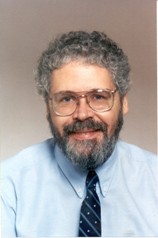 Jaime Carbonell合作论文数School of Computer Science, Carnegie Mellon University;Language Technologies Institute, Carnegie Mellon University11
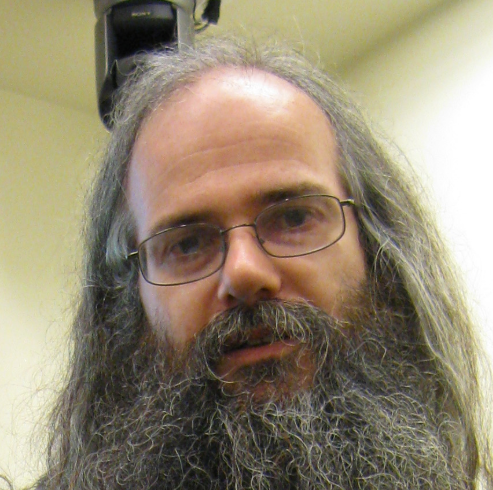 Alan W Black合作论文数Language Technologies Institute, School of Computer Science, Carnegie Mellon University9
 Alison Alvarez合作论文数Language Technologies Institute9
 Teruko Mitamura合作论文数Language Technologies Institute, School of Computer Science, Carnegie Mellon University8
 Eric Nyberg合作论文数School of Computer Science, Carnegie Mellon University;Language Technologies Institute, Carnegie Mellon University8
 Alon Lavie合作论文数Language Technologies Institute, School of Computer Science, Carnegie Mellon University;Phrase8
 Anatole Gershman合作论文数Language Technologies Institute, School of Computer Science, Carnegie Mellon University8Christopher Hogan合作论文数7
 Jeff Good合作论文数6
 Sergei Nirenburg合作论文数University of Maryland, Baltimore County5
 Rushin Shah合作论文数Carnegie Mellon University5
 Alexander I. Rudnicky合作论文数Language Technologies Institute, School of Computer Science, Carnegie Mellon University;Automated Speech Technologies LLC5
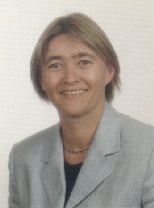 Tanja Schultz合作论文数Cognitive Systems Lab, University of Bremen;Language Technologies Institute, School of Computer Science, Carnegie Mellon University5John Moody合作论文数4
 Alex Waibel合作论文数Interactive Systems Labs, Institute for Anthropomatics and Robotics, Karlsruhe Institute for Technology;InterACT;Carnegie Mellon University4
 Yiming Yang合作论文数Machine Learning Department, School of Computer Science, Carnegie Mellon University;Language Technologies Institute, School of Computer Science, Carnegie Mellon University4Dean Grannes合作论文数4Eric Steinbrecher合作论文数4Bo Lin合作论文数4
 Richard C. Wang (王俊晴)合作论文数Target4
 Kevin A. Lenzo合作论文数Carnegie Mellon University4Yibing Geng合作论文数3
 Maxine Eskenazi合作论文数Language Technologies Institute, School of Computer Science, Carnegie Mellon University3Donna Gates合作论文数3Peter Cousseau合作论文数3Jürgen Reichert合作论文数3Kevin Dela Rosa合作论文数2Dorcas Wallace合作论文数2K Satoh合作论文数2David Farwell合作论文数2
 Douglas W. Oard合作论文数College of Information Studies, University of Maryland2
 Jeff Allen合作论文数2Ariel Cohen合作论文数2
 Pierrette Bouillon合作论文数University of Geneva2
 Ying Zhang合作论文数Carnegie Mellon University2
 Manny Rayner合作论文数TIM;ISSCO;ETI,
University of Geneva2
Manny Rayner合作论文数TIM;ISSCO;ETI,
University of Geneva2 Anthony Tomasic合作论文数Robotics Institute, Carnegie Mellon University2
 Udhyakumar (Udhay) Nallasamy合作论文数Apple Inc2Christian Monson合作论文数2
 Eduard Hovy合作论文数School of Computing and Information Systems, The University of Melbourne2Isaac Simmons合作论文数2Weston Feely合作论文数2
 Fabio Pianesi合作论文数Fondazione Bruno Kessler2
 Jonathan Clark合作论文数Google Research2Ahmed Badran合作论文数2
 Ian Jordaan合作论文数Faculty of Engineering and Applied Science, Memorial University of Newfoundland2
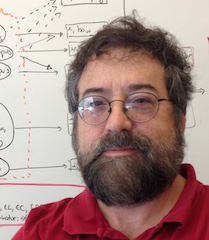 William W. Cohen合作论文数Google;Language Technologies Institute, Carnegie Mellon University;Machine Learning Department, Carnegie Mellon University2




