ABSTRACTCharacterizing the complex relationships between animals and their habitats is essential for effective wildlife conservation and management. Wildlife–habitat selection is influenced by multiple life‐history requirements, which act over varying spatial and temporal scales, and result in dispersion patterns that can differ across ecological levels. For example, sites that attract intense communal use (e.g., hibernacula and communal basking sites) are often a subset of the habitats required by individuals for survival. Despite the conservation importance of both individually and communally significant habitats, snake habitat models rarely incorporate information about both individual and population‐level activity. We used 4 years of radiotelemetry data from eastern copperheads (Agkistrodon contortrix) to evaluate the presence of multilevel spatial habitat responses and whether they revealed conservation‐relevant information. We related individual and population space use intensity to underlying habitat covariates to determine whether predictors of copperhead spatial activity were level‐dependent, and whether individual core habitats differed by sex and reproductive state. Copperheads' episodic gregariousness resulted in spatial and environmental separation between individual and communal core habitats. Population‐level use was greatest in rocky, forested habitats associated with winter brumation and spring basking, whereas individual‐level use was greatest in open habitats with woody debris associated with foraging and reproductive behaviors. Male core habitats were open and thickly vegetated while those of females were moderately forested, with gravid female core habitats containing ample woody debris. Our findings demonstrate that multilevel spatial patterns carry conservation‐relevant information about snake habitat relationships. We suspect that behaviors leading to multilevel spatial patterns exist in many wildlife species whose individual spatial activities overlap around shared resources.
Genome-wide scans for selection have become a popular tool for investigating evolutionary responses in wildlife to emerging diseases. However, genome scans are susceptible to false positives and do little to demonstrate specific mechanisms by which loci impact survival. Linking putatively resistant genotypes to observable phenotypes increases confidence in genome scan results and provides evidence of survival mechanisms that can guide conservation and management efforts. Here we used an expression quantitative trait loci (eQTL) analysis to uncover relationships between gene expression and alleles associated with the survival of little brown bats (Myotis lucifugus) despite infection with the causative agent of white-nose syndrome. We found that 25 of the 63 single-nucleotide polymorphisms (SNPs) associated with survival were related to gene expression in wing tissue. The differentially expressed genes have functional annotations associated with the innate immune system, metabolism, circadian rhythms, and the cellular response to stress. In addition, we observed differential expression of multiple genes with survival implications related to loci in linkage disequilibrium with focal SNPs. Together, these findings support the selective function of these loci and suggest that part of the mechanism driving survival may be the alteration of immune and other responses in epithelial tissue.
Pathogens not only cause mortality but also impose nonlethal fitness consequences. Snakes experience trade-offs associated with behaviors that combat disease but divert time and energy away from other critical activities. The impacts of such behaviors on fitness remain poorly understood, raising concerns amid the emergence of novel herpetofaunal diseases. Ophidiomycosis, caused by the ascomycete fungus Ophidiomyces ophidiicola, impacts free-ranging snakes across North America and has been implicated in declines of several imperiled populations. Although previous ophidiomycosis research has primarily focused on disease-related mortality, few studies have evaluated nonlethal impacts on snake fitness. To address this knowledge gap, we investigated the effects of apparent ophidiomycosis on the behavior, habitat use, and movement of snakes in central New Jersey, USA, from 2020 to 2021. Our focal species was the eastern copperhead (Agkistrodon contortrix), a state species of special concern with limited representation in the ophidiomycosis literature. Although we did not observe mortality in our study population, we found that copperheads with apparent ophidiomycosis (8/31 individuals) displayed significantly different thermoregulatory behaviors than snakes without ophidiomycosis. Specifically, individuals with apparent ophidiomycosis favored areas with less canopy cover, less rock cover, and more coarse woody debris. Our findings suggest that snakes with apparent ophidiomycosis select habitats conducive to initiating behavior-mediated fever, potentially facilitating recovery.
Environmental DNA (eDNA) approaches to monitoring biodiversity in terrestrial environments have largely focused on sampling water bodies, potentially limiting the geographic and taxonomic scope of eDNA investigations. We assessed the performance of two strictly terrestrial eDNA sampling approaches to detect arboreal mammals, a guild with many threatened and poorly studied taxa worldwide, within two central New Jersey (USA) woodlands. We evaluated species detected with metabarcoding using two eDNA collection methods (tree bark vs. soil sampling), and compared the performance of two detection methods (qPCR vs. metabarcoding) within a single species. Our survey, which included 94 sampling events at 21 trees, detected 16 species of mammals, representing over 60% of the diversity expected in the area. More DNA was found for the 8 arboreal versus 8 non-arboreal species detected (mean: 2466 vs. 289 reads/sample). Soil samples revealed a generally similar composition, but a lower diversity, of mammal species. Detection rates for big brown bat were 3.4 × higher for qPCR over metabarcoding, illustrating the enhanced sensitivity of single-species approaches. Our results suggest that sampling eDNA from on and around trees could serve as a useful new monitoring tool for cryptic arboreal mammal communities globally.
Terrestrial arthropods are a diverse taxonomic group of significant ecological and economic importance. Our ability to understand the diversity that comprises this group is hampered by the variety of sampling techniques and high level of taxonomic expertise required to identify individual species. DNA metabarcoding approaches have potential to overcome these challenges but have been mainly limited to studies where DNA is directly extracted from trapped individuals. We posit that collection of environmental DNA (eDNA) deposited on vegetation surfaces could provide an alternative method of conducting metabarcoding-based arthropod inventories. In this study, we illustrate the promise of characterizing arthropod biodiversity based on eDNA collected from terrestrial plant surfaces. We collected 40 paired samples using two novel eDNA sampling techniques-tree bark and foliage sampling-in a New Jersey, USA, pine barrens forest. Metabarcoding using two primer sets revealed significantly higher taxonomic richness for the 16S versus COI primer set (1077 vs. 650 molecular operational taxonomic units; MOTUs), as well as higher richness and diversity in foliage versus bark samples. Accumulation curves suggest that our samples captured about half of the available MOTU-level diversity. Matching to reference databases revealed 28 arthropod orders, 181 families, 353 genera, and 292 species. Despite having lower MOTU-level richness, the COI primer set revealed more taxa that were identified to species (197 vs. 115) and genus (227 vs. 173) thanks to a more complete reference database. The two primer sets and sampling substrates showed distinct community compositions that differed in important ecological traits (feeding guild, body size), demonstrating the utility of a multi-faceted sampling and analytical approach. Our study highlights the value of exploiting eDNA left on plant surfaces via metabarcoding for contributing to rapid arthropod inventories, and thus realizing a range of ecological research and management goals.
Abstract White‐nose syndrome (WNS), a catastrophic fungal disease of hibernating bats, is perpetuated by environmental reservoirs of the fungal pathogen, Pseudogymnoascus destructans. Surviving bats clear infection each summer but are re‐infected upon return to the hibernaculum. Therefore, addressing environmental reservoirs is critical for managing WNS. Ultraviolet (UV) light is known to kill P. destructans in the lab, and whole‐room UV sanitization is a common practice in many commercial settings. However, effective UV treatment at the hibernaculum scale has yet to be confirmed. Importantly, existing standard practices likely require modification for implementation in hibernation sites. Prior to field testing, confirming the ability of UV sanitizers to treat the complex topography of hibernacula, as well as quantifying the effects of such topography on effective treatment times is necessary. Here we use a laboratory setting to investigate the feasibility of whole‐room UV‐C sanitization in treating environmental reservoirs of P. destructans. All trials resulted in mean fungal reductions of 97.3% (range: 91.9‐99.7%) relative to controls. To prepare for future implementation within a hibernaculum, we quantified the effect of distance, emission angle, and incidence angle on UV‐C irradiance delivered to target locations. From these data, we calculated treatment times required for killing P. destructans at the scale of a natural setting. Measurable UV‐C irradiance extended to a maximum distance of 21.3 m. Angles of emission and incidence both reduced irradiance; however, we conclude that ~325 m3 of surface volume could be treated in <2 h. Taken together, UV‐C sanitization may provide a feasible, scalable, and relatively ecologically benign method of reducing P. destructans populations.
Terrestrial arthropods are abundant and diverse with outsized ecological and economic importance. Our ability to monitor this diversity is hampered by the variety of sampling techniques and taxonomic expertise required to catalog the species in an area. DNA metabarcoding approaches show promise but have mainly been limited to trapping studies where DNA is extracted from captured individuals. Here we illustrate the promise of terrestrial plant surfaces as reservoirs of environmental DNA (eDNA) that is rich in arthropod biodiversity information. We posit that collection of surface eDNA will enable easier and more rapid arthropod inventories. We collected 40 paired samples using two novel terrestrial surface eDNA sampling techniques – ‘roller’ tree bark and ‘spray’ foliage sampling – in a New Jersey, USA pine barrens forest. Metabarcoding using two primer sets (COI and 16S) revealed the presence of 177 arthropod families (from 21 orders), representing 80% of the family-level diversity expected in the area based on accumulation curves. Spray samples revealed more families than roller (148 vs. 126), while the two methods showed distinct, though overlapping, community composition. The two primer sets revealed similar alpha diversity, although they also captured different taxonomic subsets. A more limited comparison of roller and spray sampling with traditional aquatic and soil eDNA samples revealed a greater family diversity in surface samples, especially compared with soil. Our study highlights the value of eDNA metabarcoding surveys for achieving the elusive goal of rapid, cost-effective arthropod inventories, and thus realizing a range of ecological research and management goals.
Domestic dogs are the most abundant carnivore globally and have demonstrable negative impacts to wildlife; yet, little evidence regarding their functional roles in natural food webs exists. Adding dogs to food webs may result in a net loss (via suppression of naturally occurring species), net gain (via mesopredator release), or no change (via functional replacement) to ecosystem function. Scavenging is a pivotal function in ecosystems, particularly those that are energetically supported by carrion. Dogs also scavenge on animal carcasses, but whether scavenging by dogs influences the structural and functional properties of food webs remains unclear. Here we used camera traps baited with carrion to test the effect of dogs on the composition and diversity of the vertebrate scavenger guild, as well as carrion detection and consumption rates. We conducted this work in sandy beach ecosystems, which rely on the import of marine organic matter (i.e. stranding of dead marine animals). Diversity of the scavenger community was similar on beaches without dogs. Dogs increased the time it took for carcasses to be detected and decreased the proportion of carrion consumed. This ‘dog suppression effect’ on scavenging was stronger for nocturnal mammalian scavengers, presumably being driven by indirect trait-mediated effects, which raises further questions about the broader ecological consequences of domestic dogs in natural systems.
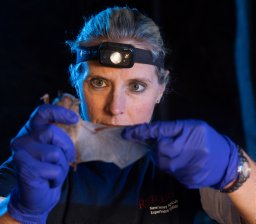 Brooke Maslo合作论文数6
 Isabelle Zoccolo合作论文数4
 Kathleen Kerwin合作论文数3
 Anthony Vastano合作论文数Dept Marine & Coastal Sci, Rutgers State Univ3Jordan C Angle合作论文数Ohio State Univ, Dept Microbiol, 484 W 12th Ave, Columbus, OH 43210 USA3
 Michael F Allen合作论文数Department of Microbiology & Plant Pathology, University of California, Riverside;Department of Biology, University of California, Riverside;Center for Conservation Biology, University of California, Riverside3
 Julie Lockwood合作论文数Department of Ecology, Evolution, and Natural Resources, School of Environmental and Biological Sciences, Rutgers University3
 Benjamin David Jaffe合作论文数3Alex Kisurin合作论文数2
 Donnie Peterson合作论文数Southern Swedish Forest Res Ctr, Swedish Univ Agr Sci2
 Evan A. Eskew合作论文数University of California, Davis2Sally Padhi合作论文数1Oliver C. Stringham合作论文数1
 Thomas Schlacher合作论文数The Animal Research Centre, University of the Sunshine Coast1
 Gignoux-Wolfsohn Sarah合作论文数1
 Joan Bennett合作论文数Department of Biochemistry and Microbiology, School of Environmental and Biological Sciences, Rutgers University;Department of Plant Biology and Pathology, School of Environmental and Biological Sciences, Rutgers University1
 Malin Pinsky合作论文数Division of Physical & Biological Sciences, University of California, Santa Cruz;Department of Ecology & Evolutionary Biology, University of California, Santa Cruz1Todd Pover合作论文数1Carl J. Herzog合作论文数New York Department of Environmental Conservation1




