Is there any research that should not be done? Could you think of an experiment and then decide not to do it? These questions get to the heart of the power of modern genetics to mix up and alter genes.
We study the statistical underpinnings of life, in particular its increase in order and complexity over evolutionary time. We question some common assumptions about the thermodynamics of life. We recall that contrary to widespread belief, even in a closed system entropy growth can accompany an increase in macroscopic order. We view metabolism in living things as microscopic variables directly driven by the second law of thermodynamics, while viewing the macroscopic variables of structure, complexity and homeostasis as mechanisms that are entropically favored because they open channels for entropy to grow via metabolism. This perspective reverses the conventional relation between structure and metabolism, by emphasizing the role of structure for metabolism rather than the converse. Structure extends in time, preserving information along generations, particularly in the genetic code, but also in human culture. We argue that increasing complexity is an inevitable tendency for systems with these dynamics and explain this with the notion of metastable states, which are enclosed regions of the phase-space that we call "bubbles," and channels between these, which are discovered by random motion of the system. We consider that more complex systems inhabit larger bubbles (have more available states), and also that larger bubbles are more easily entered and less easily exited than small bubbles. The result is that the system entropically wanders into ever-larger bubbles in the foamy phase space, becoming more complex over time. This formulation makes intuitive why the increase in order/complexity over time is often stepwise and sometimes collapses catastrophically, as in biological extinction.
Theology and Science, pp. 69-92 (2018) No AccessChapter 4: The Science of One Life at a TimeRobert PollackRobert Pollackhttps://doi.org/10.1142/9789813235045_0004Cited by:0 PreviousNext AboutSectionsPDF/EPUB ToolsAdd to favoritesDownload CitationsTrack CitationsRecommend to Library ShareShare onFacebookTwitterLinked InRedditEmail Abstract: Genetic medicine is the branch of science that depends on a knowledge of many lifetimes, much history, and vast collaboration. The trick will be to see that it is informed, as Niebuhr would have it, by hope, faith, and love. Certain current practices in genetic medicine do not promise much of any of these three, all of them being the irrational properties of a religion. I will consider ways that hope, faith, and love might be returned to genetic medicine, that part of medical practice invested in a future of ever-expanding genetic knowledge. Without our choice to act now to return to these, every person will one day be obliged to pay attention to genomic news in a context possibly not devoid of faith or love, but certainly devoid of hope. There already are a few people who have had to deal with genetic news in this gloomy context. These are the descendants of genetic bottlenecks, members of groups of people — apparently unrelated — who share a small number of common ancestors. The Jews of Eastern Europe — the Ashkenazim — are one of these groups. How Jews and others respond to this challenge should be of interest to everyone whose recent family history includes the inheritance of unusual versions of one or more genes; that is, everyone. From The Faith of Biology and the Biology of Faith: Order, Meaning, and Free Will in Modern Medical Science, Robert E. Pollack, Columbia University Press, 2000. Copyright 2000 Robert E. Pollack, Reprinted with permission of the publisher. FiguresReferencesRelatedDetails Theology and ScienceMetrics History PDF download
How can we stop cancer progression? Current strategies depend on modelling progression as the balanced outcome of mutations in, and expression of, tumour suppressor genes and oncogenes. New treatments emerge from successful attempts to tip that balance, but secondary mutational escape from those treatments has become a major impediment because it leads to resistance. In this Opinion article, we argue for a return to an earlier stratagem: tumour cell reversion. Treatments based on selection and analysis of stable revertants could create more durable remissions by reducing the selective pressure that leads to rapid drug resistance.
L et me begin with a quotation from Galileo’s Letter to the Grand Duchess Christina. It poses the problem I wish to discuss: How may one keep imagination, will, and intellect aligned? This is from a reading in a Colloquium Amy and I are taking this semester at the Heyman Center. . . . to command that the very professors of astronomy themselves see to the refutation of their own observations and proofs . . . is to enjoin something that lies beyond any possibility of accomplishment. . . . Before this could be done they would have to be taught how to make one mental faculty command another, and the inferior powers the superior, so that the imagination and the will might be forced to believe the opposite of what the intellect understands. What do we do when the will and imagination are being forced to believe the opposite of what the intellect understands? Rabbi Abraham Joshua Heschel of the Jewish Theological Seminary tells us, in his 1962 book on the Prophets: Our sight is suffused with knowing, instead of feeling painfully the lack of knowing what we see. The principle to be kept in mind is to know what we see rather than to see what we know.
pneumonia, because my parents had signed papers inadvance, asking that their lives not be extended by hero-ic measures once they had crossed an irreversible thresh-old of pain or dementia.My mother survived him, and in her last months, andeven in her last days, she gave me and my family ampleevidence of the difference between dying and being dead.She became stronger as she became weaker, becameincreasingly generous and wise with me and my rela-tives, and with a host of new and old friends, in ways thatshe could not while she was more fully alive. This stun-ning emergence of a kinder and wiser person from thedying body of my mother came to a halt only in her lastfew days, when the pain of her tumor began to requiresuch high doses of morphine that she was unable to speakwith any lucidity. Even then, she clearly accepted herdeath, said goodbye, and, with the help of hospice care athome, died peacefully.Hospice care is still controversial at many major med-ical centers today, for its goal is not to provide goodtreatment for the dying but to provide a good death. Attheir best, hospices excel at delivering what they prom-ise: control over pain, dignity to the end, and the assur-ance that no one need spend their last moments alone.The current hospital response of science to the dyingreflects my own attitudes during those decades I workedin my lab. It goes something like this: “You have had themisfortune to be born too soon to benefit from science’sever deeper comprehension of nature. That is too bad, butsince we can know how everything works, certainly oneday we will know how to keep a death like yours fromhappening. Until then, you will understand if we do notspend much time on the relatively uninteresting matter ofhow it is to die.”The medical treatment of the dying is almost invisibletoday, an embarrassing situation that can only get worseas the rest of medical science succeeds in allowing agreater fraction of the population to live into old age withsufficient residual mental and physical capacity to under-stand their situation. For the sake of these lucky people -may we all be among them - medical science is obligatednow to begin a research effort focused on making dyingitself as brief, and as healthy, as possible. This is no joke:the hospice movement - not a product of scientific medi-cine but a reaction to it - has shown that a dying accom-panied by a minimum of pain and a maximum of socialinteraction is healthier and better by far than the typicaldying of today, accompanied as it so often is by pro-longed agony and isolation.For most of my life, and for all of my thirty years asan experimental scientist, I scrupulously avoided my ownpersonal and professional responsibility to attend to thedying. It is not that I had no chances to make the connec-tion between science and dying; I simply chose not totake them. In my own confusion, I lost sight of the funda-mental truth that dying is as distant from death as anyother stage in life is. The deaths of my parents bracketed the period inwhich I came to see how a failure to acknowledge deathproperly distorts the practice of medical science. Myfather died of a respiratory infection acquired in the hos-pital a decade after he had lost his senses to Alzheimer’sdisease. During his last years I did not see him at all, andI did not understand that he was dying, for I already imag-ined him as dead. He lived for many years in a home forthe demented, his body kept alive by strangers becausehis family — myself included — could not carry the bur-den of caring for him after he ceased to know who we —or anyone else — were. He was allowed to die at last, of
General undergraduate education intends to broaden a student’s perspective, to advance alternative ways of thinking, and to develop empathy for other worldviews. While colleges and universities have ballooned with science courses in recent years, they do not often teach the scientific process nor cover the breadth of interesting, contemporary science content. There are many barriers that prevent undergraduates from learning science con-tent and process. When science is not well integrated into a core education curriculum, students may choose not to take elective science courses because they view them as too difficult or worse, unnecessary for their future lives. The subsequent science illiteracy is a detriment to functioning in modern society. Columbia University has endeavored to repair this problem locally by creating a new required undergraduate course that makes science a chief component of a solid core curriculum; one that is collaborative and multi-disciplinary and offers students an opportunity to debate and discuss the philosophical, historical and methodological contexts of current research. This course also allows the faculty to create a forum for open discourse among the diverse student population where nearly eighty percent of students are humanities majors. Teaching science to all entering students in a context where the humanities have historically dominated is our laboratory for the development of a curriculum that shows how science can be made accessible to people of all backgrounds.
Davenport's Dream . 21st Century Reflections on Heredity and Eugenics. By Jan A. Witkowski and John R. Inglis, Eds. . Cold Spring Harbor Laboratory Press, Cold Spring Harbor, NY, 2008. 520 pp. $55. ISBN 9780879697563. This volume combines a reprint of Charles Davenport's 1911 Heredity in Relation to Eugenics with discussions of its themes---including human genetic variation, mental illness, nature versus nurture, and human evolution---in a contemporary context.
This is a very clever and subtle obligation: on reflection, it is saying that concealed acts also require us to apply the provisions of “this Teaching/Torah,” but for concealed acts, the provision is precisely that we are to admit them before the Lord so that they are no longer concealed. Full repentance requires the full surrendering of secrets. Rabbi Adin Steinsaltz is a major figure in the Jewish world, a commentator and translator of Talmud and other ancient Jewish texts into modern Hebrew— which won him the Israel Prize—and also into Russian, English, Spanish and French. Here is how he expresses this notion of repentance:
The Language of God . A Scientist Presents Evidence for Belief. By Francis S. Collins . Free Press (Simon and Schuster), New York, 2006. 303 pp. $26, C$32.95. ISBN 0-7432-8639-1. Holding that the principles of faith are complementary with those of science, the author presents his case for the existence of God and of miracles.
Robert E. Pollack asks how physicians and scientists in Germany could have found themselves party to a sequence of events that began with sterilization of people with disabilities, became selective euthanasia, and wound up killing about half a million Germans designated as “lives not worth living,” all before the outbreak of the war in 1939. He then asks whether and if so, to what degree, we are vulnerable to making these mistakes today. Biography: Robert E. Pollack is Professor of Biological Sciences and Director of the Center for the Study of Science and Religion, Columbia University. He also serves as Adjunct Professor of Science and Religion at Union Theological Seminary. The Edah Journal 5:1
In 1957, the year I entered college, the American Medical Association issued its Principles of Medical Ethics. Section 10 stated, "The honored ideals of the medical profession imply that the responsibility of the physician extends not only to the individual, but also to society . . . [with] the purpose of improving both the health and the well-being of the individual and the community." Improving the health of the individual remains an honored ideal of the medical profession and one that has served as the guiding principle behind government funding of basic biomedical research. But improving the health of the entire community in our deeply individualistic society is an ideal more easily articulated than practiced, and the wave of enthusiasm for decoding the human genome is distancing medicine even further from its community responsibility.
 Michael F. Verderame合作论文数College of Medicine, The Pennsylvania State University16
 Robert Goldman合作论文数Department of Cell and Developmental Biology, Feinberg School of Medicine, Northwestern University10
 Suzie Chen合作论文数9Arthur Vogel合作论文数9
 Bettie M. Steinberg合作论文数Department of Otolaryngology;Long Island Jewish Medical Center;Einstein College of Medicine, Albert;Long Island Jewish Medical Center, Albert Einstein College of Medicine8G Blanck合作论文数7D Rifkin合作论文数7
 Daniel B. Rifkin合作论文数Department of Cell Biology, Grossman School of Medicine, New York University;Department of Medicine, Grossman School of Medicine, New York University6Richard C Risser合作论文数5
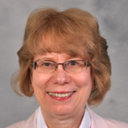 Eileen Friedman合作论文数5N. B. Nicholson合作论文数4
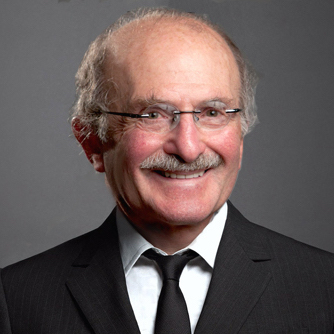 Charles Cantor合作论文数Department of Biomedical Engineering, College of Engineering, Boston University;Sequenom, Inc.4M LIPKIN合作论文数4
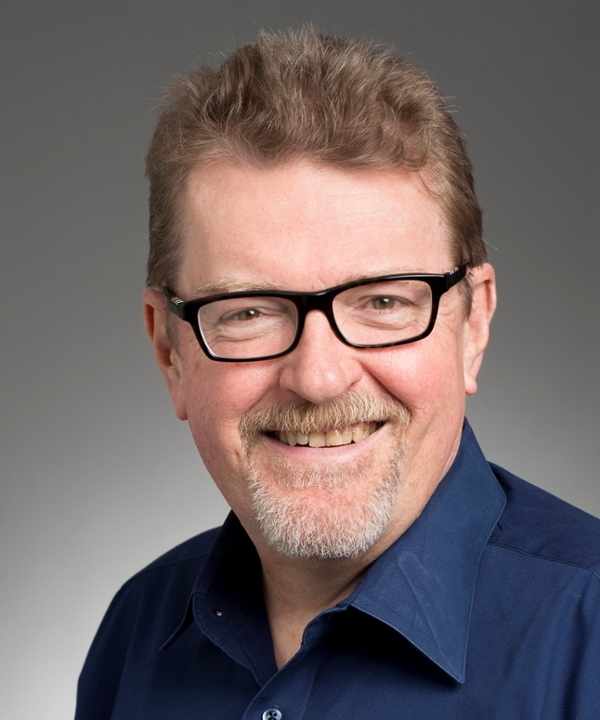 Robert F. Murphy合作论文数School of Computer Science, Carnegie Mellon University;Department of Biological Sciences, College of Science, Carnegie Mellon University4S CONLON合作论文数3T Kusano合作论文数3R Wang合作论文数3K Smith合作论文数3W TOPP合作论文数3Pvc Hough合作论文数2Sp Scordilis合作论文数2KATY SMITH合作论文数2K Weber合作论文数2H Green合作论文数2Matthew Cobb合作论文数Division of Evolution and Genomic Sciences, School of Biological Sciences, Faculty of Biology, Medicine and Health, The University of Manchester2
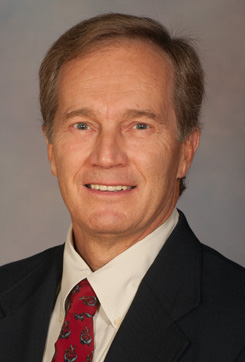 Scott Powers合作论文数Department of Applied Physiology and Kinesiology, College of Health and Human Performance, University of Florida2
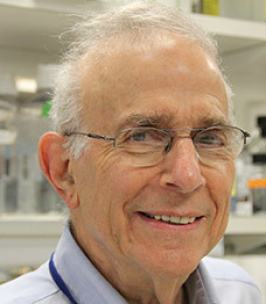 Robert Simon Adelstein合作论文数Laboratory of Molecular Cardiology, National Heart, Lung, and Blood Institute, National Institutes of Health2S Shin合作论文数2
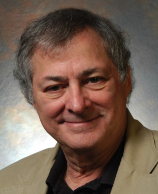 Arnold J. Levine合作论文数The Simons Center for Systems Biology, Institute for Advanced Study;School of Natural Sciences, Institute for Advanced Study2Levy Kopelovich合作论文数Division of Cancer Prevention, NCI2Elias Lazarides合作论文数2Anne Bushnell合作论文数2John D Loike合作论文数1BD CRAWFORD合作论文数1Vh Freedman合作论文数1GM GRAHAM合作论文数1MA MARTIN合作论文数1Pop Tso合作论文数1LM SCHECHTMAN合作论文数1
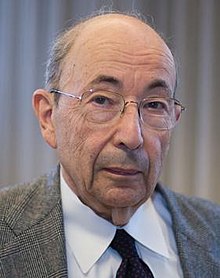 Howard Green合作论文数Harvard Medical School1
 H Warren Moos合作论文数1Jeffery Kate J合作论文数1Ledbetter M C合作论文数1T MIYAMURA合作论文数1R Dubrow合作论文数1
 Carlo Rovelli合作论文数Centre de Physique Theorique, Department of Physics, Aix-Marseille University1
 Arthur Pardee合作论文数Dana-Farber Cancer Institute1K. Weber合作论文数1




