A three-year open-label study of atomoxetine in adults with ADHD followed two multicenter, double-blind trials. In the double-blind trials, female gender and higher levels of emotional symptoms were associated with better outcome. Following a 4-week placebo washout period, 384 (of 536) subjects continued into the open-label study. 61% of subjects entering this open-label study remained after 6 months at an average dose of 100 mg/day. Subjects who had previously responded to double-blind atomoxetine achieved maximum response after 8 weeks of open-label medication, but others continued to improve for 36 weeks. Women improved more (7.7 ± 6.4) than men (6.1 ± 6.4) on the Wender–Reimherr Adult Attention Deficit Disorder Scale (WRAADDS) (P = .007) and the Conners’ Adult ADHD Rating Scale (P = .03). Subjects with emotional dysregulation improved more than others on the WRAADDS (P = .001). Responders ultimately improved approximately 60% in attentional, hyperactive/impulsive, and emotional symptoms. Thirty-nine percent of atomoxetine double-blind non-responders became responders during open-label treatment.
BACKGROUND:This open-label trial followed a previously reported randomized, placebo-controlled trial of osmotic release oral system (OROS) methylphenidate (MPH) for the treatment of personality disorder (PD). Important findings from the double-blind phase are reexamined for long-term significance. METHODS:Of 41 patients who completed the double-blind, placebo-controlled trial, 34 continued into this open-label phase. The Wender-Reimherr Adult Attention Deficit Disorder Scale (WRAADDS) measured outcome. Patients were categorized using previously defined attention-deficit/hyperactivity disorder (ADHD) groups: ADHD alone, ADHD with emotional dysregulation (ADHD + ED), and ADHD plus emotional dysregulation plus oppositional symptoms (ADHD + ED + ODD); and 3 post hoc personality categories: patients with no PD (PD-negative), patients with 1 PD (PD-positive), and patients meeting criteria for 2 or more PDs (PD-plus). RESULTS:Three WRAADDS-defined ADHD dimensions improved at similar levels (attention + disorganization, 61%; hyperactivity + impulsivity, 60%; and emotional dysregulation, 66%). All ADHD subgroups (ADHD alone, ADHD + ED, and ADHD + ED + ODD) improved. ADHD + ED + ODD patients had the highest level of social maladjustment at baseline and showed the most long-term improvement in this area. PD-plus patients were less likely to complete the study or show improvement. Sixty-five percent of treatment responders were on moderate doses (< or =54 mg/d) of OROS MPH. Vital signs and ECGs did not differ from baseline. CONCLUSIONS:Eighteen (44%) patients completed the trial. All 3 ADHD dimensions showed similar, well-maintained improvement. Patients with several PDs responded poorly to treatment in this small trial.
BACKGROUND Comorbidity of personality disorder (PD) and attention-deficit/hyperactivity disorder (ADHD) has been suggested in several reports. However, assessment of PD is problematic, and studies have over-relied on baseline evaluations. METHODS Forty-seven patients entered a double-blind trial of osmotic release oral system (OROS) methylphenidate (MPH). Patients were assessed at baseline with the Wisconsin Personality Inventory IV (WISPI-IV) and the Structured Clinical Interview for DSM-IV Axis II Personality Disorders (SCID-II). Following the study, all information-including tests, family reports, and extended clinical observations-produced a final PD diagnosis. Three post hoc categories were created: PD-negative (no PD), PD-positive (1 PD), and PD-plus (2 or more PDs). RESULTS Twenty-one (45%) patients had a PD on the final assessment vs 62% using SCID-II and 33% using WISPI-IV; final PD diagnosis revealed 9% cluster A, 17% cluster B, and 28% cluster C. Twenty-one percent of patients experienced multiple disorders. Using a weighted kappa, the number of PDs on the final assessment correlated with the WISPI-IV (kappa=.53; P > .001) and the SCID-II (kappa =.70; P < .001). However the SCID-II overidentified and the WISPI-IV underidentified PD. CONCLUSION Almost all PDs were represented in this sample, and past emphasis on cluster B appears unwarranted. Although the SCID-II and WISPI-IV had limited success in identifying specific PDs, they were more successful in identifying the number of PDs present in each patient. The small sample makes these findings preliminary.
BACKGROUND:This study explored the relationship between the dimensions of adult attention-deficit/hyperactivity disorder (ADHD), personality disorder (PD), and adverse social adjustment. METHODS:In a controlled trial of osmotic release oral system methylphenidate, PD was assessed using the Wisconsin Personality Disorders Inventory IV (WISPI-IV), the Structured Clinical Interview for DSM-IV Axis II Personality Disorders (SCID-II), and a final consensus diagnosis. Participants were categorized 2 ways: (1) ADHD alone, ADHD with emotional dysregulation (ADHD + ED), and ADHD plus emotional dysregulation plus oppositional symptoms (ADHD + ED + ODD); and (2) those with no PD (PD-negative), 1 (PD-positive), and 2 or more (PD-plus) PDs. RESULTS:None of the ADHD-alone patients had a PD compared with 33% of ADHD + ED patients and 68% of ADHD + ED + ODD patients. The level of ADHD-related emotional and oppositional symptoms correlated significantly with the severity of PD dimensions as assessed by WISPI-IV z scores and the number of items endorsed on the SCID-II screening questionnaire. Complex presentations (define by both ADHD and personality categories) were associated with high childhood ADHD ratings and problems in work, extended family, and economic functioning. CONCLUSION:The ADHD symptoms of emotional dysregulation and oppositional symptoms were associated with increased Axis II disorders. Adverse outcomes were concentrated in patients with ADHD combined with emotional and oppositional symptoms, and in those with comorbid PDs.
BACKGROUND:This study explored the relationship between personality disorder (PD) and treatment response in a randomized, double-blind, clinical trial of osmotic release oral system (OROS) methylphenidate (MPH). METHODS:Forty-seven patients entered a crossover trial using the Wender-Reimherr Adult Attention Deficit Disorder Scale (WRAADDS) to assess outcome. A final personality diagnosis was made using staff consensus and information from the Wisconsin Personality Inventory IV (WISPI-IV) and the Structured Clinical Interview for DSM-IV Axis II Personality Disorders (SCID-II). Three post hoc categories were created: PD-negative (no PD; n = 26), PD-positive (patients with 1 PD; n = 11), and PD-plus (patients with 2 or more PDs; n = 10). Improvement in attention-deficit/hyperactivity disorder (ADHD) symptoms was assessed using a mixed-model analysis with treatment and personality categories as fixed variables. Average z scores on the WISPI-IV and items endorsed on SCID-II provided dimensional measures of PD severity. RESULTS:Different treatment effects were observed for the PD subgroups (P < .001). PD-negative patients improved 40% on OROS MPH vs 7% on placebo, and PD-positive patients improved 66% on OROS MPH vs 9% on placebo. In contrast, PD-plus patients improved 26% on OROS MPH vs 23% on placebo. CONCLUSION:Most patients experienced significantly reduced ADHD symptoms on OROS MPH; however, patients with 2 or more PDs did not. The 2 alternate measures of PD supported this observation in this small exploratory study.
Background: Bright visible-spectrum light therapy has proven effective in the treatment of seasonal affective disorder (SAD) and recent basic research suggests that blue wavelengths similar to 470nm account for that effectiveness. To more stringently test the importance of these wavelengths, bright red-light was used for the placebo (control) condition. Methods: Thirty subjects meeting DSM-IV criteria for SAD were randomized to narrow-band light-emitting diode panels emitting blue- or red-light in this 3-week, parallel, double-blind trial. Twenty-five subjects participated in an open-label blue-light follow-up. Subjects were divided in a blinded, post hoc manner into two groups: SAD only and those experiencing depression with seasonal intensification. The outcome was assessed using Hamilton Depression Rating Scale-17 item version (HAMD-17) and the Structured Interview Guide for the Hamilton Depression Rating Scale-SAD version. Responders were defined by Clinical Global Impression-Improvement scale. Results: HAMD-17 scores improved more under the blue-light condition (51%) than under the red-light condition (32%) (P=.05). Further, in the blue arm 60% of subjects responded compared with 13% in the red arm (P=.01). During the open-label phase, subjects from both double-blind arms improved over baseline. SAD alone patients responded numerically better to treatment than those experiencing depression with seasonal intensification during both treatment periods. Conclusions: Narrow bandwidth blue-light therapy proved superior to red-light therapy. Blue-light therapy produced results similar to both previous 10, 000 lux visible-spectrum light studies and many medication studies. The use of bright red panels supported claims that wavelengths of similar to 470nm account for the documented effectiveness of light therapy. Depression and Anxiety 26.273-278, 2009. (C) 2008 Wiley-Liss, Inc.
BACKGROUND:The realization that attention-deficit/hyperactivity disorder (ADHD) often persists into adulthood has led to increased frequency of diagnosis and treatment in adults. Osmotic release oral system (OROS) methylpheni-date is a long-acting stimulant demonstrated to be effective in the treatment of children and adolescents with ADHD.METHOD:Forty-seven adults entered and 41 completed this double-blind, placebo-controlled, crossover trial of OROS methylphenidate. Each double-blind arm lasted 4 weeks; data were collected from August 2004 through December 2005. Subjects met both DSM-IV-TR and Utah Criteria for ADHD in adults. Outcome measures included the Wender-Reimherr Adult Attention Deficit Disorder Scale (WRAADDS), the adult ADHD-Rating Scale (ADHD-RS), and the Clinical Global Impressions-Improvement scale (CGI-I). At baseline, subjects were categorized as having significant emotional symptoms with the WRAADDS and/or significant oppositional-defiant symptoms using a self-report scale assessing the DSM-IV criteria for oppositional defiant disorder.RESULTS:17% of the sample (N = 8) had ADHD alone, 38% (N = 18) had ADHD plus significant emotional symptoms, and 40% (N = 19) had ADHD with both significant emotional and oppositional symptoms. At a mean +/- SD dose of 64.0 +/- 23.3 (0.75 mg/kg), OROS methylphenidate proved superior to placebo for all clinical measures: total WRAADDS score decrease of 42% versus 13%, respectively, p < .001 and total ADHD-RS score decrease of 41% versus 14%, respectively, p = .003, plus the subscales addressing inattention, hyperactivity/ impulsivity, and emotional dysregulation.CONCLUSIONS:OROS methylphenidate proved effective in treating adult ADHD. ADHD alone was relatively uncommon. Over 80% of our patients had ADHD with a combination of emotional and/or oppositional symptoms.
Background: Some reports suggest that a subset of depressed patients may experience suicidality – that is increase or emergence of suicidal ideation (SI) or behavior – after initiation of an antidepressant. The time course and clinical correlates of this phenomenon have not been characterized in detail. Method: We conducted a secondary analysis of a multicenter, prospective, open, 12-week trial of fluoxetine 20 mg in outpatients with nonpsychotic major depressive episodes. Adverse effects and other clinical features associated with the emergence of suicidality, defined using item 3 of the Hamilton Depression Rating Scale, were examined using Cox regression models. Results: Among 414 subjects without SI at baseline, 59 (14.3%) reported SI on at least 1 postbaseline visit. In a Cox regression, emergence of activation and worsening of depression severity were independently associated with emergence of SI, along with female gender, younger age and having thoughts that life was not worth living prior to treatment. Treatment response and remission were significantly less likely among subjects who developed SI. Conclusions: New SI was relatively common in this trial of fluoxetine and associated with the emergence of activation and overall symptomatic worsening. Whether prophylaxis against or aggressive treatment of adverse events can decrease emergence of SI merits further study.
 Frederick W. Reimherr合作论文数18
 Barrie K Marchant合作论文数17Erika Williams合作论文数15Corinne Halls合作论文数10Poonam Soni合作论文数10
 Reid J Robison合作论文数Department of Physiology and Developmental Biology and the Neuroscience Center, Brigham Young University6Phillip Gale合作论文数3James D. Wines, Jr.合作论文数3John L Olsen合作论文数2Poonarn Soni合作论文数2Mestas Ruth合作论文数2
 Douglas G Kondo合作论文数Department of Psychiatry and Behavioral Sciences, Duke University Medical Center2
 Charles M Beasley合作论文数Lilly Research Laboratories, Eli Lilly and Company2
 Tina In-Albon合作论文数Abteilung Klinische Kinder- und Jugendpsychologie, Universität Basel2
 Maurizio Fava合作论文数Dana-Farber / Harvard Cancer Center;Harvard Medical School;Mass General Brigham Academic Medical Centers Psychiatry Department2Steven Barry合作论文数1
 Jenny Guidi合作论文数Dept Psychol Renzo Canestrari, Univ Bologna1Rosenbaum Jerrold F合作论文数1Hedges Dawson W合作论文数1Sonkiss Joshua合作论文数1Shear Deborah合作论文数1
 Michael Schredl合作论文数Sleep Laboratory of the Central Institute of Mental Health in Mannheim, Heidelberg University1Roselind Lieb合作论文数1
 Alexander Moreira-Almeida合作论文数School of Medicine, Universidade Federal de Juiz de Fora1
 Jay D. Amsterdam合作论文数Department Of Psychiatry, Perelman School of Medicine, University of Pennsylvania1
 Roy Tamura合作论文数University of South Florida1
 J. Alexander Bodkin合作论文数1Hildegard Pfister合作论文数1
 Cristina Cusin合作论文数Massachusetts General Hospital;Harvard Medical School1Lutz Wittmann合作论文数1
 Roy Perlis合作论文数Center for Quantitative Health, Massachusetts General Hospital;Center for Genomic Medicine, Mass General Research Institute;Harvard Medical School1Frederick Quitkin合作论文数1
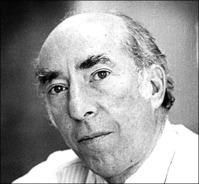 Paul H. Wender合作论文数College of Medicine, The University of Utah;School of Medicine, University of Utah1




