Hydrocarbons are partly responsible for the opacity of warm Jupiters' atmospheres in the infrared. Laboratory high-resolution spectroscopic data, including hot band rovibrational transitions, are crucial to model and interpret telescope observations. In this work, a set of six hot bands and 11 cold bands of ethylene (12C2H4) is observed using cavity ringdown spectroscopy between 5880 and 6200 cm-1. The ethylene sample is preheated to 650 and 850 K before being expanded through a Laval nozzle to produce a high Mach number expansion. The rotational temperature drops to ∼12-13 K in the jet, while the vibrational population accumulates in the first excited vibrational state ν10, from which all the observed hot bands originate. The observed transitions are assigned using the lower state combination difference approach; a set of A, B, and C rotational constants, along with the energy of the upper state, is determined using PGOPHER software for the 17 observed vibrational bands. The TheoReTS (Theoretical Reims-Tomsk Spectral data) model, employed to identify the upper vibrational states, will benefit from these newly identified transitions.
The SMAUG device is used to thermally populate the vibrational states of the methane molecule and depopulate its rotational states through its supersonic expansion in argon. The methane molecule is probed during expansion by cavity ringdown spectroscopy (CRDS) between 5880 and 6220 cm-1. The laser beam passes through both the isentropic core of the flow, characterized by a very low rotational temperature of 40.4 f 0.8 K, and the hotter boundary layers surrounding it, which are characterized by an average rotational temperature of 364.3 f 7.7 K. Analysis of the spectrum reveals that the vibrational population does not follow a Boltzmann distribution. A special procedure is developed to assign an effective vibrational temperature to each vibrational state, ranging from 532.4 f 32.2 to 1112.0 f 81.7 K for molecules in the isentropic core, and from 811.6 f 43.1 to 851.8 f 45.6 K for those in the shear layer. Only the first vibrational states of each methane polyad remain significantly populated leading to detectable transitions. A total of 2525 transitions from the cold gas of the isentropic core and from the warmer gas of the boundary layers are assigned from a new ab initio effective model and 1000 are confirmed by lower state combination differences (LSCD). Among these transitions, 718 originates from cold bands and 1807 from hot bands starting from vibrational states nu 4, nu 2 (dyad), 2 nu 4 (pentad) and 3 nu 4 (octad).
We report high-resolution, cavity-enhanced direct frequency comb Fourier transform spectroscopy of cold acetylene (C2H2) molecules in a planar supersonic jet expansion. The experiment is based on a near-infrared frequency comb with a 300 MHz effective repetition rate, matched to a high-finesse enhancement cavity traversing the jet. The rotational and translational cooling of acetylene was achieved via expansion in argon carrier gas through a slit nozzle. By interleaving successive mode-resolved spectra measured at different comb repetition rates, we retrieved full absorption line profiles. Spectroscopic analysis reveals sharp, Doppler-limited transitions corresponding to a jet core rotational temperature below 7 K. Frequency comb and cavity stabilization were achieved through active Pound–Drever–Hall locking and mechanical vibration damping, enabling a spectral precision better than 2 MHz, limited by the vibrations induced by the pumping system. The demonstrated sensitivity reaches a minimum detectable absorption of 7.8 × 10⁻⁷ cm−1 over an 18 m effective path length in the jet core. This work illustrates the potential of cavity-enhanced direct frequency comb spectroscopy for precise spectroscopic characterization of cold supersonic expansions, with implications for studies in molecular dynamics, reaction kinetics, and laboratory astrophysics.
In the continuity of a previous jet-cooled rovibrational study of trans and cis conformers of 2-furfural in the mid-infrared region (700-1750 cm-1) [Chawananon et al., Molecules 28 (10), 4165 (2023)], the present work investigates the far-infrared spectroscopy of 2-furfural using a long path absorption cell coupled to a high-resolution Fourier transform spectrometer and synchrotron radiation at the AILES beamline of the SOLEIL synchrotron. Guided by anharmonic calculations, vibrational energy levels and excited-state rotational constants are sufficiently predictive for a complete assignment of all fundamental and combination bands up to 700 cm-1, as well as the rovibrational analysis of 4 (1) low-frequency modes of trans-(cis-)2-furfural. A global rovibrational simulation, including far-infrared rovibrational lines and microwave and millimeter-wave rotational lines assigned in a previous study [Motiyenko et al., J. Mol. Spectrosc., 244, 9 (2007)] provides a reliable set of ground- and excited-state rotational parameters involving ring torsion, bending, and ring puckering modes of 2-furfural. In a second step, a rovibrational analysis of several hot band sequences, mainly involving the lowest frequency ring CHO torsion mode, is carried out. Reliable values of some anharmonic coefficients are obtained experimentally and could serve as a benchmark for validating advanced anharmonic calculations related to these large amplitude motions of flexible molecules.
Absorption spectra of jet-cooled ethylene (ethene, C2H4) are recorded at three different rotational temperatures (6/8 K, 12 K, 38 K) using cavity ring-down spectroscopy (CRDS) in the 5880-6200 cm−1 spectral region. Rotational cooling is used to determine the various vibrational band centers by simplifying drastically the rotational band structure. A line-by-line assignment, based on a direct comparison with the TheoReTS variational line list and a systematic use of lower state combination difference (LSCD), is performed. Experimental line lists including line position and line integrated absorption cross sections are drawn up. The 6/8 K, 12 K and 38 K spectra contain 668, 1553 and 1679 absorption lines respectively. Overall, 320 rovibrational lines are assigned across 20 interacting vibrational bands. Among the 20 vibrational cold bands identified in this work, 14 had never been observed before. Line intensities are in the range of 10−24 - 10−20 cm/molecule. A direct comparison between our work and the TheoReTS and ExoMol theoretical line lists, as well as with the recent experimental work of Ben Fathallah et al. 2024 is provided.
The ortho-isomer 2-furfural (2-FF), which is a primary atmospheric pollutant produced from biomass combustion, is also involved in oxidation processes leading to the formation of secondary organic aerosols. Its contribution to radiative forcing remains poorly understood. Thus, monitoring 2-FF directly in the atmosphere or in atmospheric simulation chambers to characterize its reactivity is merited. The present study reports an extensive jet-cooled rovibrational study of trans and cis conformers of 2-FF in the mid-IR region using two complementary setups: a continuous supersonic jet coupled to a high-resolution Fourier transform spectrometer on the IR beamline of the SOLEIL synchrotron (JET-AILES), and a pulsed jet coupled to a mid-IR tunable quantum cascade laser spectrometer (SPIRALES). Firstly, jet-cooled spectra recorded at rotational temperatures ranging between 20 and 50 K were exploited to derive reliable excited-state molecular parameters of trans- and cis-2-FF vibrational bands in the fingerprint region. The parameters were obtained from global fits of 11,376 and 3355 lines distributed over eight and three vibrational states (including the ground state), respectively, with a root mean square of 12 MHz. In a second step, the middle resolution spectrum of 2-FF recorded at 298.15 K and available in the HITRAN database was reconstructed by extrapolating the data derived from our low-temperature high-resolution analyses to determine the cross sections of each vibrational band of both 2-FF conformers in the 700-1800 cm(-1) region. Finally, we clearly demonstrated that the contribution of hot bands observed in the room temperature 2-FF spectrum, estimated between 40 and 63% of the fundamental band, must be imperatively introduced in our simulation to correctly reproduce the HITRAN vibrational cross sections of 2-FF with a deviation smaller than 10%.
Reaching low temperatures is of great interest for precision spectroscopy, as it simplifies rovibrationnal spectra of large molecules. Efficient cooling can be achieved via the supersonic expansion of a gas through a nozzle, which can be probed using cavity-enhanced spectroscopy [1]–[3]. We demonstrate comb-based Fourier transform spectroscopy (FTS) of acetylene in a supersonic jet. The experimental setup is shown on Fig. 1(a): the comb was an amplified Er:fiber source coupled to a 300-finesse enhancement cavity mounted perpendicular to the gas chamber, and the cavity transmission was analyzed using FTS. The comb was locked to the cavity using the two-point Pound-Drever-Hall scheme, and the repetition rate $f_{rep}$ was stabilized by acting on the cavity length with a piezo actuator [4]. The comb filtered by the cavity had a $f_{rep}=707 \ \text{MHz}$ , and two-burst interferograms were acquired, yielding comb mode resolution [4]. A mixture of 90% Ar and 10% C2H2 was expanded from a reservoir at 16 Torr into a chamber at 0.35 Torr through an aerospike nozzle. The isentropic core of the resulting supersonic jet exhibited a rotational temperature of 140 K and was surrounded by shear layers and residual gas at room temperature.
Laboratory spectroscopic data is essential for the modeling of hot exoplanet atmospheres, since molecules such as methane, a major component of hot-Jupiter-type exoplanet atmospheres, have a complex vibrational energy structure that makes computational predictions difficult at high temperatures for ro-vibrational transitions involving highly excited vibrational sates. To better inform line lists used in radiative transfer modeling, the ro-vibrational spectrum of methane has been recorded in the tetradecad region between 1.7 and 1.65 mu m (5880-6060 cm-1) through non-local thermodynamic equilibrium (non-LTE) cavity ringdown spectroscopy (CRDS). Non-LTE conditions, characterized by a low rotational temperature (-39 K) and a high vibrational temperature (up to 1130 K), have been obtained by hypersonic expansion of a pre-heated mixture of argon and methane in a contoured Laval nozzle. The high vibrational temperature increases the intensity of new hot bands, while the very low rotational temperature greatly simplifies their rotational structure, thus facilitating their identification. A close comparison of the recorded CRDS data to the TheoReTS database reveals both inefficient vibrational relaxation between polyads and efficient vibrational relaxation between vibrational states forming a polyad. These effects result in an overpopulation of the lowest vibrational energy level of each polyad, an effect not widely currently incorporated in non-LTE radiative transfer models. A series of new hot band transitions originating from the pentad and octad polyads were assigned and are provided as a line list for use in future databases.
Creating a supersonic jet in the laboratory is both a challenging and an expensive task. The supersonic flow is sensitive to the shape of the wall bounding it because a shock could be developed at the sharp edges. Moreover, the growth of boundary layer, within and outside the nozzle, makes the design of a convergent–divergent nozzle a sophisticated work. The present work proposes an optimization algorithm that is believed to be efficient in constructing a nozzle contour to deliver a shock-free radially uniform flow at the exit plane. The steepest descent optimization technique is employed to obtain the shape with minimum radial velocity at the outlet, along with restriction on the inlet angle, i.e., the angle of divergence immediately downstream the throat. Three different ways of implementing the constraints are discussed and compared with the experimental results after fabricating the nozzle. The optimized nozzle shows a potential core of 7 throat diameters height at the nozzle exit and an axial extent of 28 throat diameters downstream the exit plane. Further, the nozzle appears to operate efficiently even after increasing the nominal total temperature by 25% or decreasing it by 50%.
We report the study of the hot bands of methane in a vibrationally hot and rotationally cool environment. The near infrared transitions were measured usingcavity ring down spectroscopy in a molecular hypersonic expansion.
Behind the iconic “pop!" accompanying the uncorking of a champagne bottle hides a gas flow of surprising complexity. Its modeling is made delicate by its supersonic nature, its interaction with the cork stopper, the eminently unsteady character of the flow escaping from the bottle, and the continuous change of the geometry of the computational flow domain due to the displacement of the cork. Our numerical simulations reveal the formation, evolution and dissipation of shock wave patterns during the first millisecond following cork popping. A first crown-shaped shock wave pattern develops radially, then followed by the formation of a detached shock wave, or bow shock, induced by the presence of the cork in the axial path of the supersonic gas. The numerical simulations correctly reproduce the position of the bow shock previously observed through high-speed imaging.
Uniform Supersonic Flows in Chemical Physics, pp. 479-538 (2022) No AccessChapter 9: Infrared Absorption Spectroscopy in Laval Nozzle Supersonic FlowsRobert Georges, Eszter Dudás, Nicolas Suas-David, and Lucile RutkowskiRobert GeorgesCNRS, IPR(Institut de Physique de Rennes)-UMR 6251, Université de Rennes, F-35000 Rennes, France, Eszter DudásCNRS, IPR(Institut de Physique de Rennes)-UMR 6251, Université de Rennes, F-35000 Rennes, France, Nicolas Suas-DavidLeiden Observatory, Leiden Universiteit, Oort — Niels Bohrweg 2, 2333 Leiden, Netherlands, and Lucile RutkowskiCNRS, IPR(Institut de Physique de Rennes)-UMR 6251, Université de Rennes, F-35000 Rennes, Francehttps://doi.org/10.1142/9781800610996_0009Cited by:0 PreviousNext AboutSectionsPDF/EPUB ToolsAdd to favoritesDownload CitationsTrack CitationsRecommend to Library ShareShare onFacebookTwitterLinked InRedditEmail Abstract: The extraordinary cooling caused by the supersonic expansion of a polyatomic gas on its infrared footprint has been extensively employed for applications ranging from nucleation studies to post-shock spectroscopy. In this chapter, we recall the benefits of decreasing the molecular sample temperature, involving the spectral simplification and the subsequent magnification of the absorption transitions starting from the lowest rotational energy levels, the drastic line width narrowing, the supersaturation, the formation, and stabilization of weakly bounded molecular complexes. These effects are illustrated by infrared spectra of, e.g. water, carbon dioxide, methane, and more complex molecules such as trans-butadiene or naphthalene. The scope of this chapter includes different types of flows obtained using the Laval nozzle: perfectly expanded or slightly overexpanded flows produced by contoured Laval nozzles, and underexpanded flows produced by simpler conical divergent nozzles. The various infrared spectroscopic techniques coupled with Laval nozzle flows are also reviewed. Conventional techniques like tunable diode laser absorption spectroscopy (TDLAS) and Fourier transform infrared spectroscopy (FTIR) have been intensively applied to the study of homogeneous nucleation. Other recent and more sensitive techniques such as cavity ring-down spectroscopy (CRDS), cavity enhanced absorption spectroscopy (CEAS), and optical frequency comb spectroscopy (OFCS) are now used for the measurement of reaction kinetics in the infrared, or for the non-ETL spectroscopy of molecules such as methane, which is of great astrophysical interest. Keywords: Low-temperature spectroscopyMolecular aggregatesNon-equilibrium spectroscopyHypersonic CRDSFTIRTDLAS FiguresReferencesRelatedDetails Uniform Supersonic Flows in Chemical PhysicsMetrics History KeywordsLow-temperature spectroscopyMolecular aggregatesNon-equilibrium spectroscopyHypersonic CRDSFTIRTDLASPDF download
 Benidar Abdessamad合作论文数26
 Michel Herman合作论文数20Nicolas Suas-David合作论文数18Ludovic Biennier合作论文数18Manuel Goubet合作论文数17
 Vincent Boudon合作论文数15
 Pierre Asselin合作论文数LADIR15
 Olivier Pirali合作论文数Laboratoire de Physique, Moléculaire et Applications, Université Paris-Sud15
 Rutkowski Lucile合作论文数14P. Soulard合作论文数13Samir Kassi合作论文数11Badr Amyay合作论文数11
 Eszter Dudas合作论文数10Gardez Aline合作论文数8Thérèse R. Huet合作论文数8
 Solene Perot合作论文数7
 E. Arunan合作论文数Department of Inorganic and Physical Chemistry, Indian Institute of Science, Bangalore7Audrey Moudens合作论文数7
 Dr. Shubhadip Chakraborty合作论文数Inst Phys Rennes, Univ Rennes 16
 Vijayanand Chandrasekaran合作论文数Institut de Physique de Rennes, CNRS-Université de Rennes 16
 Michael Rey合作论文数6Julien Lecomte合作论文数5mohamed bach合作论文数5
 Alexandra V. Domanskaya合作论文数5André Fayt合作论文数5
 Christof Maul合作论文数5J. Thiévin合作论文数5
 Vinayak Kulkarni合作论文数Department of Mechanical Engineering, Indian Institute of Technology Guwahati5J. Vander Auwera合作论文数5Bertrand R. Rowe合作论文数4Omar Abdelkader Khedaoui合作论文数4Theo Guillaume合作论文数4
 Anthony Roucou合作论文数Inst Condensed Matter & Nanosci, Catholic Univ Louvain4
 Thomas Hearne合作论文数CNRS, Univ Paris Saclay4
 Pascale Roy合作论文数Soleil Synchrotron, French National Centre for Scientific Research4Le Picard Sébastien D合作论文数4Hays Brian M合作论文数4Martin Hepp合作论文数4
 Vladimir Tyuterev合作论文数Groupe de Spectroscopie Moléculaire et Atmosphérique UPRESA CNRS Q 6089, Université de Reims4
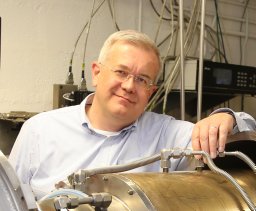 Ian R. Sims合作论文数School of Chemistry, The University of Birmingham4Maud Louviot合作论文数3Raghed Bejjani合作论文数3
 Divita Gupta合作论文数CNRS, Univ Rennes3
 Ilsa Cooke合作论文数Department of Chemistry, Faculty of Science, The University of British Columbia3
 Severine Robert合作论文数3
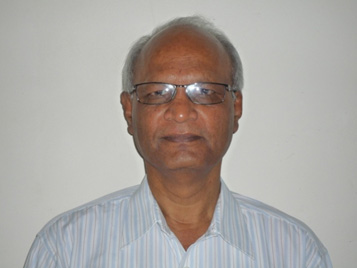 K. P. J. Reddy合作论文数Department of Aerospace Engineering,Indian Institute of Science,Bangalore,India3
 Isabelle Kleiner合作论文数Laboratoire Interuniversitaire des Systemes Atmospheriques, Centre National de la Recherche Scientifique3
 Christine Charles合作论文数Department of Nuclear Physics & Accelerator Applications, Research School of Physics, Australian National University3




