The quantification of cognitive powers rests on identifying a behavioural task that depends on them. Such dependence cannot be assured, for the powers a task invokes cannot be experimentally controlled or constrained a priori, resulting in unknown vulnerability to failure of specificity and generalisability. Evaluating a compact version of Raven's Advanced Progressive Matrices (RAPM), a widely used clinical test of fluid intelligence, we show that LaMa, a self-supervised artificial neural network trained solely on the completion of partially masked images of natural environmental scenes, achieves representative human-level test scores a prima vista, without any task-specific inductive bias or training. Compared with cohorts of healthy and focally lesioned participants, LaMa exhibits human-like variation with item difficulty, and produces errors characteristic of right frontal lobe damage under degradation of its ability to integrate global spatial patterns. LaMa's narrow training and limited capacity suggest matrix-style tests may be open to computationally simple solutions that need not necessarily invoke the substrates of reasoning.
The architecture of the brain is too complex to be intuitively surveyable without the use of compressed representations that project its variation into a compact, navigable space. The task is especially challenging with high-dimensional data, such as gene expression, where the joint complexity of anatomical and transcriptional patterns demands maximum compression. The established practice is to use standard principal component analysis (PCA), whose computational felicity is offset by limited expressivity, especially at great compression ratios. Employing whole-brain, voxel-wise Allen Brain Atlas transcription data, here we systematically compare compressed representations based on the most widely supported linear and non-linear methods-PCA, kernel PCA, non-negative matrix factorisation (NMF), t-stochastic neighbour embedding (t-SNE), uniform manifold approximation and projection (UMAP), and deep auto-encoding-quantifying reconstruction fidelity, anatomical coherence, and predictive utility across signalling, microstructural, and metabolic targets, drawn from large-scale open-source MRI and PET data. We show that deep auto-encoders yield superior representations across all metrics of performance and target domains, supporting their use as the reference standard for representing transcription patterns in the human brain.
Medical imaging research is often limited by data scarcity and availability. Governance, privacy concerns and the cost of acquisition all restrict access to medical imaging data, which, compounded by the data-hungry nature of deep learning algorithms, limits progress in the field of healthcare AI. Generative models have recently been used to synthesize photorealistic natural images, presenting a potential solution to the data scarcity problem. But are current generative models synthesizing morphologically correct samples? In this work we present a three-dimensional generative model of the human brain that is trained at the necessary scale to generate diverse, realistic-looking, high-resolution and morphologically preserving samples and conditioned on patient characteristics (for example, age and pathology). We show that the synthetic samples generated by the model preserve biological and disease phenotypes and are realistic enough to permit use downstream in well-established image analysis tools. While the proposed model has broad future applicability, such as anomaly detection and learning under limited data, its generative capabilities can be used to directly mitigate data scarcity, limited data availability and algorithmic fairness. Medical imaging research is limited by data availability. To address this challenge, Tudosiu and colleagues develop a 3D generative model of the human brain that can generate high-resolution morphologically correct brains conditioned on patient characteristics.
Our knowledge of the organisation of the human brain at the population-level is yet to translate into power to predict functional differences at the individual-level, limiting clinical applications, and casting doubt on the generalisability of inferred mechanisms. It remains unknown whether the difficulty arises from the absence of individuating biological patterns within the brain, or from limited power to access them with the models and compute at our disposal.Here we comprehensively investigate the resolvability of such patterns with data and compute at unprecedented scale. Across 23 810 unique participants from UK Biobank, we systematically evaluate the predictability of 25 individual biological characteristics, from all available combinations of structural and functional neuroimaging data. Over 4526 GPU*hours of computation, we train, optimize, and evaluate out-of-sample 700 individual predictive models, including fully-connected feed-forward neural networks of demographic, psychological, serological, chronic disease, and functional connectivity characteristics, and both uni- and multi-modal 3D convolutional neural network models of macro- and micro-structural brain imaging.We find a marked discrepancy between the high predictability of sex (balanced accuracy 99.7%), age (mean absolute error 2.048 years, R2 0.859), and weight (mean absolute error 2.609Kg, R2 0.625), for which we set new state-of-the-art performance, and the surprisingly low predictability of other characteristics. Neither structural nor functional imaging predicted an individual's psychology better than the coincidence of common chronic disease (p<0.05). Serology predicted chronic disease (p<0.05) and was best predicted by it (p<0.001), followed by structural neuroimaging (p<0.05).Our findings suggest either more informative imaging or more powerful models will be needed to decipher individual level characteristics from the human brain. We make our models and code openly available.
Our knowledge of the organisation of the human brain at the population-level is yet to translate into power to predict functional differences at the individual-level, limiting clinical applications, and casting doubt on the generalisability of inferred mechanisms. It remains unknown whether the difficulty arises from the absence of individuating biological patterns within the brain, or from limited power to access them with the models and compute at our disposal. Here we comprehensively investigate the resolvability of such patterns with data and compute at unprecedented scale. Across 23 810 unique participants from UK Biobank, we systematically evaluate the predictability of 25 individual biological characteristics, from all available combinations of structural and functional neuroimaging data. Over 4526 GPU hours of computation, we train, optimize, and evaluate out-of-sample 700 individual predictive models, including fully-connected feed-forward neural networks of demographic, psychological, serological, chronic disease, and functional connectivity characteristics, and both uni- and multi-modal 3D convolutional neural network models of macro- and micro-structural brain imaging. We find a marked discrepancy between the high predictability of sex (balanced accuracy 99.7%), age (mean absolute error 2.048 years, R2 0.859), and weight (mean absolute error 2.609Kg, R2 0.625), for which we set new state-of-the-art performance, and the surprisingly low predictability of other characteristics. Neither structural nor functional imaging predicted psychology better than the coincidence of chronic disease (p<0.05). Serology predicted chronic disease (p<0.05) and was best predicted by it (p<0.001), followed by structural neuroimaging (p<0.05). Our findings suggest either more informative imaging or more powerful models are needed to decipher individual level characteristics from the human brain.
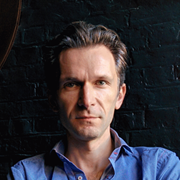 Parashkev Nachev合作论文数Department of Brain Repair and Rehabilitation, Queen Square Institute of Neurology, Faculty of Brain Sciences, University College London5
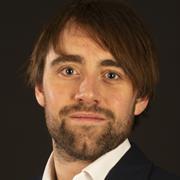 James Ruffle合作论文数Department of Translational Neuroscience and Stroke, University College London;Queen Square Institute of Neurology, University College London4
 Harpreet Hyare合作论文数3
 Guilherme Pombo合作论文数3
 Geraint Rees合作论文数Institute of Cognitive Neuroscience, Faculty of Brain Sciences, University College London3Samia Mohinta合作论文数Queen Square Institute of Neurology, University College London2
 Chaitanya Kaul合作论文数Univ York, Dept Comp Sci, York YO10 5DD, N Yorkshire, England2Mark S. Graham合作论文数1Joe Mole合作论文数1Virginia Fernandez合作论文数1
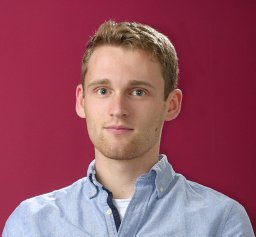 H. C. Watkins合作论文数UCL Queen Square Institute of Neurology, University College London1
 Jessica Dafflon合作论文数Ctr Neuroimaging Sci, Kings Coll London1Pedro Borges合作论文数Department of Medical Physics and Biomedical Engineering, UCL, London, UK1Ashay Patel合作论文数Kings Coll London1
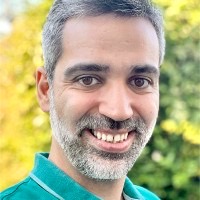 Jorge Cardoso合作论文数King’s College London;The London Medical Imaging & Artificial Intelligence Centre for Value Based Heathcare1
 Amy Nelson合作论文数Institute of Neurology, Department of Brain Repair & Rehabilitation, University College London1
 Walter Hugo Lopez Pinaya合作论文数1
 Petru-Daniel (Dan) Tudosiu合作论文数AI Theory Group, Noah's Ark Lab, Huawei Technologies Research & Development (UK) Ltd1
 Lisa Cipolotti合作论文数University College London Hospitals;Queen Square Institute of Neurology, University College London1
 Sebastien Ourselin合作论文数London Institute for Healthcare Engineering, School of Biomedical Engineering & Imaging Sciences, Faculty of Life Sciences & Medicine, King’s College London;Wellcome EPSRC Centre for Medical Engineering, King’s College London;Artificial Intelligence Centre for Value Based Healthcare;Hypervision Surgical;Elaitra;OxVent1
 Michel Thiebaut de Schotten合作论文数CENIR – Centre de Neuroimagerie de Recherche, Hopital de la Salpetriere, 75651 Paris, France1
 Edgar Chan合作论文数1




