The Edinburgh Study of Decision Making on Farms comprises a multidisciplinary group of researchers including psychologists, agricultural scientists, business management specialists, and mathematicians. The aim of the study is to construct multivariate models of important farming behaviors, such as environmentally oriented farming, production behavior, and stress. Although many variables to be included in the models, such as personality, cognitive ability, and coping skills, could be assessed using currently available instruments, there were no readily available measures relevant to farming. Therefore, the present report describes the domains of farmers' attitudes, goals, and behaviors, and provides scales for their measurement. In addition to providing taxonomies of important areas of farmers' vocational behaviors, the report describes the correlations of farmers' attitudes, goals, and behaviors with measures of personality traits.
A recent paper published by Bonvillian, Garber & Dell (1997) examines one ancient and two medieval studies of children's language development, whereby children were allegedly isolated from hearing any spoken language in order to discover what, if any, language the children would come to produce. Bonvillian et al. consider studies attributed to Psamtik I, an Egyptian Pharaoh in the seventh century BC; to James IV of Scotland in the fifteenth century AD; and to Akbar the Great, Mogul Emperor in India, in the sixteenth century AD. Bonvillian et al. conclude, correctly, that the Akbar study did take place. However, their contention that the Akbar study indicates that a system of gestural communication is a precursor to language is, in our view, unwarranted. Here, we criticize the paper by Bonvillian et al. on three grounds: it fails to mention previously published research on the topic; it fails to mention another medieval study attributed to Frederick II, King of Sicily, in the thirteenth century ad; and its contention that gestural communication is a precursor to language is not supported by reference to the primary sources on Akbar's study.
Despite considerable effort to understand and represent decision making by farmers, there has been little attempt to integrate socio‐economic, psychological and farming variables within a comprehensive framework. This paper attempts to do this in the context of two types of farming behaviour ‐ business and environmental ‐for a sample of over 200 Scottish farmers. Using variables covering their attitudes, objectives and behaviours relevant to many aspects of farming, we proposed mediating variables models of business‐oriented and environmentally‐oriented farming behaviours. Structural equation modelling was used to test the adequacy of the proposed models. The results of the study emphasise the importance of psychological factors in the decision making of farmers.
The analysis of social science data is increasingly dependent on the construction of mathematical models to predict and explain behaviour. This and the following paper have two objectives. The first objective is to describe some of the results of a recent survey on farmer decision-making and to present a number of models which have been developed using the data from this survey. The second objective is to use these models as a framework for a general discussion of the wide range of techniques available for the modelling of psychological, social and economic data. The classification of models into categories such as mechanistic and empirical, and the range of mathematical techniques available are described. The use of linear modelling is illustrated with examples from the data.
Brown, W.S. & Goldberg, D.M. (1990). An acoustic study of the intelligible utterances of the hearing impaired. Folia Phoniatrica, 42, 230-238. Kenstowicz, M. (1994). Phonology in Generative Grammar (Cambridge, MA: Blackwell). Romani, C. (1992). Are there distinct input and output buffers? Language and Cognitive Processes, 7, 133-62. Van Riper, C. (1973). The Nature of Stuttering (Englewood Cliffs, NJ: Prentice Hall).
ABSTRACT An overall aim of the study is to identify effective forms of collaboration between speech and language therapists, teachers and parents in Scotland. The study seeks to define and clarify the roles and responsibilities of speech and language therapists, teaching staff and parents in facilitating the development of speech, language and communication in children and young people with language and communication difficulties. In particular, the contribution of speech and language therapists to educational programmes is investigated. The focus is on children with significant levels of need but not exclusively those with a Record of Needs. The project employs both quantitative and qualitative methods. Visits have been made to a variety of educational locations and in‐depth interviews were carried out with speech and language therapists and teaching staff. National surveys were conducted through postal questionnaires to speech and language therapists, speech and language therapy managers, teachers, advisers in special educational needs, educational psychologists, and parents. Different questionnaires were designed to elicit information specific to each group. Questionnaire returns were received from: 381 (>80%) of speech and language therapists with children on their caseload; 41 speech and language therapy managers (two outstanding); over 800 teachers from 415 schools (mainstream and special); 17 advisers in special educational needs (11 outstanding; and 11 principal educational psychologists (21 outstanding). However, since the analysis of the data is in process, this paper will focus on data collected from 47 interviews carried out during the Autumn term 1994 in five special schools and five mainstream schools located in six Scottish regions. Intervews have allowed the identification of certain elements that may enable effective speech and language therapist/teacher collaboration, these include: working together with individuals or groups of children; joint planning of classroom activities; speech and language therapist input to educational programmes; curricular influences on speech and language therapy programmes; time spent in sharing information, planning and assessment; speech and language therapists and teachers attending training sessions jointly; share framework for the integration of language and communication into the curriculum; formal remit for speech and language therapists to work within the context of educational programmes. At this stage in our research, we are not able to draw the full implications for policy development. However, we shall discuss those strategies which are being employed successfully to promote collaboration and its effectiveness in these 10 schools. The project is commissioned and funded by the Scottish Office Education Department
ABSTRACT Metaphon is a two‐phase therapy procedure for children with disordered phonology. It seeks to influence phonological production by targeting aspects of linguistic awareness within an interactive learning framework. An earlier investigation of this procedure, involving 13 children treated by a single therapist, showed a significant decrease in the occurrence of simplifying processes post‐therapy for most subjects (Howell & Dean, 1994). The investigation reported in this paper sought to test the effectiveness of Metaphon therapy further by studying a larger number of children. In addition, the study was designed to determine the relative contribution to phonological change of the two phases of Metaphon therapy; Phase I which aims to harness awareness of phonological contrasts and Phase II which aims to enhance communicative competence. Fifty children aged between 3;6‐5;6 participated in the investigation. They were treated by 12 speech and language therapists. The criteria used for subject selection ensure that the children had received no previous speech therapy and that their communication difficulties were specific to the speech sound system. They were all monolingual speakers and came from a variety of social backgrounds. The subjects were assigned to four different experimental conditions: Group 1 — Phase I treatment only (six treatment sessions); Group 2 — both phases I and II treatment (10 treatment sessions); Groups 3 and 4 — no treatment (control groups, one for each of the two treatment conditions). (All the children in the control groups received therapy immediately following the experimental period.) A variety of cognitive and linguistic assessments were given to all subjects before and after their respective periods of therapy/no therapy. A comparison of mean error scores on a measure of phonological production before and after the period of therapy/no therapy showed a reduction in error occurrence for all four groups, with the greater change occurring in Group 2, the subjects receiving the complete Metaphon programme. Analysis of covariance revealed a significant interaction between treatment group (control/experimental) and inter‐test interval. The results suggest that Metaphon therapy does have a positive effect on phonological change, with both phases of Metaphon required for maximum effectiveness for most subjects. The implications for clinical practice from this investigation include the following. Firstly, that enhancing awareness of the phonological and communicative aspects of language appears to be an effective way of bringing about phonological change. Secondly, the finding that phonological change occurred in both the treated and non‐treated groups over a relatively short timespan suggests that the potential influence of maturation should be considered when appraising the effectiveness of any therapeutic programme used with this client group.
 Morag L. Donaldson合作论文数10o morgan合作论文数7
 Ian Deary合作论文数School of Philosophy, Psychology and Language Sciences, College of Arts, Humanities and Social Sciences, The University of Edinburgh7janet howell合作论文数5j reid合作论文数5
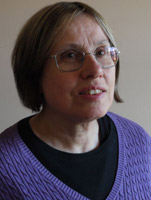 Elizabeth Jane Austin合作论文数School of Philosophy, Psychology and Language Sciences, University of Edinburgh5
 Gavin J. Gibson合作论文数5Murray M. McGregor合作论文数4
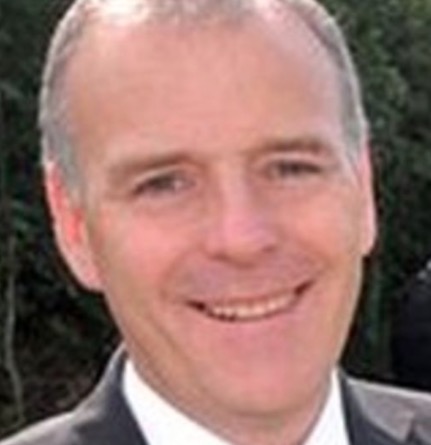 Gareth Edwards Jones合作论文数Department of Sustainable Agriculture, University of Aberystwyth;Bangor University School of Natural Sciences4Joyce Willock合作论文数4Elizabeth Dean合作论文数4Elizabeth C Dean合作论文数4Alister Sutherland合作论文数4Jb Dent合作论文数3Martin Hughes合作论文数3j willock合作论文数3G. Edwards-Jones合作论文数3Robin N Campbell合作论文数3J. Barry Dent合作论文数3Margaret Donaldson合作论文数2
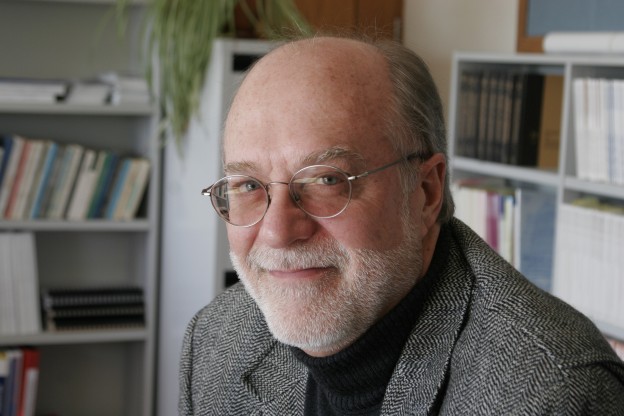 William E. Tunmer合作论文数Institute of Education, Massey University2
 Murray James McGregor合作论文数Muresk Institute;Curtin University of Technology;Muresk Institute, Curtin University of Technology2Robert Hoogenraad合作论文数2B Dent合作论文数1louise tait合作论文数1G.J Gibson合作论文数1TK Pitcairn合作论文数1Ampofo-Boateng K合作论文数1Demetre J D合作论文数1
 David N. Lee合作论文数School of Philosophy, Psychology and Language Sciences, University of Edinburgh1J. Reid合作论文数1S. Millar合作论文数1
 James Thomson合作论文数Department of Molecular, Cellular, and Developmental Biology, University of California, Santa Barbara;Department of Cell and Regenerative Biology, School of Medicine and Public Health, University of Wisconsin-Madison;Morgridge Institute for Research1Lucy Dow合作论文数1Ainsley M. Sutherland合作论文数1Judith A. Bowey合作论文数University of Queensland1James Mcgarrigle合作论文数1Diarmid Murray合作论文数1Kay Williamson合作论文数1Janet Howell合作论文数1Roger J. Wales合作论文数1




