This paper describes CAPE, a programming environment that combines Clips And Perl with Extensions. CLIPS is an efficient and expressive forward-chaining rule-based system with a flexible object system (supporting both message passing and generic functions). Perl is a popular procedural language with extremely powerful regular expression matching facilities, and a huge library of freely available software modules. CAPE closely integrates these two programming languages, and provides extensions to facilitate building systems with an intimate mixture of the two languages. These features make CAPE an excellent language for building knowledge-based systems to exploit the opportunities being presented by the Internet. This paper describes the current version of CAPE and the facilities it offers programmers, including the demonstration systems and "component applications" that are distributed with it. The use of the system is then discussed with reference to an application for automatically generating graphs of remote web sites. Finally, planned developments of the system are indicated.
This paper describes Cape, a programming environment combining Clips And Perl with Extensions. Clips is an efficient and expressive forward-chaining rule-based system with a flexible object system. Perl is a popular procedural language with extremely powerful regular expression matching facilities, and a huge library of freely available software. Cape closely integrates these languages, and provides extensions to facilitate building systems with an intimate mixture of the two. The paper describes the facilities Cape offers programmers and the demonstration systems and "component applications" distributed with it. The use of the system is then discussed with reference to dime (Distributed Information Manipulation Environment), a toolkit being developed to support identifying and coordinating the use of external knowledge sources. Finally, planned developments of the system are indicated.
Initially the Web was intended to provide a simple mechanism that would make it easy for users to share information across disparate and distributed computing platforms. While it can indeed still fill this need, its growth has for the most part transformed it into a mass-audience broadcast medium delivering complex, highly designed multi-media that have been carefully designed atWaet the attention of those who are browsing to find something of interest.
The flexibility of current workflow systems needs to be extended to allow them to operate in more dynamic and uncertain environments. Adaptive workflow systems need to be able to provide intelligent support for the planning and enactment of complex processes; supporting their users in performing flexible and creative tasks, while respecting the norms of the organizations within which they are deployed. We discuss how knowledge about the dynamic context of a process may be represented in terms of roles within tasks, and the remits, authorities, and capability requirements associated with such roles. We outline how this knowledge may be used, together with information about the capabilities of available agents, to support the selection of an appropriate set of agents to fill the roles in a given task. An example is given based on an experimentation task within the chemical process industries.
This paper describes initial work assessing the problems associated with building an agent to retrieve and combine data from various sources on the WWW. It describes a prototype system built to explore options in the area of home shopping. It highlights the problems facing the system and identifies the directions for possible work.
Article Free Access Share on Automatic generation of diagrammatic Web site maps Authors: Robert Inder Human Communication Research Centre, University of Edinburgh Human Communication Research Centre, University of EdinburghView Profile , Jonathan Kilgour Human Communication Research Centre, University of Edinburgh Human Communication Research Centre, University of EdinburghView Profile , John Lee Human Communication Research Centre, University of Edinburgh Human Communication Research Centre, University of EdinburghView Profile Authors Info & Claims SAC '98: Proceedings of the 1998 ACM symposium on Applied ComputingFebruary 1998 Pages 719–725https://doi.org/10.1145/330560.331078Online:27 February 1998Publication History 0citation434DownloadsMetricsTotal Citations0Total Downloads434Last 12 Months3Last 6 weeks1 Get Citation AlertsNew Citation Alert added!This alert has been successfully added and will be sent to:You will be notified whenever a record that you have chosen has been cited.To manage your alert preferences, click on the button below.Manage my Alerts New Citation Alert!Please log in to your account Save to BinderSave to BinderCreate a New BinderNameCancelCreateExport CitationPublisher SiteeReaderPDF
Current research on database systems breaks the problem into two halves-formulating a query and presenting the results. This paper suggests that there is a third “half” which deserves attention in its own right: sustaining the interaction.
Hyper-media is about following links, but this obliges readers to track what they have and have not seen. Navigating within a document can be a significant task, which, if not done well enough, can leave one ‘lost in hyperspace’. Displaying the structure of a hyper-document is one way of helping readers move through it. But we have adopted an alternative approach, as advocated by Neilsen [1]. Guided by ideas from Discourse Theory, we are trying to recognise the structure of the reader's own interaction with the system. We have created DS-Info, an enhanced version of the Info hypertext system within the Emacs editor. DS-Info uses the distinction between structural and cross-structural links to identify topics and digressions. We are currently empirically evaluating DS-Info. Preliminary results are encouraging.
Recognising and gathering relevant data is often a very time-consuming part of an expert's work. Databases can make the necessary information available , but current access methods require database skills which few experts have. This paper describes a system which uses knowledge-based techniques to allow users to browse databases without requiring database skills, thus bridging the gap between experts and the information they require. An object-oriented model of the domain is used to determine how the content and structure of relational databases should be presented to the user. The system uses this model to ensure that information is presented in a form that is readily appreciated, and that familiar terms and concepts can be used to formulate queries, to control display of information, and to navigate through the database. Fuzzy matching techniques further support the user in specifying what information is required. A system embodying these ideas has been implemented and has already been applied to a number of diierent databases in diierent domains.
We present a way of structuring a database query system to form a bridge between current data handling systems and the data requirements of creative work. The interface is based around specifying the contents of “bags” of objects and inspecting them using “viewers”, which can then be used to launch further queries.
Article Free Access Share on Bags and viewers: a metaphor for structuring a database browser Authors: Robert Inder HCRC, University of Edinburgh, 2, Buccleuch Place, Edinburgh EH8 9LW, SCOTLAND HCRC, University of Edinburgh, 2, Buccleuch Place, Edinburgh EH8 9LW, SCOTLANDView Profile , Jussi Stader AIAI, University of Edinburgh, 80, South Bridge, Edinburgh EH1 1HN, SCOTLAND AIAI, University of Edinburgh, 80, South Bridge, Edinburgh EH1 1HN, SCOTLANDView Profile Authors Info & Claims AVI '94: Proceedings of the workshop on Advanced visual interfacesJune 1994 Pages 228–230https://doi.org/10.1145/192309.192356Published:01 June 1994Publication History 0citation191DownloadsMetricsTotal Citations0Total Downloads191Last 12 Months6Last 6 weeks1 Get Citation AlertsNew Citation Alert added!This alert has been successfully added and will be sent to:You will be notified whenever a record that you have chosen has been cited.To manage your alert preferences, click on the button below.Manage my AlertsNew Citation Alert!Please log in to your account Save to BinderSave to BinderCreate a New BinderNameCancelCreateExport CitationPublisher SiteeReaderPDF
build Prolog programs by means of a Prolog Techniques Editor (PTE);
An abstract is not available for this content so a preview has been provided. Please use the Get access link above for information on how to access this content.
Individual differences have been mostly ignored in cognitive/experimental psychology since the birth of the field, while the measurement of cognitive abilities has become a successful field of applied psychology. Because of its separation from mainstream research psychology, cognitive ability testing has focused on application, often without providing sound theoretical basis for the tests. More recently, the gap between cognitive/experimental psychology and differential/psychometric research has been closing. This stems from a rediscovery of variation in cognitive abilities in experimental psychology, owing largely to the concept of working memory. We present process overlap theory, a new theory of intelligence that is informed by cognitive psychology. The theory explains the positive correlations between diverse tests on the basis of overlapping cognitive processes and reinterprets the general factor of intelligence, g, as a formative construct. The consequences of this approach are discussed, including a focus on specific abilities rather than on global scores in cognitive test results.
This paper discusses the role of uncertainty in accessing petroleum exploration databases. Two distinct forms of uncertainty are identified : the uncertainty in the user's requirements, and the uncertainty in the data held. A general mechanism is described which is applicable to both.
The purpose of this paper is to describe an environment for the construction of complex Prolog programs by combining simpler Prolog programs. The technique consists of the development in parallel of pieces of software which are combined to produce the nal program. For producing elegant and eecient programs we need to keep information such as: the kind of program according to a classiication eeected by considering features of the program and information about history development such as the initial skeleton and techniques that the user applied in the construction of the program. The problem of combining two programs for producing a new program while retaining correctness properties is not an easy problem. Therefore we design a system which provides assistance in deciding how to combine the two programs. The system is based on program transformation, a technique used for optimisation of programs BD77], supplemented with knowledge of program development.
 Paul Chung合作论文数Department of Computer Science, Loughborough University7
 Jussi Stader合作论文数4
 Maria Vargas-Vera合作论文数Knowledge Media Institute;Open University3
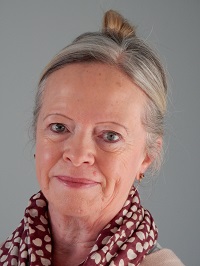 Ann Macintosh合作论文数Digital Governance at the University of Leeds2Jonathan Oberlander合作论文数University of Edinburgh 's School of Informatics2
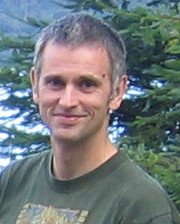 David Stuart Robertson合作论文数University of Edinburgh Centre for Intelligent Systems and their Applications (CISA), Division of Informatics Appleton Tower, Crichton Street Edinburgh EH8 9LE United Kingdom Appleton Tower, Crichton Street Edinburgh EH8 9LE United Kingdom2Jonathan Moore合作论文数1diana bental合作论文数1
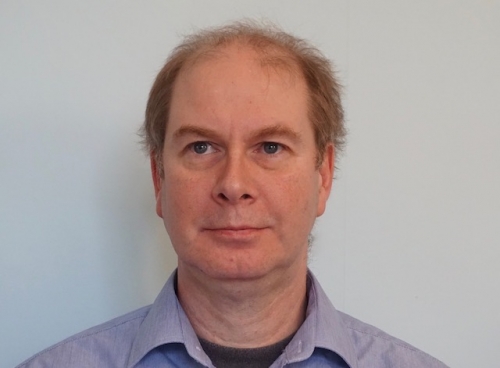 Richard Tobin合作论文数Institute for Language, Cognition and Computation, School of Informatics, The University of Edinburgh1Moore, J.合作论文数1
 Richard Cox合作论文数Department of Informatics, University of Sussex1
 Ruth Aylett合作论文数School of Mathematical and Computer Sciences, Heriot-Watt University1E. Smith合作论文数1Michael Uschold合作论文数1
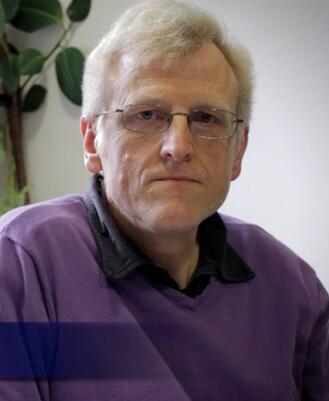 John Lee合作论文数School of Informatics,University of Edinburgh1
 Jonathan Kilgour合作论文数Institute for Adaptive and Neural Computation, School of Informatics, The University of Edinburgh1Terri Lydiard合作论文数1
 Dave Robertson合作论文数School of Informatics,University of Edinburgh1E. Goodfellow合作论文数1Matthew Hurst合作论文数Chinese University of Hong Kong1




