The Risk Assessment Review Group was organized by the U.S. Nuclear Regulatory Commission on July 1, 1977, with four elements to its charter: (1) Clarify the achievements and limitations of WASH-1400, the "Rasmussen Report." (2) Assess the peer comments thereon, and responses to those comments. (3) Study the present state of such risk assessment methodology. (4) Recommend to the Commission how (and whether) such methodology can be used in the regulatory and licensing process.
The issue of light-water reactor (LWR) safety has been the subject of a part-time, year-long study sponsored by the American Physical Society. The goal of the study was the assessment of some of the technical aspects of the safety of large light-water nuclear power reactors typical of present commercial practice in the Unted States. The report examines issues related to safe operation of LWRs; the research and development program responsible for establishing and enhancing safety; and the consequences of accidents for public health and welfare. The report in no way deals with the need for nuclear power or its benefits, and should not be considered as a net assessment of the risks versus the benefits of nuclear reactors. Since the risks of ecological impacts of other energy technologies are not addressed, no recommendations are made concerning the specific reactor program which should be followed in the immediate future. Among the areas covered in the report are primary pressure-vessel integrity; quality assurance; accident initiation from operator error, transients, and sabotage; the adequacy of present emergency core-cooling system designs; the calculation of long-term consequences to health of one particular low-probability accidental release of radioactivity; and the experimental and calculational (computer-code-development) aspects of the present reactor safety research program. A number of recommendations are contained with the report, mainly addressed to ways in which the safety of the present LWRs can be improved or better understood.
Nature of SU(3) X 5U(3) Symmetry Breaking -Results from a Systematic Test of the Soft-Meson Theorems, Frank von Hippel and Jae
The differential cross section for quasi-elastic electron-deuteron scattering has been measured at the Cambridge Electron Accelerator in the four-momentum-transfer region from 7 to 115 ${\mathrm{F}}^{\ensuremath{-}2}f[0.27 \mathrm{to} 4.47 {(\frac{\mathrm{BeV}}{c})}^{2}]$. The method used involved a coincidence between scattered electrons and recoiling protons. Electrons without a high-energy proton in coincidence were assumed to be due to a neutron interaction. The impulse approximation as developed by Durand and McGee was used to extract from the data the ratio of neutron to proton cross sections. Neutron/proton cross-section ratios from deuterium were measured at ${q}^{2}=7,10,15,20,30,45,\mathrm{and} 70$ ${\mathrm{F}}^{\ensuremath{-}2}$ (at 20\ifmmode^\circ\else\textdegree\fi{}); at ${q}^{2}=15$ ${\mathrm{F}}^{\ensuremath{-}2}$ (at 90\ifmmode^\circ\else\textdegree\fi{}); and at ${q}^{2}=115$ ${\mathrm{F}}^{\ensuremath{-}2}$ (at 29.64\ifmmode^\circ\else\textdegree\fi{}). It is shown that in the low-${q}^{2}$ region there are problems of theoretical interpretation. Finally, all available experimental data on the electron-neutron interaction are used to calculate values for the neutron form factors.
Electron-proton coincidences from the reaction ${e}^{\ensuremath{-}}+p\ensuremath{\rightarrow}{e}^{\ensuremath{-}}+p+{\ensuremath{\pi}}^{0}$ have been measured for pion-nucleon center-of-mass energies in the region of the ${N}^{*}(1236)$ resonance at four-momentum transfers near 1, 3, 6, and 10 ${\mathrm{F}}^{\ensuremath{-}2}$ [0.05 to 0.4 ${(\mathrm{B}\mathrm{e}\mathrm{V}/\mathit{c})}^{2}$]. Data have been obtained for pion polar angles between 100\ifmmode^\circ\else\textdegree\fi{} and 180\ifmmode^\circ\else\textdegree\fi{} c.m. over a wide range of azimuthal angles. The results are compared with the dispersion theories of Adler and Zagury.
Differential cross-section measurements for the reaction e- +p-e- +n + at in the re- gion of the N*(1236) resonance are compared with the dispersion theories of Adler and Zagury at four-momentum transfers between 1.2 and 15.3 F-~ using the pion form fac- tor as a free parameter. The results suggest a form factor similar to that of the proton. Extensive angular distribution measurements for the reaction e- +p -e- +n + 7it at pion-nucleon cen- ter-of-mass energies near the ~*(1236) resonance have been made at the Cambridge Electron Accel- erator. The principal aims of the experiment were to investigate the dependence of the pion form fac- tor ~,(q~) upon the square of the four-momentum transfer, q2, and to estimate the rms charge radius of the T+. Data were obtained at four-momentum transfers near 1, 3, 6, 10, and 15 F-2 for pion polar angles, O,*, between 0" and 50" c.m, over a wide range of pion azimuthal angles, cp,. The experiment was performed in conjunction with the previously reported measurements1 of the reaction e- +p -e- +p +TO. The apparatus was identical to that described in Ref. 1. Electrons scattered from a liquid-hydrogen target were detected in coincidence with positive pions or protons and momentum analyzed in a half- quadrupole spectrometer. The positive pions and protons were detected behind a large-solid-angle sweeping magnet by a counter array consisting of three scintillation counters, a 144-bin scintillation- counter hodoscope, and a Plexiglas Cherenkov counter. Pions were separated from protons by means of pulse-height information recorded by an on-line PDP-1 computer. The details of the experimental analysis will be published el~ewhere.~ The angular distribution for single-pion electroproduction is given by where a, is the c.m. solid angle for pion detec- tion, we is the electron solid angle in the labora- tory, E' is the energy of the scattered electron, and E is the polarization of the transverse com- ponents of the virtual photon. The kinematic fac- tor rT is defined in Ref. 1. The first term in the cross section, daT/di2,, is associated with the transverse components of the electromagnetic field and reduces to the cor- responding photoproduction cross section at ze- ro four-momentum transfer. The second term, doo/dS2,, is associated with the scalar (longitu- dinal) components of the field and is sensitive to the pion form factor because of a large contribu- tion from the one-pion-exchange interaction. In the present measurement, this term, which is approximately proportional to FT2, is predicted to be between 37 and 68 4", of the observed cross section, depending on the four-momentum trans- fer and c.m. en erg^.^,^ Since du0/di2, is evaluat- ed in the Born approximation with small final- ' state interaction corrections, its calculation is expected to be fairly reliable.
The energy spectrum of electrons inelastically scattered at 20\ifmmode^\circ\else\textdegree\fi{} lab from deuterium has been measured for an incident electron energy of 1578 MeV. The virtual photon cross section has two peaks at mass values corresponding to the $\ensuremath{\Delta}(1236)$ and ${N}^{\ensuremath{'}}(1525)$ resonances. No peak was observed in the mass region of the ${N}^{\ensuremath{'}}(1470)$ Roper resonance. The upper limit for the contribution of the Roper resonance to the virtual photon cross section is estimated to be 120 \ensuremath{\mu}b.
Received 5 September 1967DOI:https://doi.org/10.1103/PhysRevLett.19.809©1967 American Physical Society
F. Low has recently conjectured on the existence of heavy electrons. A search for a heavy electron in the mass range of 300 to 700 MeV is described. No evidence for the existence of such an object was observed within this mass range.
 Michael Goitein合作论文数8
 Charles A. Mistretta合作论文数Department of Medical Physics, School of Medicine and Public Health, University of Wisconsin–Madison;Department of Radiology, School of Medicine and Public Health, University of Wisconsin–Madison;Department of Biomedical Engineering, University of Wisconsin–Madison;Biomedical Engineering Center for Translational Research, University of Wisconsin–Madison7
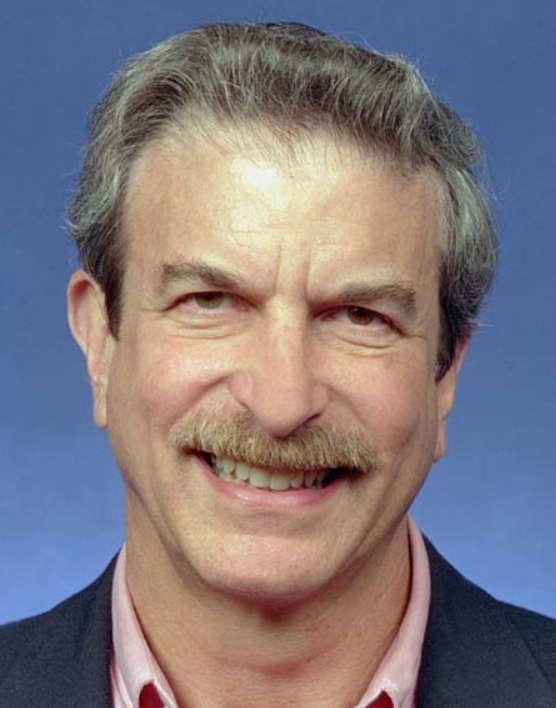 Jeffrey Appel合作论文数Program Planning Office, Fermi National Accelerator Laboratory7
 Kenneth M. Hanson合作论文数Hanson Photo7D. Imrie合作论文数7J. Dunning合作论文数6Richard Wilson合作论文数6L. Carroll合作论文数5James K Walker合作论文数3F. Zachariasen合作论文数1W. D. Rowe合作论文数1robert m graven合作论文数1A. Litke合作论文数1Nf Ramsey合作论文数1david r miller合作论文数1Muller R A合作论文数1R. McCarthy合作论文数1
 George Smoot (乔治・斯穆特)合作论文数The Hong Kong University of Science and Technology;Department of Physics, University of California, Berkeley;Lawrence Berkeley National Laboratory1Theodore B. Taylor合作论文数1
 Richard K. Wilson合作论文数Institute for Genomic Medicine, Nationwide Children's Hospital;Ohio State University College of Medicine1
 Jess Brewer合作论文数Department of Physics & Astronomy, The University of Britishcolumbia1L Charles Hebel合作论文数1Wolfgang Panofsky合作论文数1V. Weisskopf合作论文数1A. Entis合作论文数1
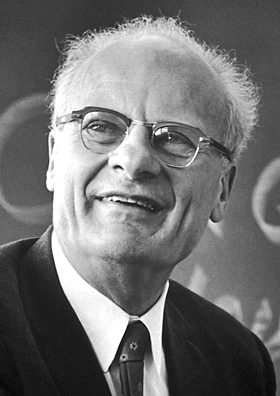 Hans Bethe合作论文数Department of Physics,Cornell University,Ithaca1Steven L Carroll合作论文数1Hilton Lewis合作论文数1Fiona Finlayson合作论文数1A. Castleman合作论文数1F. Von Hippel合作论文数1S. Keeny合作论文数1J. Alberi合作论文数1David E. Dorfan合作论文数1W. Ross合作论文数1
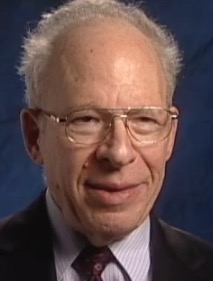 Richard L. Garwin合作论文数IBM Thomas J. Watson Research Center1




