Fractal-like structures of varying complexity are common in nature, and measure-based dimensions (Minkowski, Hausdorff) supply their basic geometric characterization. However, at the level of fundamental dynamics, which is quantum, structure does not enter via geometric features of fixed sets but is encoded in probability distributions on associated spaces. The question then arises whether a robust notion of the fractal measure-based dimension exists for structures represented in this way. Starting from effective number theory, we construct all counting-based schemes to select effective supports on collections of objects with probabilities and associate the effective counting dimension (ECD) with each. We then show that the ECD is scheme-independent and, thus, a well-defined measure-based dimension whose meaning is analogous to the Minkowski dimension of fixed sets. In physics language, ECD characterizes probabilistic descriptions arising in a theory or model via discrete “regularization”. For example, our analysis makes recent surprising results on effective spatial dimensions in quantum chromodynamics and Anderson models well founded. We discuss how to assess the reliability of regularization removals in practice and perform such analysis in the context of 3d Anderson criticality.
Quantum physics frequently involves a need to count the states, subspaces, measurement outcomes, and other elements of quantum dynamics. However, with quantum mechanics assigning probabilities to such objects, it is often desirable to work with the notion of a “total” that takes into account their varied relevance. For example, such an effective count of position states available to a lattice electron could characterize its localization properties. Similarly, the effective total of outcomes in the measurement step of a quantum computation relates to the efficiency of the quantum algorithm. Despite a broad need for effective counting, a well-founded prescription has not been formulated. Instead, the assignments that do not respect the measure-like nature of the concept, such as versions of the participation number or exponentiated entropies, are used in some areas. Here, we develop the additive theory of effective number functions (ENFs), namely functions assigning consistent totals to collections of objects endowed with probability weights. Our analysis reveals the existence of a minimal total, realized by the unique ENF, which leads to effective counting with absolute meaning. Touching upon the nature of the measure, our results may find applications not only in quantum physics, but also in other quantitative sciences.
The uncertainty associated with probing the quantum state is expressed as the effective abundance (measure) of possibilities for its collapse. New kinds of uncertainty limits entailed by the quantum description of the physical system arise in this manner.
A marquee feature of quantum behavior is that, upon probing, the microscopic system emerges in one of multiple possible states. While quantum mechanics postulates the respective probabilities, the effective abundance of these simultaneous ``identities'', if a meaningful concept at all, has to be inferred. To address such problems, we construct and analyze the theory of functions assigning the quantity (effective number) of objects endowed with probability weights. In a surprising outcome, the consistency of such probability-dependent measure assignments entails the existence of a minimal amount, realized by a unique effective number function. This result provides a well-founded solution to identity-counting problems in quantum mechanics. Such problems range from counting the basis states contained in an output of a quantum computation, and relevant in the analysis of quantum algorithms, to a novel way to characterize complex states such as QCD vacuum or eigenstates of quantum spin systems. In accompanying works, we analyze notable consequences of these findings, namely expressing quantum uncertainty as a measure, the ensuing universal treatment of localization phenomena, and effective description of quantum states. At the basic level, our results point to useful extensions for concepts of measure and support, and to a new probability notion of effective choices.
Conceptual designs of 1.5 and 3.0 T full-body magnetic resonance imaging (MRI) magnets using conduction cooled MgB2 superconductor are presented. The sizes, locations, and number of turns in the eight coil bundles are determined using optimization methods that minimize the amount of superconducting wire and produce magnetic fields with an inhomogeneity of less than 10 ppm over a 45 cm diameter spherical volume. MgB2 superconducting wire is assessed in terms of the transport, thermal, and mechanical properties for these magnet designs. Careful calculations of the normal zone propagation velocity and minimum quench energies provide support for the necessity of active quench protection instead of passive protection for medium temperature superconductors such as MgB2. A new 'active' protection scheme for medium Tc based MRI magnets is presented and simulations demonstrate that the magnet can be protected. Recent progress on persistent joints for multifilamentary MgB2 wire is presented. Finite difference calculations of the quench propagation and temperature rise during a quench conclude that active intervention is needed to reduce the temperature rise in the coil bundles and prevent damage to the superconductor. Comprehensive multiphysics and multiscale analytical and finite element analysis of the mechanical stress and strain in the MgB2 wire and epoxy for these designs are presented for the first time. From mechanical and thermal analysis of our designs we conclude there would be no damage to such a magnet during the manufacturing or operating stages, and that the magnet would survive various quench scenarios. This comprehensive set of magnet design considerations and analyses demonstrate the overall viability of 1.5 and 3.0 T MgB2 magnet designs.
We consider suspension hypersurface singularities of type g = f (x, y) + z(n), where f is an irreducible plane curve singularity. For such germs, we prove that the link of g determines completely the Newton pairs of f and the integer n except for two pathological cases, which can be completely described. Even in the pathological cases, the link and the Milnor number of g determine uniquely the Newton pairs of f and n. In particular, for such g, we verify Zariski's conjecture about the multiplicity,. The result also supports the following conjecture formulated in this paper: if the link of an isolated hypersurface singularity is a rational homology 3-sphere, then it determines the equisingularity type, the embedded topological type, the equivariant Hodge numbers and the multiplicity of the singularity. The conjecture is verified for weighted homogeneous singularities too.
It is shown that it is impossible to construct a free theory of fermions on infinite hypercubic Euclidean lattice in even number of dimensions that: (a) is ultralocal, (b) respects the symmetries of hypercubic lattice, (c) chirally nonsymmetric part of its propagator is local, and (d) describes single species of massless Dirac fermions in the continuum limit. This establishes non-ultralocality for arbitrary doubler-free Ginsparg-Wilson fermionic action with hypercubic symmetries ("strong non-ultralocality"), and complements the earlier general result on non-ultralocality of infinitesimal Ginsparg-Wilson-Luscher symmetry transformations ("weak non-ultralocality").
After a short review of the Method of Recursive Counting we introduce a general algebraic description of recursive lattice building. This provides a rigorous framework for discussion of method's limitations.
 Ivan Horvath合作论文数6Robert W. Brown合作论文数1
 Abdullah Al Amin合作论文数Dept Mech Engn, Northwestern Univ1
 Laith Abed Sabri合作论文数Aeronaut Tech Engn, Al Farahidi Univ1Xuan Peng合作论文数1
 Robert J. Deissler合作论文数Dept. of Phys., Case Western Reserve Univ.;c;Dept. of Phys., Case Western Reserve Univ.1Charles Poole合作论文数1
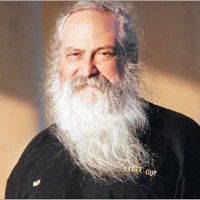 Michael Creutz合作论文数Physics Department, Brookhaven National Laboratory1
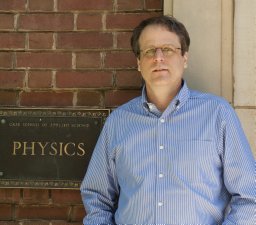 M. Martens合作论文数Fermi National Accelerator Laboratory1Chetan T. Balwe合作论文数1
 David Doll合作论文数1Michael Tomsic合作论文数1Andras Nemethi合作论文数Department of Mathematics;Ohio State University;Department of Mathematics, Ohio State University1
 Ozan Akkus合作论文数Department of Mechanical and Aerospace Engineering, Case School of Engineering, Case Western Reserve University;Collamedix Inc.1
 Mike D. Sumption合作论文数Department of Materials Science and Engineering, College of Engineering, The Ohio State University1As N ´ Andr ´合作论文数1
 Tanvir Noor Baig合作论文数1
 Matt Rindfleisch合作论文数Hyper Tech Research, Inc.1
 Peter Markoš合作论文数Faculty of Mathematics, Physics and Informatics, Comenius University in Bratislava1




