PCB 180 is a persistent and abundant non-dioxin-like PCB (NDL-PCB). We determined the developmental toxicity profile of ultrapure PCB 180 in developing offspring following in utero and lactational exposure with the focus on endocrine, metabolic and retinoid system alterations. Pregnant rats were given total doses of 0, 10, 30, 100, 300 or 1000 mg PCB 180/kg bw on gestational days 7−10 by oral gavage, and the offspring were sampled on postnatal days (PND) 7, 35 and 84. Decreased serum testosterone and triiodothyronine concentrations on PND 84, altered liver retinoid levels, increased liver weights and induced 7-pentoxyresorufin O-dealkylase (PROD) activity were the sensitive effects used for margin of exposure (MoE) calculations. Liver weights were increased together with induction of the metabolizing enzymes cytochrome P450 (CYP) 2B1, CYP3A1, and CYP1A1. Less sensitive effects included decreased serum estradiol and increased luteinizing hormone levels in females, decreased prostate and seminal vesicle weight and increased pituitary weight in males, increased cortical bone area and thickness of tibial diaphysis in females and decreased cortical bone mineral density in males. Developmental toxicity profiles were partly different in male and female offspring, males being more sensitive to increased liver weight, PROD induction and decreased thyroxine concentrations. MoE assessment indicated that the 95th percentile of current maternal PCB 180 concentrations do not exceed the estimated tolerable human lipid-based PCB 180 concentration. Although PCB 180 is much less potent than dioxin-like compounds, it shares several toxicological targets suggesting a potential for interactions.
PCB 180 is a persistent non-dioxin-like polychlorinated biphenyl (NDL-PCB) abundantly present in food and the environment. Risk characterization of NDL-PCBs is confounded by the presence of highly potent dioxin-like impurities. We used ultrapure PCB 180 to characterize its toxicity profile in a 28-day repeat dose toxicity study in young adult rats extended to cover endocrine and behavioral effects. Using a loading dose/maintenance dose regimen, groups of 5 males and 5 females were given total doses of 0, 3, 10, 30, 100, 300, 1000 or 1700 mg PCB 180/kg body weight by gavage. Doseresponses were analyzed using benchmark dose modeling based on dose and adipose tissue PCB concentrations. Body weight gain was retarded at 1700 mg/kg during loading dosing, but recovered thereafter. The most sensitive endpoint of toxicity that was used for risk characterization was altered open field behavior in females; i.e. increased activity and distance moved in the inner zone of an open field suggesting altered emotional responses to unfamiliar environment and impaired behavioral inhibition. Other dose-dependent changes included decreased serum thyroid hormones with associated histopathological changes, altered tissue retinoid levels, decreased hematocrit and hemoglobin, decreased follicle stimulating hormone and luteinizing hormone levels in males and increased expression of DNA damage markers in liver of females. Dose-dependent hypertrophy of zona fasciculata cells was observed in adrenals suggesting activation of cortex. There were gender differences in sensitivity and toxicity profiles were partly different in males and females. PCB 180 adipose tissue concentrations were clearly above the general human population levels, but close to the levels in highly exposed populations. The results demonstrate a distinct toxicological profile of PCB 180 with lack of dioxin-like properties required for assignment of WHO toxic equivalency factor. However, PCB 180 shares several toxicological targets with dioxin-like compounds emphasizing the potential for interactions. Citation: Viluksela M, Heikkinen P, van der Ven LTM, Rendel F, Roos R, et al. (2014) Toxicological Profile of Ultrapure 2,29,3,4,49,5,59-Heptachlorbiphenyl (PCB 180) in Adult Rats. PLoS ONE 9(8): e104639. doi:10.1371/journal.pone.0104639 Editor: Alok Deoraj, Florida International University, United States of America Received March 6, 2014; Accepted July 10, 2014; Published August 19, 2014 Copyright: 2014 Viluksela et al. This is an open-access article distributed under the terms of the Creative Commons Attribution License, which permits unrestricted use, distribution, and reproduction in any medium, provided the original author and source are credited. Funding: This study was funded by the European Commission (ATHON (Assessing the toxicity and hazards of NDL-PCBs present in food), FOOD-CT-2005022923). The authors are solely responsible for the contents of this paper, which does not necessarily represent the opinion of the European Community. RR was also supported by the National Fund Research, Luxembourg (FNR) and co-funded under the Marie Curie Actions of the European Commission (FP7-COFUND), J. Toppari by the Academy of Finland and the Sigrid Jusélius Foundation and KH by Formas (2007-1524). The funders had no role in study design, data collection and analysis, decision to publish, or preparation of the manuscript. Competing Interests: The authors have declared that no competing interests exist. * Email: matti.viluksela@thl.fi
PCB 180 is a persistent non-dioxin-like polychlorinated biphenyl (NDL-PCB) abundantly present in food and the environment. Risk characterization of NDL-PCBs is confounded by the presence of highly potent dioxin-like impurities. We used ultrapure PCB 180 to characterize its toxicity profile in a 28-day repeat dose toxicity study in young adult rats extended to cover endocrine and behavioral effects. Using a loading dose/maintenance dose regimen, groups of 5 males and 5 females were given total doses of 0, 3, 10, 30, 100, 300, 1000 or 1700 mg PCB 180/kg body weight by gavage. Dose-responses were analyzed using benchmark dose modeling based on dose and adipose tissue PCB concentrations. Body weight gain was retarded at 1700 mg/kg during loading dosing, but recovered thereafter. The most sensitive endpoint of toxicity that was used for risk characterization was altered open field behavior in females; i.e. increased activity and distance moved in the inner zone of an open field suggesting altered emotional responses to unfamiliar environment and impaired behavioral inhibition. Other dose-dependent changes included decreased serum thyroid hormones with associated histopathological changes, altered tissue retinoid levels, decreased hematocrit and hemoglobin, decreased follicle stimulating hormone and luteinizing hormone levels in males and increased expression of DNA damage markers in liver of females. Dose-dependent hypertrophy of zona fasciculata cells was observed in adrenals suggesting activation of cortex. There were gender differences in sensitivity and toxicity profiles were partly different in males and females. PCB 180 adipose tissue concentrations were clearly above the general human population levels, but close to the levels in highly exposed populations. The results demonstrate a distinct toxicological profile of PCB 180 with lack of dioxin-like properties required for assignment of WHO toxic equivalency factor. However, PCB 180 shares several toxicological targets with dioxin-like compounds emphasizing the potential for interactions.
Polychlorinated biphenyls (PCBs) are among the most ubiquitously detectable ‘persistent organic pollutants’. In contrast to ‘dioxinlike’ (DL) PCBs, less is known about the molecular mode of action of the larger group of the ‘non-dioxinlike’ (NDL) PCBs. Owing to the life-long exposure of the human population, a carcinogenic, i.e., tumor-promoting potency of NDL-PCBs has to be considered in human risk assessment. A major problem in risk assessment of NDL-PCBs is dioxin-like impurities that can occur in commercially available NDL-PCB standards. In the present study, we analyzed the induction of CYP2B1 and CYP3A1 in primary rat hepatocytes using a number of highly purified NDL-PCBs with various degrees of chlorination and substitution patterns. Induction of these enzymes is mediated by the nuclear xenobiotic receptors CAR (Constitutive androstane receptor) and PXR (Pregnane X receptor). For CYP2B1 induction, concentration–response analysis revealed a very narrow window of EC50 estimates, being in the range of 1–4μM for PCBs 28 and 52, and between 0.4 and 1μM for PCBs 101, 138, 153 and 180. CYP3A1 induction was less sensitive to NDL-PCBs, the most pronounced induction being achieved at 100μM with the higher chlorinated congeners. Using okadaic acid and small interfering RNAs targeting CAR and PXR, we could demonstrate that CAR plays a major role and PXR a minor role in NDL-PCB-driven induction of CYPs, both effects showing no stringent structure–activity relationship. As the only obvious relevant determinant, the degree of chlorination was found to be positively correlated with the inducing potency of the congeners.
Light sterile neutrinos can be excited by oscillations with active neutrinos in the early universe. Their properties can be constrained by their contribution as extra-radiation, parameterized in terms of the effective number of neutrino species Neff, and to the universe energy density today Ωνh2. Both these parameters have been measured to quite a good precision by the Planck satellite experiment. We use this result to update the bounds on the parameter space of (3+1) sterile neutrino scenarios, with an active-sterile neutrino mass squared splitting in the range (10−5–102)eV2. We consider both normal and inverted mass orderings for the active and sterile states. For the first time we take into account the possibility of two non-vanishing active-sterile mixing angles. We find that the bounds are more stringent than those obtained in laboratory experiments. This leads to a strong tension with the short-baseline hints of light sterile neutrinos. In order to relieve this disagreement, modifications of the standard cosmological scenario, e.g. large primordial neutrino asymmetries, are required.
PCB 180 (2,2',3,4,4',5,5'-heptachlorobiphenyl) is a persistent and accumulating polychlorinated biphenyl abundantly present in food and the environment. In this study, we used highly purified PCB 180 (dioxinlike impurities: 2.7 ng TEQ(WHO)/g PCB 180) in a 28-day toxicity study in young adult Sprague-Dawley rats. Male and female rats were given total doses of 3, 10, 30, 100, 300, 1000 or 1700 mg/kg b.w. PCB 180 by gavage. Increased liver weights were observed at ≥ 300 mg/kg b.w. in males and females. No increases in serum ALT or ALP activities were found. A significant increase in liver pentoxyresorufin O-dealkylase (PROD) activity was found in males at ≥ 10 mg/kg b.w. and in females at ≥ 30 mg/kg b.w. In both genders, a significant induction of hepatic 7-ethoxyresorufin O-deethylase (EROD) activity was also observed in males at ≥ 10 mg/kg b.w. and in females at ≥ 300 mg/kg b.w. Western blotting showed that mainly cytochromes P450 (CYPs) 2B1/2 and 3A1 were induced while slight effects were seen on CYP1A1, CYP1A2 and CYP1B1. However, no induction of CYP1A1, 1A2 and 1B1 was found on the mRNA level, except for a slight effect in females at 1000 mg/kg b.w. Furthermore, hepatic UDP-glucuronosyltransferases (UGTs) 1A1 and 1A6 were markedly induced in males and slightly induced in females. The hepatic concentrations of apolar retinoids were decreased in males at ≥ 30 mg/kg b.w. and in females at ≥ 300 mg/kg b.w. Taken together our findings show that pure PCB 180 leads to hepatic changes in a dose range which did not cause CYP1A1 induction but causes centrilobular liver hypertrophy, affects drug-metabolizing enzymes involved in the metabolism of exogenous and endogenous substrates and leads to changes in liver retinoid levels. A benchmark dose (BMD) approach is presented in order to model lowest effective dose levels for these effects. Comparison of PCB 180 liver level related to BMDL₅ for hepatic hypertrophy in rats with human data on 'total' hepatic PCB levels in individuals without history of specific exposure suggests a relatively small margin of tissue burden in the range of 37-fold. Our results show that the highly pure non dioxin-like PCB 180 exerted strong effects different to dioxin-like compounds and that the low TEQ contamination allowed a characterization of the PCB as non-dioxinlike.
Regression test suite prioritization techniques reorder test cases so that, on average, more faults will be revealed earlier in the test suite's execution than would otherwise be possible. This paper presents a genetic algorithm-based test prioritization method that employs a wide variety of mutation, crossover, selection, and transformation operators to reorder a test suite. Leveraging statistical analysis techniques, such as tree model construction through binary recursive partitioning and kernel density estimation, the paper's empirical results highlight the unique role that the selection operators play in identifying an effective ordering of a test suite. The study also reveals that, while truncation selection consistently outperformed the tournament and roulette operators in terms of test suite effectiveness, increasing selection pressure consistently produces the best results within each class of operator. After further explicating the relationship between selection intensity, termination condition, fitness landscape, and the quality of the resulting test suite, this paper demonstrates that the genetic algorithm-based prioritizer is superior to random search and hill climbing and thus suitable for many regression testing environments.
Liver cell aggregates were established from freshly isolated adult rat hepatocytes and non-parenchymal liver cells (NPC) in rotating cultures. One-third of the inoculated cells formed spheroidal aggregates and one-third of the aggregates remained in culture for up to 12 days, expressing a high intracellular lactate dehydrogenase (LDH) activity and ATP content. The 7-ethoxyresorufin O-deethylase (EROD) activity was doubled on day 8 compared with that in freshly isolated cells, and the glutathione S-transferase (GST) activity was preserved to initial level at day 12. Cytochrome P-450 (CYP) isoforms were differentially affected: at day 8, CYP1A1/2 and CYP2B1/2 contents were close to freshly isolated cell contents; CYP3A1/2 and 4A1/2/3 were preserved at half of the original levels; CYP2C6 and 2C11/2B1/2 were reduced. Enzyme inductions were effective throughout the whole culture period: EROD activity increased fivefold after exposure to phenobarbital (PB) and up to 20-fold after 3-methylcholanthrene (3-MC) exposure; GST activity was stimulated approximately twofold by both inducers. Compound-specific inductions were found for aldrin epoxidase (by PB only), ethoxycoumarin O-deethylase (ECOD) and UDP-glucuronyltransferase (by 3-MC only). Experiments with hepatocyte aggregates showed that the NPC in heterotypic aggregates preserve liver-specific functions more efficiently in long-term experiments. Accordingly, these aggregate cultures from adult rat liver cells could serve as a suitable in vitro model for long-term studies on xenobiotic metabolism or on the interaction of hepatotoxic chemicals with the cross-talk between hepatocytes and NPC.
GOAL:To clarify whether disturbances in the autonomic nervous system, reflected in abnormal cardiovascular reflexes, could explain symptoms of impaired heat regulation in patients with intestinal pseudo-obstruction.BACKGROUND:Chronic intestinal pseudo-obstruction is a clinical syndrome characterized by diffuse, unspecific gastrointestinal symptoms due to damage to the enteric nervous system or the smooth muscle cells. These patients often complain of excessive sweating or feeling cold, suggesting disturbances in the autonomic nervous system. Earlier studies have pointed to a coexistence of autonomic disturbances in the enteric and cardiovascular nervous system.STUDY:Thirteen consecutive patients (age range 23 to 79, mean 44 y) fulfilling the criteria for chronic intestinal pseudo-obstruction were investigated. Six of them complained of sweating or a feeling of cold. Examination of autonomic reflexes included heart rate variation to deep-breathing (expiration/inspiration index), heart rate reaction to tilt (acceleration index, brake index), and vasoconstriction (VAC) due to indirect cooling by laser doppler (VAC-index; high index indicates impaired VAC). Test results in patients were compared with healthy individuals.RESULTS:Patients had significantly higher (more abnormal) median VAC-index compared with healthy controls [1.79 (interquartile ranges 1.89) vs. 0.08 (interquartile ranges 1.29); P=0.0007]. However, symptoms of impaired heat regulation were not related to the VAC-index. There were no differences in expiration/inspiration, acceleration index, or brake index between patients and controls.CONCLUSIONS:The patients with severe gastrointestinal dysmotility showed impaired sympathetic nerve function which, however, did not seem to be associated with symptoms of impaired heat regulation.
Regression test prioritization is often performed in a time constrained execution environment in which testing only occurs for a fixed time period. For example, many organizations rely upon nightly building and regression testing of their applications every time source code changes are committed to a version control repository. This paper presents a regression test prioritization technique that uses a genetic algorithm to reorder test suites in light of testing time constraints. Experiment results indicate that our prioritization approach frequently yields higher average percentage of faults detected (APFD) values, for two case study applications, when basic block level coverage is used instead of method level coverage. The experiments also reveal fundamental trade offs in the performance of time-aware prioritization. This paper shows that our prioritization technique is appropriate for many regression testing environments and explains how the baseline approach can be extended to operate in additional time constrained testing circumstances.
The graphical user interface (GUI) is an important component of many software systems. Past surveys indicate that the development of a GUI is a significant undertaking and that the GUI's source code often comprises a substantial portion of the program's overall source base. Graphical user interface creation frameworks for popular object-oriented programming languages enable the rapid construction of simple and complex GUIs. In this paper, we examine the run-time performance of two GUI creation frameworks, Swing and Thinlet, that are tailored for the Java programming language. Using a simple model of a Java GUI, we formally define the difficulty of a GUI manipulation event. After implementing a case study application, we conducted experiments to measure the event handling latency for GUI manipulation events of varying difficulties. During our investigation of the run-time performance of the Swing and Thinlet GUI creation frameworks, we also measured the CPU and memory consumption of our candidate application during the selected GUI manipulation events. Our experimental results indicate that Thinlet often outperformed Swing in terms of both event handling latency and memory consumption. However, Swing appears to be better suited, in terms of event handling latency and CPU consumption, for the construction of GUIs that require manipulations of high difficulty levels.
The combination of the Jini network technology and the JavaSpaces object repository provides an exceptional environment for the design and implementation of loosely coupled distributed systems. We explore the strengths and weaknesses of the most popular implementation of a persistent JavaSpace. We report on the design, implementation, and analysis of RDBSpace, a JavaSpace that is supported by a relational database. Our experimental results indicate that it is possible to build an efficient and scalable JavaSpace that relies on a relational database back-end.
A genetic algorithm is used to find shellsort increment sequences that give good average-case performance on sequences of bounded size. Our approach applies a local improvement by removing a set of common factors from each increment sequence.
The island model for distributed genetic algorithms (GAs) is a natural match for the master-worker paradigm in distributed computation. We explore the benefits and drawbacks of several distributed system architectures in developing an implementation of a distributed GA that exploits the Jini and JavaSpace technologies. Our results, using the knapsack problem as an illustration, show that there is an unavoidable price to pay in terms of decreasing computation-to-communication ratios as a function of instance size. However, we can diminish these effects by expanding the number of JavaSpaces beyond those required for the obvious implementation. Our results also indicate that as the number of remote machines increases the potential for a better solution also rises. Even though our distributed GAs did not always exploit this potential for a higher quality solution, we believe that the combination of Java, Jini, and JavaSpaces presents avenues for easily distributing the computation of genetic algorithms. Keywords—Distributed Systems, Genetic Algorithms, JavaSpaces, Jini
As open source software engineering becomes more preva- lent, employing sound software engineering practices and the tools used to implement these practices becomes more important. This paper examines the current status of free software engineering tools. For each set of tools, we deter- mined the important attributes that would best assist a de- veloper in each stage of the waterfall model. We rated each tool based on predetermined attributes. We used the creation of a graphical user interface based email client in Java to assist in evaluating each tool. Our findings show that there is still a need for free tools to extract UML diagrams, test graphical user interfaces, make configuring Emacs easier, and profile Java applications. In other areas there are free tools that provide satisfactory functionality such as Concur- rent Versions System (CVS), GVim, JUnit, JRefactory, GNU Make, Jakarta Ant, Javadoc, and Doc++.
We demonstrate that the class of languages accepted by deterministic one-counter machines, or DOCAs (a natural subset of the context-free languages), is learnable in polynomial time. Our learning protocol is based upon Angluin's concept of a "minimally adequate teacher" who can answer membership queries about a concept and provide counterexamples to incorrect hypothesized concepts. We also demonstrate that the problem of testing DOCAs for equivalence may be solved in polynomial time, answering a question posed by Valiant and Paterson.
 Helen Hakansson合作论文数8
 Dieter Schrenk合作论文数8Krister Halldin合作论文数Institute of Environmental Medicine, Karolinska Institutet7
 Patrik Andersson合作论文数Department of Chemistry, Faculty of Science and Technology, Umeå University7Gerd Hamscher合作论文数6
 Gregory M. Kapfhammer合作论文数Allegheny College6
 Leo T van der Ven合作论文数5Viluksela Matti合作论文数5Päivi Heikkinen合作论文数5
 Javier Esteban合作论文数4
 Merja Korkalainen合作论文数4Rendel Filip合作论文数4Maria Herlin合作论文数4Satu Sankari合作论文数4Annika Adamsson合作论文数3
 Mikko Finnilä合作论文数Research Unit of Health Sciences and Technology, Faculty of Medicine, University of Oulu3
 Jorma Toppari合作论文数Turku University Hospital;University of Turku;University of Chile3Timo Hamers合作论文数3Juha Tuukkanen合作论文数3
 Ulla Stenius合作论文数Unit of Biochemical Toxicology, Institute of Environmental Medicine, Karolinska Institutet3
 Hanna Mari Miettinen合作论文数VTT3Emma Westerholm合作论文数2Piotr Berman合作论文数2Kine-Susann Dervola合作论文数2
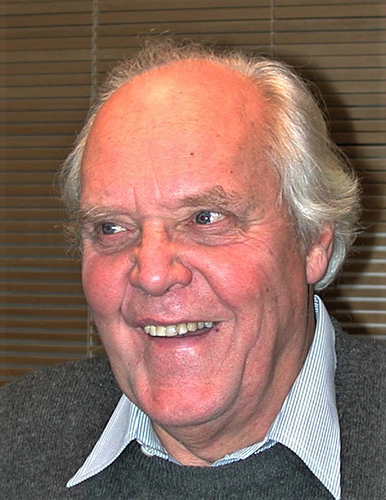 Frode Fonnum合作论文数Institute of Basal Medicine, University of Oslo2Hellmuth Lilienthal合作论文数2Kari Savolainen合作论文数2
 Inger Lise Bogen合作论文数Institute of Basic Medical Sciences, University of Oslo2
 Sanna Lensu合作论文数Department of Pharmacology and Toxicology, University of Kuopio2j asencio合作论文数1Dennis Hellgren合作论文数1
 Ismael Sanchez合作论文数1HJ Schmitz合作论文数1
 Annika Hanberg合作论文数1Maike Gährs合作论文数1
 Antti Koskela合作论文数1
 Elsa Antunes Fernandes合作论文数1
 Remco Westerink合作论文数Department Population Health Sciences, Utrecht University;Neurotoxicology Research Group, Institute for Risk Assessment Sciences, Utrecht University1Goran Sundkvist合作论文数1
 Mary Lou Soffa合作论文数Department of Computer Science, The University of Virginia1
 Jordi Boix合作论文数Laboratory of Neurobiology, Centro de Investigación Príncipe Felipe1
 Xavier Barber合作论文数Centro de Investigación Operativa, Universidad Miguel Hernández de Elche-Alicante1
 Heather Leslie合作论文数School of Marine Sciences, University of Maine1Miroslav Machala合作论文数Department of Toxicology, Pharmacology, and Immunopharmacology, Veterinary Research Institute1Geoffrey C. Arnold合作论文数1Alexander Conrad合作论文数1
 Marjo Niittynen合作论文数1Hans-Joachim Schmitz合作论文数1Sabina Litens合作论文数1




