Natural language generation is usually divided into separate text planning and linguistic components. This division, though, assumes that the two components can operate independently, which is not always true. The IGEN generator eliminates the need for this assumption; it handles interactions between the components without sacrificing the advantages of modularity. IGEN accomplishes this by means of annotations that its linguistic component places on the structures it builds; these annotations provide an abstract description of the effects of particular linguistic choices, allowing the planner to evaluate these choices without needing any linguistic knowledge. This approach allows IGEN to vary the work done by each component independently, even in cases where the final output depends on interactions between them. In addition, since IGEN explicitly models the effects of linguistic choices, it can gracefully handle situations where the available time or linguistic resources are limited.
Research into natural language generation has often divided the processing into separate text planning and linguistic realization components. Despite this division's intuitive plausibility and practical utility, it ultimately interferes with some of the decisions necessary in the generation process. The IGEN generator, described here, implements a solution to this dilemma by having the linguistic component provide feedback to the planner. This feedback is in the form of annotations that describe the effects and consequences of particular linguistic decisions. The planner can then ratify or override the decisions of the linguistic component, without needing any direct access to purely linguistic information. This allows the two components to interact fully while retaining the strict separation of the levels of processing.
We present some of the technology developed at StreamSage for indexing and retrieving audio/video data. A primary difficulty of this task is precise extraction of the passages relevant to the query from the audio/video stream, which is crucial in presenting results in a manageable fashion, particularly locating their beginning and end. We focus on the combination of linguistic and statistical approaches employed to construct content-specific relevance intervals in timed media. These techniques, including topic and topic boundary identification, referent resolution, and large coverage word sense disambiguation, must be automatic, scalable, and domain-independent.
StreamSage's audio/video indexing and retrieval system finds relevant content and displays it in a prioritized list of search results. The system automatically identifies the precise intervals of content that are relevant for every topic addressed in the media file. The resulting index of Relevance Intervals allows users to quickly find the information in audio/video content they need.
The summer of 1992, the Soar/IFOR research group has been building intelligent automated agents for tactical air simulation. The ultimate goal of this project is to develop automated pilots whose behavior in simulated engagements is indistinguishable from that of human pilots. This technical report is a collection of the research papers that have been generated from this project as of Spring 1994. The research covered in these papers spans a wide spectrum of issues in agent development such as explanation, managing situational awareness, managing multiple interacting goals, coordination between multiple agents, natural language processing, developing believable agents, event tracking, and the infrastructure to support agent development, including knowledge acquisition and use, interfacing to simulation environments, and developing low cost simulators.
NL-Soar is a computer system that performs language comprehension and generation within the framework of the Soar architecture [New90]. NL-Soar provides language capabilities for systems working in a real-time environment. Responding in real time to changing situations requires a flexible way to shift control between language and task operations. To provide this flexibility, NL-Soar organizes generation as a sequence of incremental steps that can be interleaved with task actions as the situation requires. This capability has been demonstrated via the integration of NL-Soar with two different independently-developed Soar-based systems.
time, flexibly use a small amount of tactical Abstract knowledge about two classes of one-versusThis article reports on recent progress one (1-v-1) Beyond Visual Range (BVR) in the development of TacAir-Soar, an tactical air scenarios. In the non-jinking intelligent automated agent for tactical air bogey scenarios, one plane (the non-jinking simulation. This includes progress in bogey) is unarmed and maintains a straightexpanding the agent’s coverage of the and-level flight path. The other plane is tactical air domain, progress in enhancing armed with long-range radar-guided, the quality of the agent’s behavior, and medium-range radar-guided, and short-range progress in building an infrastructure for infrared-guided missiles. Its task is to set up research and development in this area. for a sequence of missile shots, at
This paper describes the construction of a MUMBLE-based [McDonald 83b] tactical component for the TEXT text generation system [McKeown 85]. This new component, which produces fluent English sentences from the sequence of structured message units output from TEXT's strategic component, has produced a 60-fold speed-up in sentence production. Adapting MUMBLE required work on each of the three parts of the MUMBLE framework: the interpreter, the grammar, and the dictionary. It also provided some insight into the organization of the generation process and the consequences of MUMBLE's commitment to a deterministic model.
 Tim Sibley合作论文数StreamSage Inc.4
 Evelyne Tzoukermann合作论文数The MITRE Corporation3
 Jill Fain Lehman合作论文数Human-Computer Interaction Institute, Carnegie Mellon University3
 John E. Laird合作论文数Computer Science and Engineering Division, Electrical Engineering and Computer Science Department, College of Engineering, University of Michigan;Center for Integrated Cognition2
 Milind Tambe合作论文数Center for Research in Computation and Society, Harvard University;John A Paulson School of Engineering and Applied Sciences, Harvard University;Google Research2
 Paul S. Rosenbloom合作论文数Thomas Lord Department of Computer Science, Viterbi School of Engineering, University of Southern California;Henry Salvatori Computer Science Center, University of Southern California2
 Anthony B. Davis合作论文数Space and Remote Sensing Sciences Group;Los Alamos National Laboratory;Space and Remote Sensing Sciences Group, Los Alamos National Laboratory2
 bageshree shevade合作论文数1Sitaram Lanka合作论文数1F Koss合作论文数1leslie chipman合作论文数1WL Johnson合作论文数1hongzhong zhou合作论文数1oliver jojic合作论文数1David Weir合作论文数1
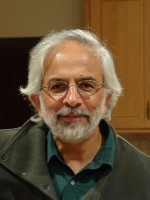 Gopalan Nadathur合作论文数Department of Computer Science and Engineering Institute of Technology University of Minnesota1
 Randolph M. Jones合作论文数Colby College & Soar Technology1Eric Mays合作论文数1
 Amit Bagga合作论文数Comcast1
 Michael Van Lent合作论文数Soar Technology1
 Martha E. Pollack合作论文数Cornell University1David Houghton合作论文数1Ethel Schuster合作论文数Northern Essex Community College1Frank V. Koss合作论文数1
 Ryan Farrell合作论文数Brigham Young University1
 Jan Neumann合作论文数Comcast1Geetu Ambwani合作论文数StreamSage/Comcast1Robert E. Wray合作论文数1Kathy Mccoy合作论文数1Karl B. Schwamb合作论文数1Anny Ewing合作论文数1Philip Rennert合作论文数1Julia Hirschberg合作论文数1Lewis Johnson合作论文数University of Southern California
Information Sciences Institute
Center for Advanced Research in Technology for Education1
Jan Neumann合作论文数Comcast1Geetu Ambwani合作论文数StreamSage/Comcast1Robert E. Wray合作论文数1Kathy Mccoy合作论文数1Karl B. Schwamb合作论文数1Anny Ewing合作论文数1Philip Rennert合作论文数1Julia Hirschberg合作论文数1Lewis Johnson合作论文数University of Southern California
Information Sciences Institute
Center for Advanced Research in Technology for Education1




