As High-Performance Computing (HPC) applications involving massive data sets, including large-scale simulations, data analytics, and machine learning, continue to grow in importance, memory bandwidth has emerged as a critical performance factor in contemporary HPC systems. The rapidly escalating memory performance requirements, which traditional DRAM memories often fail to satisfy, necessitate the use of High-Bandwidth Memory (HBM), which offers high bandwidth, low power consumption, and high integration capacity, making it a promising solution for next-generation platforms. However, despite the notable increase in memory bandwidth on modern systems, no prior work has comprehensively assessed the memory bandwidth requirements of a diverse set of HPC applications and provided sufficient justification for the cost of HBM with potential performance gain. This work presents a performance analysis of a diverse range of scientific applications as well as standard benchmarks on platforms with varying memory bandwidth. The study shows that while the performance improvement of scientific applications varies quite a bit, some applications in CFD, Earth Science, and Physics show significant performance gains with HBM. Furthermore, a cost-effectiveness analysis suggests that the applications exhibiting at least a 30
Recently, the Texas Advanced Computing Center at the University of Texas at Austin held its third Texascale Days event on Frontera. Frontera is the most powerful academic supercomputer in the U.S. This tightly connected system allows experienced users with sophisticated parallel applications to run across thousands of cores. Frontera offers a unique opportunity for National Science Foundation researchers. Texascale Days provides researchers the opportunity to execute half- to full-system runs. Events such as Texascale Days allow our colleagues to experiment outside their regular workflow and push their applications and our systems to the limit. The issues we encounter and overcome provide insight on how to better deploy our systems and support their research. These events are stepping stones to the science problems of tomorrow and the HPC resources required to investigate them. Here, we describe the effort required to offer the Texascale Days opportunity to our researchers.
A dataset from the field of High Performance Computing (HPC) was curated with the focus on facilitating its reuse and to appeal to a broader audience beyond HPC specialists. At an early stage in the research project, the curators gathered requirements from prospective users of the dataset, focusing on how and for which research projects they would reuse the data. Users needs informed which curation tasks to conduct, which included: adding more information elements to the dataset to expand its content scope; removing personal information; and, packaging the data in a size, a format, and at a frequency of delivery that are convenient for access and analysis purposes. The curation tasks are embedded in the software that produces the data, and are implemented as an automated workflow that spans various HPC resources, in which the dataset is generated, processed and stored and the Texas ScholarWorks institutional repository, through which the data is published. Within this distributed architecture, the integrated data creation and curation workflow complies with long-term preservation requirements, and is the first one implemented as a collaboration between the supercomputing center where the data is created on ongoing basis, and the University Libraries at UT Austin where it is published. The targeted curation strategy included the design of proof of concept data analyses to evaluate if the curated data met the reuse scenarios proposed by users. The results suggest that the dataset is understandable, and that researchers can use it to answer some of the research questions they posed. Results also pointed to specific elements of the curation strategy that had to be improved and disclosed the difficulties involved in breaking data to new users.
It can be troublesome and challenging to diagnose and resolve problems caused by improper individual user account configurations on supercomputer systems. To assist individual users and those who support them in handling these issues efficiently and conveniently, we designed and created a new lightweight system utility named Sanity Tool. Sanity Tool includes a group of generic and machine-specific tests that are used to evaluate the correctness of a user's account configurations. It has played an important role in user support since its emergence on supercomputers at the Texas Advanced Computing Center (TACC). This tool can also be installed on almost any supercomputer system effortlessly, and it can be extended with customized site-specific tests with a reasonable amount of work.
XALT is a job-monitoring tool to collect accurate, detailed, and continuous job level and link-time data on all MPI jobs running on a computing cluster. Due to its usefulness and complementariness to other system logs, XALT has been deployed on Stampede at Texas Advanced Computing Center and other high performance computing resources around the world. The data collected by XALT can be extremely valuable to help resource providers understanding resources usages and identify patterns and insights for future improvements. However, the volume of data collected by XALT grows quickly over time on large system and presents challenges for access and analysis. In this paper, we describe development of a prototype tool to analyze and visualize XALT data. The application utilizes Spark for efficient data processing over large volume of log data and R for interactive visualization of the results over the web. The application provides an easy to use interface for users to conveniently share and communicate executable usage and patterns without prerequisite knowledge on big data technology. In this paper, we detail the features of this tool, current development status, performance evaluation and exemplar use cases.
XALT is a tracking tool that collects accurate, detailed, and continuous job-level and link-time data. XALT stores that data in a database and ensures that all the data collection is transparent to the users. XALT tracks libraries and object files linked by the application. A recent feature improvement in XALT enable it to also track external subroutines and functions called by an application. This paper describes the function-tracking implementation in XALT and showcases the kind of data and analysis that becomes available from this new feature. A recently developed web-based interface to XALT database is also described, allowing the staffs of a supercomputing center to more easily understand software usage on their compute resources.
XALT collects accurate, detailed, and continuous job-level and link-time data and stores that data in a database; all the data collection is transparent to the users. The data stored can be mined to generate a picture of the compilers, libraries, and other software that users need to run their jobs successfully, highlighting the products that researchers use. We showcase how data collected by XALT can be easily mined into a digestible format by presenting data from four separate HPC centers. XALT is already used by many HPC centers around the world due to its usefulness and complementariness to existing logs and databases. Centers with XALT have a much better understanding of library and executable usage and patterns. We also present new functionality in XALT - namely the ability to anonymize data and early work in providing seamless access to provenance data.
Those participating in HUST '15 appreciate the potential value of high quality tools and technologies intended to enhance the user experience on large-scale computers. Given the changing landscape of large-scale computing, they likely also feel a renewed sense of urgency associated with the emerging needs of an increasingly diverse user base. Do user support tools, however, really make a difference for users and those who support them? Are they making a difference now? This paper is one response to these questions: it describes five brief case studies in which the authors employed software tools to help address problems and issues associated with users' needs on the Stampede supercomputer at the Texas Advanced Computing Center. The paper highlights the authors' thoughts on their experiences, including a few deliberately provocative assertions intended to invite reflection and discussion.
This work enhances our understanding of individual users' software needs, then leverages that understanding to help stakeholders conduct business in a more efficient, effective, and systematic way. The product, XALT, builds on work that is already improving the user experience and enhancing support programs for thousands of users on twelve supercomputers across the United States and Europe. XALT will instrument individual jobs on high-end computers to generate a picture of the compilers, libraries, and other software that users need to run their jobs successfully. It will highlight the products our researchers need and do not need, and alert users and support staff to the root causes of software configuration issues as soon as the problems occur. A key objective of this work is generating the information needed to improve efficiency and effectiveness for an extensive community of stakeholders including users, sponsoring institutions, support organizations, and development teams. Efficiency, effectiveness, and responsible stewardship each require a clear picture of users' needs. XALT is an important step in the quest to achieve that clarity.
This is the final report on reproducibility@xsede, a one-day workshop held in conjunction with XSEDE14, the annual conference of the Extreme Science and Engineering Discovery Environment (XSEDE). The workshop's discussion-oriented agenda focused on reproducibility in large-scale computational research. Two important themes capture the spirit of the workshop submissions and discussions: (1) organizational stakeholders, especially supercomputer centers, are in a unique position to promote, enable, and support reproducible research; and (2) individual researchers should conduct each experiment as though someone will replicate that experiment. Participants documented numerous issues, questions, technologies, practices, and potentially promising initiatives emerging from the discussion, but also highlighted four areas of particular interest to XSEDE: (1) documentation and training that promotes reproducible research; (2) system-level tools that provide build- and run-time information at the level of the individual job; (3) the need to model best practices in research collaborations involving XSEDE staff; and (4) continued work on gateways and related technologies. In addition, an intriguing question emerged from the day's interactions: would there be value in establishing an annual award for excellence in reproducible research?
The Lustre file system provides high aggregated I/O bandwidth and is in widespread use throughout the HPC community. Here we report on work (1) developing a model for understanding collective parallel MPI write operations on Lustre, and (2) producing a library that optimizes parallel write performance in a user-friendly way. We note that a system's default stripe count is rarely a good choice for parallel I/O, and that performance depends on a delicate balance between the number of stripes and the actual (not requested) number of collective writers. Unfortunate combinations of these parameters may degrade performance considerably. For the programmer, however, it's all about the stripe count: an informed choice of this single parameter allows MPI to assign writers in a way that achieves near-optimal performance. We offer recommendations for those who wish to tune performance manually and describe the easy-to-use T3PIO library that manages the tuning automatically.
HPC user support teams invest a lot of time and effort in installing scientific software for their users. A well-established practice is providing environment modules to make it easy for users to set up their working environment. Several problems remain, however: user support teams lack appropriate tools to manage a scientific software stack easily and consistently, and users still struggle to set up their working environment correctly. In this paper, we present a modern approach to installing (scientific) software that provides a solution to these common issues. We show how EasyBuild, a software build and installation framework, can be used to automatically install software and generate environment modules. By using a hierarchical module naming scheme to offer environment modules to users in a more structured way, and providing Lmod, a modern tool for working with environment modules, we help typical users avoid common mistakes while giving power users the flexibility they demand.
This work describes an implementation of distributed particle tracking that provides a factor 10000x speedup over traditional schemes. While none of the techniques used to achieve this result are completely new, they have been used in combination to great effect in this project. The implementation includes parallel IO using HDF5, a flexible load balancing scheme, and dynamic buffering to achieve excellent performance at scale. The use of HDF5 decouples the size of the simulation generating the data from the particle tracing, providing a more flexible and efficient workflow. The load balancing scheme ensures that heterogeneous particle distributions do not result in a waste of computational resources by maintaining all the MPI tasks occupied at any given time. Dynamic buffering minimizes MPI exchanges across MPI tasks, a critical element in the performance improvements achieved.
This paper presents a tool chain, based on the open source tool TACC_Stats, for systematic and comprehensive job level resource use measurement for large cluster computers, and its incorporation into XDMoD, a reporting and analytics framework for resource management that targets meeting the information needs of users, application developers, systems administrators, systems management and funding managers. Accounting, scheduler and event logs are integrated with system performance data from TACC_Stats. TACC_Stats periodically records resource use including many hardware counters for each job running on each node. Furthermore, system level metrics are obtained through aggregation of the node (job) level data. Analysis of this data generates many types of standard and custom reports and even a limited predictive capability that has not previously been available for open-source, Linux-based software systems. This paper presents case studies of information that can be applied for effective resource management. We believe this system to be the first fully comprehensive system for supporting the information needs of all stakeholders in open-source software based HPC systems.
The iPlant Collaborative (iPlant) is a United States National Science Foundation (NSF) funded project that aims to create an innovative, comprehensive, and foundational cyberinfrastructure in support of plant biology research (PSCIC, 2006). iPlant is developing cyberinfrastructure that uniquely enables scientists throughout the diverse fields that comprise plant biology to address Grand Challenges in new ways, to stimulate and facilitate cross-disciplinary research, to promote biology and computer science research interactions, and to train the next generation of scientists on the use of cyberinfrastructure in research and education. Meeting humanity's projected demands for agricultural and forest products and the expectation that natural ecosystems be managed sustainably will require synergies from the application of information technologies. The iPlant cyberinfrastructure design is based on an unprecedented period of research community input, and leverages developments in high-performance computing, data storage, and cyberinfrastructure for the physical sciences. iPlant is an open-source project with application programming interfaces that allow the community to extend the infrastructure to meet its needs. iPlant is sponsoring community-driven workshops addressing specific scientific questions via analysis tool integration and hypothesis testing. These workshops teach researchers how to add bioinformatics tools and/or datasets into the iPlant cyberinfrastructure enabling plant scientists to perform complex analyses on large datasets without the need to master the command-line or high-performance computational services.
Commodity-based Linux HPC clusters dominate the scientific computing landscape in both academia and industry ranging from small research clusters to petascale supercomputers supporting thousands of users. To support broad user communities and manage a user-friendly environment, end-user sites must combine a range of low-level system soft ware with multiple compiler chains, support libraries, and a suite of 3rd party applications. In addition, large sys tems require bare metal provisioning and a flexible software management strategy to maintain consistency and upgrade ability across thousands of compute nodes. This report documents a Linux operating system framework, (LosF), which has evolved over the last seven years to provide an integrated strategy for the deployment of multiple HPC systems at the Texas Advanced Computing Center. Documented within this effort is the high-level cluster configuration options and definitions, bare-metal provisioning, hierarchical HPC soft ware stack design, package-management, user environment management tools, user account synchronization, and local customization configurations.
 Mark R. Fahey合作论文数National Center for Computational Sciences, Oak Ridge National Laboratory;Argonne National Laboratory, U.S. Department of Energy Office of Science8Doug James合作论文数7John Cazes合作论文数Univ Texas Austin, Texas Adv Comp Ctr, Austin, TX 78712 USA5
 Si Liu合作论文数5
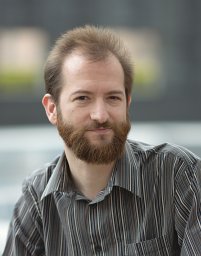 William L. Barth合作论文数at Austin, The University of Texas4Lars Koesterke合作论文数3
 Reuben D. Budiardja合作论文数Physics Division;Oak Ridge National Laboratory;Physics Division, Oak Ridge National Laboratory3
 C. Rosales合作论文数2R. Todd Evans合作论文数2
 Kapil Agrawal合作论文数Nat. Inst. for Comput. Sci. (NICS),, Univ. of Tennessee;c;Nat. Inst. for Comput. Sci. (NICS),, Univ. of Tennessee2
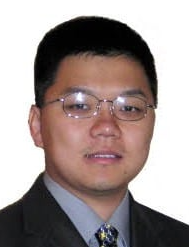 Weijia Xu合作论文数Visa2Graham F. Carey合作论文数2G. Bicken合作论文数2Bill Barth合作论文数2steve maher合作论文数1chris kummerow合作论文数1jesse allen合作论文数1alex kekesi合作论文数1
 David Micklos合作论文数Dolan DNA Learning Center, Cold Spring Harbor Laboratory1
 E. Dejong合作论文数1Karla Gendler合作论文数1Dave Semeraro合作论文数1Dave Mattson合作论文数1Christopher Jordan合作论文数1Dan Ryan合作论文数1james chishun tsiao合作论文数1Doug Soltis合作论文数1Cecile Ane合作论文数1sophie kate kay合作论文数1
 Matthew Cawood合作论文数Texas Advanced Computing Center, USA1greg shirah合作论文数1Junjie Li合作论文数1Kenton Mchenry合作论文数Computer Science, University of Illinois at Urbana-Champaign1
 Yinzhi Wang合作论文数Texas Adv Comp Ctr, Univ Texas Austin1
 Markus Geimer合作论文数1
 Benjamin Gilbert合作论文数Department of Earth and Planetary Science, University of California, Berkeley1
 Geir Kjetil Ferkingstad Sandve合作论文数Section of Machine learning, Department of Informatics, The Faculty of Mathematics and Natural Sciences, University of Oslo1
 Ruizhu Huang合作论文数1
 Daniel Scheeres合作论文数Celestial and Spaceflight Mechanics Laboratory, University of Colorado Boulder;Department of Aerospace Engineering Sciences, University of Colorado Boulder;Colorado Center for Astrodynamics Research, University of Colorado Boulder1
 Ann E. Stapleton合作论文数Department of Medicine, University of Washington1
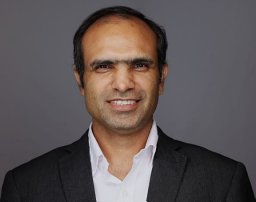 Amit Ruhela合作论文数CSE Dept., IIT Delhi;c;CSE Dept., IIT Delhi1Fonseca, J.合作论文数1Sheila Miguez合作论文数1Aaron Dubrow合作论文数1
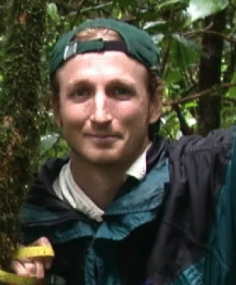 Brian Enquist合作论文数Department of Ecology and Evolutionary Biology, College of Science, University of Arizona;The Santa Fe Institute;Oxford University;Rocky Mountain Biological Laboratory1
 Victoria Stodden合作论文数School of Information Sciences, University of Illinois at Urbana-Champaign1
 Erik Asphaug合作论文数Dept. of Planetary Sciences, The University of Arizona1
 Stephen P. Goff合作论文数Vagelos College of Physicians and Surgeons, Columbia University Irving Medical Center;Department of Microbiology & Immunology, Columbia University1S. Suzuki合作论文数1




