In most scenarios of the future a personalized virtual butler appears. This butler not only performs communication and coordination tasks but also gives recommendations on how to handle everyday probl
Servants and butlers always have been playing an important role, not only in books of history but also in fiction, such as fairy tales, novels, plays, operas, and films. Three types of them are discussed: "Natural Servants", i.e. human ones, who understand the wishes of their masters well but, in any case, their mental and physical capabilities cannot exceed those of humans. "Ghost Servants" like genies with capabilities we humans can only dream of, and "Robotic Servants" that have a machine as a body and sensors and actuators controlled by complex, often smart programs. Several examples of each type are presented, relating them to the aims of a "virtual butler". Finally, the contribution of every chapter of this volume to the "making-of" is highlighted.
The EMCSR'2010 Proceedings will be printed directly from camera-ready copies sent electronically to the conference secre- tariat <sec@ofai.at>. To ensure that all papers in the Proceedings have a uniform ap- pearance, authors are asked to adhere to the instructions given in this document.
Real-Time Strategy (RTS) games are a challenging genre for the design of Intelligent Virtual Agents. We were interested whether incorporating a simple emotional model to an existing bot-script improves playing strength. We implemented a bot for Microsoft's RTS game "Age of Mythology". The emotional model is based on the "Big-Five" and the Emotion-Connectionist Model. Four variants of the bot were evaluated, each using different personality parameters; one of the variants was designed to show "neurotic" behaviour. The emotion-driven bots were evaluated in a bot-versus-bot setup, playing matches against the game's default script. Evaluation results indicate a significant increase in playing strength, the "neurotic" bot being the strongest one.
There can be no doubt that conflict in general and international conflicts in particular are amongst the most important phenomena that we should study. Tens of millions of people have died as a result of conflict in the last century, untold destruction was wreaked on many societies, and millions of people lost all and became refugees as a result of some conflict or another. No other social process threatens the stability and order of the international system more than conflict. No other social process threatens the complete elimination of another person, group or nation. Clearly, there is much to be learned about conflict and how best to resolve it, to avoid the undesirable and negative consequences associated with conflict. Knowledge about the conditions and causes of conflict, and an understanding of its dynamics and modes of termination can help us transform a potentially violent process into a more constructive one. This chapter purports to suggest a way, a method, of thinking about conflict management, and presenting some ideas for scholars and policy makers that might suggest how best to approach a conflict. Our focus here is avowedly practical, though our approach is strongly theoretical (Deutsch, 1973).
Resource-bounded agents that are situtated in complex environments face challenges of uncertainty, non-determinism, conflicting goals, and social interaction. We investigate planning and emotional processes as helpful assets in this context and point out possibilities of interactions between them. The different perspectives of these processes on the tasks of situated agents are found to be complementary in whole architectural designs, although substantial consolidation and integration is needed.
The main motivation guiding our research during the last 15 years, formulated as question, has been: Is it possible to aid decision-makers or their advisors who want to prevent the outbreak of hostilities/wars or to end them by means of negotiations or mediation, by giving them (interactively) recommendations as the result of applying Artificial Intelligence methods to existing war/crisis/mediation databases?
This chapter reports about the application of pattern recognition methods from the area of "neural computation" exploring their capabilities for finding structure in a data base of conflict management events since 1945 (Confman: Bercovitch and Langley, 1993; see Chapter 6). In particular, the following two methods were tested
During the last years it has become more and more clear that "the rational" and "the emotional" do not exclude each other, on the contrary, it is e.g. difficult for a person to make rational decisions if her or his brain structures responsible for experiencing emoions are not property functioning. Emotions have therefore become more important in artificial intelligence, e.g. for improving rational decisions by reducing the search space, for increasing the acceptance of M-programs by recognizing emotions of the user and by processing and expressing emotions, and by giving computergenerated actors (e.g. in edutainment or videogames) a "character" by developing albeit simplified personality models. In this presentation, we would like to first explain the motivation for this work, and then give an overview on how emotions are structured, their functionality analysed (or assumed) and, sometimes, already modelled, from different standpoints, e.g. the brain researcher, the cognitive scientist, the computer program and interface developer, and the computer game developer. Finally, we will describe two potential impacts of emotions research, both an our self-view, namely the potential relation of emotions to consciousness and new ethical problems.
The encounter between emotion research and agent-based technology is multifaceted. One the one hand, results from emotion research start to serve as role model from nature, providing inspirations for technical design criteria for individual agents at the micro level and agent groups and societies at the macro level as well as the sophisticated linkages in between them. On the other hand, they are of immediate impact in important aspects of human-agent interaction and effective social cooperation between humans and conversational interfaces. In this broad survey, we offer an appetising selection of results from different areas of emotion research.
This paper presents an empirical study on the possibility of discovering interesting event sequences and sequential rules in a large database of international political events. A data mining algorithm first presented by Mannila and Toivonen (1996), has been implemented and extended, which is able to search for generalized episodes in such event databases. Experiments conducted with this algorithm on the Kansas Event Data System (KEDS) database, an event data set covering interactions between countries in the Persian Gulf region, are described. Some qualitative and quantitative results are reported, and experiences with strategies for reducing the problem complexity and focusing on the search on interesting subsets of events are described.
 Paolo Petta合作论文数Austrian Research Institute for Artificial Intelligence;Centre for Medical Statistics, Informatics, and Intelligent Systems, Medical University of Vienna12
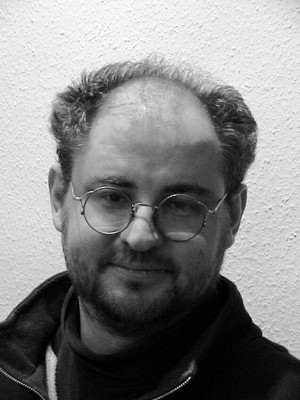 Johannes Fürnkranz合作论文数Institute for Application-Oriented Knowledge Processing, Johannes Kepler University Linz8
 osterreichische studiengesellschaft fur kybernetik合作论文数5european meeting on cybernetics合作论文数4Jacob Bercovitch合作论文数4Johann Petrak合作论文数Research Institute for Artificial Intelligence Schottengasse4Franz Pichler合作论文数3Werner Horn合作论文数2Harald Trost合作论文数Institut für Kunstgeschichte, University of Vienna2
 Nicholas V. Findler合作论文数Department of Computer Science and Engineering, Arizona State University2Michael Gervautz合作论文数Institute of Computer;Vienna University of Technology2
 Michael Luck合作论文数University of Sussex2
 Johannes Matiasek合作论文数2Erik Hörtnagl合作论文数2Zsolt Szalavári合作论文数Institute of Computer Graphics;Vienna University of Technology;Institute of Computer Graphics, Vienna University of Technology2Jürgen Rattenberger合作论文数2
 Gerhard Widmer合作论文数Institute of Computational Perception, Johannes Kepler University of Linz;AI Lab, Linz Institute of Technology, Johannes Kepler University of Linz2Gerda Helscher合作论文数2Ingeborg Steinacker合作论文数2
 Olga Štěpánková合作论文数Czech Institute of Informatics, Robotics and Cybernetics, Czech Technical University in Prague2
 Thomas Psik合作论文数2
 Stefan Rank合作论文数Austrian Research Institute for Artificial Intelligence (OFAI)2
 Vladimír Mařík合作论文数CertiCon a.s.;Department of Cybernetics, Faculty of Electrical Engineering, Czech Tech University2
 Stephan Mantler合作论文数VRVis Research Center2Walter Buchstaller合作论文数2Alexander Staller合作论文数2jacob bercovitch合作论文数1Richard Zach合作论文数1
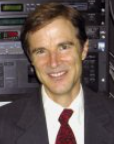 Roger B. Dannenberg合作论文数School of Music, Carnegie Mellon University1
 Alfred Kobsa合作论文数University of California--Irvine1
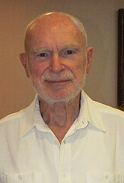 George Klir合作论文数School of Systems Science and Industrial Engineering, Binghamton University, State University of New York1Stafford Beer合作论文数1
 Bernhard Pfahringer合作论文数Department of Computer Science, University of Waikato1Sabine Payr合作论文数Austrian Research Institute for Artificial Intelligence1Nicolas Schwank合作论文数1Universitat Wien合作论文数1
 Georg Dorffner (格奥尔格杜夫纳)合作论文数Institute of Artificial Intelligence, Center for Medical Statistics, Informatics and Intelligent Systems, Medical University of Vienna;The Siesta Group Schlafanalyse GmbH1
 Christoph Hermann合作论文数Institut für Organische Chemie, Universität Tübingen1Hans Bornschein合作论文数1Ernst Buchberger合作论文数Dept. of Med. Cybernetics and AI
Center for Brain Research1Soheil Khosravipour合作论文数1Leopold Wündsch合作论文数1Johannes Retti合作论文数1Rolfe C. Tomlinson合作论文数1Astrid V. Lützow合作论文数1
Christoph Hermann合作论文数Institut für Organische Chemie, Universität Tübingen1Hans Bornschein合作论文数1Ernst Buchberger合作论文数Dept. of Med. Cybernetics and AI
Center for Brain Research1Soheil Khosravipour合作论文数1Leopold Wündsch合作论文数1Johannes Retti合作论文数1Rolfe C. Tomlinson合作论文数1Astrid V. Lützow合作论文数1




