Background/Overview The ABI is intended to restore some hearing in people with NF2 who are rendered deaf by bilateral removal of the characteristic neurofibromas involving the auditory nerve. The ABI consists of an externally worn speech processor that provides auditory information by electrical signal that is transferred to a receiver/stimulator implanted in the temporal bone. The receiver stimulator is, in turn, attached to an electrode array implanted on the surface of the cochlear nerve in the brainstem, thus bypassing the inner ear
Abstract The auditory brainstem implant (ABI) is a surgically implanted device to electrically stimulate auditory neurons in the cochlear nucleus complex of the brainstem in humans to restore hearing sensations. The ABI is similar in function to a cochlear implant, but overall outcomes are poorer. However, recent applications of the ABI to new patient populations and improvements in surgical technique have led to significant improvements in outcomes. While the ABI provides hearing benefits to patients, the outcomes challenge our understanding of how the brain processes neural patterns of auditory information. The neural pattern of activation produced by an ABI is highly unnatural, yet some patients achieve high levels of speech understanding. Based on a meta-analysis of ABI surgeries and outcomes, a theory is proposed of a specialized sub-system of the cochlear nucleus that is critical for speech understanding.
Objectives: Cochlear implants (CIs) have been shown to benefit patients with single-sided deafness (SSD) in terms of tinnitus reduction, localization, speech understanding, and quality of life (QoL). While previous studies have shown cochlear implantation may benefit SSD patients, it is unclear which point of comparison is most relevant: baseline performance before implantation versus performance with normal-hearing (NH) ear after implantation. In this study, CI outcomes were assessed in SSD patients before and up to 6 mo postactivation. Benefits of cochlear implantation were assessed relative to binaural performance before implantation or relative to performance with the NH ear alone after implantation. Design: Here, we report data for 10 patients who completed a longitudinal, prospective, Food and Drug Administration-approved study of cochlear implantation for SSD patients. All subjects had severe to profound unilateral hearing loss in one ear and normal hearing in the other ear. All patients were implanted with the MED-EL CONCERTO Flex 28 device. Speech understanding in quiet and in noise, localization, and tinnitus severity (with the CI on or off) were measured before implantation (baseline) and at 1, 3, 6 mo postactivation of the CI processor. Performance was measured with both ears (binaural), the CI ear alone, and the NH ear alone (the CI ear was plugged and muffed). Tinnitus severity, dizziness severity, and QoL were measured using questionnaires administered before implantation and 6 mo postactivation. Results: Significant CI benefits were observed for tinnitus severity, localization, speech understanding, and QoL. The degree and time course of CI benefit depended on the outcome measure and the reference point. Relative to binaural baseline performance, significant and immediate (1 mo postactivation) CI benefits were observed for tinnitus severity and speech performance in noise, but localization did not significantly improve until 6 mo postactivation; questionnaire data showed significant improvement in QoL 6 mo postactivation. Relative to NH-only performance after implantation, significant and immediate benefits were observed for tinnitus severity and localization; binaural speech understanding in noise did not significantly improve during the 6-mo study period, due to variability in NH-only performance. There were no correlations between behavioral and questionnaire data, except between tinnitus visual analog scale scores at 6 mo postactivation and Tinnitus Functional Index scores at 6 mo postactivation. Conclusions: The present behavioral and subjective data suggest that SSD patients greatly benefit from cochlear implantation. However, to fully understand the degree and time course of CI benefit, the outcome measure and point of comparison should be considered. From a clinical perspective, binaural baseline performance is a relevant point of comparison. The lack of correlation between behavioral and questionnaire data suggest that represent independent measures of CI benefit for SSD patients.
Objective: To determine the safety and feasibility of the auditory brainstem implant (ABI) in congenitally deaf children with cochlear aplasia and/or cochlear nerve deficiency.Study Design: Phase I feasibility clinical trial of surgery in 10 children, ages 2 to 5 years, over a 3-year period.Setting: Tertiary children's hospital and university-based pediatric speech/language/hearing center.Intervention(s): ABI implantation and postsurgical programming.Main Outcome Measure(s): The primary outcome measure is the number and type of adverse events during ABI surgery and postsurgical follow-up, including behavioral mapping of the device. The secondary outcome measure is access to and early integration of sound.Results: To date, nine children are enrolled. Five children have successfully undergone ABI surgery and postoperative behavioral programming. Three children were screen failures, and one child is currently undergoing candidacy evaluation. Expected adverse events have been documented in three of the five children who received the ABI. One child experienced a cerebral spinal fluid leak, which resolved with lumbar drainage. One child demonstrated vestibular side effects during device programming, which resolved by deactivating one electrode. One child experienced postoperative vomiting resulting in an abdominal radiograph. Four children have completed their 1-year follow-up and have speech detection thresholds of 30 to 35 dB HL. Scores on the IT-MAIS/MAIS range from 8 to 31 (out of a total of 40), and the children are demonstrating some ability to discriminate between closed-sets words that differ by number of syllables (pattern perception).Conclusion: ABI surgery and device activation seem to be safe and feasible in this preliminary cohort.
‘Second Consensus Meeting on Management of Complex Inner Ear Malformations: Long Term Results of ABI in Children and Decision Making Between CI and ABI’ took place on 5–6 April 2013 in Kyrenia, Nor...
Music and speech share many acoustic cues but not all are equally important. For example, harmonic pitch is essential for music but not for speech. When birds communicate is their song more like speech or music? A new study contrasting pitch and spectral patterns shows that birds perceive their song more like humans perceive speech.
Since the first neurofibromatosis type 2 (NF2) patient underwent placement of an auditory brainstem implant (ABI) following acoustic tumor resection in 1979, over 300 procedures have been performed in our center. Most patients obtain awareness of environmental sounds, and most ABIs provide significant speech understanding benefit only as an adjunct to lip-reading. Our previous experience had shown that about 10% of patients do not receive any auditory perception and only 5% obtain significant open set speech understanding with sound alone.
The House Ear Institute (HEI) had a long and distinguished history of auditory implant innovation and development. Early clinical innovations include being one of the first cochlear implant (CI) centers, being the first center to implant a child with a cochlear implant in the US, developing the auditory brainstem implant, and developing multiple surgical approaches and tools for Otology. This paper reviews the second stage of auditory implant research at House - in-depth basic research on perceptual capabilities and signal processing for both cochlear implants and auditory brainstem implants. Psychophysical studies characterized the loudness and temporal perceptual properties of electrical stimulation as a function of electrical parameters. Speech studies with the noise-band vocoder showed that only four bands of tonotopically arrayed information were sufficient for speech recognition, and that most implant users were receiving the equivalent of 8-10 bands of information. The noise-band vocoder allowed us to evaluate the effects of the manipulation of the number of bands, the alignment of the bands with the original tonotopic map, and distortions in the tonotopic mapping, including holes in the neural representation. Stimulation pulse rate was shown to have only a small effect on speech recognition. Electric fields were manipulated in position and sharpness, showing the potential benefit of improved tonotopic selectivity. Auditory training shows great promise for improving speech recognition for all patients. And the Auditory Brainstem Implant was developed and improved and its application expanded to new populations. Overall, the last 25 years of research at HEI helped increase the basic scientific understanding of electrical stimulation of hearing and contributed to the improved outcomes for patients with the CI and ABI devices. This article is part of a Special Issue entitled .
Background In the US, a child born deaf with abnormal inner ear anatomy and for whom a cochlear implant fails to provide benefit has no approved surgical treatment options. The auditory brainstem implant (ABI) was developed in the US for patients with Neurofibromatosis 2. A European surgical team has advanced ABI use in young children, with promising outcomes. Clinical teams face a number of challenges, from regulatory issues to funding. The strategic decisions leading to the safety and early efficacy protocol of the ABI for young children with congenital deafness are described. Methods A sponsor-investigator pre–Investigational Device Exemption (IDE) was significantly altered in discussion with the Food and Drug Administration (FDA), followed by approval of a revised protocol. A critical step involved securing external funding through an NIH U01 clinical trial grant, and enrollment began in 2014. Early Results The protocol focused on strict inclusion criteria, clear stopping rules, and rigorous interim safety data review before proceeding with enrollment. To date, 4 of the 7 enrolled subjects met criteria for implantation. A single expected serious adverse event occurred, which resolved completely without sequela. Conclusions Promising innovative treatments face a number of obstacles along the pathway to full commercialization. A strategy that included early conversations with the FDA and the device manufacturer, and successfully obtaining external funding, resulted in an approved IDE protocol. Early results indicated that the risks, though not minimal, can be successfully mitigated. These young children appear to benefit audiologically from the ABI.
Pediatric auditory brainstem implantation is in its early stages in the United States. US FDA investigational device exemption (IDE) trials are underway. The National Institutes of Health/National Institute on Deafness and Other Communication Disorders (NIDCD) are sponsoring a trial of the auditory brainstem implant in children to assess surgical safety and audiological outcomes.
The purpose of this study was to determine the extent to which cochlear implant (CI) rate discrimination can be improved through training. Six adult CI users took part in a study that included 32 h of training and assessment on rate discrimination measures. Rate difference limens (DLs) were measured from 110 to 3520 Hz in octave steps using 500 ms biphasic pulse trains; the target and standard stimuli were loudness-balanced with the target always at an adaptively lower rate. DLs were measured at four electrode positions corresponding to basal, mid-basal, mid-apical, and apical locations. Procedural variations were implemented to determine if rate discrimination was impacted by random variations in stimulus amplitude or by amplitude modulation. DLs improved by more than a factor of 2 across subjects, electrodes, and standard rates. Factor analysis indicated that the effect of training was comparable for all electrodes and standard rates tested. Neither level roving nor amplitude modulation had a significant effect on rate DLs. In conclusion, the results demonstrate that training can significantly improve CI rate discrimination on a psychophysical task.
Recent advances in basic research and clinical trials have poisedmotor and visual prostheses to help restore movement and sight. Together with cochlear implants and deep brain stimulators already in use for improving audition and reducing tremor, neural prostheses offer a new avenue of therapy. Progress will continue to depend on deeper scientific understanding of the underlying neural circuits and how they process information. One limitation to sustained progress relates to the inability to measure activity from millions of identified neurons simultaneously. New methods are needed, as highlighted by President Obama’s BRAIN Initiative. Less appreciated is the critical need for new conceptual frameworks for information processing. Without these, it is unclear whether the ‘‘big data’’ produced by new measurements will result in deeper scientific understanding. Emerging frameworks include those based on dynamical systems, dimensionality reduction, recurrent neural networks, and machine learning and should increase the performance of prostheses. Another limitation relates to ‘‘writing’’ information into the brain. While optogenetics has revolutionized neuroscience by enabling the modulation of cell-typespecific and projection-targeted neurons, the ability to create naturalistic patterns of activity acrossmillions of specific neurons is still needed. Altering neural activity in this way (along various ‘‘meaningful dimensions’’) should allow neural prostheses to deliver better sensory signals. Deconstructing Disease and Treatment
Auditory brainstem implants (ABIs) can provide useful auditory perception and language development in deaf children who are not able to use a cochlear implant (CI). We prospectively followed up a consecutive group of 64 deaf children up to 12 years following ABI surgery. The etiology of deafness in these children was: cochlear nerve aplasia in 49, auditory neuropathy in 1, cochlear malformations in 8, bilateral cochlear postmeningitic ossification in 3, neurofibromatosis type 2 in 2, and bilateral cochlear fractures due to a head injury in 1. Thirty-five children had other congenital nonauditory disabilities. Twenty-two children had previous CIs with no benefit. Fifty-eight children were fitted with the Cochlear 24 ABI device and 6 with the MedEl ABI device, and all children followed the same rehabilitation program. Auditory perceptual abilities were evaluated on the Categories of Auditory Performance (CAP) scale. No child was lost to follow-up, and there were no exclusions from the study. All children showed significant improvement in auditory perception with implant experience. Seven children (11%) were able to achieve the highest score on the CAP test; they were able to converse on the telephone within 3 years of implantation. Twenty children (31.3%) achieved open set speech recognition (CAP score of 5 or greater) and 30 (46.9%) achieved a CAP level of 4 or greater. Of the 29 children without nonauditory disabilities, 18 (62%) achieved a CAP score of 5 or greater with the ABI. All children showed continued improvements in auditory skills over time. The long-term results of ABI surgery reveal significant auditory benefit in most children, and open set auditory recognition in many. i 2014 S. Karger AG, Basel
When the idea of restoring hearing by electrical stimulation of the cochlear was first proposed scientists were highly skeptical, arguing that the complexity of the cochlea and auditory nerve could not be usefully replicated with a handful of electrodes, each activating large swatches of nerve. Yet early single channel cochlear implants were received enthusiastically by deaf patients because even the rudimentary sound they provided helped with lip reading and lessened the sense of isolation caused by deafness. Over the years cochlear implants have improved to the point that deaf recipients can now expect to be able to converse on the phone with their implant. Further developments have resulted in similar abilities in some patients who received an auditory brain stem implant—similar to a cochlear implant but designed to stimulate the cochlear nucleus complex in the brain stem. These developments show the power of the brain to adapt to new or distorted patterns of sensory information. Peripheral sensory information does not have to be restored in all its detailed glory to be useful. Complex sensory experience depends on both the information of the sensory end organ as well pattern processing in the brain. Successful prosthesis design must take both ear and brain into account.
Objectives:Auditory brainstem implants (ABIs) have been implanted in 64 children with no permanent major complications. We detail the protocol for ABI patient selection, ABI surgery and intra‐operative monitoring, and device fitting and rehabilitation with children.Methods:Sixty‐four children received the ABI between 2000 and 2013. The follow‐up ranged from 6 months to 8 years. A protocol is presented for acoustic and electrophysiological assessment of ABI candidacy. A retrosigmoid‐transmeatal approach was used in the Neurofibromatosis type 2 (NF2) and a retrosigmoid approach in the nontumor children. Tests for assessing auditory and cognitive development and rehabilitation are recommended.Results:All children, except NF2 subjects, scored 0 before ABI implantation on all tests, even the 31 children previously fitted with a cochlear implant. Perceptual outcomes showed statistically significant improvements over time. At the last follow‐up no significant postoperative complications were observed.Conclusions:ABIs have been shown to be beneficial for children who cannot use a cochlear implant. However, implanting an ABI in a child requires special care and expertise and should only be undertaken by an experienced pediatric implant team. This paper presents a comprehensive protocol for application of ABIs in children.
These 11 up-and-coming technologies could revolutionize diagnosis and treatment of speech, language and hearing disorders.
 Qianjie Fu合作论文数Department of Head and Neck Surgery, University of California, Los Angeles;Department of Otorhinolaryngology Head and Neck Surgery, Capital Medical University;Department of Speech, Language and Hearing Sciences, Purdue University;National Kaohsiung Normal University;Department of Otolaryngology, National Cheng Kung University;University of Maryland;National Taiwan University Hospital22
 Vittorio Colletti合作论文数16
 Fangang Zeng (曾凡钢)合作论文数Department of Otolaryngology-Head and Neck Surgery, School of Medicine, University of California, Irvine;Hearing and Speech Laboratory, Center for Hearing Research, University of California, Irvine13Liliana Colletti合作论文数12D E Brackmann合作论文数8Deniz Baskent合作论文数8
 Steven R. Otto合作论文数8
 Monita Chatterjee合作论文数Department of Auditory;Implants and Perception;House Ear Institute;Department of Auditory, House Ear Institute7
 John J. Galvin合作论文数House Ear Institute Department of Auditory Implants and Perception 2100 West Third Street Los Angeles CA 90057 USA7Marco Carner合作论文数7William E. Hitselberger合作论文数7We Hitselberger合作论文数6derald e brackmann合作论文数6Monica Padilla合作论文数6John Wygonski合作论文数5
 Sheila Veronese合作论文数ENT Department, University of Verona5F Portillo合作论文数4
 Jose N. Fayad合作论文数4Eisenberg Laurie S合作论文数4
 Derald E. Brackmann合作论文数The House Institute Ear Institute4
 Eric P. Wilkinson合作论文数4Ra Nelson合作论文数3SR OTTO合作论文数3
 William H. Slattery合作论文数Ear Clinic, The House Institute;Department of Clinical Studies, House Ear Institute;USC School of Medicine3Friesen Lendra合作论文数3
 Marco Mandala合作论文数3
 Douglas B. McCreery合作论文数Huntington Medical Research Institutes3Ralph F. Naunton合作论文数3Mark D. Krieger合作论文数3Lendra M. Friesen合作论文数3Johannes Kuchta合作论文数3
 Blake Shaw Wilson合作论文数Department of Biomedical Engineering, Pratt School of Engineering, Duke University;Duke Hearing Center, Duke University3John H. Ferguson合作论文数3WH Hall合作论文数2elsa bray合作论文数2Noel Cohen合作论文数2Xiao-Song Wang合作论文数2
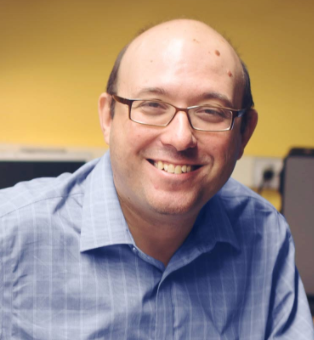 David M. Landsberger合作论文数Department of Otolaryngology—Head and Neck Surgery, Grossman School of Medicine, New York University2
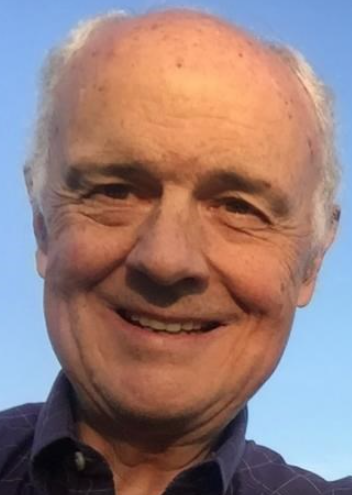 Eric Young合作论文数Department of Biomedical Engineering, Whiting School of Engineering, Johns Hopkins University;School of Medicine, Johns Hopkins University2
 Gerald E. Loeb合作论文数Alfred E. Mann Department of Biomedical Engineering, Viterbi School of Engineering, University of Southern California;Chironics Ltd.;SynTouch Inc.;Biomed Concepts Inc.2Helge Rask- Andersen合作论文数2
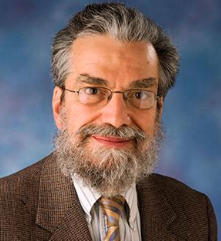 Paul Abbas合作论文数Cochlear Implant Electrophysiology Lab, University of Iowa2Zach W. Hall合作论文数2Arthi G. Srinivasan合作论文数2Andrew A. Monjan合作论文数2Steven Staller合作论文数2Patricia M. Chute合作论文数2Christine Menapace合作论文数2Amy Martinez合作论文数2




