VacciniumL., a globally distributed genus, encompasses economically and nutritionally valuable species such as blueberry ( V. corymbosumL. and its hybrids), cranberry ( V. macrocarponA.), bilberry ( V. myrtillusL.), and lingonberry ( V. vitis-ideaL.). There has been a robust growth of blueberry cultivation in the tropical and subtropical regions of the world, such as Central and South America, the Southern United States, Australia, and the Mediterranean. This growth has been enabled by the integration of various wild species such as northern lowbush blueberry V. angustifolium(Aiton), evergreen blueberry V. darrowii(Camp), and rabbiteye blueberry V. virgatum(Aiton) into highbush blueberry breeding programs. Still, numerous under-studied wild Vacciniumspecies have untapped potential for breeding use and local cultivation in diverse climates. The harvest of wild Vacciniumfruit has long contributed to the nutrition of local communities throughout Southeast Asia and the Americas. Our objective was to conduct preliminary investigations into the fruit qualities and anthocyanin profiles of two such under-studied species, V. myrtoides(Blume) and V. floribundum(Kunth), and compare their characteristics to that of the southern highbush blueberry cultivar ‘O’Neal’ ( V. corymbosumhybrid). Over the spring and summer of 2021, we determined fruit size, percent soluble solids, pH, total anthocyanin concentration, and anthocyanin aglycons profiles. The fruit was sourced from the US Department of Agriculture (USDA), National Clonal Germplasm Repository (NCGR) in Corvallis, Oregon. The wild species’ fruit size, soluble solids, and pH were not significantly different from those of ‘O’Neal.’ The total anthocyanin levels for V. floribundum(87.4 mg anthocyanin/100 g frozen fruit) and V. myrtoides(80.4 mg/100 g frozen fruit) were significantly higher than those for ‘O’Neal’ (32 mg/100 g frozen fruit). Anthocyanin profiles were also unique to each species. V. myrtoideshad the most complex profile with eight anthocyanin peaks; V. floribundumhad four peaks ‘O’Neal’ had three. One of the most prominent anthocyanins in blueberries, petunidin-3- galactoside, occurred in ‘O’Neal’ and V. myrtoidesbut was absent from V. floribundum. Del-3-arabinoside was present in both V. myrtoidesand V. floribundumyet absent in ‘O’Neal’. The unique anthocyanin profiles of the two wild species could have value in diversifying the anthocyanins available in cultivated blueberries and deserve further investigation.
BACKGROUND Cranberries (Vaccinium macrocarpon Ait.) contain high levels of phytochemicals such as proanthocyanidins (PACs). These polymeric condensations of flavan-3-ol monomers are associated with health benefits. Our objective was to evaluate phytochemicals in fruit from Hawaiian cranberry relatives, V. reticulatum Sm. and V. calycinum Sm. Normal-phase HPLC coupled with fluorescence and ESI-MS detected PACs; the colorimetric 4-dimethylaminocinnamaldehyde (DMAC) assay was used to determine total PACs. Spectrophotometric tests and reverse-phase HPLC coupled to photodiode array and refractive index detectors evaluated phenolics, sugars, and organic acids. Antioxidant capacity was determined by the ORAC and FRAP assays. RESULTS Antioxidant capacities of Hawaiian berries were high. The FRAP measurement for V. calycinum was 454.7 ± 90.2 µmol L(-1) Trolox equivalents kg(-1) for pressed fruit. Hawaiian berries had lower peonidin, quinic and citric acids amounts and invert (∼1) glucose/fructose ratio compared with cranberry. Both Hawaiian Vaccinium species were good sources of PACs; they contained phenolics and PAC monomers, A and B-type trimers, tetramers and larger polymers. Vaccinium reticulatum and V. calycinum showed comparable or higher PAC levels than in cranberry. Cranberries had higher percentage of A-type dimers than did V. reticulatum. A and B-type dimers were not differentiated in V. calycinum. The total PACs (as measured by DMAC) for V. calycinum (24.3 ± 0.10 mg catechin equivalents kg(-1) ) were about twice that in cranberry. CONCLUSION Berries of V. reticulatum and V. calycinum could serve as a rich dietary source of PACs, comparable to or greater than cranberries. These finding suggest that Hawaiian Vaccinium berries could be a functional food. Additional examination of the phytochemicals in other wild Vaccinium species is warranted.
BACKGROUND: The objective of this study was to assess whether canned peaches could deliver nutrient levels comparable to fresh peaches. Fresh freestone peaches, fresh cling peaches and canned cling peaches were analyzed for vitamins A, C and E, folate, antioxidants, total phenolics and total carotenoids to assess how these nutrients were affected by the canning process and whether storage further changed these components. RESULTS: The vitamins and phytochemicals measured in this study were found to be present in canned cling peaches versus fresh freestone at statistically significantly higher levels (vitamin C, antioxidants and folate); higher but not statistically different levels (vitamin A); or lower, but not statistically different levels (vitamin E, total phenolics and total carotenoids). There were no statistically significant changes in nutrient content during storage for 3 months. CONCLUSIONS: The nutritional content of canned peaches has been shown in this study to be comparable to that of fresh peaches. There were no statistically significant decreases in those nutritional parameters measured in this study between fresh freestone peaches and canned cling peaches. Vitamins A and E along with total carotenoids decrease immediately upon processing, but appear to stabilize after the processing step, showing minimal additional changes upon storage for 3 months. This study shows that canned peaches can provide comparable nutrient levels to the consumer as fresh peaches, meaning that consumers can enjoy peaches year round without worrying about loss of nutrients in their diet. (C) 2012 Society of Chemical Industry
The pomegranate fruit ( Punica granatum ) has become an international high-value crop for the production of commercial pomegranate juice (PJ). The perceived consumer value of PJ is due in large part to its potential health benefits based on a significant body of medical research conducted with authentic PJ. To establish criteria for authenticating PJ, a new International Multidimensional Authenticity Specifications (IMAS) algorithm was developed through consideration of existing databases and comprehensive chemical characterization of 45 commercial juice samples from 23 different manufacturers in the United States. In addition to analysis of commercial juice samples obtained in the United States, data from other analyses of pomegranate juice and fruits including samples from Iran, Turkey, Azerbaijan, Syria, India, and China were considered in developing this protocol. There is universal agreement that the presence of a highly constant group of six anthocyanins together with punicalagins characterizes polyphenols in PJ. At a total sugar concentration of 16 degrees Brix, PJ contains characteristic sugars including mannitol at >0.3 g/100 mL. Ratios of glucose to mannitol of 4-15 and of glucose to fructose of 0.8-1.0 are also characteristic of PJ. In addition, no sucrose should be present because of isomerase activity during commercial processing. Stable isotope ratio mass spectrometry as > -25 per thousand assures that there is no added corn or cane sugar added to PJ. Sorbitol was present at <0.025 g/100 mL; maltose and tartaric acid were not detected. The presence of the amino acid proline at >25 mg/L is indicative of added grape products. Malic acid at >0.1 g/100 mL indicates adulteration with apple, pear, grape, cherry, plum, or aronia juice. Other adulteration methods include the addition of highly concentrated aronia, blueberry, or blackberry juices or natural grape pigments to poor-quality juices to imitate the color of pomegranate juice, which results in abnormal anthocyanin profiles. To adjust the astringent taste of poor-quality juice or peel extract, addition of nonpomegranate sugars is a commonly detected adulteration method. The profile generated from these analyses combined with information from existing databases and published literature has been integrated into a validated IMAS for PJ, which can be utilized to detect PJ adulteration. In this survey of commercial pomegranate juices, only 6 of 23 strictly met all of the IMAS criteria.
Cultivated tomatoes (Solanum lycopersicum L.) produce anthocyanins in vegetative tissues and certain flavonols can be found in the fruit. Some related wild species do produce anthocyanins in the fruit, and this trait has been transferred into cultivated tomato. Fruit with the genes Abg, Aft, and atv exhibit varying degrees of anthocyanin production in the epidermis, but not in the fruit pericarp. Fruit with these alleles in various combinations were analyzed to characterize the anthocyanidin profile, moieties, and total anthocyanin content. In general, combining atv with either Aft or Abg substantially increased anthocyanin production in the fruit. Over 23 different anthocyanins were detected, petunidin-3-(p-coumaryl)-rutinoside-5-glucoside being predominant. The highest level of anthocyanin expression was observed in small fruit with the genotype Abg- atvatv and AftAft atvatv, well in excess of 100 mg/100 g fresh weight of epidermis and subepidermis depending on the size of the fruit. Nonanthocyanin flavonoids were also upregulated in proportion to the anthocyanin concentration. The anthocyanin genes were also combined with genes affecting carotenoid composition and content. Reduced carotenoid content conditioned by the alleles B (Beta) and r (yellow flesh) was associated with lower total anthocyanins, an unexpected observation because the carotenoid and anthocyanin pathways are thought to be independent. The level of anthocyanin did not affect carotenoid profiles or amounts.
Current Protocols in Food Analytical ChemistryVolume 00, Issue 1 p. F1.3.1-F1.3.13 UNIT Separation and Characterization of Anthocyanins by HPLC Robert W. Durst, Robert W. Durst Oregon State University, Corvallis, OregonSearch for more papers by this authorRonald E. Wrolstad, Ronald E. Wrolstad Oregon State University, Corvallis, OregonSearch for more papers by this author Robert W. Durst, Robert W. Durst Oregon State University, Corvallis, OregonSearch for more papers by this authorRonald E. Wrolstad, Ronald E. Wrolstad Oregon State University, Corvallis, OregonSearch for more papers by this author First published: 01 August 2001 https://doi.org/10.1002/0471142913.faf0103s00Citations: 19Read the full textAboutPDF ToolsRequest permissionExport citationAdd to favoritesTrack citation ShareShare Give accessShare full text accessShare full-text accessPlease review our Terms and Conditions of Use and check box below to share full-text version of article.I have read and accept the Wiley Online Library Terms and Conditions of UseShareable LinkUse the link below to share a full-text version of this article with your friends and colleagues. Learn more.Copy URL Share a linkShare onFacebookTwitterLinked InRedditWechat Citing Literature RelatedInformation
 Ronald Wrolstad合作论文数Department of Food Science and Technology, College of Agricultural Sciences, Oregon State University4
 Kim Hummer合作论文数Department of Horticulture, College of Agricultural Sciences, Oregon State University3
 peter mes合作论文数1peter boches合作论文数1
 Claire Luby合作论文数1charles r brown合作论文数1
 David Wang合作论文数School of Chemical and Biomolecular Engineering, Faculty of Engineering, The University of Sydney1
 Nahla Bassil合作论文数U.S. Department of Agriculture1Krueger Dana合作论文数1
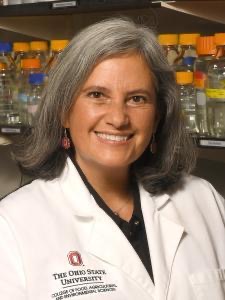 Monica Giusti合作论文数Department of Food Science and Technology, Ohio State University1
 Todd Anderson合作论文数Department of Environmental Toxicology, Texas Tech University1Atnip Allison合作论文数1
 Navindra P. Seeram合作论文数Department of Biomedical and Pharmaceutical Sciences, University of Rhode Island1Weaver George W合作论文数1
 Yanjun Zhang (张艳军)合作论文数Tianjin University of Traditional Chinese Medicine1
 David Heber合作论文数Herbalife Nutrition Institute;Center for Human Nutrition, Department of Medicine, David Geffen School of Medicine, University of California, Los Angeles;Division of Clinical Nutrition, Department of Medicine, David Geffen School of Medicine, University of California, Los Angeles1W.David Loomis合作论文数1
 Scott Leonard合作论文数Linus Pauling Institute, Oregon State University1Ru-Po Lee合作论文数1
 James R. Myers合作论文数Department of Geography1
 David E. Culley合作论文数Microbiology Department, Pacific Northwest National Laboratory1Francis Zee合作论文数1




