Semioidentity refers to the sign–identity relationship in its pragmatic and metapragmatic dimensions. A component of social semiotic analysis, the study of semioidentity offers a distinctive contribution to archaeology by making explicit the different kinds of signs and their functions in the interpretive process. It privileges indexical signs as a means of anchoring interpretation and thus provides opportunities for additional higher-order claims about ideology and belief systems. A semiotic approach contributes to knowledge growth by positing that the most reliable interpretations—that is, those most likely to be true in the long term—are those that incorporate a variety of semiotic resources since their functions will act to constrain one another. In this essay, I discuss semiotic resources and semiotic ideology from the perspective of Peircean semiotics. I then offer a case study focusing on the archaeology of the Pueblo Revolt and the emergence of a pan-Pueblo historical consciousness to illustrate some of the rich insights that it affords.
A radical shift in orientation alongside the objects of archaeology has occasioned a reconsideration of what theory is in a very general sense. What function does it serve and how might we define it? In retrospect, these questions arise not in the context of paradigms and strong theories, which some consider to have run their course, but in their absence. Here, there is a danger that theory might be jettisoned altogether if its nature and purpose are not critically re-assessed. The modest goal of this paper is to join in on this conversation.
The ‘ontological turn’ is currently being touted in anthropology and other social sciences as a way of providing new insights into the global ecological crisis. This move encompasses a variety of posthumanist and New Materialist approaches including assemblage theory, vibrant matter, perspectivism and object-oriented ontology. Although distinctive, these approaches share an interest in animating things. Not surprisingly, archaeologists have taken notice of this new-found fascination with things and are participating in the ontological debates on our own terms. One can distinguish three main approaches: symmetrical archaeology, assemblage thinking and relational archaeologies. This paper will examine the nature of the ontological turn and offer a critical review of its use in archaeology.
The 'ontological turn' in the social sciences is premised on the critique of representation. In this essay, I defend representation against some of the major criticisms advanced in archaeology. In developing my argument, I draw insights from the semiotics of Charles Sanders Peirce and its incorporation in semiotic anthropology. I conclude that while it is not possible to go beyond representation, we can nonetheless improve our representational models through a 'hermeneutics of generosity.' Such a perspective involves opening up our interpretive practices to the agency of non-human actors not usually considered in our archaeological accounts. But it also involves engaging with descendent communities in the practice of collaborative knowledge production. These moves have the dual benefit of increasing scientific accuracy and underwriting meaningful social action.
Over 30 years ago, Paul Minnis (1985) proposed the distinction between ‘pristine domestication’ and ‘primary crop acquisition’. The former refers to the initial domestication of wild plant resources and is characterised by only a dozen or so places in the world, most notably China, the Near East and Mesoamerica. The latter refers to the local integration of crops that were domesticated elsewhere and is the more common process. The American Southwest, here defined as the U.S. states of Nevada, Utah, Arizona and New Mexico, and the Mexican states of Sonora and Chihuahua, is a classic case of primary crop acquisition. Cultigens, first maize and then squash and beans, originally domesticated in Mesoamerica, were brought north by immigrant groups who joined with local hunter-gatherer communities. The introduction of these cultigens did not initiate major immediate changes in ecological or social relationships, instead the shift to agriculture as the central subsistence practice took millennia. Just why this is the case continues to be hotly debated. The two volumes under review offer new data and valuable syntheses relevant to scholars interested in the interrelationships between the adoption of cultigens, mixed mobility strategies, and trade and exchange relationships.
An abstract is not available for this content so a preview has been provided. Please use the Get access link above for information on how to access this content.
Post-processual archaeology refers to an intellectual movement in Anglo-American archaeology that emerged in the 1980s. As its name implies, it grew out of critiques of processual archaeology and advocated alternative interpretive perspectives, especially those encompassing questions of meaning, history, politics, and practice. At the broadest level, post-processual archaeology can be seen as a response to the widespread influences of post-structuralism, feminism, postcolonialism, and postmodernism on the humanities and social sciences. Significantly, post-processual archaeology expanded the reach of the field by opening up spaces for the investigation of gender, practice, materiality, and identity. It also encouraged archaeologists to acknowledge the relationships of humans and their object worlds and the different possible trajectories they travel. A key insight is that studies of materiality cannot simply focus upon the characteristics of objects; they must engage in the dialectic of people and things. Although post-processual archaeology per se no longer is the focus of contemporary debates, its legacy continues through these ongoing projects and interventions.
of this volume, have told me that the Columbian Consequences project served as a catalyst for the initial symposium entitled "Transformations during the Colonial Era: Divergent Histories in the American Southwest," subsequently published as this volume.They also asked me to write a few words about the Columbian Consequences effort, from a quarter-century perspective.The roots of Columbian Consequences run back to the late 1980s, a time of considerable stress and not a little self-reflection in the Americanist archaeological community.A decade of repatriation and reburial debate would culminate in the 1990 The Native American Graves Protection and Repatriation Act (NAGPRA) legislation.Competing paradigms of processual and postprocessual archaeology generated lively conversations about future directions of archaeological theory.The rapid growth of applied archaeology (in the form of cultural resource management) tested the conventionally academic structure of the archaeological profession.Long-standing issues of gender bias clouded archaeological interpretations of the past and the practice of archaeology in the present.
Archaeology is a semiotic enterprise engaged in the study of meaning-making practices by past actors and of archaeologists themselves. Archaeology embraced its semiotic character in the context of the processual and postprocessual debates, and in terms of various postprocessual developments. Recently some archaeologists have drawn inspiration from the material semiotics of Bruno Latour to advocate for a symmetrical archaeology. This perspective offers a novel approach to object agency and focuses on how objects and humans together form assemblages. However, it neglects a satisfying account of how objects and things transform each other. One productive way forward is a consideration of semiotic mediation offered by a pragmatic archaeology linked to the work of Charles Sanders Peirce.
Against the backdrop of increasing social change, an urgency courses through contemporary life for weaving the past into the present.The process of folding past conditions into present ones is selective; it has to be, given the richly textured inheritance bestowed on each passing generation (Trouillot 1995).The result over the past century plus has been a gradual refining of practices and ways of talking about what came before, encompassed by the concept of 'cultural heritage.'Cultural heritage is variously invoked as something (some object, site, building, landscape, traditional practice) with historic connections that must be properly tended to, as well as the field of expertise that has developed around this care.Over time, or at critical moments provoked by shifting events, these practices and languages of heritage became incorporated into political and legal institutions with jurisdiction over local, regional (e.g., state), national, or international bodies of governance.National standards have traditionally been the most influential in institutionalizing how heritage is dealt with, but increasingly so too are international norms codified within an expanding oeuvre of global conventions, recommendations, lists, safeguards, management guidelines, and reports picked up as 'best practices.'This expansion at the national and international level
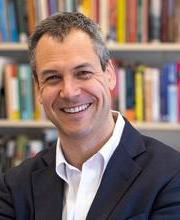 Matthew Liebmann合作论文数Department of Anthropology, Harvard University3
 Rosemary Joyce合作论文数Department of Anthropology, University of California, Berkeley2
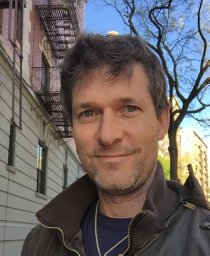 Alexander A. Bauer合作论文数Department of Anthropology;University of Pennsylvania;Department of Anthropology, University of Pennsylvania2
 william a longacre合作论文数1James A. Bell合作论文数1zbigniew kobylinski合作论文数Instytut Archeologii Uniwersytet Kardynała Stefana Wyszyńskiego1
 Timothy Earle合作论文数Department of Anthropology, Weinberg College of Arts & Sciences, Northwestern University1
 Karl Rickels合作论文数Department of Psychiatry, Perelman School of Medicine, University of Pennsylvania1Linda Cordell合作论文数1
 Barbara Barich合作论文数1Celso-Ramon Garcia合作论文数1Robert D. Leonard合作论文数Department of Anthropology, University of New Mexico1
 Ian Hodder合作论文数Department of Anthropology, Stanford University1
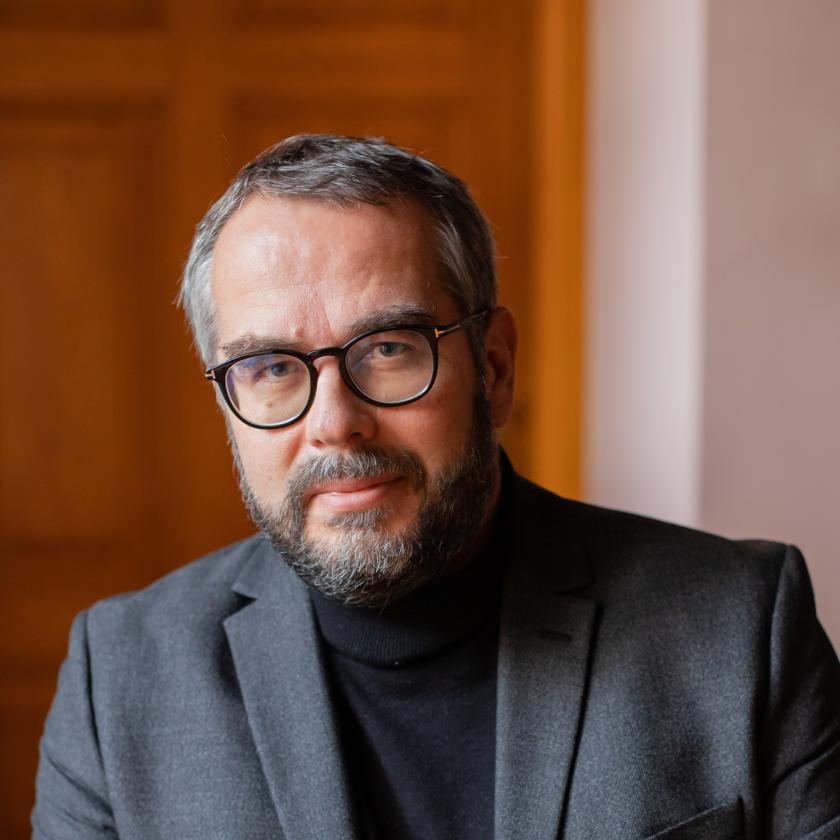 Marek Tamm合作论文数School of Humanities, Tallinn University1Thomas J Ferguson合作论文数Department of Anthropology, University of Arizona1
 Michael J. O'Brien合作论文数Texas A&M University–San Antonio1
 James Sackett合作论文数1Regis Pecos合作论文数1
 Julia A. Hendon合作论文数1
 Lynn Meskell合作论文数Department of Anthropology, School of Arts & Sciences, University of Pennsylvania;Middle East and Asia Sections, Penn Museum;Cornell University1




