PDF file - 5320K, Validation of antibodies for analysis of SphK1 expression on FFPE colorectal cancer tissues
PDF file - 1047K, Effects of the combination cetuximab plus fingolimod on apoptosis of GEO-CR tumor xenografts
Supplementary Data from Oral Poly(ADP-Ribose) Polymerase-1 Inhibitor BSI-401 Has Antitumor Activity and Synergizes with Oxaliplatin against Pancreatic Cancer, Preventing Acute Neurotoxicity
PDF file - 483K, Effects of SphK1 inhibition by DMS on cetuximab sensitivity in resistant colorectal cancer cell lines
Supplementary Figures S1-S2 from Vascular Endothelial Growth Factor Receptor-1 Contributes to Resistance to Anti–Epidermal Growth Factor Receptor Drugs in Human Cancer Cells
PDF file - 908K, Multivariate analysis correlating the response to cetuximab-based regimens to different factors
PDF file - 357K, Sensitivity to cetuximab of a panel of human colorectal cancer cell lines
PDF file - 503K, Effects of SphK1 modulation on cetuximab sensitivity in resistant colorectal cancer cell lines
PDF file - 2068K, Correlation of SphK1 expression with clinical data in colorectal cancer patients
In several tumors the PI3K/AKT/mTOR pathway is frequently disrupted, an event that results in uncontrolled cell proliferation and tumor growth. Through the years, several compounds have been developed to inhibit the pathway at different steps: the mammalian target of rapamycin (mTOR) seemed to be the most qualified target. However, this kinase has such a key role in cell survival that mechanisms of resistance are rapidly developed. Nevertheless, clinical results obtained with mTOR inhibitors in breast cancer, renal cell carcinoma, neuroendocrine tumors and mantle cell lymphoma push oncologists to actively further develop these drugs, maybe by better selecting the population to which they are offered, through the research of predictive factors of responsiveness. In this review, we aim to describe mechanisms of resistance to mTOR inhibitors, from preclinical and clinical perspectives.
The urokinase-type plasminogen activator receptor (uPAR) is a GPI-anchored cell membrane receptor that focuses urokinase (uPA) proteolytic activity on the cell surface. Its expression is increased in many human cancers, including non-small cell lung cancer (NSCLC) and colorectal cancer (CRC), and correlates with a poor prognosis and early invasion and metastasis. uPAR is able to control, through a cross-talk with tyrosine kinase receptors, the shift between tumor dormancy and proliferation, that usually precedes metastasis formation. Therefore, we investigated the role of uPAR expression in RAS mutated NSCLC and CRC cells. In this study we provided evidence, for the first time, that RAS mutational condition is functionally correlated to uPAR overexpression in NSCLC and CRC cancer cell lines and patient-derived tissue samples. Moreover, oncogenic features related to uPAR overexpression in RAS mutated NSCLC and CRC, such as adhesion, migration and metastatic process may be targeted, in vitro and in vivo, by new anti-uPAR small molecules, specific inhibitors of uPAR-vitronectin interaction. Therefore, anti-uPAR drugs could represent an effective pharmacological strategy for NSCLC and CRC patients carrying RAS mutations.
BACKGROUND:Several evidences suggest a marked angiogenic dependency in triple-negative breast cancer (TNBC) tumorigenesis and a potential sensitivity to anti-angiogenic agents. Herein, the putative role of Hedgehog (Hh) pathway in regulating TNBC-dependent angiogenesis was investigated.METHODS:Expression and regulation of the Hh pathway transcription factor glioma-associated oncogene homolog1 protein (GLI1) were studied on the endothelial compartment and on TNBC-initiated angiogenesis. To evaluate the translational relevance of our findings, the combination of paclitaxel with the Smo inhibitor NVP-LDE225 was tested in TNBC xenografted mice.RESULTS:Tissue microarray analysis on 200 TNBC patients showed GLI1 overexpression paired with vascular endothelial growth factor receptor 2 (VEGFR2) expression. In vitro, Hh pathway promotes TNBC progression in an autocrine manner, regulating the VEGF/VEGFR2 loop on cancer cell surface, and in a paracrine manner, orchestrating tumour vascularisation. These effects were counteracted by Smo pharmacological inhibition. In TNBC xenografted mice, scheduling NVP-LDE225 rather than bevacizumab provided a better sustained inhibition of TNBC cells proliferation and endothelial cells organisation.CONCLUSIONS:This study identifies the Hh pathway as one of the main regulators of tumour angiogenesis in TNBC, thus suggesting Hh inhibition as a potential new anti-angiogenic therapeutic option to be clinically investigated in GLI1 overexpressing TNBC patients.
Two series of N-(aryl)-1-(hydroxyalkyl)pyrrolidine-2-carboxamides (2a–2g and 3a–3g) and 1,4-disubstituted 1,2,3-triazoles (5a–5h and 8a–8h) were synthesized. All the compounds, containing a lipophilic tail and a polar headgroup, were evaluated as sphingosine kinase (SphK) inhibitors by assessing their ability to interfere with the acetylcholine (Ach) induced relaxation of aortic rings pre-contracted with phenylephrine. Moreover, their antiproliferative activity was tested on several cell lines expressing both SphK1 and SphK2. Compounds 5h and 8f, identified as the most efficient antiproliferative agents, showed a different selectivity profile, with 8f being selective for SphK1.
Inhibition of the mechanistic target of rapamycin (mTOR) is a promising treatment strategy for several cancer types. Rapamycin derivatives such as everolimus are allosteric mTOR inhibitors acting through interaction with the intracellular immunophilin FKBP12, a prolyl isomerase with different cellular functions. Although mTOR inhibitors have significantly improved survival of different cancer patients, resistance and lack of predictive factors of response remain unsolved issues. To elucidate the mechanisms of resistance to everolimus, we evaluated Met activation in everolimus-sensitive/resistant human cancer cells, in vitro and in vivo. Biochemical and computational analyses were performed. Everolimus-resistant cells were xenografted into mice (10/group) and studied for their response to everolimus and Met inhibitors. The statistical significance of the in vitro results was evaluated by Student's t test. Everolimus reduced Met phosphorylation in everolimus-sensitive cells. This event was mediated by the formation of a Met-FKBP12 complex, which in turn is disrupted by everolimus. Aberrant Met activation in everolimus-resistant cells and overexpression of wild-type/mutant Met caused everolimus resistance. Pharmacological inhibition and RNA silencing of Met are effective in condition of everolimus resistance (P<0.01). In mice xenografted with everolimus-resistant cells, the combination of everolimus with the Met inhibitor PHA665752 reduced tumor growth and induced a statistically significant survival advantage (combination vs control P=0.0005). FKBP12 binding is required for full Met activation and everolimus can inhibit Met. Persistent Met activation might sustain everolimus resistance. These results identify a novel everolimus mechanism of action and suggest the development of clinical strategies based on Met inhibitors in everolimus-resistant cancers.
Introduction: Several reports have suggested that a population of undifferentiated cells known as cancer stem cells (CSCs), is responsible for cancer formation and maintenance. In the last decade, the presence of CSCs in solid cancers have been reported.Areas covered: This review summarizes the main approaches for targeting CSCs drug resistance. It is indeed known that CSCs may contribute to resistance to conventional chemotherapy, radiotherapy and targeted agents. Among the mechanisms by which CSCs escape anticancer therapies, removal of therapeutic agents by drug efflux pumps, enhanced DNA damage repair, activation of mitogenic/anti-apoptotic pathways; the main features of CSCs, stemness and EMT, are involved, as well as the capability to evade immune response.Expert opinion: Different approaches are suitable to target CSCs mediated drug resistance. Some of them are currently under clinical evaluation in different cancer types. A better understanding of CSC biology, as well as more accurate study design, may maximize the therapeutic effects of these agents. In this respect, it is important to establish: (i) which molecules should be targeted; (ii) what drug combinations may be suitable; (iii) which patient settings will CSC targeting offer the highest clinical benefit; and (iv) how to integrate therapeutic approaches targeting CSCs with standard cancer therapy.
Resistance to the EGFR tyrosine kinase inhibitors (TKIs) gefitinib and erlotinib, often related to Ras or secondary EGFR mutations, is a relevant clinical issue in Non-Small Cell Lung Cancer (NSCLC). Although Src TK has been involved in such resistance, clinical development of its inhibitors has been so far limited. To better define the molecular targets of the Src TKIs saracatinib, dasatinib and bosutinib, we used a variety of in vitro/in vivo studies. Kinase assays supported by docking analysis demonstrated that all the compounds directly inhibit EGFR TK variants. However, in live cells only saracatinib efficiently reduced EGFR activation, while dasatinib was the most effective agent in inhibiting Src TK. Consistently, a pronounced anti-proliferative effect was achieved with saracatinib, in EGFR mutant cells, or with dasatinib, in wt EGFR/Ras mutant cells, poorly dependent on EGFR and erlotinib-resistant. We then identified the most effective drug combinations to overcome resistance to EGFR inhibitors, both in vitro and in nude mice: in T790M EGFR erlotinib-resistant cells, saracatinib with the anti-EGFR mAb cetuximab; in Ras mutant erlotinib-resistant models, dasatinib with the MEK inhibitor selumetinib. Src inhibitors may act with different mechanisms in NSCLCs, depending on EGFR/Ras mutational profile, and may be integrated with EGFR or MEK inhibitors for different cohorts of NSCLCs.
 Roberto Bianco合作论文数34Vincenzo Damiano合作论文数26Marciano Roberta合作论文数22
 DE PLACIDO SABINO合作论文数Dipartimento di Medicina clinica e Chirurgia, Universita degli Studi di Napoli Federico II22
 Valentina D'amato合作论文数21
 Lucia Nappi合作论文数Department of Urologic Sciences, Faculty of Medicine, The University of British Columbia18
 Giampaolo Tortora合作论文数Department of Medical Oncology, Policlinico Universitario Agostino Gemelli17
 Bianca Maria Veneziani合作论文数Dipartimento di Biologia e Patologia Cellulare e Molecolare;Universitadi Napoli Federico II;Dipartimento di Biologia e Patologia Cellulare e Molecolare, Universitadi Napoli Federico II17
 Luigi Formisano合作论文数16Sonia Garofalo合作论文数12Teresa Gelardi合作论文数11Gabriella Marfe合作论文数11
 Chiara Carlomagno合作论文数Department of Molecular and Clinical Endocrinology and Oncology, University Federico II of Naples10Alfonso De Stefano合作论文数10Antonella Zannetti合作论文数Istituto di Biostrutture e Bioimmagini, Consiglio Nazionale delle Ricerche9
 Adelaide Greco合作论文数9Davide Melisi合作论文数7
 Lucia Raimondo合作论文数Dipartimento di Endocrinologia ed Oncologia Molecolare e Clinica, Università di Napoli Federico II7
 Sudhir Agrawal合作论文数ARNAY Sciences LLC;UMass Chan Medical School7
 Giancarlo Troncone合作论文数Dipartimento di Sanità Pubblica, Scuola di Medicina e Chirurgia, Università degli Studi di Napoli Federico II7Servetto A合作论文数Dipartimento di Medicina Clinica e Chirurgia, Università di Napoli 'Federico II'5Rosa Caputo合作论文数4Roberta Clara Orsini合作论文数4Paola Ciciola合作论文数4
 Luigi Racioppi合作论文数Department of Medicine, School of Medicine, Duke University School of Medicine4
 Fortunato Ciardiello合作论文数Dipartimento di Medicina di Precisione, Scuola di Medicina e Chirurgia, Universita degli Studi della Campania Luigi Vanvitelli;Department of Clinical and Experimental medicine, Universita degli Studi della Campania Luigi Vanvitelli4Di Mauro Concetta合作论文数4D'Amato Claudia合作论文数4
 Sarah Parsons合作论文数4Ana Paula De Maio合作论文数3
 Francesca Iommelli合作论文数3
 Sandro De Falco合作论文数Angiogenesis Lab, Inst Genet & Biophys Adriano Buzzati Traverso3
 Francesca Monteleone合作论文数3
 Alberto Bardelli合作论文数Department of Oncology, Medical School, University of Turin;The AIRC Institute of Molecular Oncology, IFOM ETS;Molecular Biotechnology Center, University of Turin3
 Federica Di Nicolantonio合作论文数Department of Oncology, University of Turin3
 Nunzia Montuori合作论文数Dipartimento di Biologia e Patologia Cellulare e Molecolare, Università di Napoli3
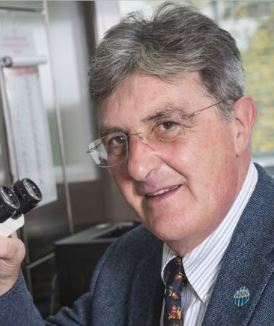 Aldo Scarpa合作论文数Pathological Anatomy Section, Department of Diagnostics and Public Health, Verona University3Ekambar R. Kandimalla合作论文数Hybridon, Inc.3
 Nicola Zambrano合作论文数Dipartimento di Biochimica e Biotecnologie Mediche, Università degli Studi di Napoli Federico II3Gerardina Merola合作论文数3
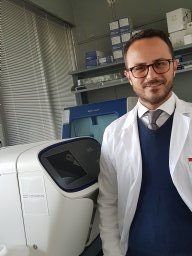 Umberto Malapelle合作论文数Dipartimento di Scienze Biomorfologiche e Funzionali, Università degli studi di Napoli Federico II3
 Paul J. Chiao合作论文数Department of Molecular and Cellular Oncology, Division of Basic Science Research, The University of Texas MD Anderson Cancer Center3Antonella Scorziello合作论文数Dip. di Scienza delle Communicazioni Umane, Sezione di Farmacologia, Italy3Barry Sherman合作论文数2Valeria Tarallo合作论文数Angiogenesis LAB, Inst Genet & Biophys Adriano Buzzati Traverso CNR2Zhu Cihui合作论文数2Mussnich Paula合作论文数2
 Alfredo Fusco合作论文数Facoltà di Medicina e Chirurgia, Università degli Studi di Napoli Federico II2




