ABBV-467 is a highly potent and selective MCL-1 inhibitor that was advanced to a phase I clinical trial for the treatment of multiple myeloma. Due to its large size and structural complexity, ABBV-467 is a challenging synthetic target. Herein, we describe the synthesis of ABBV-467 on a decagram scale, which enabled preclinical characterization. The strategy is convergent and stereoselective, featuring a hindered biaryl cross coupling, enantioselective hydrogenation, and conformationally preorganized macrocyclization by C-O bond formation as key steps.
In the originally published version of this Letter, the authors Arthur F. Kluge, Michael A. Patane and Ce Wang were inadvertently omitted from the author list. Their affiliations are: I-to-D, Inc., PO Box 6177, Lincoln, Massachusetts 01773, USA (A.F.K.); Mitobridge, Inc. 1030 Massachusetts Avenue, Cambridge, Massachusetts 02139, USA (M.A.P.); and China Novartis Institutes for BioMedical Research, No. 4218 Jinke Road, Zhangjiang Hi-Tech Park, Pudong District, Shanghai 201203, China (C.W.). These authors contributed to the interpretation of results and design of compounds. In addition, author ‘Edward A. Kesicki’ was misspelled as ‘Ed Kesicki’. These errors have been corrected online.
Abstract The dynamic and reversible acetylation of proteins catalyzed by histone acetyltransferases (HATs) and histone deacetylases (HDACs) is a major epigenetic regulatory mechanism of gene transcription associated with multiple diseases. While HDAC inhibitors are approved to treat certain cancers, progress on the development of drug-like HAT inhibitors has lagged. The HAT paralogs p300 and CBP (p300/CBP) are key transcriptional co-activators essential for a multitude of cellular processes and also implicated in human pathological conditions, including cancer. Current p300/CBP HAT domain inhibitors including natural products, bi-substrate analogs (Lys-CoA) and the widely utilized C646 lack potency or selectivity. Here, we describe A-485, a potent, selective and drug-like p300/CBP catalytic inhibitor. We show the first high resolution (1.95Å) co-crystal structure of a small molecule bound to the catalytic active site of p300 and demonstrate that A-485 is acetyl-CoA competitive. A-485 selectively inhibited proliferation across lineage-specific tumor types, including several hematological malignancies and androgen receptor-positive prostate cancer. A-485 inhibited the androgen receptor transcriptional program in both androgen sensitive and castrate resistant prostate cancer and inhibited tumor growth in a castration resistant xenograft model. These results demonstrate the feasibility of selectively targeting the catalytic activity of histone acetyltransferases. Citation Format: Kenneth D. Bromberg, Loren M. Lasko, Clarissa G. Jakob, Wei Qiu, Debra Montgomery, Enrico L. Digiammarino, Todd M. Hansen, Roberto M. Risi, Robin R. Frey, Vlasios Manaves, Bailin Shaw, Mikkel Algire, Paul Hessler, Lloyd T. Lam, Tamar Uziel, Emily Favire, Debra Ferguson, Fritz G. Buchanan, Ruth L. Martin, Maricel Torrent, Saul H. Rosenberg, Michael R. Michaelides, Albert Lai. Discovery of a potent catalytic p300/CBP inhibitor that targets lineage-specific tumors [abstract]. In: Proceedings of the AACR-NCI-EORTC International Conference: Molecular Targets and Cancer Therapeutics; 2017 Oct 26-30; Philadelphia, PA. Philadelphia (PA): AACR; Mol Cancer Ther 2018;17(1 Suppl):Abstract nr LB-A23.
potent and selective catalytic inhibitor of p300/CBP histone acetyltransferases suppresses tumour proliferation across multiple cell lineages, illustrating the therapeutic potential of drug-like small molecules that target histone acetyltransferases.
p300 and its paralog CBP can acetylate histones and other proteins and have been implicated in a number of diseases characterized by aberrant gene activation, such as cancer. A novel, highly selective, orally bioavailable histone acetyltransferase (HAT) domain inhibitor has been identified through virtual ligand screening and subsequent optimization of a unique hydantoin screening hit. Conformational restraint in the form of a spirocyclization followed by substitution with a urea led to a significant improvement in potency. Replacement of the hydantoin moiety with an oxazolidinedione followed by fluoro substitution led to A-485, which exhibits potent cell activity, low clearance, and high oral bioavailability.
Four different Rh-catalyzed asymmetric hydroformylation (AHF) tandem reactions have been developed in the context of the total syntheses of (+)-patulolide C, (-)-pyrenophorol, (+)-decarestrictine L, and (+)-Prelog-Djerassi lactone. A total synthesis of (+)-patulolide C has been accomplished in three steps utilizing a Rh(I)-catalyzed Z-selective anti-Markovnikov hydroacetoxylation of a known alkyne to give a Z-enol acetate with excellent selectivity. An AHF/intramolecular Wittig olefination cascade was utilized to set the C4-hydroxyl stereochemistry, E-olefin geometry, and form the macrolactone. In addition, both (-)-pyrenophorol and (+)-decarestrictine L have been synthesized from the enantiomeric (4R)- and (4S)-4-(tert-butyldimethylsiloxy)-1-pentyne in five and four steps, respectively. These syntheses feature Ru(II)-catalyzed Z-selective anti-Markovnikov hydroacetoxylation of terminal alkynes followed by AHF/Wittig olefination sequences to rapidly establish functionality and stereogenicity. A synthesis of (+)-Prelog-Djerassi lactone was accomplished in three isolations from the known 1-vinyl-4-methyl-2,6,7-trioxabicyclo[2.2.2]octane ortho ester. An AHF/crotylation tandem sequence has been developed to set the C2-C4 stereochemistry. An asymmetric hydrogenation was employed to set the C6 stereochemistry, resulting in an especially efficient enantioselective synthesis from achiral starting material. In summary, these syntheses have greatly improved efficiency in terms of atom-economy, catalytic stereoselective transformations, inexpensive reagents, step-counts, and overall yield when compared with previous synthetic attempts.
A highly atom-economical total synthesis of (+)-patulolide C has been accomplished in three steps from the known (2R)-8-nonyn-2-ol in 49% overall yield and 93% de. A Rh(I)-catalyzed asymmetric hydroformylation (AHF)/ intramolecular Wittig olefination cascade was utilized to set the C4-hydroxyl stereochemistry and E-olefin geometry as well as form the macrolactone.
A synthesis of the Prelog-Djerassi lactone [(+)-1] has been accomplished in three isolations and 57% overall yield from the known vinyl ortho ester 2. A Rh(I)-catalyzed asymmetric hydroformylation/crotylation tandem sequence has been developed and used to set the C2-C4 stereochemistry. A Rh(I)-catalyzed asymmetric hydrogenation was employed to set the C6 sterechemistry, resulting in an unusually short and efficient enantioselective synthesis of this touchstone molecule from achiral starting material.
 Michael Michaelides合作论文数4
 Loren M Lasko合作论文数Cancer Research, Molecular Modeling, Pharmacology, and High Throughput Biology, Research and Development, AbbVie , 1 North Waukegan Road, North Chicago, Illinois 60064-6114, United States.4Kenneth D. Bromberg合作论文数4Albert Lai合作论文数4Paul Hessler合作论文数3Bailin Shaw合作论文数3Debra Ferguson合作论文数3
 Ruth L Martin合作论文数3Mikkel Algire合作论文数3A. F. KLUGE合作论文数3Vlasios Manaves合作论文数3Peter de Vries合作论文数3
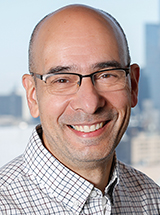 Ronen Marmorstein合作论文数Department of Biochemistry and Biophysics, Perelman School of Medicine, University of Pennsylvania3McElligott D L合作论文数3
 Saul H. Rosenberg合作论文数AbbVie3Steven D. Burke合作论文数Department of Chemistry, University of Wisconsin-Madison3
 Clarissa G. Jakob合作论文数3
 Kannan Karukurichi合作论文数Department of Chemistry;Uni Versity of Nebraska3Debra A. Montgomery合作论文数3Tamar Uziel合作论文数Sackler School of Medicine, Tel Aviv University3
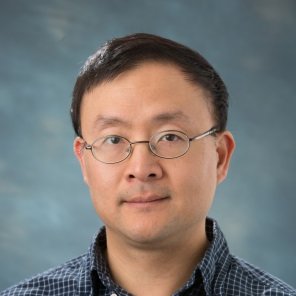 Lloyd T. Lam合作论文数University of Wisconsin School of Medicine and Public Health3
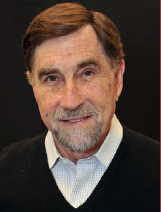 James Langston合作论文数Parkinson’s Institute and Clinical Center;Stanford Neuroscience Health Center;Department of Pathology, School of Medicine, Stanford University3Fritz G Buchanan合作论文数3Maricel Torrent合作论文数3
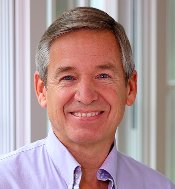 John H. Van Drie合作论文数Vertex Pharmaceuticals Inc.3Enrico L. Digiammarino合作论文数3michael a patane合作论文数2edward a kesicki合作论文数2Rohinton Edalji合作论文数2Todd M Hansen合作论文数2
 George Chiang合作论文数Department of Urology, School of Medicine, University of California, San Diego2Wei Qiu合作论文数2
 Brian T Weinert合作论文数Department of Molecular and Cell Biology|University of California , Berkeley2Souers Andrew J合作论文数2
 Choudhary Chunaram合作论文数Novo Nordisk Fdn, Univ Copenhagen2
 Michel Michaelides合作论文数Department of Genetics, Institute of Ophthalmology, Faculty of Brain Sciences, University College London;Moorfields Eye Hospital NHS Foundation Trust2Michael L Curtin合作论文数2Alan S. Florjancic合作论文数2Anthony Mastracchio合作论文数2Philip Cole合作论文数Saint Michael's Hospital, University of Toronto;Department of Otolaryngology, University of Toronto2Robin R. Frey合作论文数2
 Robert Mantei合作论文数2Emily J. Faivre合作论文数2Chaohong Sun合作论文数2Chunqiu Lai合作论文数2T. Matthew Hansen合作论文数2B K Sorensen合作论文数1Michael A Patane合作论文数1Patrick B. Brady合作论文数1




