An air of paradox attends the problem of modeling uncertain events in an ABM or other simulation. If no known probability distribution is associated with a collection of uncertain possible events, how are we to compute their realizations in a simulation? This study is about decision making under uncertainty, a quite common circumstance and one of core interest to agent-based modeling. In the context of decision making under uncertainty we addressed two main questions: We proposed and implement an uncertainty number generator, which affords an answer to the second question. We find that uncertainty decision rules can identify more valuable alternatives among the consideration set and upon modeling with the uncertain number generator these identifications are robust. Agents lacking probabilities for the eventualities (agents engaging in decision making under uncertainty) can make sensible choices from among the available alternatives and do so robustly to uncertain events. We have demonstrated all of this with a class of examples which we believe is appropriate. Further research will be required to gain insight on how widely our findings generalize.
Download This Paper Open PDF in Browser Add Paper to My Library Share: Permalink Using these links will ensure access to this page indefinitely Copy URL Copy DOI
Animal foraging regimes are standardly modeled as economic systems, for which standard economic modeling and its assumptions are apt. Patch selection foraging models are a case in point. There, the ideal free distribution (IFD) model has canonically served to explain and predict equilibrium distribution of foragers across patches. We investigate patch selection under assumptions of imperfect information on the part of the forager agents. In a first regime, agents' perceptions (upon which they act) are drawn from Gaussian distributions with a common standard deviation and mean equal to the true value of the productivity of the patch in question. In a second regime, agents' perceptions are modeled using Weber's law of just noticeable differences (JND), a biologically and psychologically well-established model, one arguably more realistic than simple Gaussian error. The paper finds that both regimes yield similar systematic, stable, non-equilibrium deviations from the IFD. In particular, the distributions of agents across patches, while stable and not in equilibrium, systematically under sample higher productivity patches and over sample lower productivity patches, a phenomenon that has been observed in the field and reported in the literature on animal foraging. The paper sketches an analytic proof of why this should be the case. If the main finding of the paper-that imperfect knowledge yields systematic deviations from ideal rationality behavior-can be shown to generalize well to other economic contexts, then the methods of agent-based modeling combined with fundamental biological and psychological principles may be material for yielding yet more satisfactory, empirically warranted accounts of social behavior than the incumbent idealizations.
Introduction:Why is it that phonologies exhibit greater dispersion than we might expect by chance? In earlier work we investigated this using a non-linguistic communication game in which pairs of participants sent each other series of colors to communicate a set of animal silhouettes. They found that above-chance levels of dispersion, similar to that seen in vowel systems, emerged as a result of the production and perception demands acting on the participants. However, they did not investigate the process by which this dispersion came about.Method:To investigate this we conducted a secondary statistical analysis of the data, looking in particular at how participants approached the communication task, how dispersion emerged, and what convergence looked like.Results:We found that dispersion was not planned from the start but emerged as a large-scale consequence of smaller-scale choices and adjustments. In particular, participants learned to reproduce colors more reliably over time, paid attention to signaling success, and shifted towards more extreme areas of the space over time.Conclusion:This study sheds light on the role of interactive processes in mediating between human minds and the emergence or larger-scale structure, as well as the distribution of features across the world's languages.
This paper focuses on two research questions arising from the 2010 U.S. Securities and Exchange Commission (SEC) Advisory on climate change reporting: (1) How does the discussion of climate change in SEC filings change after the Advisory? and (2) What are firms talking about when they talk about climate change? Findings were obtained from the 218,000 10-K filings to the SEC during the 2000--2019 period. The study develops and applies text mining methodology based on extracting information from the ``semantic associates'' in the ``neighborhoods'' of indicative terms. On (1) it finds that climate change-related reporting does increase substantially after the SEC guidance. On (2) a nuanced picture emerges. Firms with comparatively larger transition risks tend to discuss climate change comparatively more, focusing on regulation-related topics. Firms exposed to the physical risks of climate change tend to discuss climate change somewhat less, focusing on meteorological topics. The results enrich our understanding regarding environmental policies and firms' behaviors regarding climate change. Theoretical and practical implications are provided.
Distributions of populations over a landscape are of keen interest in biology and many of the social and behavioral sciences, including linguistics, economics, anthropology, and archeology. We are interested in exploring how individual preferences affect these distributions, in particular how distributions are affected by dynamic preferences built from the situation at hand. Particularly, in dynamic situations the information processing abilities and practices of the relevant agents are crucial. Small changes in their information processing abilities and practices can have large impacts on behavior and the resulting distributions of the agents.
Mendelian genetics, with its model of particulate, discrete genes, has been a power tool of analysis, as well as an attractive one that has drawn many researchers in cultural evolution. Many forms of cultural evolution, however, involve continuous variation over a space that is not easily quantized. In this paper, we look at continuous variation directly, not through the lens of particulate encodings, but rather from the perspective of mechanisms that generate continuous behavior (or phenotype). We study the degree to which we can come to understand cultural evolution in continuous space directly. We propose a spatial or landscape representation framework for evolution in continuous space of clustered behavior. The paper then presents four models of how clustered behavior patterns may evolve on their landscapes, including drift, selection, separation, and merging. These may be seen as building blocks for a comprehensive program of modeling cultural evolution.
Languages exhibit structure at a number of levels, including at the level of phonology, the system of meaningless combinatorial units from which words are constructed. Phonological systems typically exhibit greater dispersion than would be expected by chance. Several theoretical models have been proposed to account for this, and a common theme is that such organization emerges as a result of the competing forces acting on production and perception. Fundamentally, this implies a cultural evolutionary explanation, by which emergent organization is an adaptive response to the pressures of communicative interaction. This process is hard to investigate empirically using natural-language data. We therefore designed an experimental task in which pairs of participants play a communicative game using a novel medium in which varying the position of one's finger on a trackpad produced different colors. This task allowed us to manipulate the alignment of pressures acting on production and perception. Here we used it to investigate (1) whether above-chance levels of dispersion would emerge in the resulting systems, (2) whether dispersion would correlate with communicative success, and (3) how systems would differ if the pressures acting on perception were misaligned with pressures acting on production (and which would take precedence). We found that above-chance levels of dispersion emerged when pressures were aligned, but that the primary driver of communicative success was the alignment of production and perception pressures rather than dispersion itself. When they were misaligned, participants both found the task harder and (driven by perceptual demands) created systems with lower levels of dispersion.
We independently implemented and studied the nest-site selection model described in Passino, K. M., and Seeley, T. D., “Modeling and analysis of nest-site selection by honeybee swarms,” 2006, focusing on the default parameter values they obtained by field calibration. We focus on aspects of the model pertaining both to imitation and social learning and to the model as kind of metaheuristic. Among other things, we find that the model is robust to different parameterizations of social learning, but that at least a modicum of social learning is essential for successful nest-site selection (in the model). Regarding the model as a metaheuristic, we find that it robustly produces good but significantly non-optimal nest-site selections. Instead of a single-criterion metaheuristic, the algorithm is best seen as balancing three objectives: choose the best of the available sites in the neighborhood, make the choice quickly, minimize risk of failing to choose a site.
Court reporters are certified at either 95% or 98% accuracy, depending on their certifying organization; however, the measure of accuracy is not one that evaluates their ability to transcribe nonstandard dialects. Here, we demonstrate that Philadelphia court reporters consistently fail to meet this level of transcription accuracy when confronted with mundane examples of spoken African American English (AAE). Furthermore, we show that they often cannot demonstrate understanding of what is being said. We show that the different morphosyntax of AAE, the different phonological patterns of AAE, and the different accents in Philadelphia related to residential segregation all conspire to produce transcriptions that not only are inaccurate, but also change the official record of who performed what actions under which circumstances, with potentially dramatic legal repercussions for everyday speakers of AAE.
The game of Hide and Seek is interesting because it affords the study both of the emergence of coordination and anti-coordination. Socially these are important for many reasons, including modeling of the evolution of identity markers and in-group-out-group tagging. We endow our agents with sensible, simple deterministic search methods, in the context of an overall evolutionary dynamic. We find that using these methods, the agents can achieve both coordination and anti-coordination, depending upon the payoffs involved. Further, we find that adding a modicum of randomization to individual search disrupts the population's ability to coordinate. It is hardly surprising that apparently random behavior should arise from individual randomized behavior. We see this in these experiments, but we also see that it is hardly necessary. The deterministic search produced effective anti-coordination. In addition, the deterministic search produced effective coordination, in distinction to what randomized behavior achieved. Throughout, we emphasize that these are emergent population phenomena. We note as well that there is randomization occurring in this model, at the population level, if not at the individual level. These results, then, suggest that an evolutionary dynamic, acting on a population, is sufficient for apparently randomized individual behavior and that adding actual randomized individual behavior may not be necessary or even helpful.
Background: Lewy body disorders (LBD) are clinical syndromes characterized by pathological inclusions containing α-synuclein. Cognitive deficits are common or diagnostic in LBD, and may be associated with the presence of beta-amyloid (Aβ), which is a hallmark histopathologic abnormality characteristic of Alzheimer's disease (AD) that can also co-occur with LBD. Objective: In the present study we evaluated whether social decision-making difficulties in LBD are associated with Aβ burden. Methods: Decision-making abilities were measured with a simple, untimed, behavioral task previously validated in patients with behavioral variant frontotemporal dementia, and performance was related to gray matter atrophy on MRI. Aβ burden was assessed by examination of cerebrospinal fluid (CSF) level of Aβ1-42 and by autopsy confirmation in a subgroup of patients. Results: The results revealed that LBD patients with evidence of Aβ have reduced social decision-making abilities compared to patients with no evidence of Aβ. The imaging analysis related greater decision-making difficulty in Aβ-positive patients in respect to Aβ-negative patients to gray matter atrophy in medial orbitofrontal. This region is a critical node of a decision-making network as well as a region previously associated with comorbid α-synuclein and Aβ in LBD. Conclusions: These preliminary findings suggest that cognitive difficulties in LBD extend to include deficits in social decision-making and that this may be related to the presence of Aβ.
Analyses of digital corpora of annotated texts reveal the influence of stochastic drift versus selection in grammatical shifts in English and provide a general method for quantitatively testing theories of language change. Languages and genes are transmitted between generations, both being subject to change with each step through random fluctuation as well as natural selection. Joshua Plotkin and colleagues assess the contribution of these two evolutionary mechanisms in a large body of texts ranging from the 12th to the 21st centuries. Some of the findings, for example that rare words are more prone to random drift than common ones, are perhaps not surprising. However, selection for the irregular forms of some verbs tends to buck the usual assumption of regularization over time, and might be related to changing frequencies of rhyming patterns. The findings suggest a more important role for random processes in language evolution than previously considered. Both language and genes evolve by transmission over generations with opportunity for differential replication of forms1. The understanding that gene frequencies change at random by genetic drift, even in the absence of natural selection, was a seminal advance in evolutionary biology2. Stochastic drift must also occur in language as a result of randomness in how linguistic forms are copied between speakers3,4. Here we quantify the strength of selection relative to stochastic drift in language evolution. We use time series derived from large corpora of annotated texts dating from the 12th to 21st centuries to analyse three well-known grammatical changes in English: the regularization of past-tense verbs5,6,7,8,9, the introduction of the periphrastic ‘do’10, and variation in verbal negation11. We reject stochastic drift in favour of selection in some cases but not in others. In particular, we infer selection towards the irregular forms of some past-tense verbs, which is likely driven by changing frequencies of rhyming patterns over time. We show that stochastic drift is stronger for rare words, which may explain why rare forms are more prone to replacement than common ones6,9,12. This work provides a method for testing selective theories of language change against a null model and reveals an underappreciated role for stochasticity in language evolution.
Game-theory has found broad application in modeling meaning in both the classical Gricean case of common interests between interlocutors and, more recently, in cases of conflicting interests. Here we consider how conflicting interests between speakers and hearers can be used to explain language change. We use tools from evolutionary game theory to characterize the effect of conflicting interests in the case of Jespersen's cycle. We show how the cycle can be modeled as an inflationary process due to signaling with costless signals under conflicting interests. We fit the resulting dynamic model to time series data drawn from a historical corpus of Middle English.
Honest signaling is generally taken to be a necessary pre-condition for a stable signaling system, because deceptive signaling at a high enough rate should cause receivers to ignore the signal, which in turn undermines the utility of sending signals. Deception is normally thought to occur because of benefits it has to the deceiver. This raises the question of why signaling systems should exist and persist over time, especially in cases in which the interests of the senders and receivers are not well aligned. Punishment has been seen as a way of imposing costs on deceptive signalers. We investigate the effects of opportunistic-that is, non-altruistic punishment-on the evolution of an honest signaling system. Our model is based on research done on social insects. We model a society of agents, divided into three castes differing in aggressiveness. Under severe punishment deception is indeed asymptotically eliminated. Under somewhat less severe punishment, deception persists and the rates of deception correlate with social structure. We find that social structure robustly mediates the level of deception under regimes of punishment and that this is evident except in the most stringent of punishment regimes.
Previous work has shown that the meaning of a quantifier such as "many" or "few" depends in part on quantity. However, the meaning of a quantifier may vary depending on the context, e.g. in the case of common entities such as "many ants" (perhaps several thousands) compared to endangered species such as "many pandas" (perhaps a dozen). In a recent study (Heim et al., 2015 Front. Psychol.) we demonstrated that the relative meaning of "many" and "few" may be changed experimentally. In a truth value judgment task, displays with 40% of circles in a named color initially had a low probability of being labeled "many". After a training phase, the likelihood of acceptance 40% as "many" increased. Moreover, the semantic learning effect also generalized to the related quantifier "few" which had not been mentioned in the training phase. Thus, fewer 40% arrays were considered "few." In the present study, we tested the hypothesis that this semantic adaptation effect was supported by cytoarchitectonic Brodmann area (BA) 45 in Broca's region which may contribute to semantic evaluation in the context of language and quantification. In an event-related fMRI study, 17 healthy volunteers performed the same paradigm as in the previous behavioral study. We found a relative signal increase when comparing the critical, trained proportion to untrained proportions. This specific effect was found in left BA 45 for the trained quantifier "many", and in left BA 44 for both quantifiers, reflecting the semantic adjustment for the untrained but related quantifier "few." These findings demonstrate the neural basis for processing the flexible meaning of a quantifier, and illustrate the neuroanatomical structures that contribute to variable meanings that can be associated with a word when used in different contexts.
The scope of reference of a word's meaning can be highly variable. We present a novel paradigm to investigate the flexible interpretation of word meaning. We focus on quantifiers such as "many" or "few, "a class of words that depends on number knowledge but can be interpreted in a flexible manner. Healthy young adults performed a truth value judgment task on pictorial arrays of varying amounts of blue and yellow circles, deciding whether the sentence "Many/few of the circles are yellow" was an adequate description of the stimulus. The study consisted of two experiments, one focusing on "many" one on "few" Each experiment had three blocks. In a first "baseline" block, each individual's criterion for "many" and "few" was assessed. In a second "adaptation" block, subjects received feedback about their decisions that was different from their initial judgments in an effort to evaluate the flexibility of a subject's interpretation. A third "test" block assessed whether adaptation of quantifier meaning induced in block 2 then was generalized to alter a subject's baseline meaning for "many" and "few" In Experiment 1, a proportion of yellow circles as small as 40% was reinforced as "many"; in Experiment 2, a proportion of yellow circles as large as 60% was reinforced as "few"Subjects learned the new criterion for "many" in Experiment 1, which also affected their criterion for "few" although it had never been mentioned. Likewise, in Experiment 2, subjects changed their criterion for "few" with a comparable effect on the criterion for "many" which was not mentioned. Thus, the meaning of relational quantifiers like "many" and "few" is flexible and can be adapted. Most importantly, adapting the criterion for one quantifier (e.g., "many") also appeared to affect the reciprocal quantifier (in this case, "few"). Implications of this result for psychological interventions and for investigations of the neurobiology of the language-number interface are discussed.
 Murray Grossman合作论文数Department of Neurology, Perelman School of Medicine, University of Pennsylvania;Penn Frontotemporal Degeneration Center, University of Pennsylvania37
 Corey T Mcmillan合作论文数Department of Neurology, Perelman School of Medicine, University of Pennsylvania28Katya Rascovsky合作论文数Department of Neurology, Perelman School of Medicine, University of Pennsylvania11
 Steven O. Kimbrough合作论文数Operations, Information and Decisions Department, The Wharton School, University of Pennsylvania9
 Nicola Spotorno合作论文数University of Pennsylvania Perelman School of Medicine, Penn Department of Neurology and Frontotemporal Degeneration Center, Philadelphia, 19104 PA, USA.7
 Christopher A Olm合作论文数Department of Psychology and;Center for Brain Science, Harvard University;Department of Psychology and;Center for Brain Science, Harvard University6Gross Rachel G合作论文数6
 David J. Irwin合作论文数Department of Neurology, Perelman School of Medicine, University of Pennsylvania5
 Ashley Boller合作论文数5
 Vanessa Troiani合作论文数Department of Neurology, University of Pennsylvania School of Medicine5Christopher A. Ahern合作论文数4
 Andrew Gareth Roberts合作论文数Department of Linguistics, School of Arts & Sciences, University of Pennsylvania4Tsao-Wei Liang合作论文数4
 Jonathan E. Peelle合作论文数University of Pennsylvania School of Medicine, Hospital of the University of Pennsylvania4
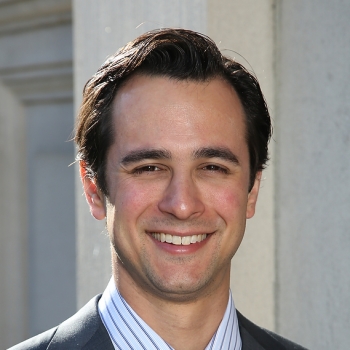 Casey H. Halpern合作论文数Neurology & Neurological Sciences Department, Stanford University/Neurosurgery Department, Stanford University4Peachie Moore合作论文数3Camp Emily合作论文数3
 Brianna Morgan合作论文数Department of Neurology, University of Pennsylvania School of Medicine3John Powers合作论文数2prashant parikh合作论文数2Nam Eun Min合作论文数2Eileen Moran合作论文数2Danielle eColeman合作论文数2
 Laura Baehr合作论文数2
 Michael Dreyfuss合作论文数2Rebecca Kazinka合作论文数2
 Jianjing Kuang合作论文数Department of Linguistics, School of Arts & Sciences, University of Pennsylvania2Khella M Catherine合作论文数2Meghan L. Healey合作论文数2Ternes Kylie合作论文数2
 Brian B. Avants合作论文数Cingulate, LLC;Invicro2Luisa Vesely合作论文数2
 Neville Ryant合作论文数Linguistic Data Consortium, University of Pennsylvania2Stefan Heim合作论文数2Lisa Cheng合作论文数1Christine Farag合作论文数1Delani Gunawardena合作论文数1Katya Raskovsky合作论文数1Jessica Kitain合作论文数1McCluskey Leo合作论文数1Mitchell G Newberry合作论文数Dept Biol, Univ Penn1Jessica Rose Kalbfeld合作论文数NYU1Katy Cross合作论文数1C DeVita合作论文数1
 Maribel Romero合作论文数Department of Linguistics, University of Konstanz1
 Taylor Jones合作论文数CulturePoint, LLC.1
 Laura Wagner合作论文数Department of Psychology, College of Arts and Sciences, The Ohio State University1
 Daniel Weintraub合作论文数Department of Psychiatry, Perelman School of Medicine, University of Pennsylvania1




