We demonstrate all-optical control of birefringence in a cold atomic cloud of ytterbium. By optically dressing the excited ^3P_1 state via an off-resonant coupling to the ^3D_1 level, we induce polarization-dependent light shifts of the Zeeman sublevels, resulting in a tunable polarization-dependent refractive index. For a circularly polarized dressing beam, we observe a rotation of the probe linear polarization, characteristic of the Faraday effect, in the absence of any magnetic field. In addition, for a linearly polarized dressing beam, the probe acquires ellipticity without rotation, corresponding to linear birefringence. More generally, the polarization of the dressing beam controls the axis of rotation of the probe polarization on the Poincaré sphere. Our results establish cold atoms as a versatile platform for engineering and controlling light-induced birefringence and open new perspectives for the fast and reconfigurable control of optical response of resonant media.
Cold atoms are promising platforms for metrology and quantum computation, yet their many-body dynamics remains largely unexplored. We here investigate Rabi oscillations from optically-thick cold clouds, driven by high-intensity coherent light. A dynamical displacement from the atomic resonance is predicted, which can be detected through the collective Rabi oscillations of the atomic ensemble. Different from linear-optics shifts, this dynamical displacement grows quadratically with the optical depth, yet it reduces with increasing pump power as dipole-dipole interactions are less effective.
In this whitepaper, we outline how recent technological advances and ongoing developments open qualitatively new science opportunities in cosmology, fundamental physics, and quantum astrophysics. First, intensity interferometry can contribute to one of the most foundational observables in cosmology: the expansion rate of the Universe. Its angular resolution allows it to resolve the angular extent of extragalactic objects such as supernovae or quasars; combined with a physical scale local to the source, this yields an angular diameter distance and hence a 'Hubble diagram'. Second, the nature of dark matter can be probed via the astrometric lensing signatures of tiny dark matter halos. Third, intensity interferometry gives direct access to second-order coherence properties of astrophysical emission, opening a window onto genuinely quantum aspects of astrophysical light.
In this work, we present a numerical and experimental investigation of the collective early-time decay rates of an optically dense cold atomic cloud supporting a large number of excitations. We prepare the atomic ensemble by driving the system to its steady state with varying Rabi frequencies Ω that go from the low excitation Ω≪Γ to the multiple excitation regime Ω≫Γ, where Γ is the single-atom decay rate. We investigate the early-time dynamics in the transition between the strong and weak driving regimes using (1) angular-dependent observables, such as the light emitted by the cloud, and (2) global observables, i.e., the excited-state population. When driving the cloud on resonance, we find that as a function of the driving frequency, the behavior of the collected light at certain angles transitions from the single-photon subradiant regime to a superradiant regime, while the behavior of the excited-state population does not show superradiance. The experiment shows good agreement with numerical predictions at the chosen angle of observation in the regime of parameters under study.
The coherence of light from independent ensembles of elementary atomic emitters plays a paramount role in diverse areas of modern optics. We demonstrate the interference of photons scattered from independent ensembles of warm atoms in atomic vapor. It relies on the feasibility of the preservation of coherence of light scattered elastically in the forward and backward directions from Doppler-broadened atomic ensembles, such that photons with chaotic photon statistics from two opposite atomic velocity groups contribute to the same detection mode. While the random phase fluctuations of the scattered light caused by a large thermal motion prevent direct observability of the interference in the detected photon rate, the stable frequency difference between photons collected from scattering off counter-propagating laser beams provides strong periodic modulation of the photon coincidence rate with the period given by the detuning of the excitation laser from the atomic resonance. The presented interferometry represents a sensitive and robust methodology for Doppler-free optical atomic and molecular spectroscopy based on photon correlation measurements on scattered light.
The use of temporal correlations in scattered photons to probe the microscopic dynamics of ultracold quantum gases has emerged as a powerful, minimally destructive approach for in situ analysis. Here, we demonstrate that temporal coherence spectroscopy can quantitatively characterize atomic motion in a magnetic trap, despite the perturbative effects of the probing light. By measuring the first-order correlation function g (1) (τ ) of light scattered by a 87 Rb cloud confined in a quadrupole trap, we identify radiation-pressure-induced acceleration and heating as the origin of the apparent discrepancy between coherence spectra and temperatures inferred from time-of-flight measurements. A simple dynamical model incorporating these effects restores agreement between theory and experiment, establishing coherence spectroscopy as a reliable in situ probe of velocity distributions in trapped atomic ensembles. Our results pave the way for time-resolved studies of nonequilibrium dynamics and thermalization processes in confined cold gases, complementing conventional destructive imaging techniques.
In this Letter, we report on the time- and space-resolved measurement of subradiant excited state population in an ultra-cold atomic cloud of 174Yb atoms. We use a depletion imaging technique that exploits the Λ-type internal energy structure to directly observe the time-resolved spatial distribution of excited state population. We characterize the decay dynamics of the subradiant modes using both the excited state population and scattered light intensity, finding good quantitative agreement with numerical predictions.
Cold atomic clouds are promising platforms for generating correlated photons, but multiple scattering and associated Doppler broadening limit their temporal coherence. Here we demonstrate that cloud geometry provides a powerful means to extend the coherence time of scattered light. In the experiment, intensity-correlation measurements show that an elongated (quasi-one-dimensional) cloud exhibits systematically longer coherence times than a spherical (three-dimensional) cloud of the same on-axis optical thickness, as a direct consequence of the suppression of multiple scattering in the elongated geometry. Random-walk simulations reproduce this trend and further show that elongation drives the coherence time toward the single-scattering limit. The combined results establish cloud geometry as a robust control parameter for temporal coherence in cold atom ensembles, with in and communication.
In the collective photon emission from atomic clouds both the atomic transition frequency and the decay rate are modified compared to a single isolated atom, leading to the effects of superradiance and subradiance. In this article, we analyze the properties of the Euclidean random matrix associated with the radiative dynamics of a cold atomic cloud, previously investigated in the contexts of photon localization and Dicke super- and subradiance. We present evidence of a phase transition, surprisingly controlled by the cooperativeness parameter, rather than the spatial density or the diagonal disorder. The numerical results corroborate the occurrence of such a phase transition at a critical value of the cooperativeness parameter, above which the lower edge of the spectrum vanishes, exhibiting a macroscopic accumulation of eigenvalues. Independent evaluations based on the two phenomena provide the same value for the critical cooperativeness parameter.
In this work we present a numerical and experimental investigation of the collective early-time decay rates of a strongly driven and optically dense cold atomic cloud. We prepare the atomic ensemble by driving the system to its steady state with varying Rabi frequencies Ω that go from the weak Ω≪ Γ to the strong driving regime Ω≫ Γ, where Γ is the single-atom decay rate. We investigate the early-time dynamics in the transition between the strong and weak driving regimes using: i) angular-dependent observables such as the light emitted by the cloud, and ii) global observables, i.e., the excited state population. When driving the cloud on-resonance, we find that as a function of the driving frequency, the behavior of the collected light at certain angles transitions from the single-photon subradiant regime to a superradiant regime while the behavior of the excited state population does not show superradiance. The experiment shows good agreement with numerical predictions in the regime of parameters under study.
Wave transport in complex media is determined by the nature of quasimodes at the microscopic level. In three dimensional disordered media, waves generally undergo a phase transition from diffusion to Anderson localization, characterized by exponentially localized modes. A remarkable exception are electromagnetic waves, whose vector-like nature prevents Anderson localization to occur. Here we demonstrate that both scalar and vector (electromagnetic) waves exhibit a non-ergodic extended phase characterized by fractal quasimodes, for a broad range of disorder strengths. While electromagnetic waves remain in the non-ergodic extended phase at high disorder strength, scalar waves eventually enter a localized regime. These results pave the way for the engineering of anomalous wave transport phenomena in disordered media without spatial correlations.
Stellar intensity interferometry consists in measuring the correlation of the light intensity fluctuations at two telescopes observing the same star. The amplitude of the correlation is directly related to the luminosity distribution of the star, which would be unresolved by a single telescope. This technique is based on the well-known Hanbury Brown and Twiss effect. After its discovery in the 1950s, it was used in astronomy until the 1970s, and then replaced by direct (“amplitude”) interferometry, which is much more sensitive, but also much more demanding. However, in recent years, intensity interferometry has undergone a revival. In this article, we present a summary of the state-of-the-art, and we discuss in detail the signal-to-noise ratio of intensity interferometry in the framework of photon-counting detection.
This study introduces a novel method to investigate in situ light transport within optically thick ensembles of cold atoms, exploiting the internal structure of alkaline-earth metals. A method for creating an optical excitation at the center of a large atomic cloud is demonstrated, and we observe its propagation through multiple scattering events. In conditions where the cloud size is significantly larger than the transport mean free path, a diffusive regime is identified. We measure key parameters, including the diffusion coefficient, transport velocity, and transport time, finding a good agreement with diffusion models. We also demonstrate that the frequency of the photons launched inside the system can be controlled. This approach enables direct time- and space-resolved observation of light diffusion in atomic ensembles, offering a promising avenue for exploring new diffusion regimes.
We consider the free propagation geometry of a light beam (or fluid of light) in a multimode waveguide. As a result of the effective photon-photon interactions, the photon fluid thermalizes to an equilibrium state during its conservative propagation. In this configuration, Rayleigh-Jeans (RJ) thermalization and condensation of classical light waves have been recently observed experimentally in graded index multimode optical fibers characterized by a 2D parabolic trapping potential. As well-known, the properties of RJ condensation differ substantially from those of Bose-Einstein (BE) condensation: The condensate fraction decreases quadratically with the temperature for BE condensation, while it decreases linearly for RJ condensation. Furthermore, for quantum particles the heat capacity tends to zero at small temperatures, and it takes a constant value in the classical particle limit at high temperatures. This is in contrast with classical RJ waves, where the specific heat takes a constant value at small temperatures, and tends to vanish above the condensation transition in the normal (uncondensed) state. Here, we reconcile the thermodynamic properties of BE and RJ condensation: By introducing a frequency cut-off inherent to light propagation in a waveguide, we derive generalized expressions of the thermodynamic properties that include the RJ and BE limits as particular cases. We extend the approach to encompass negative temperatures. In contrast to positive temperatures, the specific heat does not display a singular behavior at negative temperatures, reflecting the non-critical nature of the transition to a macroscopic population of the highest energy level. Our work contributes to understanding the quantum-to-classical crossover in the equilibrium properties of light, within a versatile experimental platform based on nonlinear optical propagation in multimode waveguides.
We report laser frequency stabilization by the combination of modulation transfer spectroscopy and balanced detection of a relatively weak hyperfine transition of the R(158)25-0 line of molecular iodine (${}^{127}$I$_{2}$), which is used as a new frequency reference for laser trapping and cooling of ${}^{174}$Yb on the $^{1}S_{0} - {}^{3}P_{1}$ transition. The atomic cloud is characterized by time-of-flight measurements, and an on-resonance optical depth of up to 47 is obtained. We show laser noise reduction and characterize the short-term laser frequency instability by the Allan deviation of the laser fractional frequency. The minimum measured value is 3.9 x $10^{-13}$ at 0.17 s of averaging time.
We present experimental and theoretical results on formation of quantum vortices in a laser beam propagating in a nonlinear medium. Topological constrains richer than the mere conservation of vorticity impose an elaborate dynamical behavior to the formation and annihilation of vortex-antivortex pairs. We identify two such mechanisms, both described by the same fold-Hopf bifurcation. One of them is particularly efficient although it is not observed in the context of liquid helium films or stationary systems because it relies on the compressible nature of the fluid of light we consider and on the non-stationarity of its flow.
Light is characterized by its electric field, yet quantum optics has revealed the importance of monitoring photon-photon correlations at all orders. We here present a comparative study of two experimental setups, composed of cold and warm Rubidium atoms, respectively, which allow us to probe and compare photon correlations up to the fourth order. The former operates in the quantum regime where spontaneous emission dominates, whereas the latter exhibits a temperature-limited coherence time. While both setups present almost-chaotic light statistics, we discuss how the access to different orders of photon correlations allows one to better characterize the mechanisms responsible for deviations from those statistics.
To address the outstanding task of detecting entanglement in large quantum systems, entanglement witnesses have emerged, addressing the separable nature of a state. Yet optimizing witnesses, or accessing them experimentally, often remains a challenge. We here introduce a family of entanglement witnesses for open quantum systems. Based on the electric field, it does not require state tomography or single-site addressing, but rather macroscopic measurements of the field quadratures and of the total fluorescence. Its efficiency is demonstrated by detecting, from almost any direction, the entanglement of collective single-photon states, such as long-lived states generated by cooperative spontaneous emission. Able to detect entanglement in large open quantum systems, and through a single continuous measurement if operating in the stationary regime, these electric-field-based witnesses can be used on any set of emitters described by the Pauli group, such as atomic systems (cold atoms and trapped ions), giant atoms, color centers, and superconducting qubits.
We report on the observation of spontaneously drifting coupled spin and quadrupolar density waves in the ground state of laser driven Rubidium atoms. These laser-cooled atomic ensembles exhibit spontaneous magnetism via light mediated interactions when submitted to optical feedback by a retro-reflecting mirror. Drift direction and chirality of the waves arise from spontaneous symmetry breaking. The observations demonstrate a novel transport process in out-of-equilibrium magnetic systems.
- Light is characterized by its electric field, yet quantum optics has revealed the importance of monitoring photon-photon correlations at all orders. We here present a comparative study of two experimental setups, composed of cold and warm rubidium atoms, respectively, which allow us to probe and compare photon correlations. The former operates in the quantum regime where spontaneous emission dominates, whereas the latter exhibits a temperature-limited coherence time. We demonstrate our capability to measure photon correlations up to the fourth order which could be useful to better characterize light scattered by cold atoms beyond the chaotic statistics.
 G. Labeyrie合作论文数69William Guerin合作论文数52Romain Bachelard合作论文数CPT39
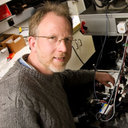 Thorsten Ackemann合作论文数University of Strathclyde Department of Physics 107 Rottenrow Glasgow G4 0NG United Kingdom27
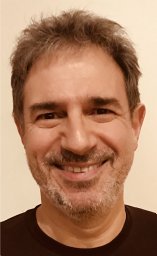 Christian Miniatura合作论文数Laboratoire Ondes et Desordre26
 Alain Aspect合作论文数Laboratoire Charles Fabry, Institut d’Optique Graduate School-Université Paris-Saclay;Ecole Polytechnique;CNRS25
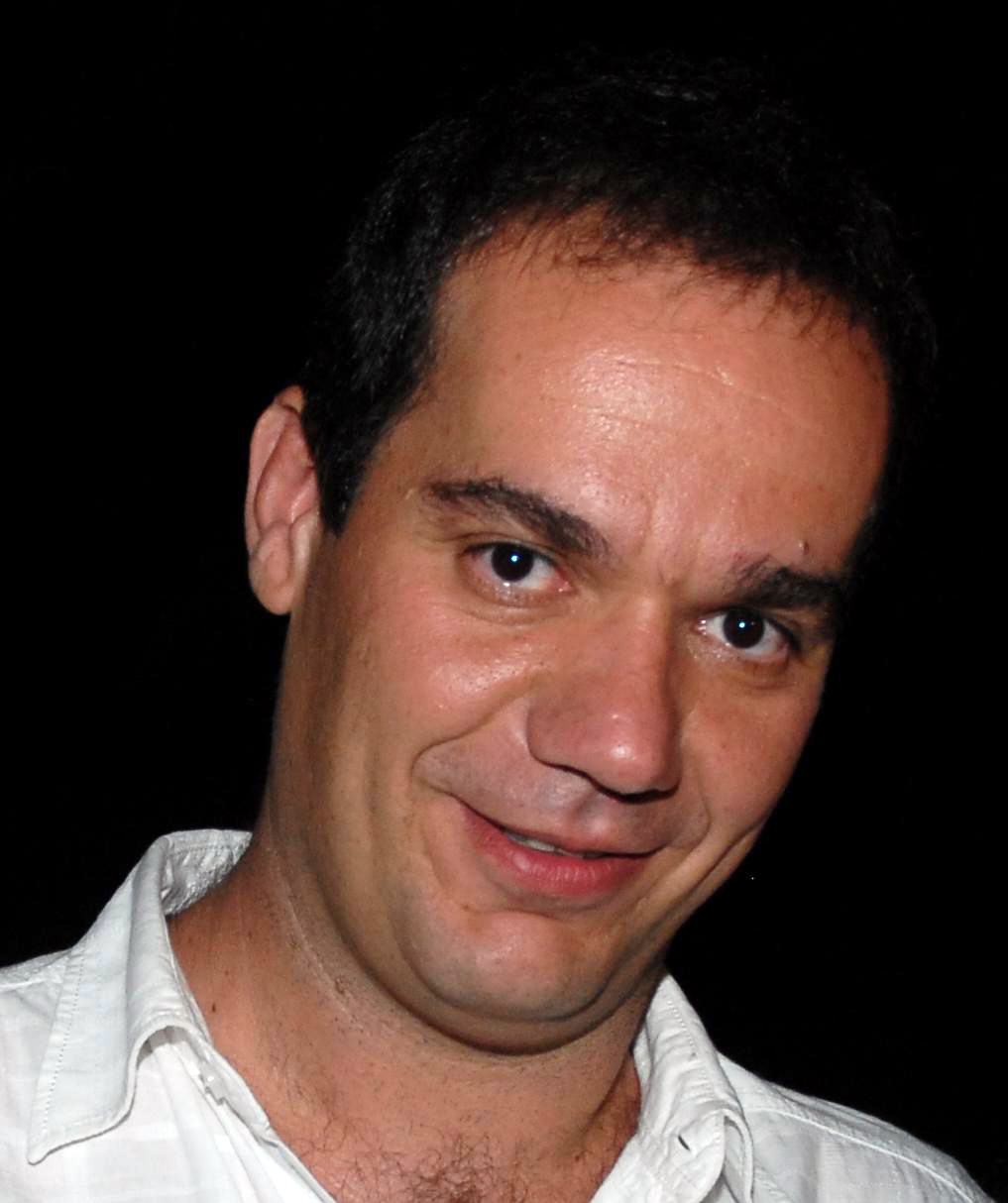 David Wilkowski合作论文数Division of Physics and Applied Physics, School of Physical and Mathematical Sciences, College of Science, Nanyang Technological University20G. R. M. Robb合作论文数Scottish Universities Physics Alliance (SUPA), University of Strathclyde19N. Vansteenkiste合作论文数16
 Gian-Luca Oppo合作论文数Department of Physics, University of Strathclyde16
 Nicola Piovella合作论文数Dipartimento di Fisica16Guillaume Labeyrie合作论文数15
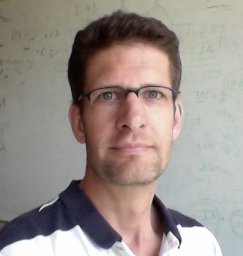 Cord A. Muller合作论文数Laboratoire Ondes et Desordre12D Delande合作论文数11Mathilde Hugbart合作论文数Laboratoire Charles Fabry de l'Institut d'Optique;Department of Physics;University of Toronto11Franck Michaud合作论文数11Nicolas Mercadier合作论文数INLN11Ci Westbrook合作论文数10Chaneliere, T.合作论文数10
 Thomas Pohl合作论文数Max Planck Institute10
 Gian Luca Lippi合作论文数Institut de Physique de Nice, Université Côte d'Azur;UMR 7010 CNRS10Ph. W. Courteille合作论文数10Willie J. Firth合作论文数Department of Physics, University of Strathclyde10Gomes, P.合作论文数9
 Giovanni Luca Gattobigio合作论文数LCAR9
 Olivier Lai合作论文数Mamalahoa Hwy .9B Klappauf合作论文数8q baudouin合作论文数8
 F. Vakili合作论文数8A. Cipris合作论文数8
 I. Krešić合作论文数Inst Theoret Phys, Vienna Univ Technol TU Wien8Enrico Tesio合作论文数8
 Vanderlei S. Bagnato合作论文数Department of Biomedical Engineering, Texas A&M University8
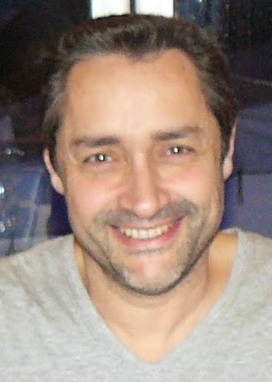 Jean-Pierre Rivet合作论文数Observatoire de la Côte d'Azur8
 Aidan S. Arnold合作论文数Department of Physics;Applied Physics;University of Strathclyde;Department of Physics, University of Strathclyde8
 Michelle O. Araújo合作论文数Dept Fis, Univ Fed Pernambuco7
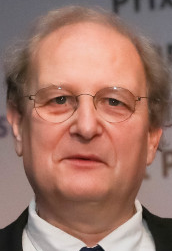 Dominique Delande合作论文数Centre National de la Recherche Scientifique/College of Science and Engineering, University of Minnesota/Sorbonne Université7Julien Chabe合作论文数Laboratoire de Physique des Lasers , Atomes et Molecules7
 Anders Kastberg合作论文数Department of Physics;Umeû a University;Department of Physics, Umeû a University7Marius Gaudesius合作论文数6
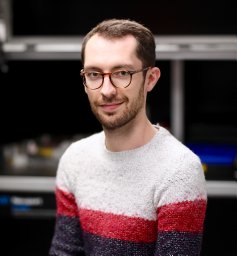 P. Azam合作论文数CNRS, Univ Cote dAzur6J-P Rivet合作论文数6Nolan Matthews合作论文数6
 Patrizia Weiss合作论文数Physikalisches Institut, Eberhard Karls Universität Tübingen6Bienaimé Tom合作论文数Institut Non-Linéaire de Nice, Université de Nice Sophia Antipolis6Farrokh Vakili合作论文数6Carsten Henkel合作论文数Institut fur Physik;Universitat Potsdam;Institut fur Physik, Universitat Potsdam6
 Giuseppe Luca Celardo合作论文数Physics Department;Tulane University;Physics Department, Tulane University6Yannick Bidel合作论文数6




