We give a linear-time algorithm to decide 3-colorability (and find a 3-coloring, if it exists) of quadrangulations of a fixed surface. The algorithm also allows to prescribe the coloring for a bounded number of vertices.
It is known that A-paths of length 0 mod m satisfy the Erdős-Pósa property if m=2 or m=4, but not if m>4 is composite. We show that if p is prime, then A-paths of length 0 mod p satisfy the Erdős-Pósa property. More generally, in the framework of undirected group-labeled graphs, we characterize the abelian groups Γ and elements ℓ∈Γ for which the Erdős-Pósa property holds for A-paths of weight ℓ.
Let G=(V,E) be a finite undirected graph. Orient the edges of G in an arbitrary way. A 2-cycle on G is a function d:E2→Z such for each edge e, d(e,⋅) and d(⋅,e) are circulations on G, and d(e,f)=0 whenever e and f have a common vertex. We show that each 2-cycle is a sum of three special types of 2-cycles: cycle-pair 2-cycles, Kuratowski 2-cycles, and quad 2-cycles. In the case that the graph is Kuratowski connected, we show that each 2-cycle is a sum of cycle-pair 2-cycles and at most one Kuratowski 2-cycle. Furthermore, if the graph is Kuratowski connected, we characterize when every Kuratowski 2-cycle is a sum of cycle-pair 2-cycles. A consequence of this is that if G is Kuratowski connected and either G is planar or G does not have a linkless embedding, then each 2-cycle on G is a sum of cycle-pair 2-cycles. A 2-cycle d on G is skew-symmetric if d(e,f)=−d(f,e) for all edges e,f∈E. We show that each skew-symmetric 2-cycle is a sum of two special types of skew-symmetric 2-cycles: skew-symmetric cycle-pair 2-cycles and skew-symmetric quad 2-cycles. In the case that the graph is Kuratowski connected, we show that each skew-symmetric 2-cycle is a sum of skew-symmetric cycle-pair 2-cycles. Similar results like this had previously been obtained by one of the authors for symmetric 2-cycles. Symmetric 2-cycles are 2-cycles d such that d(e,f)=d(f,e) for all edges e,f∈E.
Motivated by the famous Hadwiger’s Conjecture, we study the properties of 8-contraction-critical graphs with no K7 minor. In particular, we prove that every 8-contraction-critical graph with no K7 minor has at most one vertex of degree 8, where a graph G is 8-contraction-critical if G is not 7-colorable but every proper minor of G is 7-colorable. This is one step in our effort to prove that every graph with no K7 minor is 7-colorable, which remains open.
We prove a refinement of the flat wall theorem of Robertson and Seymour to undirected group-labelled graphs (G,γ) where γ assigns to each edge of an undirected graph G an element of an abelian group Γ. As a consequence, we prove that Γ-nonzero cycles (cycles whose edge labels sum to a non-identity element of Γ) satisfy the half-integral Erdős-Pósa property, and we also recover a result of Wollan that if Γ has no element of order two, then Γ-nonzero cycles satisfy the Erdős-Pósa property. As another application, we prove that if m is an odd prime power, then cycles of length ℓmodm satisfy the Erdős-Pósa property for all integers ℓ. This partially answers a question of Dejter and Neumann-Lara from 1987 on characterizing all such integer pairs (ℓ,m).
We give a linear-time algorithm to decide 3-colorability of a triangle-free graph embedded in a fixed surface, and a quadratic-time algorithm to output a 3-coloring in the affirmative case. The algorithms also allow to prescribe the coloring of a bounded number of vertices.
We settle a problem of Havel by showing that there exists an absolute constant d such that if G is a planar graph in which every two distinct triangles are at distance at least d, then G is 3-colorable. In fact, we prove a more general theorem. Let G be a planar graph, and let H be a set of connected subgraphs of G, each of bounded size, such that every two distinct members of H are at least a specified distance apart and all triangles of G are contained in ⋃H. We give a sufficient condition for the existence of a 3-coloring ϕ of G such that for every H∈H the restriction of ϕ to H is constrained in a specified way.
Let $G$ be a plane graph with $C$ the boundary of the outer face and let $(L(v):v\in V(G))$ be a family of non-empty sets. By an $L$-coloring of a subgraph $J$ of $G$ we mean a (proper) coloring $\phi$ of $J$ such that $\phi(v)\in L(v)$ for every vertex $v$ of $J$. Thomassen proved that if $v_1,v_2\in V(C)$ are adjacent, $L(v_1)\ne L(v_2)$, $|L(v)|\ge3$ for every $v\in V(C)\setminus \{v_1,v_2\}$ and $|L(v)|\ge5$ for every $v\in V(G)\setminus V(C)$, then $G$ has an $L$-coloring. As one final application in this last part of our series on $5$-list-coloring, we derive from all of our theory a far-reaching generalization of Thomassen's theorem, namely the generalization of Thomassen's theorem to arbitrarily many such faces provided that the faces are pairwise distance $D$ apart for some universal constant $D>0$.
Let G be a 4-critical graph with t triangles, embedded in a surface of genus g. Let c be the number of 4-cycles in G that do not bound a 2-cell face. We prove that the sum of lengths of (>=5)-faces of G is at most linear in g+t+c-1.
A cornerstone theorem in the Graph Minors series of Robertson and Seymour is the result that every graph G with no minor isomorphic to a fixed graph H has a certain structure. The structure can then be exploited to deduce far-reaching consequences. The exact statement requires some explanation, but roughly it says that there exist integers k,n depending on H only such that 0<k<n and for every n× n grid minor J of G the graph G has a a k-near embedding in a surface Σ that does not embed H in such a way that a substantial part of J is embedded in Σ. Here a k-near embedding means that after deleting at most k vertices the graph can be drawn in Σ without crossings, except for local areas of non-planarity, where crossings are permitted, but at most k of these areas are attached to the rest of the graph by four or more vertices and inside those the graph is constrained in a different way, again depending on the parameter k. The original and only proof so far is quite long and uses many results developed in the Graph Minors series. We give a proof that uses only our earlier paper [A new proof of the flat wall theorem, J. Combin. Theory Ser. B 129 (2018), 158–203] and results from graduate textbooks. Our proof is constructive and yields a polynomial time algorithm to construct such a structure. We also give explicit constants for the structure theorem, whereas the original proof only guarantees the existence of such constants.
Robertson and Seymour's celebrated Graph Minor Theorem states that graphs are well-quasi-ordered by the minor relation. Unlike the minor relation, the topological minor relation does not well-quasi-order graphs in general. Among all known infinite antichains with respect to the topological containment, subdivisions of a graph obtained from an arbitrarily long path by duplicating each edge can be found. In the 1980's Robertson conjectured that this is the only obstruction. Formally, he conjectured that for every positive integer $k$, graphs that do not contain the graph obtained from a path of length $k$ by duplicating each edge as a topological minor are well-quasi-ordered by the topological minor relation. The case $k=1$ implies Kruskal's Tree Theorem, and the case $k=2$ implies a conjecture of Vázsonyi on subcubic graphs. This series of papers dedicates a proof of Robertson's conjecture. We prove Robertson's conjecture for graphs of bounded tree-width in this paper. It is an essential step toward the complete proof of Robertson's conjecture, and the machinery developed in this paper will be applied in future papers of the series. This bounded tree-width case proved in this paper implies all known results about well-quasi-ordering graphs by the topological minor relation that can be proved without using the Graph Minor Theorem, and our proof in this paper is self-contained.
We show that the size of a 4-critical graph of girth at least five is bounded by a linear function of its genus. This strengthens the previous bound on the size of such graphs given by Thomassen. It also serves as the basic case for the description of the structure of 4-critical triangle-free graphs embedded in a fixed surface, presented in a future paper of this series.
Let G be a cubic graph, with girth at least five, such that for every partition X,Y of its vertex set with |X|,|Y|>6 there are at least six edges between X and Y. We prove that if there is no homeomorphic embedding of the Petersen graph in G, and G is not one particular 20-vertex graph, then either G\v is planar for some vertex v, or G can be drawn with crossings in the plane, but with only two crossings, both on the infinite region. We also prove several other theorems of the same kind.
We prove two results: 1. A graph $G$ on at least seven vertices with a vertex $v$ such that $G-v$ is planar and $t$ triangles satisfies $|E(G)| \leq 3|V(G)|- 9 + t/3$. 2. For $p=2,3,\ldots,9$, a triangle-free graph $G$ on at least $2p-5$ vertices with no $K_p$-minor satisfies $|E(G)|\leq (p-2)|V(G)| - (p-2)^2$.
We prove that every sufficiently large 6-connected graph of bounded tree-width either has a K 6 minor, or has a vertex whose deletion makes the graph planar. This is a step toward proving that the same conclusion holds for all sufficiently large 6-connected graphs. Jørgensen conjectured that it holds for all 6-connected graphs.
We prove that every 3-regular graph with no circuit of length less than six has a subgraph isomorphic to a subdivision of the Petersen graph.
Let H be a fixed graph. What can be said about graphs G that have no subgraph isomorphic to a subdivision of H? Grohe and Marx proved that such graphs G satisfy a certain structure theorem that is not satisfied by graphs that contain a subdivision of a (larger) graph H1. Dvořák found a clever strengthening—his structure is not satisfied by graphs that contain a subdivision of a graph H2, where H2 has “similar embedding properties” as H. Building upon Dvořák's theorem, we prove that said graphs G satisfy a similar structure theorem. Our structure is not satisfied by graphs that contain a subdivision of a graph H3 that has similar embedding properties as H and has the same maximum degree as H. This will be important in a forthcoming application to well-quasi-ordering.
An embedding of a graph in 3-space is linkless if for every two disjoint cycles there exists an embedded ball that contains one of the cycles and is disjoint from the other. We prove that every bipartite linklessly embeddable (simple) graph on n ≥ 5 vertices has at most 3n - 10 edges, unless it is isomorphic to the complete bipartite graph K3,n-3.
We prove that every sufficiently large 6-connected graph of bounded tree-width either has a K6 minor, or has a vertex whose deletion makes the graph planar. This is a step toward proving that the same conclusion holds for all sufficiently large 6-connected graphs. Jørgensen conjectured that it holds for all 6-connected graphs.
Let G be a plane graph of girth at least five. We show that if there exists a 3-coloring phi of a cycle C of G that does not extend to a 3-coloring of G, then G has a subgraph H on O(|C|) vertices that also has no 3-coloring extending phi. This is asymptotically best possible and improves a previous bound of Thomassen. In the next paper of the series we will use this result and the attendant theory to prove a generalization to graphs on surfaces with several precolored cycles.
 Paul Seymour合作论文数Department of Mathematics, Princeton University;Oxford University33
 Neil Robertson合作论文数26
 Daniel Kráľ合作论文数Faculty of Informatics, Masaryk University12
 Paul Wollan合作论文数Department of Computer Science, University of Rome10
 Sergey Norin合作论文数Department of Mathematics & Statistics, McGill University8
 Luke Postle合作论文数Combinatorics and Optimization Department, University of Waterloo8
 Ken-ichi Kawarabayashi (河原林健一)合作论文数Principles of Informatics Research Division, National Institute of Informatics6
 Dan Sanders合作论文数Materials Discovery Department, IBM Research – Almaden5
 Thor Johnson合作论文数4Peter Whalen合作论文数4
 Xingxing Yu合作论文数School of Mathematics, College of Sciences, Georgia Institute of Technology4Youngho Yoo合作论文数3
 Noga Alon合作论文数Department of Mathematics, Princeton University;Tel Aviv University3
 Vojtěch Rödl合作论文数Department of Mathematics and Computer Science, Emory University3
 Chun-Hung Liu合作论文数Department of Aquaculture, National Pingtung University of Science and Technology3
 Maria Chudnovsky合作论文数Department of Mathematics, Princeton University3Thanh N. Dang合作论文数2
 Francis Edward Su合作论文数2Deborah E. Berg合作论文数2Martin Loebl合作论文数Department of Applied Mathematics2
 Jiri Matousek合作论文数Department of Applied Mathematics, Charles University;Institute of Theoretical Computer Science, ETH Zurich2
 Bogdan Oporowski合作论文数Department of Mathematics, College of Science, Louisiana State University2
 Carl Yerger合作论文数Department of Mathematics, East Tennessee State University2Arash Asadi合作论文数2
 Zi-Xia Song合作论文数Department of Mathematics, University of Central Florida2
 Nathan Chenette合作论文数Georgia Institute of Technology2Noah Streib合作论文数2Igor Kríz合作论文数University of Michigan2William McCuaig合作论文数1PD Seymour合作论文数1Rajneesh Hegde合作论文数1Martin Rolek合作论文数1
 Rose McCarty合作论文数Univ Waterloo, Dept Combinator & Optimizat, Waterloo, ON, Canada1
 Gábor Tardos合作论文数Alfred Renyi Institute of Mathematics1
 Guantao Chen合作论文数Georgia State University, Georgia State University1
 Bruce Alan Reed合作论文数School of Computer Science, McGill University1Gunnar Brinkmann合作论文数Fakultät für Mathematik, Universität Bielefeld1
 Bojan Mohar合作论文数Department of Mathematics, Faculty of Science, Simon Fraser University;Department of Mathematics, University of Ljubljana1Asaf Shapira合作论文数asafico@tau.ac.il1Lei Wang合作论文数1
 Vijay V. Vazirani合作论文数Department of Computer Science, Donald Bren School of Information and Computer Sciences, University of California, Irvine1
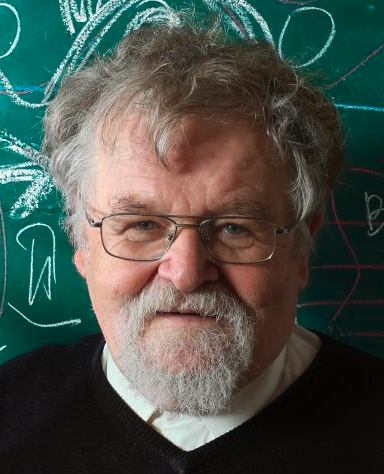 Jaroslav Nesetril合作论文数Computer Science Institute, Faculty of Mathematics and Physics, Charles University;Center of Excellence, Institute of Theoretical Computer Science, Charles University1
 Jan Kratochvíl合作论文数Department of Applied Mathematics, Faculty of Mathematics and Physics, Charles University1
 Gelasio Salazar合作论文数Instituto de Fisica, Universidad Autonoma de San Luis Potosi1
 Hanno Lefmann合作论文数1Pavel Valtr合作论文数1
 Louis H. Kauffman合作论文数Department of Mathematics, Statistics, and Computer Science, University of Illinois at Chicago1Torsten Inkmann合作论文数1
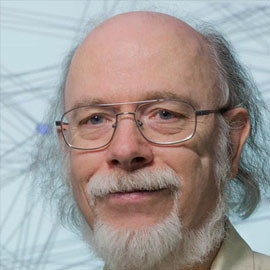 Brendan McKay合作论文数School of Computing, College of Engineering, Computing and Cybernetics, Australian National University1




