Chalcogen bonds are noncovalent interactions and are increasingly coming into focus for the design of complex structures in research areas such as crystal engineering, molecular recognition and catalysis. Conceptionally, chalcogen bonds can be considered as interaction between one σ-hole and one Lewis base center. Herein, we analyze the interaction between bidentate chelating ligands having two nucleophilic centers with one single σ-hole of a chalcogenazole (two-lone-pair/one-σ-hole interactions). Referring to this, we show by quantum chemical calculations and X-ray studies that three bond types are possible: in the first case, a chalcogen bond is formed between the σ-hole and only one of the Lewis base centers. In the second case, a strong bond is formed by one nucleophilic center; the second center provides only a small amount of additional stabilization. In the third case, two equivalent bonds to the σ-hole are formed by both Lewis base centers. According to the calculations, the bifurcated bonds are stronger than simple chalcogen bonds and lead to a more rigid molecular arrangement in the complex.
AbstractIn den letzten Jahren entwickelten sich die Chalkogenbindungen, bei denen die Bindung über nicht‐kovalente Wechselwirkungen unter Beteiligung von Chalkogenzentren erfolgt, in zahlreichen Forschungsfeldern zu einer interessanten Alternative zu den weitverbreiteten Wasserstoffbrückenbindungen. Mittels quantenchemischer Berechnungen auf hohem Niveau konnte gezeigt werden, dass die Carbonyl⋅⋅⋅Tellurazol‐Chalkogenbindung mindestens so stark wie eine konventionelle Wasserstoffbrückenbindung ist. Durch die Verwendung des Carbonyl⋅⋅⋅Tellurazol‐Bindungsmotivs, das in Form von cyclischen Tellurazolpeptiden zum Einsatz kam, gelang uns das Design komplexer supramolekularer Netzwerke in der festen Phase. Röntgenstrukturanalysen belegen, dass die starre Struktur des Cyclopeptids auf Wasserstoffbrückenbindungen zurückzuführen ist, während das supramolekulare Netzwerk durch Chalkogenbindungen zusammengehalten wird. Die Erscheinungsform des supramolekularen Netzwerks hängt vom verwendeten Peptid ab; sowohl lineare Stränge als auch bienenwabenartige supramolekulare organische Gerüstverbindungen (SOF) konnten beobachtet werden. Die einzigartige SOF‐Struktur verfügt über zwei Kanäle, die mit verschiedenen Lösungsmittelgemischen gefüllt sind, die entweder eingeschlossen oder frei beweglich sind.
AbstractChalkogenbindungen sind Sigma‐Hole‐Wechselwirkungen und kommen seit einiger Zeit als Alternative zu Wasserstoffbrückenbindungen zum Einsatz. In der Regel werden das elektrostatische Potential am Chalkogenatom und Delokalisierungseffekte für die Orientierung der Chalkogenbindung verantwortlich gemacht. Wir konnten jedoch mithilfe von SAPT‐Berechnungen zeigen, dass weder der induktive Term (Delokalisierungseffekte) noch der elektrostatische Term die räumliche Orientierung starker Chalkogenbindungen in tellurhaltigen Aromaten verursacht. Stattdessen sind sterische Wechselwirkungen (Pauli‐Abstoßung) für die Geometrie der Chalkogenbindung ausschlaggebend. Entgegen der chemischen Intuition sind die Dispersionsenergien der untersuchten tellurhaltigen Aromaten im Vergleich zu den Dispersionsenergien der entsprechenden Schwefel‐ und Selenverbindungen weitaus weniger relevant für die Gesamtanziehungskraft. Unsere Ergebnisse unterstreichen die Bedeutung der häufig übersehenen sterischen Wechselwirkungen (Pauli‐Repulsion) in der Konformationskontrolle von Sigma‐Hole‐Wechselwirkungen.
In the last years, chalcogen bonding, the noncovalent interaction involving chalcogen centers, has emerged as interesting alternative to the ubiquitous hydrogen bonding in many research areas. Here, we could show by means of high-level quantum chemical calculations that the carbonyl...tellurazole chalcogen bond is at least as strong as conventional hydrogen bonds. Using the carbonyl...tellurazole binding motif, we were able to design complex supramolecular networks in solid phase starting from tellurazole-substituted cyclic peptides. X-ray analyses reveal that the rigid structure of the cyclic peptides is caused by hydrogen bonds, whereas the supramolecular network is held together by chalcogen bonding. The type of the supramolecular network depends on peptide used; both linear wires and a honeycomb-like supramolecular organic framework (SOF) were observed. The unique structure of the SOF shows two channels filled with different types of solvent mixtures that are either locked or freely movable.
AbstractChalcogen bonds are σ hole interactions and have been used in recent years as an alternative to hydrogen bonds. In general, the electrostatic potential at the chalcogen atom and orbital delocalization effects are made responsible for the orientation of the chalcogen bond. Here, we were able to show by means of SAPT calculations that neither the induction (orbital delocalization effects) nor the electrostatic term is causing the spatial orientation of strong chalcogen bonds in tellurium‐containing aromatics. Instead, steric interactions (Pauli repulsion) are responsible for the orientation. Against chemical intuition the dispersion energies of the examined tellurium‐containing aromatics are far less important for the net attractive forces compared to the energies in the corresponding sulfur and selenium compounds. Our results underline the importance of often overlooked steric interactions (Pauli repulsion) in conformational control of σ hole interactions.
In this paper we discuss the shape of sulfur and selenium rings S 6 to S 20 and Se 6 to Se 20 . The sizes and conformations of the sulfur rings are known by X‐ray data. A comparison between the results of B3LYP/cc‐pVTZ, B3LYP‐D3/cc‐pVTZ, and B3LYP‐D3BJ/cc‐pVTZ calculations reveals structural relaxation dispersion energy values of 3.0 kJ/mol (S 10 ) and 19.4 kJ/mol (S 18 ) for the sulfur allotropes. In the case of selenium rings, we investigated rings with the same size. We found that at low temperatures the selenium rings Se 13 , Se 14 , Se 18 and Se 20 should be more stable than Se 8 if the empirical dispersion corrections D3 and D3BJ are taken into account. All larger rings reveal structural relaxation dispersion between 6.0 kJ/mol (Se 10 ) and 34.7 kJ/mol (Se 18 ). Furthermore, the calculations reveal that the consideration of the dispersion energy using the correction terms D3 and D3BJ leads in some cases to a distortion of the molecular structure accompanied by a degradation of the molecular symmetry. In these cases, the transannular distances strongly depend on the method used and the difference sometimes amounts to more than 1 Å. For the structural relaxation dispersion energy, the following applies: A few short noncovalent bonds are better than many medium‐sized ones. The structural distortion is also found in the X‐ray data which stresses the importance of the usage of the dispersion correction terms for the structural investigation of these cycles.
This paper reports the synthesis and characterization of a number of monocyclic systems with one or two phosphorus atoms in the scaffold. The cyclic systems with one P-atom are: 1-phosphacyclodeca-3,8-diyne, 1-phosphacycloundeca-3,9-diyne, 1-phosphacyclododeca-3,10-diyne, 1-phosphacyclotrideca-3,11-diyne, 1-phosphacyclotetradeca-3,12-diyne and 1-phosphacyclotetradeca-4,11-diyne. The P-centers in the rings were further stabilized by phenyl- or 2,4,6-tri-tert-butylphenyl rings as third ligand and sulfur or oxygen atoms as fourth ligand. The rings with two P-atoms are 1,8-diphospha-cyclotetradeca-4,11-diyne and 1,10-diphosphacyclooctadeca-5,14-diyne, with phenyl rings and oxygen at the P-centers. For many of the products the structures and conformations in the solid state were obtained by X-ray studies.
This review considers noncovalent bonds between divalent chalcogen centers. In the first part we present X-ray data taken from the solid state structures of dimethyl- and diphenyl-dichalcogenides as well as oligoalkynes kept by alkyl-sulfur, -selenium, and -tellurium groups. Furthermore, we analyzed the solid state structures of medium sized (12-24 ring size) selenium coronands and medium to large rings with alkyne and alkene units between two chalcogen centers. The crystal structures of the cyclic structures revealed columnar stacks with close contacts between neighboring rings via noncovalent interactions between the chalcogen centers. To get larger space within the cavities, rings with diyne units between the chalcogen centers were used. These molecules showed channel-like structures in the solid state. The flexibility of the rings permits inclusion of guest molecules such as five-membered heterocycles and aromatic six-membered rings. In the second part we discuss the results of quantum chemical calculations. To treat properly the noncovalent bonding between chalcogens, we use diffuse augmented split valence basis sets in combination with electron correlation methods. Our model substances were 16 dimers consisting of two Me-X-Me (X = O, S, Se, Te) pairs and dimers of Me-X-Me/Me-X-CN (X = O, S, Se, Te) pairs. The calculations show the anticipated increase of the interaction energy from (Me-O-Me)2 (-2.15 kcal/mol) to (Me-O-Me/Me-Te-CN) (-6.59 kcal/mol). An analysis by the NBO method reveals that in the case of the chalcogen centers O and S the hydrogen bridges between the molecules dominate. However, in the case of Se and Te the major bonding between the pairs originates from dispersion forces between the chalcogen centers. It varies between -1.7 and -4.0 kcal/mol.
In the first part we summarize the results of experiments performed with medium‐sized cyclic compounds (10, 12, 14 ring size) incorporating either two opposite acetylene units or two buta‐1,3‐diyne units. The acetylene units in the 10‐membered rings react either thermally or with the aid of Au I catalysis to afford bicyclo[4.4.0]‐1,6‐diene rings. Reduction with H 2 /Pd or addition of I 2 to 12‐membered rings containing two opposite buta‐1,3‐diyne units yield 5–6–5 cycles, whereas 14‐membered rings react with HCl to afford 5–8–5 or 6–6–6 rings. In the second part we discuss the results of calculations relating to 1,6‐transannular ring closure of cyclodeca‐1,6‐diyne derivatives in which the two triple bonds are each flanked either with two oxygen atoms or with two NH groups. For the resulting heterocycles, dicarbenes with singlet ground states are predicted. The extension of these model calculations led us to look at substituted phenylacetylenes (e.g., Ph–C≡C–OMe) for which dimerization to cyclobutadiene derivatives was predicted. This forecast could be verified by trapping the cyclobutadiene products with maleic acid.
The focus of this review is the nature of a third covalent bond between two divalent chalcogen centers. This bond is longer than a single bond and less than the van der Waals distance between two chalcogen atoms. Such a bond is only possible when electron density is withdrawn from the divalent chalcogens. For two sulfur centers this means S center dot center dot center dot S bond lengths between 2.3 angstrom and 3.1 angstrom. Our discussion is based on model systems, such as various trithiapentalene derivatives, 1,5-dithia-2,4,6,8-tetrazocine and related SN cage systems, the dimers of a 1,3-dithia-2,4,6-triazine radical, and systems adopting 2-center-3-electron and 4-center-6-electron bonds, respectively, between two or four sulfur centers. The leitmotiv of this review is that the loss of electron density at the divalent sulfides can lead to trivalent sulfur centers. This behavior is first rationalized qualitatively by simple MO models. The properties of the models are reproduced by high level quantum chemical methods. (C) 2017 Elsevier B.V. All rights reserved.
In recent years, Au(I)-catalyzed reactions proved to be a valuable tool for the synthesis of substituted cycles by cycloaromatization and cycloisomerization starting from alkynes. Despite the myriad of Au(I)-catalyzed reactions of alkynes, the mono Au(I)-catalyzed pendant to the radical dimerization of nonconjugated alkyne units has not been investigated by quantum chemical calculations. Herein, by means of quantum chemical calculations, we describe the mono Au(I)-catalyzed dimerization of two alkyne units as well as the transannular ring closure reaction of a nonconjugated diyne. We found that depending on the system and the method used either the corresponding cyclopropenylmethyl cation or the butadienyl cation represents the stable intermediate. This circumstance could be explained by different stabilizing effects. Moreover, the calculation reveals a dramatic (>1012-fold) acceleration of the Au(I)-catalyzed reaction compared to that of the noncatalyzed radical variant. Trapping experiments with a substituted 1,6-cyclodecadiyne using benzene as a solvent at room temperature as well as studies with deuterated solvents confirm the calculations. In this context, we also demonstrate that trapping of the cationic intermediate with benzene does not proceed via a Friedel-Crafts-type reaction.
The double "pancake" bonding in the dimers of the six-membered heterocycles 1,3-dithia-2,4,6-triazine (4) and 1,3-dithia-2,4-diazine (16) were investigated by means of high-level quantum chemical calculations (B3LYP and CCSD(T)). It was found that the S-S dimers, 20 a and 27, are not the most stable isomers, but the dimers showing short S-N (21 a) and S-C (25, 28) bonds. An investigation of the 5-phenyl-1,3-dithia-2,4,6-triazine (4 b) yields that the syn dimer with two S-S bonds (2.57 Å) is the most stable one. In this dimer, the phenyl groups are placed on top of each other. The additional dispersion energy of the phenyl rings causes a stabilization of the syn-S-S (C2v -like) isomer. As a result, two weak albeit relevant single S-S bonds (2.57 Å) are predicted. These findings contradict the recently published concept of double "pancake" bonding in the dimer 4 b2 .
Fluorophores were successfully used in several areas of chemistry and biochemistry. For many purposes, however, it is necessary that the fluorescence compound features a high fluorescence quantum yield as well as a large Stokes shift. The latter is, for example, achieved by the use of a twisted intramolecular charge-transfer (TICT) compound, which shows a twisted geometry in the excited state. However, the higher the twisting is, the lower becomes in general the fluorescence quantum yield as the resulting emission from the twisted state is forbidden. In order to escape this dilemma, we propose the model of planarized intramolecular charge-transfer (PLICT) states. These compounds are completely twisted in the ground states and planar in the excited states. By means of quantum chemical calculations (time-dependent (TD)-B3LYP and CC2) and experimental studies, we could demonstrate that 1-aminoindole and its derivatives form photoinduced PLICT states. They show both very large Stokes shifts (ν˜ =9000-13 500 cm(-1) , i.e., λ=100-150 nm) and high fluorescence quantum yields. These characteristics and their easy availability starting from the corresponding indoles, make them very attractive for the use as optical switches in various fields of chemistry as well as biological probes.
The preparation and properties of novel mixed arsonium–iodonium and sulfonium–iodonium ylides are reported. A series of substituted arsonium and sulfonium ylides was obtained by the nucleophilic substitution of iodonium groups in mixed ylides. A one-pot process, which included the nucleophilic substitution and silylation of arsonium–iodonium ylides with subsequent elimination of the silyl group and a Wittig olefination reaction, provided route to access Z-α,β-unsaturated haloketones.
High-level quantum chemical calculations reveal that the dimerization of enediynes to 1,3-butadiene-1,4-diyl diradicals is energetically more favored than the corresponding Bergman cyclization of enediynes. Moreover, the activation barrier of both reactions can be drastically reduced by the introduction of electron-withdrawing substituents like fluoro groups at the reacting carbon centers of the triple bonds.
By means of high-level quantum chemical calculations (B2PLYPD and CCSD(T)), the dimerization of 1,3-diacetylenes was studied and compared to the dimerization of acetylene. We found that substituted 1,3-diacetylenes are more reactive than the corresponding substituted acetylenes having an isolated triple bond. The most reactive centers for a dimerization are always the terminal carbon atoms. The introduction of a test reaction allows the calculation of the relative reactivity of individual carbon centers in phenylacetylene, phenylbutadiyne, and phenylhexatriyne. A comparison shows that the reactivity of the terminal carbon atoms increases with increasing numbers of alkyne units, whereas the reactivity of the internal carbon atoms remains very low independent of the number of alkyne units.
 Frank Rominger合作论文数Organisch-Chemisches Institut, Universität Heidelberg135
 Hermann Irngartinger合作论文数University of Heidelberg Institute of Organic Chemistry58
 Jens Spanget-Larsen合作论文数Department of Life Sciences and Chemistry, Roskilde University45
 Isabella Hyla-Kryspin合作论文数41Gebhard Haberhauer合作论文数38
 Leo A. Paquette合作论文数Ohio State University37
 Daniel Bodo Werz合作论文数Technische Universität Braunschweig34Peter Bischof合作论文数33Bernhard Nuber合作论文数30Richard Bartetzko合作论文数26
 Michael C. Böhm合作论文数Institut für Physikalische Chemie, Technische Hochschule Darmstadt26Mc Bohm合作论文数19
 Roald Hoffmann合作论文数Department of Chemistry & Chemical Biology, The College of Arts & Sciences, Cornell University18
 Wolfgang Schaefer合作论文数Roche Diagnostics GmbH, Sandhofer Strasse 116, D-68296 Mannheim, Germany18B.J. Rausch合作论文数17Detlef Kratz合作论文数17
 Edgar Heilbronner合作论文数Physikalisch-Chemischen Institits, Universität Basel17
 Klaus Gubernator合作论文数17Thomas Oeser合作论文数16Joachim Ritter合作论文数16Mirjana Eckert-Maksić合作论文数15
 Hans Pritzkow合作论文数Institute of Fluid Mechanics, Technische Universität Dresden14
 Nikolai Serafimovich Zefirov合作论文数Division of Organic Chemistry, Department of Chemistry, Moscow State University14Elena D. Matveeva合作论文数14Michael C. Boehm合作论文数14Podrugina Tatyana合作论文数13Michael Karcher合作论文数12Carsten Schaefer合作论文数12Rudolf Haider合作论文数12D. B. Werz合作论文数11G. KRENNRICH合作论文数11Peter Hofmann合作论文数11
 Wolfram Sander合作论文数Faculty of Chemistry and Biochemistry, Ruhr-Universitat Bochum11
 Franz Effenberger合作论文数University of Stuttgart11KH PFEIFER合作论文数10
 Joseph Grobe合作论文数10Fabian Gerson合作论文数Universität Basel10Sabine Bethke合作论文数10
 Christian Bleiholder合作论文数Protein Analysis Facility, German Cancer Research Center10Rolf J. Schaller合作论文数9Erika Schmidt合作论文数9Ml Ziegler合作论文数9P. Bischof合作论文数9
 Gion Calzaferri合作论文数Department of Chemistry, Biochemistry and Pharmaceutical Sciences, University of Berne9Hans-Dieter Martin合作论文数9
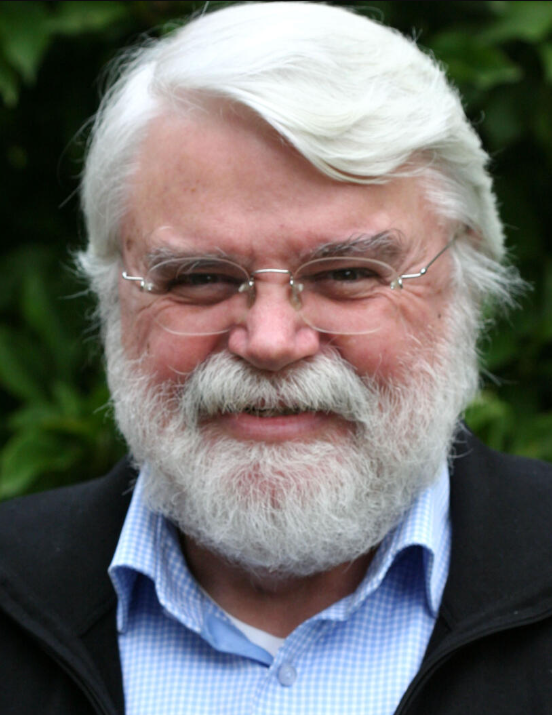 Gerhard Erker合作论文数Organisch-Chemisches Institut, University of Münster9Rolf Roers合作论文数9




