We show that several models of interacting X X Z spin chains subject to boundary driving and dissipation possess a subtle kind of time-reversal symmetry, making their steady states exactly solvable. We focus on a model with a coherent boundary drive, showing that it exhibits a unique continuous dissipative phase transition as a function of the boundary drive amplitude. This transition has no analog in the bulk closed system or in incoherently driven models. We also show the steady-state magnetization exhibits a surprising fractal dependence on interaction strength, something previously associated with less easily measured infinite-temperature transport quantities (the Drude weight). Our exact solution also directly yields driven-dissipative double-chain models that have pure, entangled steady states that are current carrying.
We investigate the influence of boundaries and spatial nonreciprocity on nonequilibrium driven-dissipative phase transitions. We focus on a one-dimensional lattice of nonlinear bosons described by a Lindblad master equation, where the interplay between coherent and incoherent dynamics generates nonreciprocal interactions between sites. Using a mean-field approach, we analyze the phase diagram under both periodic and open boundary conditions. For periodic boundaries, the system always forms a condensate at nonzero momentum and frequency, resulting in a time-dependent traveling wave pattern. In contrast, open boundaries reveal a far richer phase diagram, featuring multiple static and dynamical phases, as well as exotic phase transitions, including the spontaneous breaking of particle-hole symmetry associated with a critical exceptional point and phases with distinct bulk and edge behavior. Our model does not require post-selection and is experimentally realizable in platforms such as superconducting circuits.
We show that several models of interacting XXZ spin chains subject to boundary driving and dissipation possess a subtle kind of time-reversal symmetry, making their steady states exactly solvable. We focus on a model with a coherent boundary drive, showing that it exhibits a unique continuous dissipative phase transition as a function of the boundary drive amplitude. This transition has no analog in the bulk closed system or in incoherently driven models. We also show the steady-state magnetization exhibits a surprising fractal dependence on interaction strength, something previously associated with less easily measured infinite-temperature transport quantities (the Drude weight). Our exact solution also directly yields driven-dissipative double-chain models that have pure, entangled steady states that are current carrying.
Studying high-energy collisions of composite particles, such as hadrons and nuclei, is an outstanding goal for quantum simulators. However, preparation of hadronic wave packets has posed a significant challenge, due to the complexity of hadrons and the precise structure of wave packets. This has limited demonstrations of hadron scattering on quantum simulators to date. Observations of confinement and composite excitations in quantum spin systems have opened up the possibility to explore scattering dynamics in spin models. In this article, we develop two methods to create entangled spin states corresponding to wave packets of composite particles in analog quantum simulators of Ising spin Hamiltonians. One wave-packet preparation method uses the blockade effect enabled by beyond-nearest-neighbor Ising spin interactions. The other method utilizes a quantum-bus-mediated exchange, such as the native spin-phonon coupling in trapped-ion arrays. With a focus on trapped-ion simulators, we numerically benchmark both methods and show that high-fidelity wave packets can be achieved in near-term experiments. We numerically study scattering of wave packets for experimentally realizable parameters in the Ising model and find inelastic-scattering regimes, corresponding to particle production in the scattering event, with prominent and distinct experimental signals. Our proposal, therefore, demonstrates the potential of observing inelastic scattering in near-term quantum simulators.
The continuous monitoring of driven-dissipative systems offers new avenues for quantum advantage in metrology. This approach mixes temporal and spatial correlations in a manner distinct from traditional metrology, leading to ambiguities in how one identifies Heisenberg scalings (e.g. standard asymptotic metrics like the sensitivity are not bounded by system size). Here, we propose a new metric for continuous sensing, the optimized finite-time environmental quantum Fisher information (QFI), that remedies the above issues by simultaneously treating time and system size as finite resources. In addition to having direct experimental relevance, this quantity is rigorously bounded by both system size and integration time, allowing for a precise formulation of Heisenberg scaling. We also introduce two many-body continuous sensors: the high-temperature superradiant sensor, and the dissipative spin squeezer. Both exhibit Heisenberg scaling of a collective magnetic field for multiple directions. The spin squeezed sensor has a striking advantage over previously studied many-body continuous sensors: the optimal measurement achieving the full QFI does not require the construction of a complex decoder system, but can be achieved using direct photodetection of the cavity output field.
We propose a method to sympathetically cool polar molecules with Rydberg atoms without destroying the quantum information encoded in the polar molecules. While the interactions between the two are usually state-dependent, we show how to engineer state-insensitive interactions between the hot molecules and the cold atoms with a suitable choice of internal states and the application of external fields. The resulting interactions, which may be van der Waals or dipolar, induce a phonon swap interaction between the two species, thereby coherently cooling the polar molecules without affecting the internal state, a process which can be repeated if the atoms are cooled again or new cold atoms are brought in. Our cooling schemes open the possibility of extending quantum computation and simulation times in emerging hybrid tweezer arrays of polar molecules and neutral atoms.
With the aim of studying nonperturbative out-of-equilibrium dynamics of high-energy particle collisions on quantum simulators, we investigate the scattering dynamics of lattice quantum electrodynamics in 1+1 dimensions. Working in the bosonized formulation of the model and in the thermodynamic limit, we use uniform-matrix-product-state tensor networks to construct multiparticle wave-packet states, evolve them in time, and detect outgoing particles post collision. This facilitates the numerical simulation of scattering experiments in both confined and deconfined regimes of the model at different energies, giving rise to rich phenomenology, including inelastic production of quark and meson states, meson disintegration, and dynamical string formation and breaking. We obtain elastic and inelastic scattering cross sections, together with time-resolved momentum and position distributions of the outgoing particles. Furthermore, we propose an analog circuit-QED implementation of the scattering process that is native to the platform, requires minimal ingredients and approximations, and enables practical schemes for particle wave-packet preparation and evolution. This study highlights the role of classical and quantum simulation in enhancing our understanding of scattering processes in quantum field theories in real time.
Experimental systems with power-law interactions have recently garnered interest as promising platforms for quantum information processing. Such systems are capable of spreading entanglement superballistically and achieving an asymptotic speed-up over locally interacting systems. Recently, protocols developed by Eldredge et al. [Phys. Rev. Lett. 119, 170503 (2017)] and Tran et al. [Phys. Rev. X 11, 031016 (2021)] for the task of transferring a quantum state between distant particles quickly were shown to be optimal and saturate theoretical bounds. However, the implementation of these protocols in physical systems with long-range interactions remains to be fully realized. In this work, we provide an experimental roadmap towards realizing fast state-transfer protocols in three classes of atomic and molecular systems with dipolar interactions: polar molecules composed of alkali-metal dimers, neutral atoms in excited Rydberg states, and atoms with strong magnetic moments (e.g. dysprosium). As a guide to near-term experimental implementation, we numerically evaluate the tradeoffs between the two protocols for small system sizes and develop methods to address potential crosstalk errors that may arise during the execution of the protocols.
Harnessing the interaction between light and matter at the quantum level has been a central theme in atomic physics and quantum optics, with applications from quantum computation to quantum metrology. Combining complex interactions with photonic synthetic materials provides an opportunity to investigate novel quantum phases and phenomena, establishing interesting connections to condensed matter physics. Here we explore many-body phenomena with a single artificial atom coupled to the many discrete modes of a photonic crystal. This experiment reaches the ultrastrong light-matter coupling regime using the circuit quantum electrodynamics paradigm, by galvanically coupling a highly nonlinear fluxonium qubit to a tight-binding lattice of microwave resonators. In this regime, the transport of a single photon becomes a many-body problem, owing to the strong participation of multi-photon bound states arising from interactions that break particle number conservation. Exploiting the effective photon-photon interactions mediated by the qubit, the transport of multiple photons leads to complex multimode dynamics that can be employed for generating a continuous reservoir of strongly-correlated photons, an important resource for quantum networks. This work opens exciting prospects for exploring nonlinear quantum optics at the single-photon level and stabilizing entangled many-body phases of light.
Circuit quantum electrodynamics is one of the most promising platforms for efficient quantum simulation and computation. In recent groundbreaking experiments, the immense flexibility of superconducting microwave resonators was utilized to realize hyperbolic lattices that emulate quantum physics in negatively curved space. Here we investigate experimentally feasible settings in which a few superconducting qubits are coupled to a bath of photons evolving on the hyperbolic lattice. We compare our numerical results for finite lattices with analytical results for continuous hyperbolic space on the Poincaré disk. We find good agreement between the two descriptions in the long-wavelength regime. We show that photon-qubit bound states have a curvature-limited size. We propose to use a qubit as a local probe of the hyperbolic bath, for example, by measuring the relaxation dynamics of the qubit. We find that, although the boundary effects strongly impact the photonic density of states, the spectral density is well described by the continuum theory. We show that interactions between qubits are mediated by photons propagating along geodesics. We demonstrate that the photonic bath can give rise to geometrically frustrated hyperbolic quantum spin models with finite-range or exponentially decaying interaction.
We study the propagation of photons in a one-dimensional environment consisting of two non-interacting species of photons frustratingly coupled to a single spin-1/2. The ultrastrong frustrated coupling leads to an extreme mixing of the light and matter degrees of freedom, resulting in the disintegration of the spin and a breakdown of the "dressed-spin", or polaron, description. Using a combination of numerical and analytical methods, we show that the elastic response becomes increasingly weak at the effective spin frequency, showing instead an increasingly strong and broadband response at higher energies. We also show that the photons can decay into multiple photons of smaller energies. The total probability of these inelastic processes can be as large as the total elastic scattering rate, or half of the total scattering rate, which is as large as it can be. The frustrated spin induces strong anisotropic photon-photon interactions that are dominated by inter-species interactions. Our results are relevant to state-of-the-art circuit and cavity quantum electrodynamics experiments.
We induce strong nonlocal interactions in a 2D Fermi gas in an optical lattice using Rydberg dressing. The system is approximately described by a t - V model on a square lattice where the fermions experience isotropic nearest-neighbor interactions and are free to hop only along one direction. We measure the interactions using many-body Ramsey interferometry and study the lifetime of the gas in the presence of tunneling, finding that tunneling does not reduce the lifetime. To probe the interplay of nonlocal interactions with tunneling, we investigate the short-time-relaxation dynamics of charge-density waves in the gas. We find that strong nearest-neighbor interactions slow down the relaxation. Our work opens the door for quantum simulations of systems with strong nonlocal interactions such as extended Fermi-Hubbard models.
Because of their strong and tunable interactions, Rydberg atoms can be used to realize fast two-qubit entangling gates. We propose a generalization of a generic two-qubit Rydberg-blockade gate to multiqubit Rydberg-blockade gates that involve both many control qubits and many target qubits simultaneously. This is achieved by using strong microwave fields to dress nearby Rydberg states, leading to asymmetric blockade in which control-target interactions are much stronger than control-control and target-target interactions. The implementation of these multiqubit gates can drastically simplify both quantum algorithms and state preparation. To illustrate this, we show that a 25-atom Greenberger-Horne-Zeilinger state can be created using only three gates with an error of 5.8%.
Reliable operation of frequency modulation mode atomic force microscopy (FM-AFM) depends on a clean resonance of an AFM cantilever. It is recognized that the spurious mechanical resonances which originate from various mechanical components in the microscope body are excited by a piezoelectric elemen that is intended for exciting the AFM cantilever oscillation and these spurious resonance modes cause the serious undesirable signal artifacts in both frequency shift and dissipation signals. We present an experimental setup to excite only the oscillation of the AFM cantilever in a fiber-optic interferometer system using optical excitation force. While the optical excitation force is provided by a separate laser light source with a different wavelength (excitation laser : λ=1310 nm), the excitation laser light is still guided through the same single-mode optical fiber that guides the laser light (detection laser : λ=1550 nm) used for the interferometric detection of the cantilever deflection. We present the details of the instrumentation and its performance. This setup allows us to eliminate the problems associated with the spurious mechanical resonances such as the apparent dissipation signal and the inaccuracy in the resonance frequency measurement.
Symmetry-breaking transitions are a well-understood phenomenon of closed quantum systems in quantum optics, condensed matter, and high energy physics. However, symmetry breaking in open systems is less thoroughly understood, in part due to the richer steady-state and symmetry structure that such systems possess. For the prototypical open system-a Lindbladian-a unitary symmetry can be imposed in a "weak" or a "strong" way. We characterize the possible Z_{n} symmetry-breaking transitions for both cases. In the case of Z_{2}, a weak-symmetry-broken phase guarantees at most a classical bit steady-state structure, while a strong-symmetry-broken phase admits a partially protected steady-state qubit. Viewing photonic cat qubits through the lens of strong-symmetry breaking, we show how to dynamically recover the logical information after any gap-preserving strong-symmetric error; such recovery becomes perfect exponentially quickly in the number of photons. Our study forges a connection between driven-dissipative phase transitions and error correction.
We study the strong coupling dynamics as well as transport properties of photons in the two-bath spin-boson model, in which a spin-1/2 particle is frustratingly coupled to two independent Ohmic bosonic baths. Using a combination of numerical and analytical methods, we show that the frustration in this model gives rise to rich physics in a very wide range of energies. This is in contrast to the one-bath spin-boson model, where the non-trivial physics occurs at an energy scale close to the renormalized spin frequency. The renormalized spin frequency in the two-bath spin-boson model is still important, featuring in different observables, including the non-equiblirum dynamics of both the spin and the baths along with the elastic transport properties of a photon. The latter however reveals a much more complex structure. The elastic scattering displays non-monotonic behavior at high frequencies, and is very different in the two channels: intra- and inter-bath scattering. The photon can also be inelastically scattered, a process in which it is split into several photons of smaller energies. We show that such inelastic processes are highly anisotropic, with the outgoing particles being preferentially emitted into only one of the baths. Moreover, the inelastic scattering rate is parameterically larger than in the one-bath case, and can even exceed the total elastic rate. Our results can be verified with state-of-the-art circuit and cavity quantum electrodynamics experiments.
We show how quantum many-body systems on hyperbolic lattices with nearest-neighbor hopping and local interactions can be mapped onto quantum field theories in continuous negatively curved space. The underlying lattices have recently been realized experimentally with superconducting resonators and therefore allow for a table-top quantum simulation of quantum physics in curved background. Our mapping provides a computational tool to determine observables of the discrete system even for large lattices, where exact diagonalization fails. As an application and proof of principle we quantitatively reproduce the ground state energy, spectral gap, and correlation functions of the noninteracting lattice system by means of analytic formulas on the Poincaré disk, and show how conformal symmetry emerges for large lattices. This sets the stage for studying interactions and disorder on hyperbolic graphs in the future. Importantly, our analysis reveals that even relatively small discrete hyperbolic lattices emulate the continuous geometry of negatively curved space, and thus can be used to experimentally resolve fundamental open problems at the interface of interacting many-body systems, quantum field theory in curved space, and quantum gravity.
 Alexey Gorshkov合作论文数Joint Quantum Institute;Department of Physics, University of Maryland;Institute for Advanced Computer Studies, University of Maryland;Quantum Measurement Division, National Institute of Standards and Technology18
 Przemyslaw Bienias合作论文数10
 Jeremy T. Young合作论文数7Lundgren Rex合作论文数6
 Seth Whitsitt合作论文数College Pk, Univ Maryland5
 Andrei Vrajitoarea合作论文数Princeton Univ, Dept Elect Engn, Princeton, NJ 08544 USA4
 Aashish Clerk合作论文数Pritzker School of Molecular Engineering, The University of Chicago;Amazon Web Services4
 Andrew Houck合作论文数Department of Electrical and Computer Engineering, School of Engineering and Applied Science, Princeton University;Center for Quantum Advantage, Brookhaven National Laboratory4Yidan Wang合作论文数3Alicia J. Kollár合作论文数Department of Physics, University of Maryland, College Park, USA3
 C. M. Wilson合作论文数Yale University3
 Adrian Lupascu合作论文数Quantum Transport Group;Kavli Institute of NanoScience;Delft University of Technology;Kavli Institute of NanoScience, Delft University of Technology3P. Forn-Díaz合作论文数2Elmer Guardado-Sanchez合作论文数2Elizabeth R. Bennewitz合作论文数2
 Benjamin M. Spar合作论文数Dept Phys, Princeton Univ2
 Thomas Iadecola合作论文数Fermilab2M. A. Yurtalan合作论文数Univ Waterloo, Inst Quantum Comp, Waterloo, ON N2L 3G1, Canada2
 David Roberts合作论文数Dept Phys, Univ Chicago2
 Zohreh Davoudi合作论文数Department of Physics, College of Computer, Mathematical, & Natural Sciences, University of Maryland2
 Igor Boettcher合作论文数Theoretical Physics Institute, University of Alberta2
 Waseem Bakr合作论文数Department of Physics, Princeton University2
 Adam Kaufman合作论文数Department of Physics, College of Arts and Sciences, University of Colorado Boulder2Luca Magazzù合作论文数2
 Peter Schauß合作论文数Max-Planck-Institut für Quantenoptik, 85748 Garching, Germany.2
 Peropadre Borja合作论文数Dept Chem & Chem Biol, Harvard Univ2
 Jean-Luc Francois-Xavier Orgiazzi合作论文数2
 Yaroslav A. Kharkov合作论文数2
 Milena Grifoni合作论文数Institute I - Theoretical Physics, University of Regensburg2
 Brian Swingle合作论文数Department of Physics, College of Computer,
Mathematical, and Natural Sciences, University of Maryland2
Brian Swingle合作论文数Department of Physics, College of Computer,
Mathematical, and Natural Sciences, University of Maryland2 Juan Jose Garcia-Ripoll合作论文数Inspiration-Q2Kate S. Collins合作论文数1De Luo合作论文数1Ali Yurtalan合作论文数1
 Cheyne Weis合作论文数1
 Martin Otto合作论文数1A. De合作论文数1
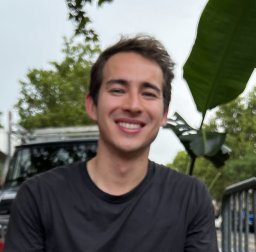 Simon Lieu合作论文数College Pk, Univ Maryland1
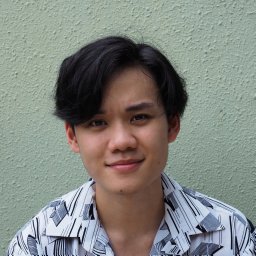 Gideon Lee合作论文数Dept Phys, Yale Univ1
 Ali Fahimniya合作论文数Dept Phys, MIT1
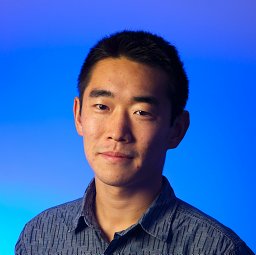 Andrew Y. Guo合作论文数College Pk, Univ Maryland1
 Andrew Lingenfelter合作论文数Univ Chicago1Brayden Ware合作论文数Dept Phys, Univ Massachusetts1
 Zachary Eldredge合作论文数College Pk, Univ Maryland1
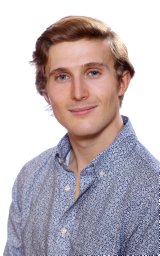 Jacob Bryon合作论文数Dept Elect Engn, Princeton Univ1
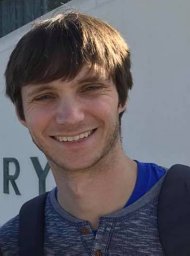 William Morong合作论文数Univ Illinois, Dept Phys, Urbana, IL 61801 USA1
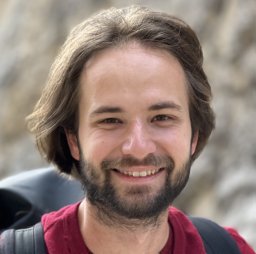 Alexander Schuckert合作论文数Dept Phys, Tech Univ Munich1
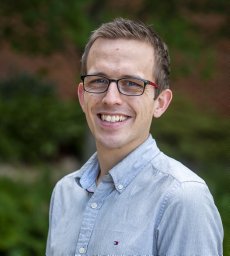 Niklas Mueller合作论文数Phys Dept, Brookhaven Natl Lab1
 Alessio Lerose合作论文数Dept Theoret Phys, Univ Geneva1




