Episodic memory is widely recognized as a critically important aspect of cognition that is often impacted by cognitive and brain aging. Prior work has shown that episodic memory is related to the presence of teeth-like folds on the dentate gyrus, called dentation. We hypothesized that episodic memory performance relates to overall hippocampal structure (i.e., dentation and volume) in an oldest-old cohort. We used data from the McKnight Brain Aging Registry, which consisted of cognitively healthy 85+-year-old adults. We conducted a canonical correlation analysis on 111 participants between a set of episodic memory tests and a set of characterizations of hippocampal structure. The analysis yielded a strong canonical correlation between episodic memory and hippocampal structure (r = 0.491, p = <0.001). The results suggest there is a connection between hippocampal morphology and function in the oldest-old. Our findings suggest that dentation may play an important role in relation to the individual differences observed in episodic memory performance among the oldest old and that hippocampal structure supports healthy cognitive aging. Highlights ### Competing Interest Statement The authors have declared no competing interest.
Objective: Age differences have been noted in the discrepancies between crystallized and fluid ability (Gc-Gf). Larger Gc-Gf discrepancies have also been shown to be associated with Alzheimer's disease biomarkers and clinical severity. However, little is known regarding the relationship between Gc-Gf discrepancies in normal aging and functional outcomes. The aim of the present study was to examine this.Method: Data from 104 adults (M-age=71.70 years, SD=9.016) were included in the present study. Measures from the NIH toolbox were used to form the discrepancy scores. Physical, cognitive, and social activities were identified using the Community Healthy Activities Model Program for Seniors activity questionnaire. Linear regression analyses, controlling for age, education, gender, health, and depressive symptoms, were used to examine the association between social, cognitive, and physical activities on Gc-Gf discrepancies.Results: Results showed that social and physical activity were significantly associated with greater discrepancies between crystallized and fluid ability, independent of covariates. There was no association between cognitive activity and Gc-Gf discrepancies.Conclusions: Larger discrepancies between crystallized and fluid ability are related to frequency of social and physical activity. The findings support previous research that discrepancy scores may serve as a marker of cognitive decline. In more highly educated older individuals, Gc-Gf discrepancies may be a more accurate indicator of actual cognitive status.
BackgroundDecrements in instrumental activities (IADL) have been observed in the prodromal phase of dementia. Given the long predementia stage in neurodegenerative diseases, it has been proposed that subtle functional changes may precede clinical IADL impairment. Incorporating more challenging advanced ADLs (eg, volunteer work) into the assessment process may increase the sensitivity of functional measures, thus expanding the window for monitoring or interventions.MethodsLongitudinal cohort study was used (follow-ups, 18-24 month), with subjects aged 60 and older (n = 3,635). To elucidate the relationship between cognitive ability and functional status we employed an IADL scale with an extended range (ADL-extended; includes IADL but also more challenging advanced ADLs) that meets item response theory properties of dimensionality, monotonicity, and item hierarchy. Procedures involved (a) a dynamic change model employed to inspect the temporal relationship between ADL-extended and cognitive status and (b) Cox proportional hazards to assess the risk of incident dementia based on ADL-extended scores.ResultsGrowth curve modeling: baseline ADL-extended was significantly associated with all four cognitive domains investigated. Worse baseline ADL-extended was associated with more rapid declines in speed/executive function, and worse baseline memory was associated with more rapid declines in ADL-extended; a concurrent association was found for language and ADL-extended. Cox model: the risk of dementia was decreased for each additional ADL-extended item endorsed (hazard ratio [HR], 0.85; 95% confidence interval = 0.81-0.90).ConclusionsAn increased risk of dementia could be observed in the ADL-extended items, which reflects an area of the functional continuum beyond IADL competencies.
IMPORTANCE Epidemiological evidence suggests that physical activity benefits cognition, but results from randomized trials are limited and mixed.OBJECTIVE To determine whether a 24-month physical activity program results in better cognitive function, lower risk of mild cognitive impairment (MCI) or dementia, or both, compared with a health education program.DESIGN, SETTING, AND PARTICIPANTS A randomized clinical trial, the Lifestyle Interventions and Independence for Elders (LIFE) study, enrolled 1635 community-living participants at 8 US centers from February 2010 until December 2011. Participants were sedentary adults aged 70 to 89 years who were at risk for mobility disability but able to walk 400 m.INTERVENTIONS A structured, moderate-intensity physical activity program (n = 818) that included walking, resistance training, and flexibility exercises or a health education program (n = 817) of educational workshops and upper-extremity stretching.MAIN OUTCOMES AND MEASURES Prespecified secondary outcomes of the LIFE study included cognitive function measured by the Digit Symbol Coding (DSC) task subtest of the Wechsler Adult Intelligence Scale (score range: 0-133; higher scores indicate better function) and the revised Hopkins Verbal Learning Test (HVLT-R; 12-item word list recall task) assessed in 1476 participants (90.3%). Tertiary outcomes included global and executive cognitive function and incident MCI or dementia at 24 months.RESULTS At 24 months, DSC task and HVLT-R scores (adjusted for clinic site, sex, and baseline values) were not different between groups. The mean DSC task scores were 46.26 points for the physical activity group vs 46.28 for the health education group (mean difference, -0.01 points [95% CI, -0.80 to 0.77 points], P = .97). The mean HVLT-R delayed recall scores were 7.22 for the physical activity group vs 7.25 for the health education group (mean difference, -0.03 words [95% CI, -0.29 to 0.24 words], P = .84). No differences for any other cognitive or composite measures were observed. Participants in the physical activity group who were 80 years or older (n = 307) and those with poorer baseline physical performance (n = 328) had better changes in executive function composite scores compared with the health education group (P = .01 for interaction for both comparisons). Incident MCI or dementia occurred in 98 participants (13.2%) in the physical activity group and 91 participants (12.1%) in the health education group (odds ratio, 1.08 [95% CI, 0.80 to 1.46]).CONCLUSIONS AND RELEVANCE Among sedentary older adults, a 24-month moderate-intensity physical activity program compared with a health education program did not result in improvements in global or domain-specific cognitive function.
 Robert Fieo合作论文数2
 Adam J. Woods合作论文数Department of Psychology, George Washington University2
 Eric S. Porges合作论文数1Deirdre M. O'Shea合作论文数1John B Williamson合作论文数1Stacy Merritt合作论文数1Courtney J Jessup合作论文数1Alex Hishaw合作论文数1Sara A Sims合作论文数1Kristina M Visscher合作论文数1RF Rezaei合作论文数1Vuga Parpura合作论文数1Pradyumna K Bharadwaj合作论文数1Ming Tang合作论文数1
 Anandh Kilpattu Ramaniharan合作论文数Dept Neurol, Univ Alabama Birmingham1Bonnie Levin合作论文数1
 Marilyn Horta合作论文数Dept Epidemiol, Univ Florida1Cynthia M Castro Sweet合作论文数1
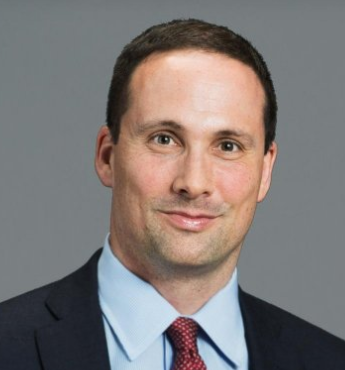 John A. Dodson合作论文数Division of Cardiology, Department of Medicine, Grossman School of Medicine, New York University1
 Laura Zahodne合作论文数Department of Psychology, College of Literature, Science, and the Arts, University of Michigan-Ann Arbor1
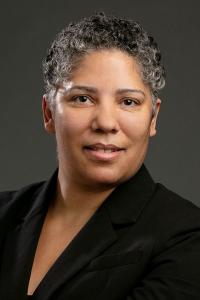 Jennifer J. Manly合作论文数Vagelos College of Physicians and Surgeons, Columbia University Irving Medical Center;Gertrude H. Sergievsky Center, Columbia University Medical Center;Cognitive Neuroscience Division, Taub Institute for Research in Aging and Alzheimer’s Disease, Columbia University Medical Center1
 Virginia G. Wadley合作论文数Division of Gerontology, Geriatrics and Palliative Care, School of Medicine, University of Alabama at Birmingham1
 Natalie C Ebner合作论文数Dept Psychol, Univ Florida1
 Kaycee M Sink合作论文数Sect Gerontol & Geriatr Med, Wake Forest Sch Med1
 Timothy Church合作论文数Health Studies Section, Division of Environmental Health Sciences, School of Public Health, University of Minnesota;Division of Epidemiology, School of Public Health, University of Minnesota1
 Eric S Porges合作论文数Department of Clinical and Health Psychology, College of Public Health & Health Professions, University of Florida;Center for Cognitive Aging and Memory, University of Florida1Rundek T合作论文数1
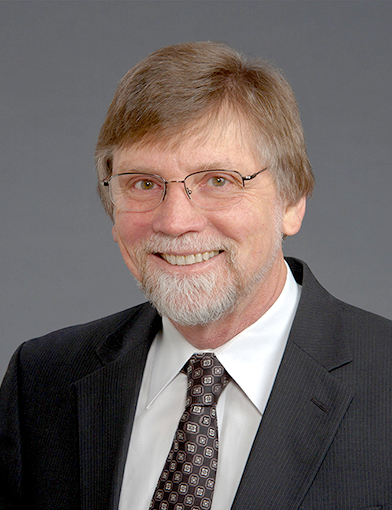 Mark A. Espeland合作论文数Cardiovascular Sciences Center, Wake Forest University;Divisions of Gerontology and Geriatric Medicine and Public Health Sciences, School of Medicine, Wake Forest University1
 Jeff D. Williamson合作论文数Gerontology and Geriatric Medicine, Department of Internal Medicine, School of Medicine, Wake Forest University1
 Mary McDermott合作论文数Division of General Internal Medicine, Department of Medicine, Feinberg School of Medicine, Northwestern University;Division of Epidemiology, Department of Preventive Medicine, Feinberg School of Medicine, Northwestern University1
 Oscar L. Lopez合作论文数Departments of Neurology, School of Medicine, University of Pittsburgh;Cognitive and Behavioral Neurology Division, University of Pittsburgh;Alzheimer's Disease Research Center, University of Pittsburgh1Van Etten Emily J合作论文数Department of Psychology, San Diego State University1
 Joe Verghese合作论文数The Saul R. Korey Department of Neurology, Albert Einstein College of Medicine;Department of Medicine, Albert Einstein College of Medicine1Jennings Janine M合作论文数1Ver Hoef Lawrence W合作论文数1
 Marco Pahor合作论文数Department of Physiology and Aging, College of Medicine, University of Florida Health1
 Gene Alexander合作论文数Brain Imaging, Behavior & Aging Lab, Department of Psychology, University of Arizona;College of Science, University of Arizona;Programs, and Evelyn F. McKnight Brain Institute, School of Mind, Brain, and Behavior, University of Arizona1
 Jack M. Guralnik合作论文数School of Medicine, University of Maryland1Lin Tian (田霖)合作论文数1Hugh C. Hendrie合作论文数1David A. Raichlen合作论文数Department of Anthropology, University of Arizona1
 Yaakov Stern合作论文数Departments of Neurology, Columbia University Irving Medical Center1
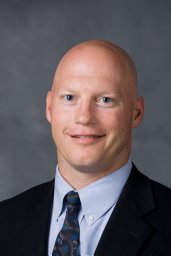 Jeffrey Katula合作论文数Department of Health and Exercise Science, Wake Forest University;Worrell Professional Center, Wake Forest University1
 Noam Alperin合作论文数Department of Radiology, University of Illinois1David S. Geldmacher合作论文数1Kieran F. Reid合作论文数1
 Julia Rushing合作论文数Winston-Salem1Theodore P. Trouard合作论文数1
 Steve Rapp合作论文数Dept Psychiat & Behav Med, Wake Forest Sch Med1




