Certified randomness has a long history in quantum information, with many potential applications. Recently Aaronson (2018, 2020) proposed a novel public certified randomness protocol based on existing random circuit sampling (RCS) experiments. The security of his protocol, however, relies on non-standard complexity-theoretic conjectures which were not previously studied in the literature. Inspired by Aaronson's work, we study certified randomness in the quantum random oracle model (QROM). We show that quantum Fourier Sampling can be used to define a publicly verifiable certified randomness protocol, with unconditional black-box security. In addition to giving a certified randomness protocol in the QROM, our work can also be seen as supporting Aaronson's conjectures for RCS-based randomness generation, as our protocol is in some sense the "black-box version" of Aaronson's protocol. In further support of Aaronson's proposal, we prove a Fourier Sampling version of Aaronson's conjecture by extending Raz and Tal's separation of BQP vs PH. Our work complements the subsequent certified randomness protocol of Yamakawa and Zhandry (2022) in the QROM. Whereas the security of that protocol relied on the Aaronson-Ambainis conjecture, our protocol is unconditionally secure - at the expense of requiring exponential-time classical verification. Our protocol also has a simple heuristic implementation.
We find a modification to QMA where having one quantum proof is strictly less powerful than having two unentangled proofs, assuming EXP NEXP. This gives a new route to prove QMA(2) = NEXP that overcomes the primary drawback of a recent approach [arXiv:2402.18790 , arXiv:2306.13247] (QIP 2024). Our modification endows each proof with a form of *multipartite* unentanglement: after tracing out one register, a small number of qubits are separable from the rest of the state.
We prove that QMA where the verifier may also make a single non-collapsing measurement is equal to NEXP, resolving an open question of Aaronson. We show this is a corollary to a modified proof of QMA+ = NEXP [arXiv:2306.13247]. At the core of many results inspired by Blier and Tapp [arXiv:0709.0738] is an unphysical property testing problem deciding whether a quantum state is close to an element of a fixed basis.
We study a variant of QMA where quantum proofs have no relative phase (i.e. non-negative amplitudes, up to a global phase). If only completeness is modified, this class is equal to QMA [arXiv:1410.2882]; but if both completeness and soundness are modified, the class (named QMA+ by Jeronimo and Wu) can be much more powerful. We show that QMA+ with some constant gap is equal to NEXP, yet QMA+ with some *other* constant gap is equal to QMA. One interpretation is that Merlin's ability to "deceive" originates from relative phase at least as much as from entanglement, since QMA(2) $\subseteq$ NEXP.
We study how the choices made when designing an oracle affect the complexity of quantum property testing problems defined relative to this oracle. We encode a regular graph of even degree as an invertible function $f$, and present $f$ in different oracle models. We first give a one-query QMA protocol to test if a graph encoded in $f$ has a small disconnected subset. We then use representation theory to show that no classical witness can help a quantum verifier efficiently decide this problem relative to an in-place oracle. Perhaps surprisingly, a simple modification to the standard oracle prevents a quantum verifier from efficiently deciding this problem, even with access to an unbounded witness.
The increasing scale of near-term quantum hardware motivates the need for efficient noise characterization methods, since qubit and gate level techniques cannot capture crosstalk and correlated noise in many qubit systems. While scalable approaches, such as cycle benchmarking, are known for special classes of quantum circuits, the characterization of noise in general circuits with non-Clifford gates has been an unreachable task. We develop an algorithm that can sample-efficiently estimate the total amount of noise induced by a layer of arbitrary non-Clifford gates, including all crosstalks, and experimentally demonstrate the method on IBM Quantum hardware. Our algorithm is inspired by Google’s quantum supremacy experiment and is based on random circuit sampling. In their paper, Google observed that their experimental linear cross entropy was consistent with a simple uncorrelated noise model, and claimed this coincidence indicated that the noise in their device was uncorrelated – a key step in hardware development towards fault tolerance. As an application, we show that our result provides formal evidence to support such a conclusion. an arbitrary n -qubit noise channel acting on each layer of gates, χ αβ ) is a positive semi-definite known as the process matrix. We show that only the Pauli-diagonal component of the
Certified randomness has a long history in quantum information, with many potential applications. Recently Aaronson (Aaronson 2018, 2020) proposed a novel certified randomness protocol based on existing random circuit sampling (RCS) experiments -- placing this application within the reach of near-term quantum devices. The security of his protocol, however, relies on non-standard complexity-theoretic conjectures which were not previously studied in the literature. In this work we provide strong complexity-theoretic evidence in support of these conjectures. In particular we prove two versions of Aaronson's conjectures unconditionally in a black-box Fourier sampling setting. This mirrors earlier complexity-theoretic evidence for quantum advantage, bringing the security of Aaronson's protocol up to the same level of evidence we have for quantum advantage from heavy output generation.
Quantum secret sharing is a method for sharing a secret quantum state among a number of individuals such that certain authorized subsets of participants can recover the secret shared state by collaboration and other subsets cannot. In this paper, we first propose a method for sharing a quantum secret in a basic $(2,3)$ threshold scheme, only by using qubits and the 7-qubit CSS code. Based on this $(2,3)$ scheme, we propose a new $(n, n)$ scheme and we also construct a quantum secret sharing scheme for any quantum access structure by induction. Secondly, based on the techniques of performing quantum computation on 7-qubit CSS codes, we introduce a method that authorized subsets can perform universal quantum computation on this shared state, without the need for recovering it. This generalizes recent attempts for doing quantum computation on $(n, n)$ threshold schemes.
We investigate the problem of quantum random walk on Cayley graphs. Quantum random walks are proved to be useful in different aspect of quantum computation. Our motivation is finding the current limitations of quantum random walks, and how these results can be applied to graphs with certain structures. For this purpose, we focus on Cayley graphs, the diagrammatic representation of groups. Aside from containing useful classes of graphs hypercubes, grids etc. one can use quantum random walks on Cayley graphs for random element generation and element finding which makes this class interesting for our study.
We introduce a method for performing universal quantum computation on quantum states shared according to general access structures. This generalizes recent attempts for doing quantum computation on $(n,n)$ threshold schemes. In a general access structure certain authorized subsets, depending on their weights, can retrieve a secret shared state, and only by their collaboration universal quantum computation can be performed on the shared state. To achieve this we have used concatenation of seven-qubit codes.
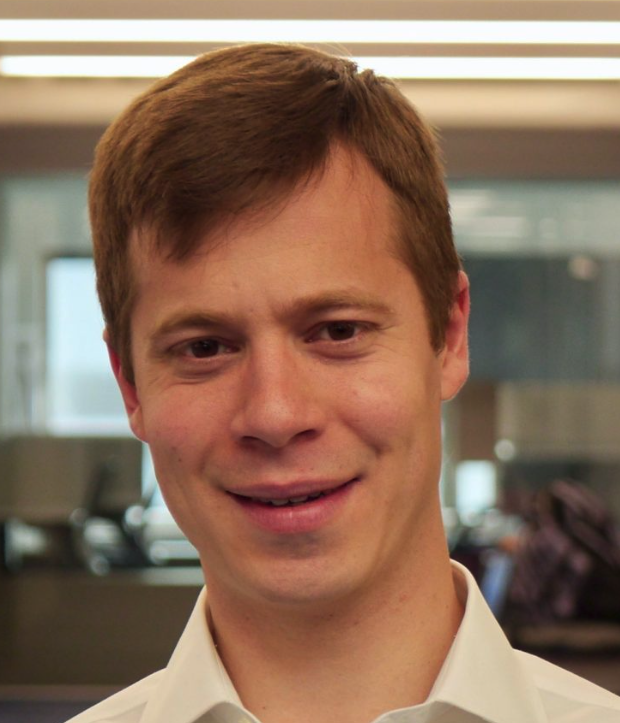 Bill Fefferman合作论文数Department of Computer Science, The University of Chicago6
 Kunal Marwaha合作论文数Dept Comp Sci, Univ Chicago4
 Samuel Gunn合作论文数Theory Group, UC Berkeley2
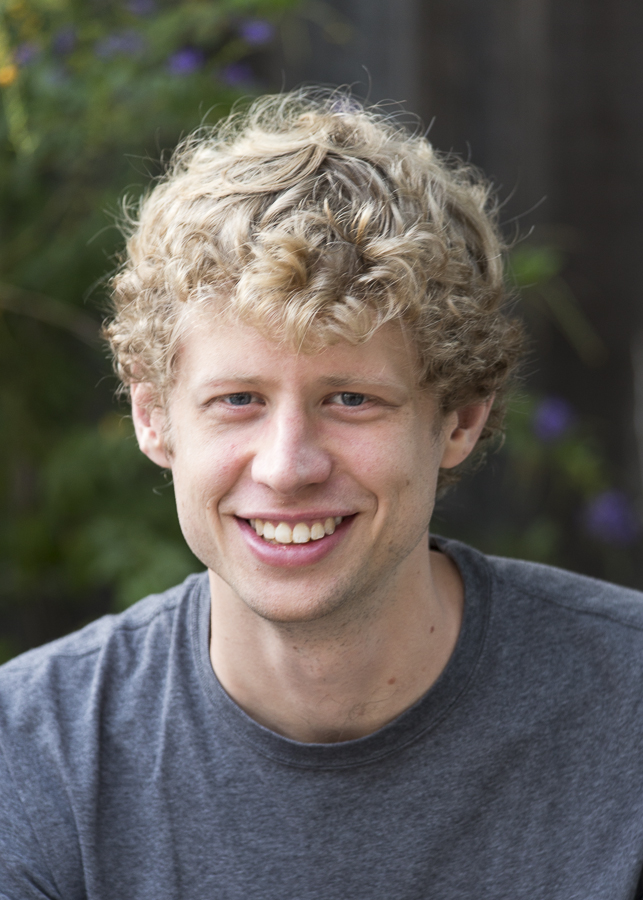 Adam Bouland合作论文数The Theory Group, Stanford University2
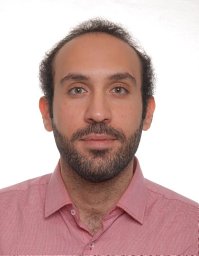 Sadra Boreiri合作论文数epfl2
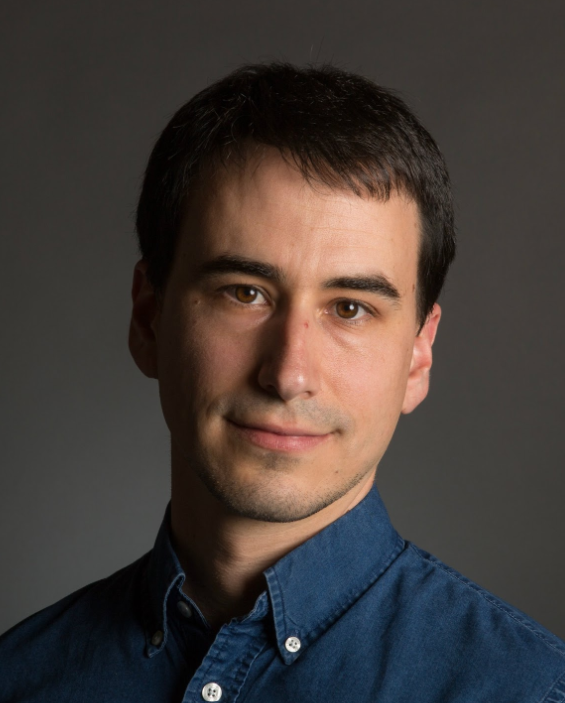 Avishay Tal合作论文数Division of Computer Science, Department of Electrical Engineering and Computer Sciences, University of California, Berkeley2
 Vahid Karimipour合作论文数Department of Physics, Sharif University of Technology2
 Yunchao Liu合作论文数1Matthew Otten合作论文数Cornell Univ, Dept Phys, Ithaca, NY 14853 USA1
 Liang Jiang合作论文数Pritzker School of Molecular Engineering, The University of Chicago;Amazon Web Services1




