How does academic research lead to technological innovation? Innovation models for ‘entrepreneurial science’ encourage scientists and engineers to move back and forth between industry and academia, and even to operate in both domains at the same time. New hybrid spaces of inquiry emerge at the intersection of these domains, for example when academics set up spin-off companies with the purpose of commercialising their research. This chapter discusses the findings of ethnographic research we conducted with award-winning innovators who work at the intersection of academia and industry. It focuses, specifically, on the creative processes that engineers undertake when designing new technologies in hybrid spaces of inquiry that combine engineering and business knowledge. We develop the concept of multi-engineering to describe a specific mode of knowledge production that our research participants employ when designing new technologies. This involves connecting multiple fields in a flat epistemology, where each field provides the tools to solve one part of the problem that is being addressed. These fields are placed in a relationship of complementarity and they are given equal interpretative power. Finally, we ask what it would mean for the anthropology of futures to develop and employ a multi-engineering approach in interdisciplinary collaborations with engineers and technologists.
This paper reports on the design of three novel products: a hand saw, electrical plug and bicycle wheel. Each case study draws on interviews with the designers and analysis of their prototypes. The focus is on how the product ideas originated, how and why they changed and why those changes weren't made earlier. In emphasising the nature of creative work throughout long and complex projects, three themes are emphasised: (1) creative challenges and creative blocks can result from earlier breakthroughs (which makes them difficult to overcome); (2) multiple design spaces co-evolve at different levels of detail (not just simple problem- and solution-spaces); (3) those developing new ideas need to recognise and accept those ideas (not just generate and develop them).
This paper argues for the broadening of the field of design creativity research in two main ways. Firstly, if we studied not just creative ideas, but also creative action, then this would better reflect some aspects of how creative design occurs ‘in the wild’. Secondly, if we adopted not just cognitive psychological perspectives, but also sociocultural approaches then this would broaden our methodological and theoretical base and permit richer descriptions of design creativity. To illustrate these points, we report on the findings of an ethnographic interview study conducted with awardwinning engineers and designers. Based on this material, we propose a way of reframing the process of designing as creative action, looking at the role of intrinsic motivation and personal values.
This paper argues for the broadening of the field of design creativity research in two main ways. Firstly, if we studied not just creative ideas, but also creative action, then this would better reflect some aspects of how creative design occurs ‘in the wild’. Secondly, if we adopted not just cognitive psychological perspectives, but also sociocultural approaches then this would broaden our methodological and theoretical base and permit richer descriptions of design creativity. To illustrate these points, we report on the findings of an ethnographic interview study conducted with awardwinning engineers and designers. Based on this material, we propose a way of reframing the process of designing as creative action, looking at the role of intrinsic motivation and personal values.
This general introduction presents the term that is the theme of this Special Section: 'time-tricking'. Whilst initially mapping a few problems and perspectives that arise from it, we focus particularly on the question of temporal agency. We claim that the concept of time-tricking allows a reconsideration of temporal agency, and then set out how the articles that make up this Special Section contribute to this reconsideration. We will see that two versions of temporal agency are particularly salient in this endeavour: first, as a response to crisis; second, as a form of maintenance work.
Here, the temporal modality of anticipation is introduced and discussed in relation to the concept of Mother-Multiple. As a mode of being that any family member can access when engaged in activities of caring oriented towards one's "domestic others"—family members, pets, or the home itself as an entity—the Mother-Multiple ontological position is analytically situated in relation to literature on ontological multiplicity and a discussion of individuality and dividuality in personhood. The ways in which anticipation is employed in enactments of the Mother-Multiple, the techniques of imagination that anticipation entails, as well as the possible effects of activities of anticipation on domestic energy consumption are considered.
The qualities of domestic buildings that are aimed for in the energy reduction agenda, such as efficiency and zero-carbon impacts, are often at odds with the aesthetic preferences of home-owners for keeping original features of their houses unaltered. The set of visual traits followed in the maintenance and listing of character houses in the UK, and their corresponding material affordances in relation to energy demand, can be regarded as affecting and delaying the future of carbon-emission reduction promised by the country's own Climate Change Act. This article interrogates the temporal and ethical considerations enacted in maintaining and admiring character houses with 'original' features. It discusses the ways in which domestic buildings emerge as multitemporal assemblages, and the forms of time trickery these processes involve in relation to notions of history, tradition and national and cultural identity.
A theoretical concept and approach for looking at human agency as embedded in everyday actions—"ordinary agency"—is introduced and discussed here. Recent anthropological re-readings and advancements of Foucault's work on ethical practices are employed in the development of this approach. The ways in which "ordinary agency" responds to this work, as well as to social sciences of sustainability calls for acknowledging the forms of personal environmental politics that laypeople develop and enact, are discussed. Furthermore, the concept is situated in relation to a critique of "neoliberal agency" and ideas about the connections between approaches to time and understandings of human agency that come from the anthropology of time.
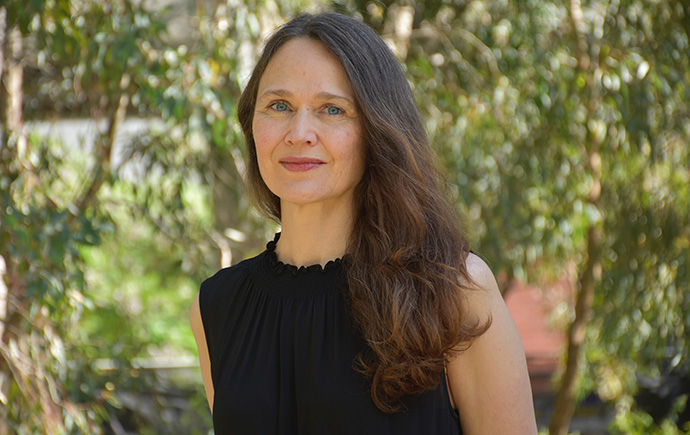 Sarah Pink合作论文数Department of Design, Monash University12
 Kerstin Leder Mackley合作论文数Loughborough University12
 Tracy Bhamra合作论文数Department of Design and Technology;Loughborough University;Department of Design and Technology, Loughborough University9
 Val Mitchell合作论文数Loughborough University9
 Nathan Crilly合作论文数Engineering Design Centre, Department of Engineering, University of Cambridge4
 Marcus Hanratty合作论文数3
 Paula Cosar合作论文数2
 Stanley Blue合作论文数Sociol, Univ Lancaster2
 daniel quiggin合作论文数School of Civil and Building Engineering, Loughborough University2
 Charlotte Louise Jensen合作论文数CONCITO2
 Chris Foulds合作论文数Anglia Ruskin University2
 Garrath T. Wilson合作论文数Loughborough Design Sch2
 Richard a Buswell合作论文数Wolfson School, Loughborough University2l h webb合作论文数1Dashamir Marini合作论文数1a chilvers合作论文数1
 Matthew Daly合作论文数Sustainable Bldg Res Ctr, Univ Wollongong1Katalin Osz合作论文数Halmstad University, Sweden1
 Mary Greene合作论文数Environm Policy Grp, Wageningen Univ1
 Rachel Macrorie合作论文数Human Geography and Spatial Planning Department, University of Utrecht1Lynda Webb合作论文数School of Informatics, The University of Edinburgh1
 Faye Wade合作论文数Sociology, School of Social and Political Science, The University of Edinburgh1
 Sean Rintel合作论文数Microsoft1
 Sarah Royston合作论文数1Buchanan Kathryn合作论文数Royal Holloway, University of London.1
 Nicola Spurling合作论文数1
 Andrew Karvonen合作论文数Komex International Ltd;PetroSearch;MDH Engineered Solutions;Komex International Ltd, Boyd PetroSearch1
 Lisa Westerhoff合作论文数1
 Carolina Escobar-Tello合作论文数1
 Abigail Sellen合作论文数Microsoft Research Cambridge1
 Lenneke Kuijer合作论文数Delft University of Technology1
 Ida Nilstad Pettersen合作论文数1




