Purpose: This paper explores how to align AI-based tools with teachers' classroom needs by using scrutable interfaces – interfaces that link an easily manipulable knowledge representation to an underlying AI model, so users can change the system's outputs without understanding its details. It provides an in-depth discussion and example of a scrutable interface that structures teachers' interactions with generative AI. This study aims to expand how and where scrutable interfaces are used in AI-based tools to support teachers, who have not been historically targeted in the design of scrutable systems. Design/Methodology/Approach: This paper presents the design and evaluation of Concept Catalyst, an AI-based tool with a scrutable interface, created to support teachers' reflection while using generative AI for curriculum development. It presents the findings from an exploratory study using Wizard-of-Oz testing with middle and high school engineering teachers, resulting in 10 depth interviews lasting 55 minutes on average. Screen/audio recordings and the classroom content teachers produced during the session were also collected. Findings: The paper provides empirical insights about how scrutable interfaces can positively structure teachers' interactions with generative AI models when creating classroom content. Findings suggest that scrutable interfaces can help teachers reflect on their teaching practices while improving efficacy, efficiency, and motivation when using AI. What is original/value of the paper: This paper explores an identified need to support teachers' classroom practices and needs when using generative AI. It extends the consideration of scrutable interfaces in two ways: to support teachers as users (not just students) and to structure interactions with generative AI models.
Fluid mechanics is an early mechanical engineering course where abstract concepts gain physical, applicable meaning. It is therefore a prime venue to teach higher-order engineering skills-problem definition, modeling, and solution analysis-needed for the ill-structured, open-ended problems engineers face in practice. These skills are primarily taught in design courses which account for only 20% of the curriculum. Thus, design thinking and pedagogy are needed in core engineering courses taught throughout the degree. This study evaluates the impact of an authentic learning assignment, titled design your own problem (DYOP), on students' higher-order thinking in a fluid mechanics course. Using Bloom's Taxonomy to gauge cognitive engagement, we conducted content analysis of students' cognitive reflections on typical engineering assessments (quizzes) and the DYOP. Results show a significant increase in higher-order cognitive skills during completion of DYOP compared with quizzes. This heightened engagement features greater analysis, evaluation, and creativity, indicating a shift toward more sophisticated problem-solving and metacognitive awareness among students. This pattern was consistent across diverse student cohorts, irrespective of gender, racial, or ethnic background, prior internship experience, or initial performance on quizzes. These findings present a simple, scalable, and effective method for incorporating higher-order cognitive skills into core courses within the engineering curriculum, thereby providing additional avenues of design-type training prior to students enrolling in design-focused courses such as senior design or capstone. Embedding authentic, open-ended tasks alongside traditional problems cultivates the modeling fluency, judgment, and analysis essential for engineering practice.
Purpose Challenges in teaching the engineering design process (EDP) at the high-school level, such as promoting good documentation practices, are well-documented. While developments in educational artificial intelligence (AI) systems have the potential to assist in addressing these challenges, the open-ended nature of the EDP leads to challenges that often lack the specificity required for actionable AI development. In addition, conventional educational AI systems (e.g. intelligent tutoring systems) primarily target procedural domain tasks with well-defined outcomes and problem-solving strategies, while the EDP involves open-ended problems and multiple correct solutions, making AI intervention timing and appropriateness complex. Design/methodology/approach Authors conducted a six-week-long Research through Co-Design (RtCD) process (i.e. a co-design process rooted in Research through Design) with two experienced high-school engineering teachers to co-construct actionable insight in the form of AI intervention points (AI-IPs) in engineering education where an AI system can effectively intervene to support them while highlighting their pedagogical practices. Findings This paper leveraged the design of task models to iteratively refine our prior understanding of teachers’ experiences with teaching the EDP into three AI-IPs related to documentation, ephemeral interactions between teachers and students and disruptive failures that can serve as a focus for intelligent educational system designs. Originality/value This paper discusses the implications of these AI-IPs for designing educational AI systems to support engineering education as well as the importance of leveraging RtCD methodologies to engage teachers in developing intelligent educational systems that align with their needs and afford them control over computational interventions in their classrooms.
Engineering has emerged as a promising context for STEM integration in K-12 schools. In the previous decade, the field has seen an increase in curricular resources and pedagogical approaches that invite students to utilize mathematics and science as they engage in engineering practices. This Innovation to Practice paper highlights one effort to meaningfully integrate mathematics and science through engineering in middle school classrooms. The STEM-ID engineering course sequence consists of three 18-week middle school engineering courses. Each of the 6th, 7th, and 8th grade courses integrate science and math with engineering design, enabling students to explore and practice foundational math and science skills in a low-risk, non-high-stakes-tested environment. This Innovation to Practice paper provides illustrative examples of STEM-integration through the STEM-ID curricula, focusing on four key areas: data analysis, measurement, experimental design, and force and motion concepts. Drawing on our project's implementation data, we highlight illustrative examples of STEM integration, in practice, and lessons learned by educators and researchers involved in the project.
Crowdsourced manufacturing leverages extensive collaboration among the cyber platform, innovators, and service providers to configure product fulfillment throughout the supply chain. Information as a Service (IaaS) emerges as a crucial and promising competency for crowdsourced manufacturing. Nevertheless, implementing autonomy, security, and decentralization for IaaS fulfillment in a crowdsourcing environment poses challenges. This paper proposes a blockchain-enabled solution for an IaaS fulfillment system to execute crowdsourced tasks and manage interactions and information flows across a cyber platform for crowdsourcing. Through critical use case analysis, we examine the workflows of crowdsourced manufacturing and the associated information flows. An IaaS fulfillment system is suggested to provide information management services using blockchain technology. This proposed IaaS system encompasses a distributed blockchain network that facilitates secured information upload and management services for information sharing. The IaaS system employs a web-based interface, smart contracts, and IPFS algorithms over a blockchain network to offer IaaS to users, allowing them to conveniently and securely upload and retrieve product fulfillment statuses at low trust costs. A case study of tank trailer crowdsourced manufacturing is provided to validate the feasibility and potential of the proposed blockchain-enabled IaaS system.
Background The need for sustainability-minded engineers prepared to address complex societal challenges has grown exponentially in recent years. Frameworks like the United Nations (UN) Sustainable Development Goals (SDGs) have begun to drive structural changes in engineering education, including new ABET accreditation focused on sustainability. The new field of conservation technology allows engineers to develop sustainability competencies and identities as conservationists and environmentalists. Purpose This manuscript describes an assessment of student identity development in conservation and environmentalism in the GaTech4Wildlife Vertically Integrated Project (VIP) course at Georgia Tech. The course uses the principles of Human-Centered Design along with the UN Sustainable Development Goals and project-based learning to solve conservation-oriented, real-world problems and develop sustainability-minded engineers. Design/Method Undergraduate students participated in the course and utilizing both in-person interviews and post-course assessment, students were assessed for course themes and identities. The sample consisted of students from the College of Engineering and the College of Computing. Results Since 2019, over 50 students have participated in this Tech4Wildlife course. Based on surveys and interviews of nearly 20 of the most recent students, students transitioned from identifying as engineers and coders with no sustainability knowledge to nearly doubling their identity measures as conservationists and environmentalists after only one semester. Conclusions To teach the next generation of sustainability-minded engineers, interdisciplinary, project-based courses grounded in Sustainable Development Goals may offer a meaningful pathway for students to develop both technical skills and conservationist identities.
Teams have been favored due to the diverse knowledge access. However, diversity can also have negative effects, and team outputs can be influenced by many factors, such as psychological safety. While the effects of psychological safety have been studied, its development has received less attention. Prior research in this area has focused either on specific populations or cross-sectional effects. To add to this area, this study examined the longitudinal development of psychological safety in engineering capstone students: how it evolves, and whether this can be influenced by team-related experiences. This study showed that although psychological safety did change meaningfully with time, neither time nor experience alone could capture the change. The results could shed light on the evolution of psychological safety, as well as what factors could potentially influence its development.
is a PhD student at Georgia Tech.Her dissertation work is in the field of combustion/thermo./fluids.She studies a novel diesel injection strategy: Ducted Fuel Injection (DFI), which is used to drastically decrease soot emissions during diesel combustion.In addition to her thesis work, Boni is passionate about engineering education.
There is a strong demand for computer scientists in the United States, and particularly, a more diverse computer science workforce is needed to meet the technical and creative challenges of the 21st century. In order to build interest and excitement around computing, there is a need for free, accessible computing experiences for K-12 students so that they become familiar with computer science and understand the its broad applications and inherent creativity. As part of broader efforts to build a pipeline into computer science, scholars at ______________ teamed up with Amazon Future Engineer, a division of Amazon, Inc. focused on building a diverse pipeline into computer science, to build a coding competition centered around remixing music from popular celebrity musicians using the EarSketch platform, developed at ___________. In this paper, we describe the elements of the pilot program, which took place during the 2019-20 school year, engaging over 20,000 users in the EarSketch platform and resulting in 1200 competition submissions from all over the country. Offerings included a 3-day competition-specific curriculum, judging rubric and process, submission guidelines, celebrity promotion and participation, prizes, and evaluation of our efforts across different stakeholder groups, including students, teachers, and judges. A formative evaluation design was utilized, including online surveys with judge, teacher, and student participants. The purpose of the evaluation was to collect formative data regarding participants' experiences during the pilot year of the competition. These online surveys contained questions about logistical aspects of participants' experiences, as well as items on the extent to which they enjoyed and valued various aspects of the competition, and allowed for suggestions for improvement. Participants in all three participant groups provided largely positive feedback about their experiences in and perceptions of the competition. Judges reported that the judging experience was enjoyable, clear, and not overly time consuming. Teachers felt the competition provided a variety of benefits to their students. Students valued the opportunity to create music through coding, and some expressed interest in taking additional computing courses. This paper will provide a detailed description of the program offered during the pilot year, as well as sample results from participant surveys.
Biologically inspired design (BID) in engineering is a systematic approach that employs analogies from biological creatures to develop solutions for engineering problems. BID is becoming increasingly prevalent in pre-college education as it facilitates students' understanding of how natural systems and features can inspire the design of systems to solve societal problems. This qualitative descriptive study investigated high school students' (n = 53) use of biological systems, processes, and concepts covered in the BID-integrated engineering-focused curriculum in the engineering design process (EDP) to develop a solution to the engineering problem. The EDP is an iterative method employed by engineers for effective problem-solving which students employed to create a better food delivery system for senior citizens. Several data sources were used to examine students' application of BID-integrated EDP, including classroom observation field notes, final design presentations, and semi-structured focus groups. Qualitative thematic analysis revealed four major themes: criteria/constraints, integration of biologically inspired design in the engineering design process, decision-making, and internalizing of structure, function, and mechanism, demonstrating that students engaged in the engineering design process holistically and iteratively and incorporated features of biological systems in their design solutions.
Biologically inspired design (BID) in engineering is a convergent, systematic approach that uses analogies from biological organisms to develop solutions for human engineering and design problems. Based on outcomes from prior studies of integrating BID in higher education, incorporating BID into pre-college education is a logical evolution. For effective BID instruction of these convergent concepts in pre-college education, teachers need to be well-equipped with biological, engineering, and pedagogical knowledge, both in general and those unique to the convergent, still evolving discipline. In this paper, we investigate the Professional Learning (professional learning) environment designed to foster engineering teachers’ understanding of BID integration in engineering and to determine to what extent the evolving professional learning environment fostered engineering teachers’ conceptual knowledge of BID across the three-year project. This design study applies conjecture mapping with design-based research (DBR) to examine a professional learning environment that changed over three summers and its impact on teachers’ conceptual understanding of BID integration in engineering. The analysis indicates that a combination of experiential and informal learning experiences along with engagement in a formal design challenge promoted teacher enthusiasm and a conceptual understanding of BID across the three years. Professional learning fostered teachers’ understanding of BID integration in engineering and enabled them to integrate BID into their engineering teaching practice.
In our call for proposals, our aim was to explore and document how COVID-19 has impacted pre-college engineering education (Alemdar et al., 2021). During COVID-19, engineering pre-college educators quickly adapted to new learning environments and technologies for teaching and learning. It was important to document these adaptations and lessons learned in formal and informal learning settings. The papers that made up this special show how lessons learned during this challenging time can inform the future of precollege engineering education. The papers offer both theoretical argumentation and empirical evidence to support their answers to the question of how adaptations during COVID-19 impacted pre-college engineering learning. A recurring theme of these papers is that worthy pre-college engineering learning experiences are possible even during unprecedented times. In this paper, we reflect on the papers, their individual and collective findings, and we highlight the impact of COVID-19 on education.
We investigate how high-school engineering teachers anticipate and deal with disruptive and productive failures in students' design challenges.This study involved a sixweek participatory design process with two teachers, revealing that teachers often make design challenges too prescriptive in order to prevent disruptive failures, which can hinder opportunities for productive failures.We discuss the implications of failure mitigation and suggest opportunities to better support teachers, including the design of an intelligent system.
Recently, there has been a national push to use machine learning (ML) and artificial intelligence (AI) to advance engineering techniques in all disciplines ranging from advanced fracture mechanics in materials science to soil and water quality testing in the civil and environmental engineering fields. Using AI, specifically machine learning, engineers can automate and decrease the processing or human labeling time while maintaining statistical repeatability via trained models and sensors. Edge Impulse has designed an open-source TinyML-enabled Arduino education tool kit for engineering disciplines. This paper discusses the various applications and approaches engineering educators have taken to utilize ML toolkits in the classroom. We provide in-depth implementation guides and associated learning outcomes focused on the Environmental Engineering Classroom. We discuss five specific examples of four standard Environmental Engineering courses for freshman and junior-level engineering. There are currently few programs in the nation that utilize machine learning toolkits to prepare the next generation of ML and AI-educated engineers for industry and academic careers. This paper will guide educators to design and implement ML/AI into engineering curricula (without a specific AI or ML focus within the course) using simple, cheap, and open-source tools and technological aid from an online platform in collaboration with Edge Impulse.
This innovative practice work in progress paper presents Biologically inspired design (BID) to transfer design principles identified in nature to human-centered design problems. The Biologically Inspired Design for Engineering Education (BIRDEE) program uses biologically inspired design to teach high school engineering in a way that uniquely engages students in the natural world. For high school students, identifying natural systems' analogues for human design problems can be challenging. Furthermore, it is often the case that students focus on and transfer superficial structures, rather than underlying design principles. Based on the Structure-Behavior-Function (SBF) design ontology, we developed a modified cognitive scaffold called Structure-Function-Mechanism (SFM) to assist students and teachers with identifying functionally similar biological analogies and identifying and transferring design principles. In this paper we describe SFM and its importance in BID and our observations from teaching SFM to high school teachers during a multi-week professional development workshop in the summer of 2020. Based on teachers' work artifacts, transcriptions of discussions, and focus groups, we highlight the challenges of teaching SFM and our plans to scaffold this important concept for students and teachers alike.
This innovative practice work in progress paper presents the Biologically Inspired Design for Engineering Education (BIRDEE) project, to create socially relevant, accessible, highly-contextualized biologically inspired design experiences that can be disseminated to high school audiences engineering audiences in Georgia and nationally. Curriculum units are 6–10 weeks in duration and will meet many standards for high school engineering courses in Georgia. There will be three curriculum units (one for each engineering course in the 3-course pathway), each building skills in engineering design and specific skills for BID. Currently in its second year, BIRDEE has developed its first unit of curriculum and has hosted its first professional development with 4 pilot teachers in the summer of 2020. The BIRDEE curriculum situates challenges within socially relevant contexts and provides cutting-edge biological scenarios to ignite creative and humanistic engineering experiences to 1) drive greater engagement in engineering, particularly among women, 2) improve student engineering skills, especially problem definition and ideation skills, and 3) increase students awareness of the connection and impacts between the engineered and living worlds. This paper describes the motivation for the BIRDEE project, the learning goals for the curriculum, and a description of the first unit. We provide reflections and feedback from teacher work and focus groups during our summer professional development and highlight the challenges associated with building BID competency across biology and engineering to equip teachers with the skills they need to teach the BIRDEE units. These lessons can be applied to teaching BID more broadly, as its multidisciplinary nature creates challenges (and opportunities) for teaching and learning engineering design.
Biologically inspired design has become increasingly common in graduate and undergraduate engineering programs, consistent with an expanding emphasis by professional engineering societies on cross-disciplinary critical thinking skills and adaptive and sustainable design. However, bio-inspired engineering is less common in K-12 education. In 2019, the NSF funded a K-12 project entitled Biologically Inspired Design for Engineering Education (BIRDEE), to create socially relevant, accessible, and highly contextualized high school engineering curricula focusing on bio-inspired design. Studies have shown that women and underrepresented minorities are drawn to curricula, courses, and instructional strategies that are integrated, emphasize systems thinking, and facilitate connection building across courses or disciplines. The BIRDEE project also seeks to interest high school girls in engineering by providing curricula that incorporate humanistic, bio-inspired engineering with a focus on sustainable and authentic design contexts. BIRDEE curricula integrate bio-inspired design into the engineering design process by leveraging design tools that facilitate the application of biological concepts to design challenges. This provides a conceptual framework enabling students to systematically define a design problem, resulting in better, more well-rounded problem specifications. The professional development (PD) for the participating teachers include six-week-long summer internships in university research laboratories focused on biology and bio-inspired design. The goal of these internships is to improve engineering teachers’ knowledge of bio-inspired design by partnering with cutting-edge engineers and scientists to study animal features and behaviors and their applications to engineering design. However, due to COVID-19 and research lab closures in the summer of 2020, the research team had to transfer the summer PD experience to an online setting. An asynchronous, quasi-facilitated online course was developed and delivered to teachers over six weeks. In this paper, we will discuss online pedagogical approaches to experiential learning, teaching bio-inspired design concepts, and the integration of these approaches in the engineering design process. Central to the online PD design and function of each course was the use of inquiry, experiential and highly-collaborative learning strategies. Preliminary results show that teachers appreciated the aspects of the summer PD that included exploration, such as during the “Found Object” activity, and the process of building a prototype. These activities represented experiential learning opportunities where teachers were able to learn by doing. It was noted throughout the focus group discussions that such opportunities were appreciated by participating teachers. Teachers indicated that the experiential learning components of the PD allowed them to do something outside of their comfort zone, inspired them to do research that they would not have done outside of this experience, and allowed them to “be in the student's seat and get hands-on application”. By participating in these experiential learning opportunities, teachers were also able to better understand how the BIRDEE curriculum may impact students’ learning in their classrooms.
Computational thinking has become pervasive across many technical and creative disciplines. Creating a computationally literate workforce capable of recognizing and eliminating algorithmic discrimination requires diverse perspectives and lived experiences. Diversity within computing is a persistent problem; in 2014, several large tech companies released diversity reports and made commitments to improvement. As of 2020, improvements have been minor, especially for Black employees. Compared to US demographics, the percentage of Black and Latinx students pursuing degrees in computing remains low, even as numbers improve in STEM more broadly. It is more important than ever to prioritize a diverse computing workforce and a computationally literate workforce, more broadly, whose interests reside with equitable outcomes.
 Meltem Alemdar合作论文数Georgia Institute of Technology38
 Sunni Newton合作论文数18Jeffrey Rosen合作论文数15
 Michael Helms合作论文数Georgia Institute of Technology14Jessica Gale合作论文数School of Psychology, Speech and Hearing, University of Canterbury10
 Jason Freeman合作论文数School of Music, College of Design, Georgia Institute of Technology;Center for 21st Century Universities, Georgia Institute of Technology;GVU Center, College of Computing, Georgia Institute of Technology;Center for Music Technology, College of Design, Georgia Institute of Technology;Institute for People and Technology, Georgia Institute of Technology;Center for Education Integrating Science, Mathematics and Computing, Georgia Institute of Technology9
 Abeera P. Rehmat合作论文数Sch Educ, Indiana Univ8
 Marc J. Weissburg (Marc Weissburg)合作论文数School of Biological Sciences, College of Sciences, Georgia Institute of Technology8
 Jeremy Lingle合作论文数7Christopher Cappelli合作论文数Georgia Institute of Technology6Hoda Ehsan合作论文数6
 Marion Usselman合作论文数Center for Education Integrating Science, Mathematics, and Computing, College of Lifetime Learning, Georgia Institute of Technology6Doug Edwards合作论文数5
 Brian Magerko合作论文数School of Literature, Media, and Communication, Ivan Allen College of Liberal Arts, Georgia Institute of Technology5
 Tom Mcklin合作论文数5
 Wind Stefanie A合作论文数Emory University4
 Christiaan J. J. Paredis合作论文数Georgia Institute of Technology4Eui-Sun Kim合作论文数4Sabrina Grossman合作论文数3Boni Yraguen合作论文数3
 Andrew Schulz合作论文数Sch Mech Engn, Georgia Inst Technol3
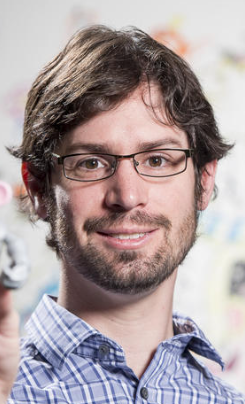 Mark Riedl合作论文数School of Interactive Computing, College of Computing, Georgia Institute of Technology3
 Anna Xambo合作论文数Institute of Education3Jeff Rosen合作论文数2Benjamin Seleb合作论文数Biological Sciences, Georgia Institute of Technology2
 Yasmine Belghith合作论文数Georgia Institute of Technology2Taneisha Lee合作论文数2
 Jessica Roberts合作论文数School of Interactive Computing, College of Computing, Georgia Institute of Technology;GVU Center, College of Computing, Georgia Institute of Technology2
 David A. Romero合作论文数Dept Mech & Ind Engn, Univ Toronto2
 Pratik Mital合作论文数H. Milton Stewart School of Industrial & Systems Engineering, Georgia Institute of Technology2Donna Llewellyn合作论文数2
 Rebecca Watts Hull合作论文数1Julia Kim合作论文数1Carol Subiño Sullivan合作论文数1Douglas Edwards合作论文数1Leigh B. Estabrooks合作论文数1Gennie Mansi合作论文数1Abdullah Asilkalkan合作论文数1Cassandra Shriver合作论文数1
 Suzanne Stathatos合作论文数California Institute of Technology1Cassie Shriver合作论文数1
 Katherine Boice合作论文数Georgia Institute of Technology1Chalece Delacoudray合作论文数Georgia Institute of Technology, Atlanta, GA, USA1caroline noyes合作论文数1
 Jessica Menold合作论文数Penn State Univ, University Pk1Shelly Engelman合作论文数1Jason Smith合作论文数Georgia Institute of Technology1
 Stephanie Couch合作论文数1
 Stephen Garrett合作论文数School of Music, College of Design, Georgia Institute of Technology1




