Abstract SABER (Sounding of the Atmosphere using Broadband Emission Radiometry) is a 10‐channel infrared radiometer that is one of four instruments on the NASA TIMED (Thermosphere‐Ionosphere‐Mesosphere Energetics and Dynamics) satellite mission to study the structure, energetics, chemistry, and dynamics of the Earth's mesosphere and lower thermosphere. Each of the ten SABER channels has a unique filter over its detector. The filter passes infrared radiation within a defined spectral region that optimizes the ability to derive temperature and constituent concentrations from the infrared radiance measurements. The TIMED spacecraft was launched into a 625 km circular polar orbit (74.1° inclination) via a Boeing Delta II rocket from Vandenberg Air Force Base on 7 December 2001. SABER continues to operate nominally and collect data routinely as it has for over 21 years. Nearly 2,200 peer‐reviewed journal articles have been published worldwide using SABER data. A list of these articles is included in Supporting Information S1 accompanying this paper. This paper presents a detailed technical description of the SABER instrument including major subsystems of the instrument and technical performance parameters. This paper comprehensively describes the instrument and its components and provides final instrument design and performance parameters. The motivation for this paper is to document this information permanently for future reference. The Space Dynamics Laboratory (SDL) of Utah State University designed, fabricated, and calibrated the SABER instrument in close collaboration with NASA Langley Research Center, Hampton University, and Global Atmospheric Technologies and Science (GATS).
The Ocean Color Instrument (OCI), which will be integrated with the Plankton, Aerosol, Cloud, ocean Ecosystem (PACE) satellite, will collect science data that will be used to monitor the health of Earth’s oceans and atmosphere. The Short-Wave Infrared (SWIR) Detection Assembly (SDA), built and characterized by Utah State University Space Dynamics Laboratory (SDL), is a subsystem of OCI consisting of 32 channels covering seven discrete optical bands of interest. A total of 16 SWIR Detection Subassemblies (SDSs) compose the SDA and house the cold optical system. The science data optical input for each SDS is supplied by a 0.22 NA multimode fiber interfacing with a fiber adapter. The diverging light from the fiber is collimated, split by a dichroic beamsplitter to two separate channels, filtered by the science filter, and then reimaged onto the single-element detectors with a final 0.76 NA. Aspheric, diamond-turned powered elements are used throughout the optical design. Fabrication and alignment tolerance analysis/budgets are balanced to ensure the optical system meets throughput requirements. All systems are aligned at ambient temperature using an InSb camera and an in-line illumination microscope system to directly image the active detector area through the science filters. Compensators used during alignment are detector focus and decenter, which are adjusted via photoetched shims in increments of 25 μm. Average focus and centering errors were less than 8 μm among all 32 flight and 10 flight spare detectors. Each SDS spectral response and conversion gain was verified at operational temperature of -65°C in vacuum.
Abstract The SABER instrument on the National Aeronautics and Space Administration Thermosphere‐Ionosphere‐Mesosphere Energetics and Dynamics satellite continues to provide a long‐term record of Earth's stratosphere, mesosphere, and lower thermosphere. The SABER data are being used to examine long‐term changes and trends in temperature, water vapor, and carbon dioxide. A tacit, central assumption of these analyses is that the SABER instrument radiometric calibration is not changing with time; that is, the instrument is stable. SABER stratospheric temperatures and those derived from Global Positioning System Radio Occultation measurements are compared to examine SABER's stability. Global Positioning System Radio Occultation measurements are inherently stable due to the accuracy and traceability of the measured phase delay rate to the Système Internationale definition of the second. Differences in global annual mean SABER and COSMIC lower stratospheric temperatures show little significant change with time in the 11 years spanning 2007–2017. From this analysis we infer that SABER temperatures are stable to better than 0.1 to 0.2 K per decade.
The Wide-Field Infrared Survey Explorer (WISE) mission launched in December of 2009 is a true success story. The mission is performing beyond expectations on-orbit and maintained cost and schedule throughout. How does such a thing happen? A team constantly focused on mission success is a key factor. Mission success is more than a program meeting its ultimate science goals; it is also meeting schedule and cost goals to avoid cancellation. The WISE program can attribute some of its success in achieving the image quality needed to meet science goals to lessons learned along the way. A requirement was missed in early decomposition, the absence of which would have adversely affected end-to-end system image quality. Fortunately, the ability of the cross-organizational team to focus on fixing the problem without pointing fingers or waiting for paperwork was crucial in achieving a timely solution. Asking layman questions early in the program could have revealed requirement flowdown misunderstandings between spacecraft control stability and image processing needs. Such is the lesson learned with the WISE spacecraft Attitude Determination & Control Subsystem (ADCS) jitter control and the image data reductions needs. Spacecraft motion can affect image quality in numerous ways. Something as seemingly benign as different terminology being used by teammates in separate groups working on data reduction, spacecraft ADCS, the instrument, mission operations, and the science proved to be a risk to system image quality. While the spacecraft was meeting the allocated jitter requirement, the drift rate variation need was not being met. This missing need was noticed about a year before launch and with a dedicated team effort, an adjustment was made to the spacecraft ADCS control. WISE is meeting all image quality requirements on-orbit thanks to a diligent team noticing something was missing before it was too late and applying their best effort to find a solution.
The design, fabrication and testing of the BeamSplitter Assembly (BSA) of the Wide-field Infrared Survey Explorer (WISE) instrument are discussed in the paper. The BSA splits the WISE telescope optical output beam into 4 spectral wavelength bands: 2.8-3.8, 4.1-5.2, 7.5-16.5, and 20-26 μm. The BSA also provides focus adjustments to focus the WISE instrument prior to launch. The methods used to focus WISE are also discussed in this paper. Funding for and management of the WISE program were provided by the NASA Jet Propulsion Laboratory.
The Sounding of the Atmosphere using Broadband Emission Radiometry (SABER) instrument, a 10-channel infrared (1.27 - 16.9 μm) radiometer, was launched on the TIMED (Thermosphere, Ionosphere, Mesosphere Energetics and Dynamics) satellite in December 2001 from Vandenburg Air Force Base. SABER is being used to measure earthlimb emissions and to characterize infrared radiation, allowing calculation of cooling rates and determination of composition and temperature profiles in the mesosphere, lower thermosphere, and ionosphere (60-180 km). The SABER telescope is an on-axis Cassegrain design with a picket-fence tuning fork chopper at the first focus and a clamshell re-imager to focus the image on the focal plane. The telescope was designed to reject stray light from the Earth and atmosphere outside the instrument's instantaneous field-of-view (IFOV). The baffle assembly contains a single-axis scan mirror, which permits the 2 km vertical IFOV of each detector to be scanned from the Earth to a 400 km tangent height. The telescope and baffle assembly are cooled to 220 K by a dedicated radiator. The focal plane assembly is cooled to 75 K by a miniature cryogenic refrigerator. Field programmable gate arrays are used to implement state machine algorithms for control and operation of the instrument and subsystems. Although originally designed for a two-year lifetime requirement, the SABER instrument has been in continuous operation since January 2002. This paper discusses the SABER instrument design and innovations developed to achieve the required performance, along with instrument performance and lessons learned from the program.
The NASA Geosynchronous Imaging Fourier Transform Spectrometer (GIFTS) has been completed as an Engineering Demonstration Unit (EDU) and has recently finished thermal vacuum testing and calibration. The GIFTS EDU was designed to demonstrate new and emerging sensor and data processing technologies with the goal of making revolutionary improvements in meteorological observational capability and forecasting accuracy. The GIFTS EDU includes a cooled (150 K), imaging FTS designed to provide the radiometric accuracy and atmospheric sounding precision required to meet the next generation GOES sounder requirements. This paper discusses a GIFTS sensor response model and its validation during thermal vacuum testing and calibration. The GIFTS sensor response model presented here is a component-based simulation written in IDL with the model component characteristics updated as actual hardware has become available. We discuss our calibration approach, calibration hardware used, and preliminary system performance, including NESR, spectral radiance responsivity, and instrument line shape. A comparison of the model predictions and hardware performance provides useful insight into the fidelity of the design approach.
The Sounding of the Atmosphere using Broadband Emission Radiometry (SABER) instrument is a 10-channel earth limb-viewing sensor that measures atmospheric emissions in the spectral range of 1.27 μm to 16.9 μm. SABER is part of NASA's Thermosphere-Ionosphere-Mesosphere Energetics and Dynamics (TIMED) mission, which was successfully launched in December 2001. Uncommon among limb-viewing sensors, SABER employs an on-axis telescope design with reimaging optics to allow for an intermediate field stop and a Lyot stop. Additional stray light protection is achieved by an innovative inner Lyot stop, which is placed conjugate to the secondary obscuration and support structure. Presented in this paper is the off-axis response of SABER as measured in the Terrestrial Black Hole off-axis scatter facility at the Space Dynamics Laboratory. The measurement was made at visible wavelengths; thus, the response is only representative of SABER's short wavelength channels. The measurement validated the stray light design and complemented the APART software model, which predicts that mirror scatter is the dominant stray light mechanism at short wavelengths. In addition, estimates of the mirror bi-directional reflectance distribution function (BRDF) were made. The off-axis response measurement indicates that SABER is an exceptional stray light suppression telescope.
This paper describes a 12-channel infrared radiometer with the acronym SABER (Sounding of the Atmosphere using Broadband Emission radiometry) that has been selected by NASA to fly on the TIMED (Thermosphere-Ionosphere-Mesosphere Energetics and Dynamics) mission.
This paper provides an overview of the sounding of the atmosphere using broadband emission radiometer (SABER) instrument proposed by NASA Langley Research Center (LaRC) and the Space Dynamics Laboratory at Utah State University (SDL/USU). SABER is a 12-channel infrared radiometer designed to measure atmospheric emissions in the 1 to 17 micrometers spectral region. Radiometric, optical, thermal, and electronic aspects of the design are discussed.
 Pierredominique Pautet合作论文数Center for Atmospheric and Space Science, Utah State University5
 Martin Mlynczak合作论文数Christopher Newport University;Langley Research Center, National Aeronautics and Space Administration5Ronald J. Huppi合作论文数5john l stauder合作论文数4David McLain合作论文数3lorin zollinger合作论文数3
 David C. Fritts合作论文数Colorado Division, GATS3
 James M. Russell III合作论文数Center for Atmospheric Sciences, Hampton University3
 Larry L. Gordley合作论文数GATS, Inc.;SOFIE3J. Clair Batty合作论文数3Doran J. Baker合作论文数3R J Huppi合作论文数2
 Scott M. Jensen合作论文数2mark jensen合作论文数2
 Stephen D. Eckermann合作论文数Space Science Division, U.S. Naval Research Laboratory2
 Tao Yuan合作论文数Ctr Atmospher & Space Sci, Utah State Univ2
 Michael J. Taylor合作论文数Department of Mechanical Engineering,Carnegie Mellon University2
 Jonathan B. Snively合作论文数Center for Atmospheric and Space Sciences, Utah State University2Mark F. Larsen合作论文数2George A. Vanasse合作论文数2
 John D. Elwell合作论文数2james champagne合作论文数1duane miles合作论文数1Glen Hansen合作论文数1gregory w cantwell合作论文数1valerie g duval合作论文数1Ulrik Gliese合作论文数1gene a ware合作论文数1scott jensen合作论文数1Steven Brown合作论文数1craig tew合作论文数1dave mclain合作论文数1Tyrel Rupp合作论文数1
 Martha Kendall合作论文数1w r pendleton合作论文数1T. Newswander合作论文数1w joe thomes合作论文数1Kenneth Squire合作论文数1Jacob K. Hedelius合作论文数1Zhao Yucheng合作论文数1Daniel Vukobratovich合作论文数1
 Emily Kan合作论文数1
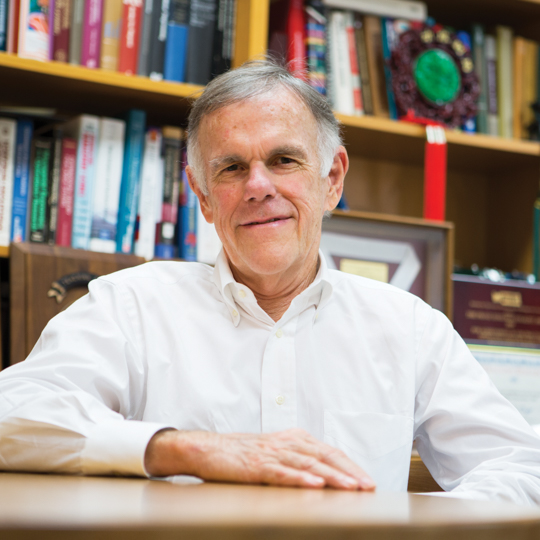 Jim Dyer合作论文数Department of Information, Risk, and Operations Management, McCombs School of Business, The University of Texas at Austin1
 Justin Miller合作论文数eBay1
 Hanli Liu合作论文数High Altitude Observatory, National Center for Atmospheric Research1
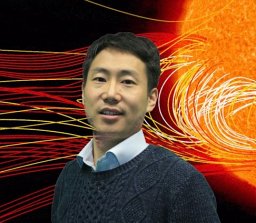 Jia Yue合作论文数High Altitude Observatory, National Center for Atmospheric Research1
 Mark Shannon合作论文数1
 Edward L. (Ned) Wright合作论文数University of California, Los Angeles1James Q Peterson合作论文数1




