Lasair is the UK Community Broker for transient alerts from the Legacy Survey of Space and Time (LSST) from the Vera C. Rubin Observatory. We explain the system's capabilities, how users can achieve their scientific goals, and how Lasair is implemented. Lasair offers users a kit of parts that they can use to build filters to concentrate their desired alerts. The kit has novel lightcurve features, sky context, watchlists of special sky objects and regions of the sky, dynamic crossmatching with catalogues of known astronomical sources, and classifications and annotations from other users and partner projects. These resources can be shared with other users, copied, and modified. Lasair offers real-time machine-to-machine notifications of filtered transient alerts. Even though the Rubin Observatory is not yet complete, Lasair is a mature system: it has been processing and serving data from the similarly formatted stream of the Zwicky Transient Facility (ZTF) alerts.
Known for their efficiency in analyzing large data sets, machine learning classifiers are widely used in wide-field sky surveys. The upcoming Vera C. Rubin Observatory Legacy of Time and Space Survey (LSST) will generate millions of alerts every night, enabling the discovery of large samples of rare events. Identifying such objects soon after explosion will be essential to study their evolution. This requires a machine learning framework that makes use of all available transient and contextual information. Using $\sim5400$ transients from the ZTF Bright Transient Survey as input data, we develop NEEDLE, a novel hybrid classifier to select for two rare classes with strong environmental preferences: superluminous supernovae (SLSNe) preferring dwarf galaxies, and tidal disruption events (TDEs) occurring in the centres of nucleated galaxies. The input data includes detection and reference images, photometric information from the alert packets, and host galaxy magnitudes from Pan-STARRS. Despite having only a few tens of examples of the rare classes, our average (best) completeness on an unseen test set reaches 77% (93%) for SLSNe and 72% (87%) for TDEs. This may still result in a large fraction of false positives for the rare transients, given the large class imbalance in real surveys. However, the goal of NEEDLE is to find good candidates for spectroscopic classification, rather than to select pure photometric samples. Our network is designed with LSST in mind and we expect performance to improve further with the higher resolution images and more accurate transient and host photometry that will be available from Rubin. Our system will be deployed as an annotator on the UK alert broker, Lasair, to provide predictions to the community in real time.
Advanced LIGO and Advanced Virgo are actively monitoring the sky and collecting gravitational-wave strain data with sufficient sensitivity to detect signals routinely. In this paper we describe the data recorded by these instruments during their first and second observing runs. The main data products are the gravitational-wave strain arrays, released as time series sampled at 16384 Hz. The datasets that include this strain measurement can be freely accessed through the Gravitational Wave Open Science Center at http://gw-openscience.org, together with data-quality information essential for the analysis of LIGO and Virgo data, documentation, tutorials, and supporting software.
Gravitational wave transients are caused by some of the most energetic events in the Universe, and a precise location would allow deep examination of the counterpart by electromagnetic waves (telescopes collecting light), the combination of GW and EM resulting in very much improved science return (multi-messenger Astronomy). Since the GW detectors do not provide good localization on the sky, the faint counterpart will be very difficult to find. One strategy to help the search is to look first where mass is concentrated and thus the prior probability of GW events is highest. In the first part of this paper, we present methods used to estimate stellar masses and metallicities of galaxies and galaxy clusters in different catalogs. In the second part of the paper, we test our estimation accuracy by comparing our results with stellar masses given in Stripe 82 Massive Galaxy Catalogue (S82-MGC). The relation between stellar mass we found and that from S82-MGC is provided for GWGC, 2MASS-GLADE, and WISExSCOS catalog in the last part of the paper. Our results are used in an interactive web-based tool (Skymap Viewer) for astronomers to decide where to look first in EM follow-up observations of GW events in the future.
We present ~47,000 periodic variables found during the analysis of 5.4 million variable star candidates within a 20,000 square degree region covered by the Catalina Surveys Data Release-1 (CSDR1). Combining these variables with type-ab RR Lyrae from our previous work, we produce an on-line catalog containing periods, amplitudes, and classifications for ~61,000 periodic variables. By cross-matching these variables with those from prior surveys, we find that > 90% of the ~8,000 known periodic variables in the survey region are recovered. For these sources we find excellent agreement between our catalog and prior values of luminosity, period and amplitude, as well as classification. We investigate the rate of confusion between objects classified as contact binaries and type-c RR Lyrae (RRc's) based on periods, colours, amplitudes, metalicities, radial velocities and surface gravities. We find that no more than few percent of these variables in these classes are misidentified. By deriving distances for this clean sample of ~5,500 RRc's, we trace the path of the Sagittarius tidal streams within the Galactic halo. Selecting 146 outer-halo RRc's with SDSS radial velocities, we confirm the presence of a coherent halo structure that is inconsistent with current N-body simulations of the Sagittarius tidal stream. We also find numerous long-period variables that are very likely associated within the Sagittarius tidal streams system. Based on the examination of 31,000 contact binary light curves we find evidence for two subgroups exhibiting irregular lightcurves. One subgroup presents significant variations in mean brightness that are likely due to chromospheric activity. The other subgroup shows stable modulations over more than a thousand days and thereby provides evidence that the O'Connell effect is not due to stellar spots.
The Catalina Sky Survey began in 2004 and uses three telescopes to cover the sky between declination δ=-75 and+ 65. Each of the survey telescopes is run as a separate subsurveys. These consist of the Catalina Schmidt Survey (CSS) and the Mount Lemmon Survey (MLS) in Tucson, AZ, and the Siding Spring Survey (SSS) in Siding Spring, Australia. All images are taken unfiltered to maximize throughput. The observations analyzed in this work were taken in sets of four images separated by 10 minutes with typical exposure times of 30s.
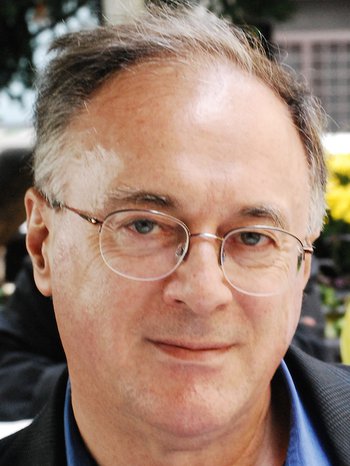 George Djorgovski合作论文数Center for Data Driven Discovery, California Institute of Technology;The Division of Physics, Mathematics and Astronomy, California Institute of Technology189
 Matthew J. Graham合作论文数The Division of Physics, Mathematics and Astronomy, California Institute of Technology175
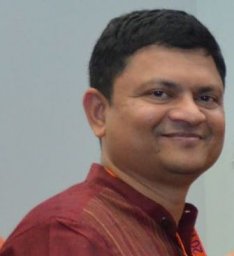 Ashish Mahabal合作论文数Center for Data Driven Discovery, California Institute of Technology;Division of Physics, Mathematics, and Astronomy, California Institute of Technology153
 S. M. Larson合作论文数115
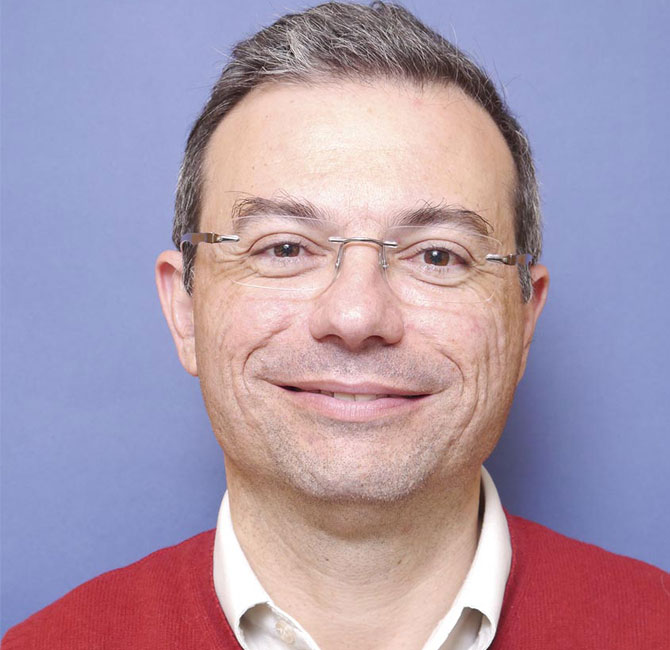 Márcio Catelan合作论文数Instituto de Astrofísica, Facultad de Física, Pontificia Universidad Catolica de Chile115
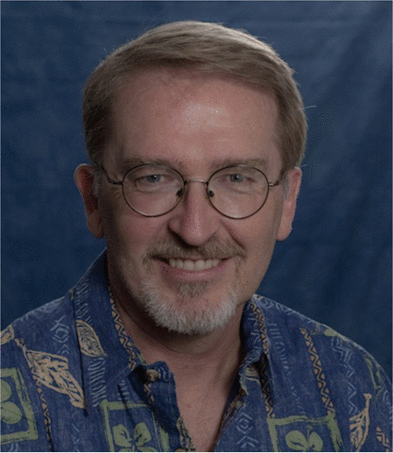 e christensen合作论文数110e c beshore合作论文数98
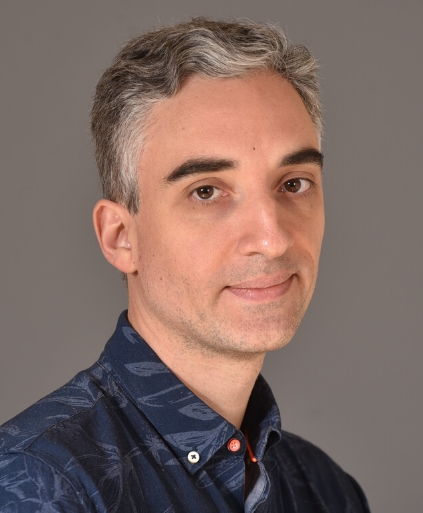 José Luis Prieto合作论文数Instituto de Estudios Astrofísicos, Facultad de Ingeniería y Ciencias, Universidad Diego Portales75Andrew J. Drake合作论文数Department of Astronomy, California Institute of Technology69Ciro Donalek合作论文数Virtualitics, Inc;Center for Data-Driven Discovery, California Institute of Technology;Soldissimi43R. H. Mcnaught合作论文数29s howerton合作论文数27Charles Baltay合作论文数Yale University23
 David Rabinowitz合作论文数Department of Physics, Yale University22A Mahabal合作论文数21Paul Messina合作论文数Manager of High Performance Computing, Jet Propulsion laboratory20
 Stefano Benetti合作论文数Osservatorio Astronomico di Padova, Istituto Nazionale di Astrofisica19g j garradd合作论文数18
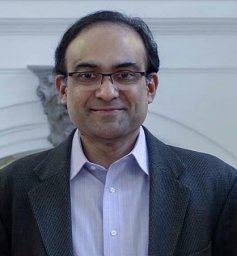 Jacob Joseph合作论文数Centre for Medical Image Computing, UCL17
 Geoffrey Fox合作论文数Department of Physics, College of Arts and Sciences, Indiana University;Department of Intelligent Systems Engineering, Indiana University;Community Grid Laboratory, Indiana University;Digital Science Center of Pervasive Technology Institute;School of Engineering and Applied Science, University of Virginia17
 Andrea Pastorello合作论文数Astrophysics Research Centre;School of Mathematics and Physics;University Belfast;School of Mathematics and Physics, Queen ' s University Belfast17Eilat Glikman合作论文数17Andrea Boattini合作论文数17
 Stefano Valenti合作论文数Department of Physics, University of California, Davis16
 A. E. Bauer合作论文数15
 Lina Tomasella合作论文数Istituto Nazionale di Astrofisica15
 P. Ochner合作论文数11steven m larson合作论文数11G. H. Marion合作论文数11
 Daniel S. Katz合作论文数University of Illinois Urbana-Champaign, University of Illinois Urbana-Champaign;School of Information Sciences, University of Illinois Urbana-Champaign11
 Adam D. Myers合作论文数Department of Physics & Astronomy, College of Engineering and Physical Sciences, University of Wyoming11
 Bruce Berriman合作论文数Infrared Processing and Analysis Center, California Institute of Technology;NASA's Jet Propulsion Laboratory11John Good合作论文数10
 Alex Gibbs合作论文数10
 Richard Scalzo合作论文数Centre for Translational Data ScienceThe University of Sydney;Darlington, NSW 2008 Australia10
 Giovanni Aloisio合作论文数Engineering Faculty of the University of Salento9
 Henry C. Ferguson合作论文数Space Telescope Science Institute9E. Beshore合作论文数8R. A. Kowalski合作论文数8Nancy Ellman合作论文数8A. A. Mahabal合作论文数8
 Alexander Szalay合作论文数Department of Physics and Astronomy, Krieger School of Arts and Sciences, Johns Hopkins University;Department of Computer Science, Whiting School of Engineering, Johns Hopkins University;Institute for Data Intensive Engineering and Science, Johns Hopkins University;Eötvös University8
 Peter Nugent合作论文数Computational Research Division, Lawrence Berkeley National Laboratory;Computational Cosmology Center, Lawrence Berkeley National Laboratory8
 Tom Prince合作论文数The Division of Physics, Mathematics and Astronomy, California Institute of Technology8
 Jonathan Jerke合作论文数Quantum Galaxies Corporation;Trinity Industries, Inc.8
 Robert J Brunner合作论文数Department of Statistics, College of Liberal Arts & Sciences, University of Illinois at Urbana-Champaign;School of Information Sciences, University of Illinois at Urbana-Champaign8AJ Drake合作论文数7robert j hill合作论文数7




