The query optimization phase within a database management system (DBMS) ostensibly finds the fastest query execution plan from a potentially large set of enumerated plans, all of which correctly compute the same result of the specified query. Sometimes the cost-based optimizer selects a slower plan, for a variety of reasons. Previous work has focused on increasing the performance of specific components, often a single operator, within an individual DBMS. However, that does not address the fundamental question: from where does this suboptimality arise, across DBMSes generally? In particular, the contribution of each of many possible factors to DBMS suboptimality is currently unknown. To identify the root causes of DBMS suboptimality, we first introduce the notion of empirical suboptimality of a query plan chosen by the DBMS, indicated by the existence of a query plan that performs more efficiently than the chosen plan, for the same query. A crucial aspect is that this can be measured externally to the DBMS, and thus does not require access to its source code. We then propose a novel predictive model to explain the relationship between various factors in query optimization and empirical suboptimality. Our model associates suboptimality with the factors of complexity of the schema, of the underlying data on which the query is evaluated, of the query itself, and of the DBMS optimizer. The model also characterizes concomitant interactions among these factors. This model induces a number of specific hypotheses that were tested on multiple DBMSes. We performed a series of experiments that examined the plans for thousands of queries run on four popular DBMSes. We tested the model on over a million of these query executions, using correlational analysis, regression analysis, and causal analysis, specifically Structural Equation Modeling (SEM). We observed that the dependent construct of empirical suboptimality prevalence correlates positively with nine specific constructs characterizing four identified factors that explain in concert much of the variance of suboptimality of two extensive benchmarks, across these disparate DBMSes. This predictive model shows that it is the common aspects of these DBMSes that predict suboptimality, not the particulars embedded in the inordinate complexity of each of these DBMSes. This paper thus provides a new methodology to study mature query optimizers, identifies underlying DBMS-independent causes for the observed suboptimality, and quantifies the relative contribution of each of these causes to the observed suboptimality. This work thus provides a roadmap for fundamental improvements of cost-based query optimizers.
The query optimization phase within a database management system (DBMS) ostensibly finds the fastest query execution plan from a potentially large set of enumerated plans, all of which correctly compute the specified query. Occasionally the cost-based optimizer selects a slower plan, for a variety of reasons. We introduce the notion of empirical suboptimality of a query plan chosen by the DBMS, indicated by the existence of a query plan that performs more efficiently than the chosen plan, for the same query. From an engineering perspective, it is of critical importance to understand the prevalence of suboptimality and its causal factors. We examined the plans for thousands of queries run on four DBMSes, resulting in over a million query executions. We previously observed that the construct of empirical suboptimality prevalence positively correlated with the number of operators in the DBMS. An implication is that as operators are added to a DBMS, the prevalence of slower queries will grow. Through a novel experiment that examines the plans on the query/cardinality combinations, we present evidence for a previously unknown upper bound on the number of operators a DBMS may be able to support before performance suffers. We show that this upper bound may have already been reached.
We describe the Arizona-NOIRLab Temporal Analysis and Response to Events System (ANTARES), a software instrument designed to process large-scale streams of astronomical time-domain alerts. With the advent of large-format CCDs on wide-field imaging telescopes, time-domain surveys now routinely discover tens of thousands of new events each night, more than can be evaluated by astronomers alone. The ANTARES event broker will process alerts, annotating them with catalog associations and filtering them to distinguish customizable subsets of events. We describe the data model of the system, the overall architecture, annotation, implementation of filters, system outputs, provenance tracking, system performance, and the user interface.
Leveraging existing data sources to improve the declaration and management of authorship conflicts of interest.
With the widespread availability of health-oriented digital and virtual devices and software (apps), healthcare organizations are shifting their approaches to recognize how patients wish to communicate, manage their health, and share their health information. The shift in digital and virtual health is designed to improve healthcare access and quality—particularly in underserved populations, geographies, and specialties. This course will present the current and emerging digital and virtual health services, as well as the benefits and drawbacks of these technologies. This course will address various forms of telehealth, apps, portable devices, and remote monitoring strategies, as well as the role of artificial and augmented intelligence in enhancing digital and virtual experiences. After a broad review of the digital and virtual health field, this course will focus on evaluating, sustaining, and leading a digital or virtual program. Each lecture will discuss regulatory issues such as privacy, security, FDA review/approval, and when digital and virtual health services can be reimbursed. In addition to these regulatory issues, the course will instruct how to conduct a needs assessment, evaluate digital and virtual health products, implement different business models, and evaluate best practices for implementation and adoption. Preferred Prerequisite: HINF 4301.
With the avalanche of alerts to be delivered by Rubin Observatory's Legacy Survey of Space and Time and the limited resources for follow-up, we will need brokers to select intriguing alerts that warrant follow-up in a timely manner. At NSF's NOIRLab and University of Arizona, we are developing the Arizona-NOIRLab Temporal Analysis and Response to Events System (ANTARES, Saha et al. 2014, 2016, Narayan et al. 2018), to hunt for the rarest of the rare events in the time domain. In this work, we provide an overview of the ANTARES system, how we use real-time alerts from the ongoing Zwicky Transient Facility survey as a training set, and the way forwards to Rubin observatory.
With the widespread availability of health-oriented digital and virtual devices and software (apps), healthcare organizations are shifting their approaches to recognize how patients wish to communicate, manage their health, and share their health information. The shift in digital and virtual health is designed to improve healthcare access and quality—particularly in underserved populations, geographies, and specialties. This course will present the current and emerging digital and virtual health services, as well as the benefits and drawbacks of these technologies. This course will address various forms of telehealth, apps, portable devices, and remote monitoring strategies, as well as the role of artificial and augmented intelligence in enhancing digital and virtual experiences. After a broad review of the digital and virtual health field, this course will focus on evaluating, sustaining, and leading a digital or virtual program. Each lecture will discuss regulatory issues such as privacy, security, FDA review/approval, and when digital and virtual health services can be reimbursed. In addition to these regulatory issues, the course will instruct how to conduct a needs assessment, evaluate digital and virtual health products, implement different business models, and evaluate best practices for implementation and adoption. Preferred Prerequisite: HINF 4301.
We describe the scientific goals and capabilities of the ANTARES project. This is a software infrastructure system designed to process time-domain alerts at the scale the Large Synoptic Survey Telescope will produce. This system will allow access to large-scale time-domain streams with real-time filters, machine learning, and other tools.
Abstract: The increasing tendency across scientific disciplines to write multi authored papers [1,2] makes the issue of the sequence of contributors’ names a major topic both in terms of reflecting actual contributions and in a posteriori assessments by evaluation committees. The reviewers aware that there are different cultures to authorship order. The usual and informal practice of giving the whole credit (impact factor) to each author of a multi authored paper is not adequate and over emphasizes the minor contributions of many authors. Similarly, evaluation of authors according to citation frequencies means often overrating resulting from high-impact but multi authored publications. Teja Tscharntke et al. [72] proposed that four methods. Like as SDC,EC, FLAE, and PCI. Comparison of the credit for contributions to this study under the four different models has been suggested. The proposed systems, such as Individual Frequency (IF) and Weighted Frequency (WF), have no repeated impact for each position.
The unprecedented volume and rate of transient events that will be discovered by the Large Synoptic Survey Telescope (LSST) demand that the astronomical community update its follow-up paradigm. Alert-brokers-automated software system to sift through, characterize, annotate, and prioritize events for follow-up-will be critical tools for managing alert streams in the LSST era. The Arizona-NOAO Temporal Analysis and Response to Events System (ANTARES) is one such broker. In this work, we develop a machine learning pipeline to characterize and classify variable and transient sources only using the available multiband optical photometry. We describe three illustrative stages of the pipeline, serving the three goals of early, intermediate, and retrospective classification of alerts. The first takes the form of variable versus transient categorization, the second a multiclass typing of the combined variable and transient data set, and the third a purity-driven subtyping of a transient class. Although several similar algorithms have proven themselves in simulations, we validate their performance on real observations for the first time. We quantitatively evaluate our pipeline on sparse, unevenly sampled, heteroskedastic data from various existing observational campaigns, and demonstrate very competitive classification performance. We describe our progress toward adapting the pipeline developed in this work into a real-time broker working on live alert streams from time-domain surveys.
 Christian S. Jensen合作论文数Department of Computer Science, Aalborg University186
 Michael Böhlen合作论文数Department of Informatics, University of Zürich84
 Hans Hinterberger合作论文数66Nathaniel Palmer合作论文数65Ethan Zhang合作论文数60
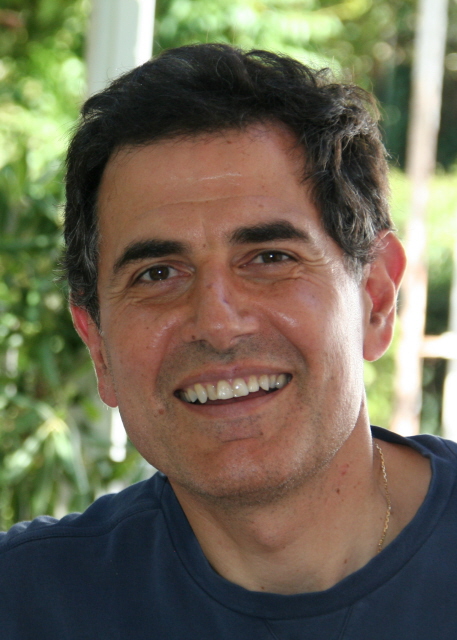 Vassilis J. Tsotras合作论文数Department of Computer Science and Engineering, Bourns College of Engineering, University of California, Riverside;Data Science Center, University of California, Riverside60
 Philippe Bonnet合作论文数IT University of Copenhagen60Yi Zhang合作论文数59
 Curtis Dyreson合作论文数Department of Computer Science, Utah State University58Bernhard Thalheim合作论文数55
 Jingren Zhou合作论文数Alibaba Group54
 Ninghui Li (李宁辉)合作论文数Department of Computer Science, Purdue University;Secure Intelligence Institute, Perplexity54Peter Revesz合作论文数53
 Yannis Theodoridis合作论文数Department of Informatics, School of Information and Communication Technologies, University of Piraeus53
 Yannis Manolopoulos合作论文数Faculty of Pure & Applied Sciences, Open University of Cyprus;Department of Informatics, Aristotle University of Thessaloniki52
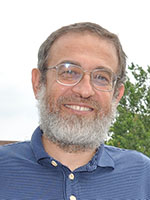 Walid G. Aref合作论文数Department of Computer Science, Purdue University51
 Nick Craswell合作论文数Microsoft Research50
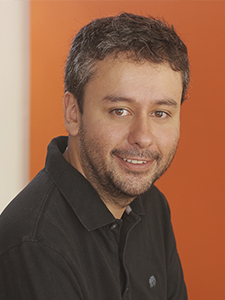 Marcelo Arenas合作论文数Department of Computer Science, School of engineering, Pontificia Universidad Católica de Chile;Institute for Mathematical and Computational Engineering, Pontificia Universidad Católica de Chile50
 Greg Speegle合作论文数Baylor Univ.50Konstantinos Morfonios合作论文数50
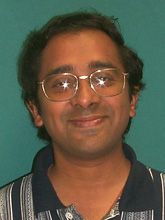 Amarnath Gupta合作论文数San Diego Supercomputer Center, University of California San Diego49
 David B. Lomet合作论文数DB Engine Perf LLC49
 Yannis Ioannidis合作论文数Department of Informatics, National and Kapodistrian University of Athens;Athena Research and Innovation Center49
 Sameh Elnikety合作论文数Microsoft Research in Cambridge49
 Maristella Matera合作论文数Dipartimento di Elettronica, Informazione e Bioingegneria, Politecnico di Milano;Human-Centric Interactive Technology Lab, Politecnico di Milano49
 Cristina Sirangelo合作论文数Institut de Recherche en Informatique Fondamentale, Université Paris Cité48Alan Fekete合作论文数48Athena Vakali合作论文数48
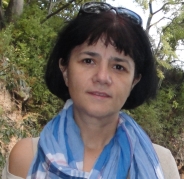 Evaggelia Pitoura合作论文数Department of Computer Science & Engineering, School of Engineering, University of Ioannina;Archimedes Research Unit on AI, Data Science and Algorithms48Betsy George合作论文数University of Minnesota48
 Gerhard Weikum合作论文数Department of Databases and Information Systems, Max-Planck Institute for Informatics48
 Ben Carterette合作论文数Spotify48
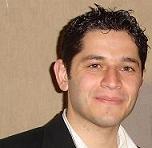 Ippokratis Pandis合作论文数Amazon Web Services47
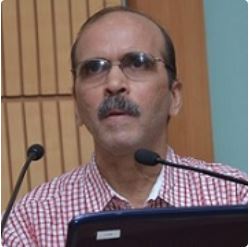 Krithi Ramamritham合作论文数Sai University47
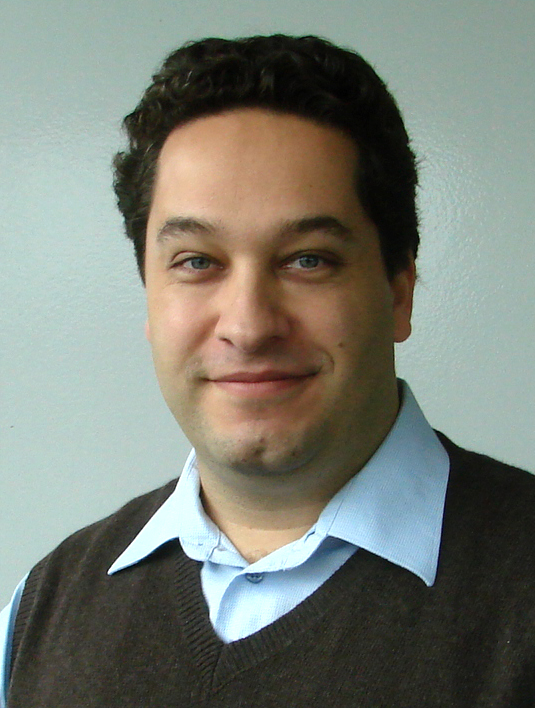 Nikos Hardavellas合作论文数Department of Electrical and Computer Engineering, McCormick School of Engineering and Applied Science, Northwestern University;Department of Computer Science, McCormick School of Engineering and Applied Science, Northwestern University47
 Jovan Pehcevski合作论文数Dell Technologies47
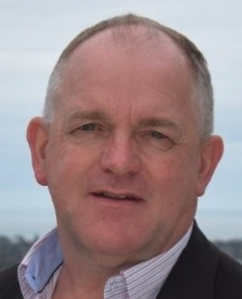 John Roddick合作论文数College of Science and Engineering, Flinders University46Benjamin Piwowarski合作论文数45
 Radu Sion合作论文数Department of Computer Science, Stony Brook University;Virtalica;Private Machines Inc.45
 Nikos Mamoulis (孟每思)合作论文数Department of Computer Science and Engineering, University of Ioannina45Arie Shoshani合作论文数44
 Shashi Shekhar合作论文数Department of Computer Science, College of Science and Engineering, University of Minnesota44
 Kazuo Goda合作论文数42
 Carson Kai-Sang Leung合作论文数Database & Data Mining Lab, Department of Computer Science, University of Manitoba42
 Johann Gamper合作论文数41
 Alexandros Labrinidis合作论文数University of Pittsburgh Department of Computer Science Advanced Data Management Technologies Laboratory41Tok Wang Ling合作论文数40
 M. (Mounia) Lalmas合作论文数Spotify;Faculty of Science, University of Amsterdam;Informatics Institute, University of Amsterdam;University College London40
 Eric Wohlstadter合作论文数Altiscale40




