In this work, two compact, permanent magnet, electron spectrometers have been built to measure the electron beam energy at the Dual Axis Radiographic Hydrodynamic Test facility. Using H- and OH- anions, the spectrometers were calibrated at the Special Technologies Laboratory in Santa Barbara, California (USA). The spectrometers were mounted on a custom drift tube that allows the magnet assemblies to be translated, which increases the path length of the electrons traveling through the magnetic field and therefore increases the upper bound of the measurable electron kinetic energy. The measurable range of electron kinetic energies is between 2.8 MeV-4.1 MeV for the first spectrometer and 14.1 MeV-21.1 MeV for the second spectrometer, with an overall measurement uncertainty of 0.32%.
Locating a gamma source can be done by a variety of methods, ranging from rotating shields, to inter-detector shadowing, to Compton and Coded aperture imaging. Directional information is usually available in spectra from detector arrays, but the information is often ignored. Compton data from an array can be exploited to yield precise source locations, but that technique is slow. Processing data from occlusion, or mutual detector shadowing, is less precise, but much faster. Instruments currently implementing an occlusion method tend to focus only on azimuthal angles, but with some modification the technique can be extended to estimate elevation angles as well. We present a generalization of the occlusion method for estimating both azimuthal and elevation angles to a source, and calibration of the method involves singular value decomposition. The method works even for ill-chosen detector array geometries, and we show results from several detector systems.
The rate equations found in frequency domain fluorescence spectroscopy are the same as those found in electronics under analog filter theory. Laplace transform methods are a natural way to solve the equations, and the methods can provide solutions for arbitrary excitation functions. The fluorescence terms can be modelled as circuit components and cascaded with drive and detection electronics to produce a global transfer function. Electronics design tools such as SPICE can be used to model fluorescence problems. In applications, such as remote sensing, where detection electronics are operated at high gain and limited bandwidth, a global modelling of the entire system is important, since the filter terms of the drive and detection electronics affect the measured response of the fluorescence signals. The techniques described here can be used to separate signals from fast and slow fluorophores emitting into the same spectral band, and data collection can be greatly accelerated by means of a frequency comb driver waveform and appropriate signal processing of the response. The simplification of the analysis mathematics, and the ability to model the entire detection chain, make it possible to develop more compact instruments for remote sensing applications.
Energy asymmetry of inter-detector crosstalk from Compton scattering can be exploited to infer the direction to a gamma source. A covariance approach extracts the correlated crosstalk from data streams to estimate matched signals from Compton gammas split over two detectors. On a covariance map the signal appears as an asymmetric cross diagonal band with axes intercepts at the full photo-peak energy of the original gamma. The asymmetry of the crosstalk band can be processed to determine the direction to the radiation source. The technique does not require detector shadowing, masking, or coded apertures, thus sensitivity is not sacrificed to obtain the directional information. An angular precision of better than 1° of arc is possible, and processing of data streams can be done in real time with very modest computing hardware.
The covariance method exploits fluctuations in signals to recover information encoded in correlations which are usually lost when signal averaging occurs. In nuclear spectroscopy it can be regarded as a generalization of the coincidence technique. The method can be used to extract signal from uncorrelated noise, to separate overlapping spectral peaks, to identify escape peaks, to reconstruct spectra from Compton continua, and to generate secondary spectral fingerprints. We discuss a few statistical considerations of the covariance method and present experimental examples of its use in gamma spectroscopy.
Covariance spectroscopy is a method of processing second order moments of data to obtain information that is usually absent from average spectra. In nuclear radiation detection it represents a generalization of nuclear coincidence techniques. Correlations and fluctuations in data encode valuable information about radiation sources, transport media, and detection systems. Gaining access to the extra information can help to untangle complicated spectra, uncover overlapping peaks, accelerate source identification, and even sense directionality. Correlations existing at the source level are particularly valuable since many radioactive isotopes emit correlated gammas and neutrons. Correlations also arise from interactions within detector systems, and from scattering in the environment. In particular, correlations from Compton scattering and pair production within a detector array can be usefully exploited in scenarios where direct measurement of source correlations would be unfeasible. We present a covariance analysis of a few experimental data sets to illustrate the utility of the concept.
The multiple coincidence technique uses 14.1 MeV neutrons to produce (n, multiple-γ) coincidences to detect fissile and fissionable materials. Measurements of n-γ-γ coincidences with targets of depleted uranium (DU), W, and Pb, show that the counting rate for the DU is substantially above that for the non-fissionables. Also, the data involving prompt neutrons and delayed gammas in the DU time spectra provide a signature for fissionables that is distinct from that of non-fissionables.
This summary describes experiments to detect and identify fissionable materials using the tagged neutron technique. The objective of this work is to enhance homeland security capability to find fissionable material that may be smuggled inside shipping boxes, containers, or vehicles. The technique distinguishes depleted uranium from lead, steel, and tungsten. Future work involves optimizing the technique to increase the count rate by many orders of magnitude and to build in the additional capability to image hidden fissionable materials. The tagged neutron approach is very different to other techniques based on neutron die-away or photo-fission. This work builds on the development of the Associated Particle Imaging (API) technique at the Special Technologies Laboratory (STL) [1]. Similar investigations have been performed by teams at the Oak Ridge National Laboratory (ORNL), the Khlopin Radium Institute in Russia, and by the EURITRACK collaboration in the European Union [2,3,4].
This paper describes the design and operation of a compact, 2-MeV, S-band linear accelerator (linac) with variable energy tuning and short-pulse operation down to 15 ps with 100-A peak current. The design consists of a buncher cavity for short-pulse operation and two coupled resonator sections for acceleration. Single-pulse operation is accomplished through a fast injector system with a 219- MHz subharmonic buncher. The machine is intended to support a variety of applications, such as x-ray and electron beam diagnostic development, and recently, electron diffraction studies of phase transitions in shocked materials.
An actively cooled plasma electrode has been developed for long pulse operation in a cesium-seeded negative ion source. To keep the electrode temperature at about 300°C, which is the optimum range of temperature to enhance cesium effects, the electrode cooling structure has been designed using three-dimensional numerical simulation assuming that the heat flux from the source plasma was 15W∕cm2. Water cooling tubes were brazed to the plasma electrode substrate with spacers made of stainless steel, which acts as a thermal resistance. The fabricated plasma electrode has been tested in a cesium-seeded volume negative ion source called Kamaboko source. The temperature of the electrode reached 280°C for the arc power of 41kW, which is the operating condition required for producing D− beams with current densities exceeding 20mA∕cm2. It was demonstrated that the actively cooled plasma electrode is applicable to long pulse operations, meeting the temperature requirement for optimizing the surface-production process of negative ions in the cesium-seeded ion source.
major difficulty encountered was in the development of detectors for the scattered electrons passing through the instrument. Fortunately one detector was fabricated that worked satisfactorily which enabled us to complete the tests on ETA II. The ETA II experiments and initial FXR experiments suggest that spurious X-ray signals will not prove troublesome. No results are yet available in the x-ray environment of DARHT.
Summary form only given. A negative ion source has been built to perform the primary calibrations of the electron spectrometers used on the Dual Axis Radiographic Hydrodynamic Test (DARHT) Facility at Los Alamos National Laboratory. The calibration requirement for the DARHT electron beam calls for an energy/momentum measurement of better than 1% absolute precision, and better than 0.5% relative precision. The negative ions of hydrogen and oxygen in the energy range of 2.5 keV to 50 keV. The ion source employs a ten-cusp "picket fence" magnetic configuration to confine the arc plasma. The source volume is approximately 0.3 liters, and arc powers of up to a kilowatt can be supported. A widening of one of the cusp gaps of the picket fence creates a barrier magnetic filter for radial beam extraction. The beam is extracted through a 1-mm aperture and is focused onto the entrance of the electron spectrometer by a three-element electrostatic accelerator stack. Result of source operation and electron spectrometer calibrations are presented.
A frame-cooled plasma grid for the International Thermonuclear Experimental Reactor (ITER) was designed in view of temperature and stress distributions using three-dimensional numerical simulations. As a material of the plasma grid, copper–chrome–zirconium was examined, since it has high mechanical strength as well as high thermal conductivity. The numerical simulations indicated that the plasma grid would be kept at about 300 °C, which is optimum temperature for negative-ion production. They also indicated that thermal stress in the plasma grid would be less than yield stress. To demonstrate it, a frame-cooled plasma grid, which corresponds to a subsegment of the ITER plasma grid, was fabricated; an experiment was performed with a prototype of an ITER ion source named Kamaboko source. Experimental results showed that its surface temperature is continuously kept at about 300 °C; it was demonstrated that the frame-cooled plasma grid is applicable to long pulse operations, meeting the temperature requirement for the cesium effect.
A large area RF source for negative ion-based injection systems has been developed and for the first time H−-current densities have been extracted which are comparable to those produced by conventional arc sources. This paper describes the design of the source and gives the results of H−-extraction experiments. A feature of this RF source is an increase of extracted ion current by up to a factor of four if noble gases are added to the hydrogen discharge. By this effect, a current density of 9 mA/cm2 at 0.65 Pa has been achieved in volume production. With caesium seeding up to 20 mA/cm2 could be extracted at 1 Pa source pressure with the addition of argon and a hot plasma grid. Recently, the RF source has been modified for long pulse operation by the installation of a Faraday screen.
The article reports on the progress made by the ITER European Home Team in strong interaction with the ITER Joint Central Team and the Japan Atomic Energy Research Institute regarding several key aspects of the beam source for the ITER injectors: (1) Integration of the SINGAP accelerator into the ITER injector design. This is a substantially simpler concept than the multiaperture, multigap (MAMuG) accelerator of the ITER NBI reference design that has the potential for significant cost savings and that avoids some of the weaknesses of the reference design such as the need for intermediate high voltage potentials from the high voltage power supply and pressurized gas insulation. (2) High energy negative ion acceleration using a SINGAP accelerator. (3) Long pulse (i.e. >1000 s) negative ion source operation in deuterium. (4) RF source development, which could reduce the scheduled maintenance of the ITER injectors (as it uses no filaments), and simplify the transmission line and the auxiliary power supplies for the ion source.
A new large area, high power rf source for negative ion beam systems has been developed. The source operates very reliably and has the potential for long pulse operation. Current densities up to 15 mA/cm2 could be extracted with a cold plasma grid at 0.65 Pa source pressure. By pure volume production 9 mA/cm2 current density at the same pressure level has been achieved with the addition of argon to the source operating gas.
 Claude Jacquot合作论文数11Eckehart Speth合作论文数8
 Bernd Heinemann合作论文数Max-Planck-Institut für Plasmaphysik8
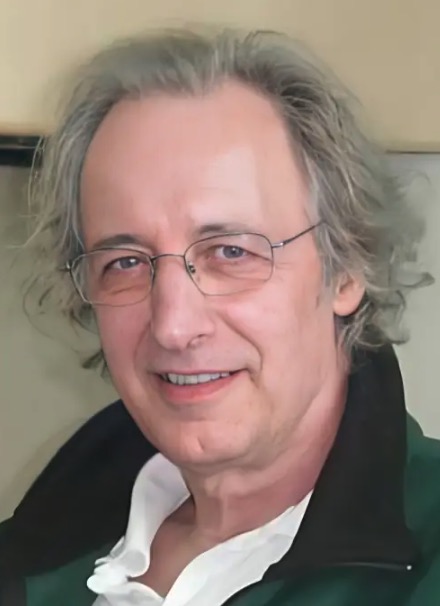 Pierre Agostini (皮埃尔·阿戈斯蒂尼)合作论文数Department of Physics, College of Arts and Sciences, The Ohio State University;Nankai University7Eric Mevel合作论文数7d riz合作论文数6D.J. Larson合作论文数6
 Kraus W合作论文数6P Frank合作论文数6
 Yoshikazu Okumura合作论文数6P. Breger合作论文数6G. Petite合作论文数5yasuhiro fujiwara合作论文数5
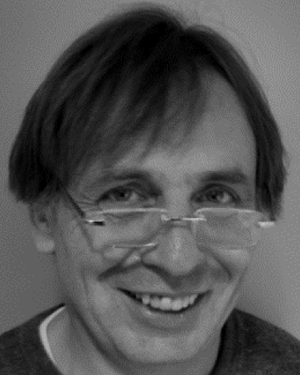 Rudolph Riedl合作论文数5A. Antonetti合作论文数5O. Vollmer合作论文数5p massmann合作论文数5j p hurley合作论文数4Jean Paul Chambaret合作论文数Laboratoire d’Optique Appliquée ENSTA, Ecole Polytechnique4raymond keegan合作论文数4
 J. Bucalossi合作论文数4A. Simonin合作论文数4NJ VANDRUTEN合作论文数3james r tinsley合作论文数3j r tinsley合作论文数3C. Blondel合作论文数3
 Gary D. Fletcher合作论文数3K Miyamoto合作论文数3Keegan Ronan M合作论文数3Wilde Scott C合作论文数3Tinsley J合作论文数3Franz Probst合作论文数3Reinhard Wilhelm合作论文数3
 J.-H Feist合作论文数3C. Desgranges合作论文数3A. Pesnelle合作论文数3P. Mcneely合作论文数3
 Michele Fumelli合作论文数3
 Arnold Migus合作论文数Cour des Comptes3e monnand合作论文数2
 Yuri Belchenko合作论文数2N. Kwon合作论文数2Philippe Martin合作论文数2j pascale合作论文数2Guillaume Petite合作论文数2T. Olsson合作论文数2
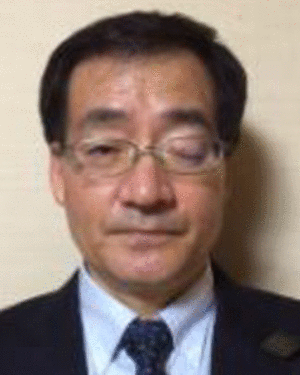 Kazuhiro Watanabe合作论文数2R. Hemsworth合作论文数2




